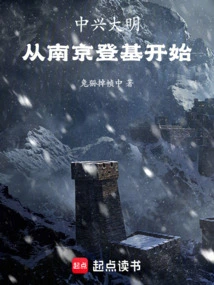
Resurgence of Ming Dynasty, Starting from Nanjing's Accession to the Throne
About This Novel
In March of the 17th year of Chongzhen's reign in the Ming Dynasty, Chongzhen hanged himself in Meishan. In May, King Fu Zhu Yousong ascended the throne in Nanjing. As luck would have it, Zhu Song happened to travel through time at the enthronement ceremony, and he also drew the title of "Dingwu". There are conflicts among the ministers inside, domineering military commanders outside, and ghosts inside oneself. In this situation, Zhu Song could only move forward cautiously step by step. An imperfect comeback.
Official Sources
What Readers Think
Rating
Community(0)
Official(8)Scraped 1mo ago
Flaws do not cover up strengths
The main theme of this book is the second best among the many late Ming Dynasty texts I have read. Although some details are not done well, it cannot cover up the excellent parts of this book. The author has a relatively good understanding of Jiangnan in the late Ming Dynasty, and realizes that the taxation in Jiangnan in the late Ming Dynasty was not caused by a few so-called wealthy families. In fact, the so-called Jiangnan gentry in the late Ming Dynasty did not avoid many taxes. The fundamental reason was that the organization was too low and there were no tax collectors. If you wanted to collect more taxes, the cost of tax would even exceed the benefits. Therefore, implementing benevolent policies to reduce taxes and find a few wealthy families to confiscate their homes is the best choice when there is huge military pressure from the outside. As for the subsequent reform, whether to follow the feudal Qin system under Sun Kewang's camp to strengthen control or continue the mercenary system, resist productivity and continue the liberalization process. However, after the liberalization process started, the mercenary system required wages. However, under the feudal militarism of the Qin system, soldiers who were equivalent to the retinue of captains did not receive wages. Therefore, if you take the liberalization route, you must levy commercial taxes and customs taxes. Here you can see the Netherlands and Spain at that time. During the Spanish war, the liberalized Netherlands could no longer afford to pay wages. However, Spain was a feudal classical military system. Spain finally conquered Dutch Brazil with far inferior equipment than the Netherlands. The fundamental reason was that Spain's feudal classical military system did not require wages. Capital, the Dutch army with no wages until the end is basically the state of the late Ming army. If you lose without pay, it is none of my business. The nature of the army in the late Ming Dynasty is exactly the same as that of the Netherlands. The Manchu and Spanish are also very similar. The results of the last two wars are also exactly the same. It can only be said that in that era when technology has not yet been reached, the classical military form with high personal control and high organization is better than the advanced liberalized army. Even if the liberalized army has advantages in weapons, it will eventually be defeated by the backward army with high organization.
The author's writing is good, just like a history book, but the disadvantage is that it is too much like a history book. I don't see any of the excitement of the rapid growth of the protagonist in a historical novel. There are too many protagonists in the past that are unsatisfactory and difficult to read. As I like reading history books, only those who read official history can read it.
It's really good. At least it makes people feel that it is possible for an ordinary person to do what the protagonist can do after becoming Hong Guang. But I'm a little worried that there will be a sudden burst of combat power during the battle with the Qing soldiers - then it will become a fantasy novel again.
Open a suite building
It's mainly characters that appeared in the first volume. If book friends are interested in adopting a character who doesn't have a name yet, you can leave a message below. (For example, the concierges of Gao and Ma Mansion have a very high probability of returning to the factory! There are also two Zhejiang soldiers, the blind scholar from Wuchang, etc.) At the same time, we are also recruiting for supporting roles. It is best if the character name is not too dramatic, and it is best to bring your own character! ! ! ! If it's better, it can usually be used, but I feel like I'm still lacking a complementary tool.
In the real version, such an unlearned time traveler will definitely not survive three episodes. I hope the author can work hard.
The part about the emperor going out with a minister is not good. Everyone knows that if you run out when the army is in chaos, bandits and broken soldiers on the road will cause trouble if you encounter them. There is also a mixed bag of fish and dragons in the place. Why do you have to ask dozens of people to follow you?
Asking for help: After studying all night, I hope to discuss Zhang Mingzhen's work in the Chongzhen Year with my book friends.
What is known is that Zhang Mingzhen only became a Taizhou guerrilla at the end of Chongzhen and the beginning of Hongguang. But the records in different books are different. "The Tombstone of Zhang Gong, Marquis of Dingxi, the Grand Master of the Ming Dynasty" mentions that the name of Dingxi is taboo, and the name Zhenzi and the character Hou Fu are taboo. He is a native of Jiangning County, Yingtian Prefecture, Nanzhili Province. The young couple has a bright future When Cao Huachunyan, the eunuch of the East Factory of the Capital during the Zhuang Tour, was a guest, Among the dying people, only King Hua Chunyi made his disciples Therefore, the relatives of Donglin were also able to communicate with the other officials of Fushe. Xiong Gong is also the royal staff of the Yuan Dynasty Those whose male yin belongs to the rod will be immortal But Gongshi has never met him Chongzhen Gui did not teach Taizhou Shipu guerrillas. There is no mention of Zhang Mingzhen's success in the Chongzhen year. But! It is mentioned in this book: At the age of Bingyin, he became famous and offered strategic advice, and was awarded the title of "Capital Fire Attack Division". When Kong Youde rebelled against Deng Cai, our troops attacked him and continued to fight for years. The reputation is so high that he will go to war, the city collapses, and he falls. ... Chongzhen Guiwei, Mingzhen beat an eunuch to death for other matters, arrested him and sent him to prison, and he was demoted to the right commander and appointed to the post of General of Zhejiang Shipu Camp. There is another saying, but even a right-wing governor like Qiu Lei can sneak into the general army, why is he just a guerrilla... I also saw the following words mentioned in the "Withdrawal of the Soldiers from Guguan and Aid to Henan and Beijing":... According to the agreement, Zhang Mingzhen commanded a thousand artillerymen from the Beijing camp to go to Guguan to send defense... The Qin obeyed the order of the ministers and other officials, and the commander of the firearms battalion, Zhang Mingzhen, led the defense with a thousand guns and a thousand general artillerymen... The rabbit was wondering, could there be someone with the same name? If Chongzhen was able to infiltrate thousands of people in the capital camp at the beginning, there is no reason why Chongzhen would still be a guerrilla at the end, still in an awkward position like Taizhou. If any readers know more about it, I hope they can help answer it below.
It smells like being a pervert
The book is very good. It's like finding gold in shit. The author should stick to it.
Rating
Community(0)
Official(8)Scraped 1mo ago
Flaws do not cover up strengths
The main theme of this book is the second best among the many late Ming Dynasty texts I have read. Although some details are not done well, it cannot cover up the excellent parts of this book. The author has a relatively good understanding of Jiangnan in the late Ming Dynasty, and realizes that the taxation in Jiangnan in the late Ming Dynasty was not caused by a few so-called wealthy families. In fact, the so-called Jiangnan gentry in the late Ming Dynasty did not avoid many taxes. The fundamental reason was that the organization was too low and there were no tax collectors. If you wanted to collect more taxes, the cost of tax would even exceed the benefits. Therefore, implementing benevolent policies to reduce taxes and find a few wealthy families to confiscate their homes is the best choice when there is huge military pressure from the outside. As for the subsequent reform, whether to follow the feudal Qin system under Sun Kewang's camp to strengthen control or continue the mercenary system, resist productivity and continue the liberalization process. However, after the liberalization process started, the mercenary system required wages. However, under the feudal militarism of the Qin system, soldiers who were equivalent to the retinue of captains did not receive wages. Therefore, if you take the liberalization route, you must levy commercial taxes and customs taxes. Here you can see the Netherlands and Spain at that time. During the Spanish war, the liberalized Netherlands could no longer afford to pay wages. However, Spain was a feudal classical military system. Spain finally conquered Dutch Brazil with far inferior equipment than the Netherlands. The fundamental reason was that Spain's feudal classical military system did not require wages. Capital, the Dutch army with no wages until the end is basically the state of the late Ming army. If you lose without pay, it is none of my business. The nature of the army in the late Ming Dynasty is exactly the same as that of the Netherlands. The Manchu and Spanish are also very similar. The results of the last two wars are also exactly the same. It can only be said that in that era when technology has not yet been reached, the classical military form with high personal control and high organization is better than the advanced liberalized army. Even if the liberalized army has advantages in weapons, it will eventually be defeated by the backward army with high organization.
The author's writing is good, just like a history book, but the disadvantage is that it is too much like a history book. I don't see any of the excitement of the rapid growth of the protagonist in a historical novel. There are too many protagonists in the past that are unsatisfactory and difficult to read. As I like reading history books, only those who read official history can read it.
It's really good. At least it makes people feel that it is possible for an ordinary person to do what the protagonist can do after becoming Hong Guang. But I'm a little worried that there will be a sudden burst of combat power during the battle with the Qing soldiers - then it will become a fantasy novel again.
Open a suite building
It's mainly characters that appeared in the first volume. If book friends are interested in adopting a character who doesn't have a name yet, you can leave a message below. (For example, the concierges of Gao and Ma Mansion have a very high probability of returning to the factory! There are also two Zhejiang soldiers, the blind scholar from Wuchang, etc.) At the same time, we are also recruiting for supporting roles. It is best if the character name is not too dramatic, and it is best to bring your own character! ! ! ! If it's better, it can usually be used, but I feel like I'm still lacking a complementary tool.
In the real version, such an unlearned time traveler will definitely not survive three episodes. I hope the author can work hard.
The part about the emperor going out with a minister is not good. Everyone knows that if you run out when the army is in chaos, bandits and broken soldiers on the road will cause trouble if you encounter them. There is also a mixed bag of fish and dragons in the place. Why do you have to ask dozens of people to follow you?
Asking for help: After studying all night, I hope to discuss Zhang Mingzhen's work in the Chongzhen Year with my book friends.
What is known is that Zhang Mingzhen only became a Taizhou guerrilla at the end of Chongzhen and the beginning of Hongguang. But the records in different books are different. "The Tombstone of Zhang Gong, Marquis of Dingxi, the Grand Master of the Ming Dynasty" mentions that the name of Dingxi is taboo, and the name Zhenzi and the character Hou Fu are taboo. He is a native of Jiangning County, Yingtian Prefecture, Nanzhili Province. The young couple has a bright future When Cao Huachunyan, the eunuch of the East Factory of the Capital during the Zhuang Tour, was a guest, Among the dying people, only King Hua Chunyi made his disciples Therefore, the relatives of Donglin were also able to communicate with the other officials of Fushe. Xiong Gong is also the royal staff of the Yuan Dynasty Those whose male yin belongs to the rod will be immortal But Gongshi has never met him Chongzhen Gui did not teach Taizhou Shipu guerrillas. There is no mention of Zhang Mingzhen's success in the Chongzhen year. But! It is mentioned in this book: At the age of Bingyin, he became famous and offered strategic advice, and was awarded the title of "Capital Fire Attack Division". When Kong Youde rebelled against Deng Cai, our troops attacked him and continued to fight for years. The reputation is so high that he will go to war, the city collapses, and he falls. ... Chongzhen Guiwei, Mingzhen beat an eunuch to death for other matters, arrested him and sent him to prison, and he was demoted to the right commander and appointed to the post of General of Zhejiang Shipu Camp. There is another saying, but even a right-wing governor like Qiu Lei can sneak into the general army, why is he just a guerrilla... I also saw the following words mentioned in the "Withdrawal of the Soldiers from Guguan and Aid to Henan and Beijing":... According to the agreement, Zhang Mingzhen commanded a thousand artillerymen from the Beijing camp to go to Guguan to send defense... The Qin obeyed the order of the ministers and other officials, and the commander of the firearms battalion, Zhang Mingzhen, led the defense with a thousand guns and a thousand general artillerymen... The rabbit was wondering, could there be someone with the same name? If Chongzhen was able to infiltrate thousands of people in the capital camp at the beginning, there is no reason why Chongzhen would still be a guerrilla at the end, still in an awkward position like Taizhou. If any readers know more about it, I hope they can help answer it below.
It smells like being a pervert
The book is very good. It's like finding gold in shit. The author should stick to it.
You Might Also Like

Reborn Female General
Qianshan Tea Guest
Twenty-seven Years
Rongke
Prime Minister of a Poor Family
Happiness Knocks On The Door
The Song of Neon Clothes and Iron Clothes
Chris Webber
Afterglow of the Ming Dynasty
Pinghai Of The Chinese Imperial Academy
Elegy of the Tang Dynasty
Travel Far Away With Sword
Ximing Lihuo
Watching The Rain And Listening To The Bamboo
Top Grade Humble Scholar
The Three Idiots Of Thieves
New Order of the Tang Dynasty
Rice With Rice
Jinting Han People
Chen Ruicong