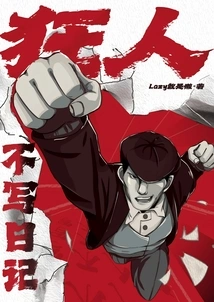
Madmen Don't Keep Diaries
by Lazy Is Lazy
About This Novel
Feng Xiuhu had a small accident while traveling through time. He failed to inherit the memory of the original owner and forgot the experience of his previous life. However, he still retained the habits of his previous life in his subconscious. So people said he was out of his mind. But Feng Xiuhu didn't recognize it. He felt that the world was ruined. After all, there is no reason for this. The common people scrambled to make cattle and horses, while the humble households worked to death and became beasts. It is not enough for the nobles to be full of oil, and the gods sit high on the temple platform to enjoy the fruits. So Feng Xiuhu is trying to adapt. I mean, trying to adapt the world to him.
Official Sources
What Readers Think
Rating
Community(0)
Rating
Community(0)
Featured in 2 Booklists
Official(2)
[Art coefficient:★★★] [Abstract coefficient:★★★☆] [When madness becomes a medal of sanity, deconstructing alienation and resistance] Identity reconstruction under the memory gap: What is lost is not only memory, but also the "correct" understanding of the world The protagonist Feng Xiuhu's time travel is full of anti-routine colors - he has neither inherited the original owner's memory nor forgotten his past life experiences, only remaining subconscious habits. This setting breaks the golden finger logic of traditional time-travel novels of "prophecy" and places the protagonist in a double confusion: he is both a stranger to the rules of another world and a questioner of his own identity. His epiphany at the door of the asylum, "This world is broken," was like a heavy hammer that shattered the fantasy shell of a utopia in another world. Through the design of memory gaps, the author skillfully transforms the protagonist's "madness" into a sharp edge of sobriety, pointing directly at the absurdity of social rules. Aesthetics of violence and black humor: using absurd behavior to tear apart the hypocrisy of civilization The novel opens with a distorted picture of a different world: coachmen fighting, butchers eating flies, shopkeepers abusing servants, and the explosion of the lunatic asylum has become a daily adjustment. Feng Xiuhu's "adaptation" process is full of violence and black humor: he buys and sells by force, dismembers monster horns, directs a "choir" to extort, and uses chaos to fight order. This behavior of fighting violence with violence may seem crazy, but it is actually a precise counterattack against a society with strict hierarchy and moral collapse. The author depicts bloody scenes in a playful style, alienating violence as a tool to deconstruct power, allowing readers to glimpse the reflection of reality in the absurd. An anti-routine time-travel narrative: there is no redemption from Golden Finger, only the sobriety of fighting violence with violence. Different from traditional time travel stories, Feng Xiuhu has neither system plug-ins nor awakened powers. The only "golden finger" is the remaining modern thinking. His method of resistance is full of primitive violence and randomness: he uses the "seven-day no-reason return policy" to blackmail the shopkeeper, uses his status as "squad leader" to intimidate gangsters, and even uses modern business logic to subvert the transaction rules of other worlds. This anti-routine setting eliminates the "refreshing feeling" of time-travel novels and instead focuses on the confrontation between individuals and the system, revealing a cruel truth - in a twisted world, the resistance of the sober people is bound to be stained with blood. Conclusion "The Madman's Guide to Time Travel" uses madness as a mirror to reveal the absurdity and hypocrisy of civilized society. Feng Xiuhu's resistance is not a heroic epic, but a black comedy full of blood. When the rules of "adapting to the world" become a trap for cannibalism, perhaps the only way to counter violence with violence is "madness"


Recommendation index:😜😜 Chaotic neutrality, good start, chaotic and reasonable logic, good writing
You Might Also Like

Reborn Female General
Qianshan Tea Guest
Hold the Body in the Sharp Edge
A Bowl Of Dukang
Run into the World
Sword Dance Show
Beginning as a Tantric Academy Monk
Exploring The Window In The Middle Of The Night
Practicing Magical Skills by Mistake Will Cause Chaos in the World
No Intentional Typo
An Edict to Heaven
Blue Flowers Under The Bridge
Wu Ling Hongguang
Fox Husband
The Ultimate Witch Master
T
Monsters in Troubled Times: It's Broken, I Turned into a Monster
Pike
Tao Becomes a Strange Fairy
29 Aries