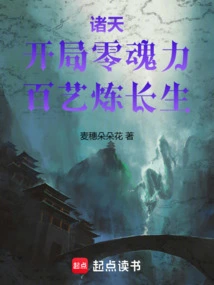
All Heavens: Starting with Zero Soul Power, Practicing a Hundred Arts to Achieve Immortality
by Wheat Ears Blossoming Flowers
About This Novel
I accidentally traveled to a fantasy sewer, and my innate soul power was zero. I thought I could only live a mediocre life. Fortunately, there is no end to the road, and as a door to the useless martial soul, it can connect to other worlds. In order to avoid an innocent death, Ye Xuan traveled across the world, carefully surviving, and at the same time mastering various skills from dangers. Farming, controlling beasts, forging weapons... Step by step, you can attribute great power to yourself and achieve the supreme immortal path! "You call me Xiaoye in the heavens and I won't pick on you. What should you call me in the sewers?"
Official Sources
What Readers Think
Rating
Community(0)
Official(44)Scraped 2mo ago
You can cultivate immortality, but you still can't add a soul ring? Wouldn't it be more beneficial to cultivating immortals to directly create a five-element elemental soul ring? Since it is stitched together, everything will be bad. It is not like merging multiple world elements to ascend to the highest level.
Time Travel Douluo would be speechless if I didn't write about Wuhun
Time Travel Douluo would be speechless if he didn't write about martial arts. After passing through it, he would awaken a door and go to another world to cultivate immortality, right? It may be said that Douluo World's military power is low, but it may have some merits! It's okay to add some soul rings to your martial soul, something to increase the speed of practice, or some weird abilities to defeat the enemy. If you just give up and don't use it, you will be speechless.
There are too many poisonous points. The most awesome one is that the protagonist has not understood his golden finger for 6 years. He is not an ordinary awesome one.
It's a bit rubbish. I don't want to watch it. I'm too lazy to say what's wrong. There's something wrong with the basic settings. No matter how good the content is, it's frustrating to watch.
The most extreme Nascent Soul period in history
Is Douluo's God King really so awesome? After watching the entire Douluo series from beginning to end, their combat performance is really rubbish and cannot be rubbish anymore. The protagonist, a Nascent Soul stage boss, beat up the God King and used his ultimate move fiercely, and in the end he was almost beaten to death. To be honest, if you can't write, don't write. Just find a class or go home and farm.
1 The eight extra meridians are the general name for Ren, Du, Chong, Dai, Yin Qiao, Yang Qiao, Yin Wei and Yang Wei. They are different from the twelve regular meridians. They are neither directly subordinate to the internal organs nor have any coordination between the exterior and interior. They follow different paths and move in strange ways, so they are called strange meridians. Its function 1. Communicate the connection between the twelve meridians; 2. It has a regulating effect on the accumulation, penetration and perfusion of qi and blood in the twelve meridians. The Ren meridian runs in the midline of the abdomen. Its meridian intersects with the three yin and yin dimensional meridians of the hands and feet many times. It can integrate the yin meridians of any body, so it is called "the sea of yin meridians". The Ren meridian originates from the uterus and is related to a woman's pregnancy, so there is a saying that "Ren is responsible for the pregnancy". The Du Vein runs in the middle of the back. Its pulse intersects with the three yang meridians of the hands and feet and the Yang Wei meridians many times. It can govern the yang meridians of the whole body, so it is called the "sea of yang meridians". The Du Vein runs in the spine, goes up into the brain, and branches out from the spine to belong to the kidneys. It is closely connected with the brain, spinal cord, and kidneys. The Chongmai, which goes up to the head and goes down to the feet, runs through the whole body; it becomes the hub of Qi and blood, and can regulate the Qi and blood of the twelve meridians, so it is called the "sea of the twelve meridians", also known as the "sea of blood". Related to women's menstruation. The Dai Pulse starts from Ji Xiang, goes down diagonally to the Dai Pulse Point, and wraps around the body like a belt, which can restrain the longitudinal meridians. Yin Qiao pulse, Yang Qiao pulse: Qiao means light, healthy and fast. It has the functions of soothing the eyes, opening and closing the eyelids and moving the lower limbs. Yin Wei Mai and Yang Wei Mai: Wei means to maintain. The function of the yin-dimensional pulse is to "maintain the yin channels"; the function of the yang-dimensional pulse is to "maintain the yang channels". Circulation and physiological functions of Du Channel 1. Circulation location: The Du Vessel starts from the lower abdomen, exits the perineum, goes backward to the Changqiang point in the tail and sacrum, goes up along the spine, passes through the neck to Fengfu point, enters the brain, belongs to the brain, along the midline of the head, goes up to the Baihui point at the top, goes down through the forehead to the Suliao point at the tip of the nose, passes through the philtrum, and reaches the Gujiao point in the middle of the upper teeth. 2. Branch: The first branch originates from the cell together with the Chong and Ren meridians, emerges from the perineum, and joins the pulse Qi of the Foot Shaoyin Kidney Meridian and the Foot Taiyang Bladder Meridian at the end of the coccyx, runs through the spine, and belongs to the kidneys. The second branch goes straight from the lower abdomen to the navel, upward to the heart, to the throat where it joins the Chong and Ren channels, to the mandible, around the lips, and to the center under the eyes. The third branch starts from the inner corner of the eye at the same time as the bladder meridian of Foot Taiyang, goes up to the forehead, meets at the top of the head, enters the brain, then exits the nape, along the inside of the shoulder blade, on both sides of the spine, reaches the middle of the waist, enters the muscles on both sides of the spine, and connects with the kidneys. Physiological function 1) Regulating the qi and blood of the yang meridian, it is the "sea of yang meridians": the Du meridian runs along the back of the body, and the back is yang, which shows that the Du meridian has the role of commanding and supervising the yang meridian qi throughout the body. In addition, the six yang meridians all intersect with the Du meridian at Dazhui point, and the Du meridian has a regulating effect on the yang meridians, so there is a saying that "the governor has one yang meridian". 2) Reflects the functions of the brain, kidneys and spinal cord: the Du meridian runs in the spine, enters the brain, and then connects the kidneys. The kidneys produce marrow, and the brain is the marrow sea. The Du Vein has a very close relationship with the brain, kidneys, and spinal cord. 3) Controls the reproductive function: The Du Channel and the Kidneys are connected with the kidney qi, and the kidneys govern reproduction, so the Du Channel is related to the reproductive function. 4 Circulation and physiological functions of Ren meridian 1. Circulation location: The Ren meridian originates from the center of the cell, descends from the perineum, passes through the mons pubis, goes up along the midline of the abdomen, passes through the throat (Tiantu point), reaches the inside of the lower lip, branches to the left and right, surrounds the lips, meets at the Gujiao point of the Du meridian, then passes through both sides of the nose, up to the lower eye orbit (Chengqi point), and intersects with the Foot Yangming meridian. 2. Branches: pass through the ridge from the center of the cell and travel upward on the back. Physiological function 1) Regulates the qi and blood of the yin meridian, which is the "sea of yin meridians": the Ren meridian circulates in the middle of the abdomen, and the abdomen is yin, which shows that the Ren meridian has an overall and responsible effect on the yin meridian qi of the body. In addition, the three yin meridians of the foot intersect with the Ren meridian in the lower abdomen, and the three yin meridian of the hand are connected to the Ren meridian through the three yin meridian of the foot. Therefore, the Ren meridian has a regulating effect on the qi and blood of the yin meridian, so there is a saying of "generally accepting all yin". 2) Regulate menstruation and support the fetus during pregnancy: Ren meridian originates from the cell and has the function of regulating menstruation and promoting women's reproductive function, so there is a saying that "Ren governs the fetus". 4. Circulation and physiological functions of Chongmai Part of its circulation: It originates from the uterus and descends from the perineum, where it divides into two branches. Ascending branch: Its anterior branch (the trunk part of the Chongmai) goes up along the front wall of the abdomen by the umbilicus (five minutes next to the umbilical cord), merges with the foot-shaoyin meridian, spreads in the chest, and then goes upward, passes through the throat, and surrounds the lips; its posterior branch goes up along the posterior wall of the abdominal cavity and into the spine. Descending branch: exits the perineum and descends along the medial aspect of the thigh to between the big toes. Physiological function 1) Regulates the qi and blood of the twelve meridians: The Chong meridians go up to the head and down to the feet, running through the whole body, and are the main points that control the qi and blood of all the meridians. When there is excess Qi and blood in the meridians and organs, Chongmai can contain and store it; when there is insufficient Qi and blood in the meridians and organs, Chongmai can perfuse and supplement it to maintain the needs of normal physiological activities of various tissues and organs of the human body. Therefore, it is called the "sea of twelve meridians", "the sea of internal organs" and the "sea of blood". 2) Main reproductive function: Chongmai originates from the uterus, also known as the "blood chamber" and "blood sea". Chongmai has the function of regulating menstruation. The Chongmai is closely related to the reproductive function. For women, "the Taichongmai is strong and the menstruation is at the time, so they have children." "The Taichongmai is weak, and the Tianguijie tunnel is blocked." The "Taichongmai" mentioned here refers to the Chongmai. In addition, if a man is born with insufficient Chongmai or has acquired Chongmai injury, this can lead to a decline in reproductive function. 3) Regulating the rise and fall of Qi: Chong mei circulates in Zushaoyin, belongs to Yangming, and connects to Jueyin and the sun. Chongmai has the function of regulating the rise and fall of qi in certain organs (mainly the liver, kidneys and stomach). 5 Circulation and physiological functions of pulse Circulation location: The Daimai pulse originates from the hypochondriac of Ji, goes diagonally downward, intersects at the Daimai point on the gallbladder meridian of Foot Shaoyang, goes around the body, and then runs forward and downward at the Daimai point along the upper edge of the hip bone to the Shaofu. Physiological function: restrains the longitudinal meridians and regulates women's vaginal discharge. 6. Circulation and physiological functions of Yin Qiao pulse Circulation location: The Yin Qiao pulse originates from the Zhaohai point on the Foot Shaoyin meridian on the inner side of the heel, goes up through the medial malleolus, enters the anterior pudenda along the inner side of the thigh, goes up along the ventral surface of the trunk, enters the chest, enters the missing basin, goes up in front of the Renying point on the Foot Yangming meridian next to the Adam's apple, reaches the side of the nose, connects to the inner corner of the eye, joins the Foot Taiyang and Yang Qiao pulses and goes up. Physiological functions: Control the opening and closing of the eyes and muscle movements. 7. Circulation and physiological functions of Yang Qiao pulse Where it travels: The Yangzhi Vein starts from the Shenmai point on the Taiyang Meridian on the outside of the heel, goes up behind the outer ankle, goes up through the outer rear edge of the lower limbs, along the hips and ribs, through the shoulders and outside of the neck, up to the corners of the mouth, and reaches the inner corners of the eyes. It joins with the Taiyang Meridian of Foot and the Yinqiao Meridian, then goes up along the Taiyang Meridian of Foot and joins the Shaoyang Meridian of Foot at the Fengchi point on the back of the neck. Physiological functions: Control the opening and closing of the eyes and muscle movements. 8. Circulation and physiological functions of Yinwei pulse Location: The Yinwei pulse originates from the Zhubin point of the Foot Shaoyin meridian five inches above the medial malleolus, goes up along the inner posterior edge of the lower limbs, to the abdomen, goes with the Foot Taiyin spleen meridian to the flank, joins the Foot Jueyin Liver meridian, then goes up to meet the Tiantu point of the Ren meridian, and reaches the Lianquan point of the throat where it joins the Ren meridian on the neck. Physiological functions: The word "Wei" in Weimai means to maintain and maintain the collaterals. The yin dimension has the function of maintaining the yin meridians. 9. Circulation and physiological functions of Yang Wei pulse Location: Yangwei Meridian starts from the Jinmen point of Foot Taiyang, passes through the outer ankle, goes up parallel with Foot Shaoyang Meridian, goes up along the lateral posterior edge of the lower limbs, passes through the back and outside of the trunk, from behind the armpits to the upper shoulders, through the neck and behind the ears, forward to the forehead, distributes on the side of the head and behind the nape to the forehead, and then joins the nape with the Du Vessel. Physiological function: maintains the yang meridian. Summary of the Characteristics of 10 Extraordinary Meridians Physiological characteristics of the eight extra meridians ① The eight extraordinary meridians have no direct collateral relationship with the internal organs. ② There is no external-internal coordination relationship between the eight extra meridians. ③ The distribution of the eight extraordinary meridians is not like the distribution of the twelve meridians throughout the body. There is no distribution of the eight extraordinary meridians in the upper limbs of the human body. Its direction is also different from that of the twelve meridians. Except for the band meridians, the others all follow from bottom to top. Common physiological functions of the eight extraordinary meridians 1. Further strengthen the connection between the twelve meridians: for example, the Du meridian can govern the yang meridians of the body; the Ren meridian can connect the yin meridians of the whole body; the belt meridian can restrain the longitudinal meridians. The two-dimensional meridians control the yin and yang of the left and right sides of the body; the two-dimensional meridians control the yin and yang of the outer and inner parts of the body. That is, the eight extraordinary meridians further strengthen the connection between various parts of the body. 2. Regulate the Qi and blood of the twelve meridians: When there is excess Qi in the twelve meridians, it is stored in the eight extra meridians; when the Qi and blood in the twelve meridians are insufficient, it is "overflowed" by the extra meridians and replenished in time. 3. The eight extraordinary meridians have a very close relationship with the liver, kidneys and other organs, as well as the female cells, brain, marrow and other extraordinary organs. They have certain physiological and pathological connections with each other. 11 Eight representative acupuncture points The eight extraordinary meridians have a regulating effect on the accumulation and permeation of Qi and blood in the twelve meridians. There are eight representative acupoints in the Eight Meridians, Gongsun, Neiguan, Zulinqi, Waiguan, Shenmai, Houxi, Lieque, and Zhaohai. The effect of each acupuncture point is, metaphorically speaking, equivalent to a "nuclear reactor". One treatment can cure a large area.
It's a bit outrageous. A bit of Shamo Kunkun has become a ten-year soul beast. You can't reach the next level after knocking it down.
Cultivation is strong, but slow! Proficient in all kinds of alchemy and talismans, hexagrams, divination and heavenly secrets, witches and poisons must be checked, mana and spells are accumulated and practiced diligently, the soul and consciousness can be controlled freely, the body and body are indestructible,
They all have the same system, one needs spiritual roots, and the other world has never had spiritual roots.
Why is it a eunuch again? The author should update it quickly.
Rating
Community(0)
Official(44)Scraped 2mo ago
You can cultivate immortality, but you still can't add a soul ring? Wouldn't it be more beneficial to cultivating immortals to directly create a five-element elemental soul ring? Since it is stitched together, everything will be bad. It is not like merging multiple world elements to ascend to the highest level.
Time Travel Douluo would be speechless if I didn't write about Wuhun
Time Travel Douluo would be speechless if he didn't write about martial arts. After passing through it, he would awaken a door and go to another world to cultivate immortality, right? It may be said that Douluo World's military power is low, but it may have some merits! It's okay to add some soul rings to your martial soul, something to increase the speed of practice, or some weird abilities to defeat the enemy. If you just give up and don't use it, you will be speechless.
There are too many poisonous points. The most awesome one is that the protagonist has not understood his golden finger for 6 years. He is not an ordinary awesome one.
It's a bit rubbish. I don't want to watch it. I'm too lazy to say what's wrong. There's something wrong with the basic settings. No matter how good the content is, it's frustrating to watch.
The most extreme Nascent Soul period in history
Is Douluo's God King really so awesome? After watching the entire Douluo series from beginning to end, their combat performance is really rubbish and cannot be rubbish anymore. The protagonist, a Nascent Soul stage boss, beat up the God King and used his ultimate move fiercely, and in the end he was almost beaten to death. To be honest, if you can't write, don't write. Just find a class or go home and farm.
1 The eight extra meridians are the general name for Ren, Du, Chong, Dai, Yin Qiao, Yang Qiao, Yin Wei and Yang Wei. They are different from the twelve regular meridians. They are neither directly subordinate to the internal organs nor have any coordination between the exterior and interior. They follow different paths and move in strange ways, so they are called strange meridians. Its function 1. Communicate the connection between the twelve meridians; 2. It has a regulating effect on the accumulation, penetration and perfusion of qi and blood in the twelve meridians. The Ren meridian runs in the midline of the abdomen. Its meridian intersects with the three yin and yin dimensional meridians of the hands and feet many times. It can integrate the yin meridians of any body, so it is called "the sea of yin meridians". The Ren meridian originates from the uterus and is related to a woman's pregnancy, so there is a saying that "Ren is responsible for the pregnancy". The Du Vein runs in the middle of the back. Its pulse intersects with the three yang meridians of the hands and feet and the Yang Wei meridians many times. It can govern the yang meridians of the whole body, so it is called the "sea of yang meridians". The Du Vein runs in the spine, goes up into the brain, and branches out from the spine to belong to the kidneys. It is closely connected with the brain, spinal cord, and kidneys. The Chongmai, which goes up to the head and goes down to the feet, runs through the whole body; it becomes the hub of Qi and blood, and can regulate the Qi and blood of the twelve meridians, so it is called the "sea of the twelve meridians", also known as the "sea of blood". Related to women's menstruation. The Dai Pulse starts from Ji Xiang, goes down diagonally to the Dai Pulse Point, and wraps around the body like a belt, which can restrain the longitudinal meridians. Yin Qiao pulse, Yang Qiao pulse: Qiao means light, healthy and fast. It has the functions of soothing the eyes, opening and closing the eyelids and moving the lower limbs. Yin Wei Mai and Yang Wei Mai: Wei means to maintain. The function of the yin-dimensional pulse is to "maintain the yin channels"; the function of the yang-dimensional pulse is to "maintain the yang channels". Circulation and physiological functions of Du Channel 1. Circulation location: The Du Vessel starts from the lower abdomen, exits the perineum, goes backward to the Changqiang point in the tail and sacrum, goes up along the spine, passes through the neck to Fengfu point, enters the brain, belongs to the brain, along the midline of the head, goes up to the Baihui point at the top, goes down through the forehead to the Suliao point at the tip of the nose, passes through the philtrum, and reaches the Gujiao point in the middle of the upper teeth. 2. Branch: The first branch originates from the cell together with the Chong and Ren meridians, emerges from the perineum, and joins the pulse Qi of the Foot Shaoyin Kidney Meridian and the Foot Taiyang Bladder Meridian at the end of the coccyx, runs through the spine, and belongs to the kidneys. The second branch goes straight from the lower abdomen to the navel, upward to the heart, to the throat where it joins the Chong and Ren channels, to the mandible, around the lips, and to the center under the eyes. The third branch starts from the inner corner of the eye at the same time as the bladder meridian of Foot Taiyang, goes up to the forehead, meets at the top of the head, enters the brain, then exits the nape, along the inside of the shoulder blade, on both sides of the spine, reaches the middle of the waist, enters the muscles on both sides of the spine, and connects with the kidneys. Physiological function 1) Regulating the qi and blood of the yang meridian, it is the "sea of yang meridians": the Du meridian runs along the back of the body, and the back is yang, which shows that the Du meridian has the role of commanding and supervising the yang meridian qi throughout the body. In addition, the six yang meridians all intersect with the Du meridian at Dazhui point, and the Du meridian has a regulating effect on the yang meridians, so there is a saying that "the governor has one yang meridian". 2) Reflects the functions of the brain, kidneys and spinal cord: the Du meridian runs in the spine, enters the brain, and then connects the kidneys. The kidneys produce marrow, and the brain is the marrow sea. The Du Vein has a very close relationship with the brain, kidneys, and spinal cord. 3) Controls the reproductive function: The Du Channel and the Kidneys are connected with the kidney qi, and the kidneys govern reproduction, so the Du Channel is related to the reproductive function. 4 Circulation and physiological functions of Ren meridian 1. Circulation location: The Ren meridian originates from the center of the cell, descends from the perineum, passes through the mons pubis, goes up along the midline of the abdomen, passes through the throat (Tiantu point), reaches the inside of the lower lip, branches to the left and right, surrounds the lips, meets at the Gujiao point of the Du meridian, then passes through both sides of the nose, up to the lower eye orbit (Chengqi point), and intersects with the Foot Yangming meridian. 2. Branches: pass through the ridge from the center of the cell and travel upward on the back. Physiological function 1) Regulates the qi and blood of the yin meridian, which is the "sea of yin meridians": the Ren meridian circulates in the middle of the abdomen, and the abdomen is yin, which shows that the Ren meridian has an overall and responsible effect on the yin meridian qi of the body. In addition, the three yin meridians of the foot intersect with the Ren meridian in the lower abdomen, and the three yin meridian of the hand are connected to the Ren meridian through the three yin meridian of the foot. Therefore, the Ren meridian has a regulating effect on the qi and blood of the yin meridian, so there is a saying of "generally accepting all yin". 2) Regulate menstruation and support the fetus during pregnancy: Ren meridian originates from the cell and has the function of regulating menstruation and promoting women's reproductive function, so there is a saying that "Ren governs the fetus". 4. Circulation and physiological functions of Chongmai Part of its circulation: It originates from the uterus and descends from the perineum, where it divides into two branches. Ascending branch: Its anterior branch (the trunk part of the Chongmai) goes up along the front wall of the abdomen by the umbilicus (five minutes next to the umbilical cord), merges with the foot-shaoyin meridian, spreads in the chest, and then goes upward, passes through the throat, and surrounds the lips; its posterior branch goes up along the posterior wall of the abdominal cavity and into the spine. Descending branch: exits the perineum and descends along the medial aspect of the thigh to between the big toes. Physiological function 1) Regulates the qi and blood of the twelve meridians: The Chong meridians go up to the head and down to the feet, running through the whole body, and are the main points that control the qi and blood of all the meridians. When there is excess Qi and blood in the meridians and organs, Chongmai can contain and store it; when there is insufficient Qi and blood in the meridians and organs, Chongmai can perfuse and supplement it to maintain the needs of normal physiological activities of various tissues and organs of the human body. Therefore, it is called the "sea of twelve meridians", "the sea of internal organs" and the "sea of blood". 2) Main reproductive function: Chongmai originates from the uterus, also known as the "blood chamber" and "blood sea". Chongmai has the function of regulating menstruation. The Chongmai is closely related to the reproductive function. For women, "the Taichongmai is strong and the menstruation is at the time, so they have children." "The Taichongmai is weak, and the Tianguijie tunnel is blocked." The "Taichongmai" mentioned here refers to the Chongmai. In addition, if a man is born with insufficient Chongmai or has acquired Chongmai injury, this can lead to a decline in reproductive function. 3) Regulating the rise and fall of Qi: Chong mei circulates in Zushaoyin, belongs to Yangming, and connects to Jueyin and the sun. Chongmai has the function of regulating the rise and fall of qi in certain organs (mainly the liver, kidneys and stomach). 5 Circulation and physiological functions of pulse Circulation location: The Daimai pulse originates from the hypochondriac of Ji, goes diagonally downward, intersects at the Daimai point on the gallbladder meridian of Foot Shaoyang, goes around the body, and then runs forward and downward at the Daimai point along the upper edge of the hip bone to the Shaofu. Physiological function: restrains the longitudinal meridians and regulates women's vaginal discharge. 6. Circulation and physiological functions of Yin Qiao pulse Circulation location: The Yin Qiao pulse originates from the Zhaohai point on the Foot Shaoyin meridian on the inner side of the heel, goes up through the medial malleolus, enters the anterior pudenda along the inner side of the thigh, goes up along the ventral surface of the trunk, enters the chest, enters the missing basin, goes up in front of the Renying point on the Foot Yangming meridian next to the Adam's apple, reaches the side of the nose, connects to the inner corner of the eye, joins the Foot Taiyang and Yang Qiao pulses and goes up. Physiological functions: Control the opening and closing of the eyes and muscle movements. 7. Circulation and physiological functions of Yang Qiao pulse Where it travels: The Yangzhi Vein starts from the Shenmai point on the Taiyang Meridian on the outside of the heel, goes up behind the outer ankle, goes up through the outer rear edge of the lower limbs, along the hips and ribs, through the shoulders and outside of the neck, up to the corners of the mouth, and reaches the inner corners of the eyes. It joins with the Taiyang Meridian of Foot and the Yinqiao Meridian, then goes up along the Taiyang Meridian of Foot and joins the Shaoyang Meridian of Foot at the Fengchi point on the back of the neck. Physiological functions: Control the opening and closing of the eyes and muscle movements. 8. Circulation and physiological functions of Yinwei pulse Location: The Yinwei pulse originates from the Zhubin point of the Foot Shaoyin meridian five inches above the medial malleolus, goes up along the inner posterior edge of the lower limbs, to the abdomen, goes with the Foot Taiyin spleen meridian to the flank, joins the Foot Jueyin Liver meridian, then goes up to meet the Tiantu point of the Ren meridian, and reaches the Lianquan point of the throat where it joins the Ren meridian on the neck. Physiological functions: The word "Wei" in Weimai means to maintain and maintain the collaterals. The yin dimension has the function of maintaining the yin meridians. 9. Circulation and physiological functions of Yang Wei pulse Location: Yangwei Meridian starts from the Jinmen point of Foot Taiyang, passes through the outer ankle, goes up parallel with Foot Shaoyang Meridian, goes up along the lateral posterior edge of the lower limbs, passes through the back and outside of the trunk, from behind the armpits to the upper shoulders, through the neck and behind the ears, forward to the forehead, distributes on the side of the head and behind the nape to the forehead, and then joins the nape with the Du Vessel. Physiological function: maintains the yang meridian. Summary of the Characteristics of 10 Extraordinary Meridians Physiological characteristics of the eight extra meridians ① The eight extraordinary meridians have no direct collateral relationship with the internal organs. ② There is no external-internal coordination relationship between the eight extra meridians. ③ The distribution of the eight extraordinary meridians is not like the distribution of the twelve meridians throughout the body. There is no distribution of the eight extraordinary meridians in the upper limbs of the human body. Its direction is also different from that of the twelve meridians. Except for the band meridians, the others all follow from bottom to top. Common physiological functions of the eight extraordinary meridians 1. Further strengthen the connection between the twelve meridians: for example, the Du meridian can govern the yang meridians of the body; the Ren meridian can connect the yin meridians of the whole body; the belt meridian can restrain the longitudinal meridians. The two-dimensional meridians control the yin and yang of the left and right sides of the body; the two-dimensional meridians control the yin and yang of the outer and inner parts of the body. That is, the eight extraordinary meridians further strengthen the connection between various parts of the body. 2. Regulate the Qi and blood of the twelve meridians: When there is excess Qi in the twelve meridians, it is stored in the eight extra meridians; when the Qi and blood in the twelve meridians are insufficient, it is "overflowed" by the extra meridians and replenished in time. 3. The eight extraordinary meridians have a very close relationship with the liver, kidneys and other organs, as well as the female cells, brain, marrow and other extraordinary organs. They have certain physiological and pathological connections with each other. 11 Eight representative acupuncture points The eight extraordinary meridians have a regulating effect on the accumulation and permeation of Qi and blood in the twelve meridians. There are eight representative acupoints in the Eight Meridians, Gongsun, Neiguan, Zulinqi, Waiguan, Shenmai, Houxi, Lieque, and Zhaohai. The effect of each acupuncture point is, metaphorically speaking, equivalent to a "nuclear reactor". One treatment can cure a large area.
It's a bit outrageous. A bit of Shamo Kunkun has become a ten-year soul beast. You can't reach the next level after knocking it down.
Cultivation is strong, but slow! Proficient in all kinds of alchemy and talismans, hexagrams, divination and heavenly secrets, witches and poisons must be checked, mana and spells are accumulated and practiced diligently, the soul and consciousness can be controlled freely, the body and body are indestructible,
They all have the same system, one needs spiritual roots, and the other world has never had spiritual roots.
Why is it a eunuch again? The author should update it quickly.
You Might Also Like

Reborn Female General
Qianshan Tea Guest
A Guide to Traveling Through the Heavens
Miaozhongmiao
A Golden Finger for Cultivating Immortals Every Year for Mortals
The Apprentice Likes The Silly Master
Mortal, I Have an Longevity Lottery Panel
Just Ate Beef Dumplings
People Are Traveling to the West, Investing in the Heavens
The Moon Rises Near The Clouds
From Fox Demon to Dou Po: the Villain at the Beginning: Big Brother
Jasper Qianren
I Found Myself in the Hand-rubbing Chat Group Covering the Sky
A Long Time
Mortal: Xiao Yan Travels Through Han Li
Drink Coke At Work
Time Travel at the Same Time, I Am the Golden Finger
Greedy Kitten
All Heavens: Starting from Covering the Sky and Pushing Across All Realms
Jianjia Crossing The River