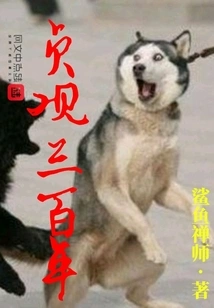
Three Hundred Years of Zhenguan
About This Novel
Wang Jiao traveled back in time to the Tang Dynasty, and it was during the Zhenguan period. "Three hundred years of Zhenguan? Huh?" This is a Tang Dynasty that has been smashed by the senior time travellers. Wang Jiao is under great pressure, copying poems, glass, cement... There is nothing he can do! Gritting his teeth, Wang Jiao picked up the paper and pen and wrote five characters on the front page: "Concierge Qin Dalang". Words are daggers, knives, swords, and occasionally fascial guns, buzzing, buzzing, buzzing... PS: The world view of the "Tang Dynasty Engineering Student" plane.
Official Sources
What Readers Think
Rating
Community(0)
Official(15)Scraped 1mo ago
Crystal flame crystal flame crystal flame crystal flame crystal flame


Ha ha! It's really fun to travel back to the dynasty where the predecessors have appeared. The newcomers are definitely in a state of confusion. There is also a book about the Ming Dynasty. This is the second time I have seen a book with such a setting. It's quite funny😘😘
When Wang Jiao woke up again, he was secretly happy because he found that his body seemed to have returned to his boyhood.
A little discussion about the background setting of this book
This shabby book still has a familiar smell, which is great! First give me a five-star tribute. The background setting feels a bit confusing. It was only 30+ years ago when the Engineering Dog ended. At that time, there were already practical steam engines and railways, which at least reached the threshold of the first industrial revolution. According to history, it was at least the level of 1750, but it experienced two civil wars, and there were With the engineering dogs laying a good theoretical foundation, the level of development in more than two hundred years has just reached the level of experimental hydropower stations and hybrid sailing ships, which is the level of 1900. Is Shark Zen Master burying the people of the Tang Dynasty and not as good as Angsa pirates and German barbarians?
Hua Ye, the Lord of Heavenly Palace, comes here for a visit
The cover is kind of interesting hahahaha






I don't like this book you wrote.
I don't like it, but I enjoyed reading the first few books.
Lu Guimeng's Theory of Relativity
He wrote Notes on Rice Rats in 206 Zhenguan, and was only over 80 years old in Zhenguan 300. Mr. Fuli lived with the depth of life.
First of all, the title of the book Three Hundred Years of Zhenguan is wrong. Could Li Shimin live 300 years old? It should be Tang San
OK, thumbs up to you
I feel like the protagonist's IQ fluctuates, but overall it's good.
In the early stage, the protagonist wanted to eat and wait for death, but then he woke up after being plotted by others. The process was a little abrupt, but acceptable. Now staying in Anren Town is laying the foundation, but can the pace be a little faster?
The car doesn't drive fast enough and there's no passion
The car doesn't drive fast enough and there's no passion
Rating
Community(0)
Official(15)Scraped 1mo ago
Crystal flame crystal flame crystal flame crystal flame crystal flame
Ha ha! It's really fun to travel back to the dynasty where the predecessors have appeared. The newcomers are definitely in a state of confusion. There is also a book about the Ming Dynasty. This is the second time I have seen a book with such a setting. It's quite funny😘😘
When Wang Jiao woke up again, he was secretly happy because he found that his body seemed to have returned to his boyhood.
A little discussion about the background setting of this book
This shabby book still has a familiar smell, which is great! First give me a five-star tribute. The background setting feels a bit confusing. It was only 30+ years ago when the Engineering Dog ended. At that time, there were already practical steam engines and railways, which at least reached the threshold of the first industrial revolution. According to history, it was at least the level of 1750, but it experienced two civil wars, and there were With the engineering dogs laying a good theoretical foundation, the level of development in more than two hundred years has just reached the level of experimental hydropower stations and hybrid sailing ships, which is the level of 1900. Is Shark Zen Master burying the people of the Tang Dynasty and not as good as Angsa pirates and German barbarians?
Hua Ye, the Lord of Heavenly Palace, comes here for a visit
The cover is kind of interesting hahahaha
I don't like this book you wrote.
I don't like it, but I enjoyed reading the first few books.
Lu Guimeng's Theory of Relativity
He wrote Notes on Rice Rats in 206 Zhenguan, and was only over 80 years old in Zhenguan 300. Mr. Fuli lived with the depth of life.
First of all, the title of the book Three Hundred Years of Zhenguan is wrong. Could Li Shimin live 300 years old? It should be Tang San
OK, thumbs up to you
I feel like the protagonist's IQ fluctuates, but overall it's good.
In the early stage, the protagonist wanted to eat and wait for death, but then he woke up after being plotted by others. The process was a little abrupt, but acceptable. Now staying in Anren Town is laying the foundation, but can the pace be a little faster?
The car doesn't drive fast enough and there's no passion
The car doesn't drive fast enough and there's no passion
Featured in 6 Booklists
Official(6)
Wang Jiao traveled back in time to the Tang Dynasty, and it was during the Zhenguan period. Very good! Very energetic! But... "Three hundred years of Zhenguan? Huh?" This is a Tang Dynasty that has been smashed by the senior time travellers. Wang Jiao is under great pressure, copying poems, glass, cement... There is nothing he can do! Gritting his teeth, Wang Jiao picked up the paper and pen and wrote five characters on the front page: "Concierge Qin Dalang".

The world of the Tang Dynasty has been magically transformed by the predecessors of the time travellers. The Tang Dynasty is already the global hegemon and has a strong national power. However, the ruling class is greedy and corrupt, and turmoil occurs one after another in various places. The wonderful thing about this book is that the villains of the imperial elite are real elites, all of them are shrewd and decisive, and they are not lacking in courage and courage. The few innovators are also firm in their beliefs and look forward to death. On the contrary, the protagonist currently has no ambitions and only wants to sneak into the ruling class and become popular and drink spicy food. Lsp strongly recommends: The plot of the interaction between the protagonist and the concubine is so interesting that I have read it several times. Don't miss it. Even if you read this book just for this plot, it is not a loss. PS: The language style of this book is very interesting. The various dialects interspersed are not obtrusive and have an inexplicable sense of harmony.


After reading Zhenguan, I will read Engineering Dog and its comments. I found that many people always start criticizing based on the superficial jokes without reading the meaning carefully, and even directly use them as jokes, Damn Miao! Some people see that the author has tried his best to use humorous writing to outline the inevitable bloody problems caused by the advancement of feudal society. They do not reflect on it, but criticize it in the name of three views. The same group of people admire some novels that contribute to the feudal ruling class. However, they do not know that no matter how dirty capital is, it is more advanced than the depiction of tender feudalism. If we have to talk about the three outlooks of modern people, then those who go back to feudalism and do not rebel and reform and engage in socialism can be classified as having incorrect three outlooks. These same people, while praising some of the protagonists in the novels who work as dogs for the feudal ruling class, also criticize the wicked Zhang Sanguan who always digs into the corners of feudal society. They also emphasize that the wicked Anu has no sense of class and is not well managed. At this time, they will not say that the wicked Zhang Sanguan is not righteous. When these people criticize the virtues of the bureaucratic capital position, they ridicule readers who are elite and capital-savvy and cannot recognize their own class position. However, they clearly insist on the feudal class division. They would rather accept the warm description of the feudal remnants than dare to look at the bloody facts. _. . . . . . . . . . . . . . . . . . . . . First edition: I have been looking forward to the historical masterpiece after Lao Hei Gong Ke Dog. After watching Gong Ke Dog, I have no interest in reading other histories. Without him, compared with Lao Hei, it is childish and naive.


,
You Might Also Like
Great Ming Chun
Dai Xiaolou
Reborn Female General
Qianshan Tea Guest
Dreaming Back to the Great Spring
Wang Zijun

Daming Primary School Students
Go With The Breeze
Depose the Dragon
Grenades Are Afraid Of Water
My Father, Emperor Gaozu of the Han Dynasty
History Wolf
Guide to Traveling Through the Northern Song Dynasty
Wang Zijun
Elegy of the Tang Dynasty
Travel Far Away With Sword
Ming Dynasty Talker
Go With The Breeze

I Have a Cornucopia
Mu Yunfeng