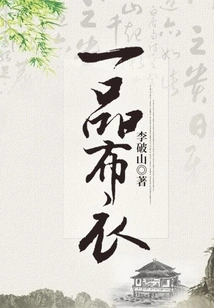
Yipin Commoner
by Li Poshan
About This Novel
[War + Blood + History] "Brother Mu, do you want a wife or not? As long as you open the mouth of Chrysostom, I will bring it to you later." When he was a small scoundrel in the market, he met a rich girl who was on the run. Traveling through a troubled world, I used swords, bows and horses to protect my family from survival.
Official Sources
What Readers Think
Rating
Community(0)
Official(271)Scraped 2mo ago
Do it yourself 🧠 Think about it, is the plot reasonable at the beginning? Let's not mention that you are not protecting and taking in a female burden with no relatives, but there are hundreds of thousands of refugees outside, and you actually collect food to make wine? ? ? ? You hired five grooms to be your master without doing anything? It's a bit logical to rely on it
It doesn't look good, it will give you heart attack. In troubled times, all you want to do is be an honest businessman. You don't know how to recruit troops. When you encounter corrupt officials, you will be humbled and feel aggrieved. There is nothing new, too benevolent, and a bad guy. As a reader of 7 or 8 years, I don't like reading this kind of thing, so I stopped reading it.
Character collapse
You don't care about killing good people and taking credit, you don't care about powerful cannibals, greedy ink, food disasters and starvation of millions of people, you are a commoner and you can't control it. When Beidi comes, you are a hero. You say you don't serve the dynasty and the people. These people are corrupt officials, tyrannical, and the rebel army eats, but Beidi can't eat. You can't stand up and your character is ruined.
4 stars, mainly due to plot issues. Hundreds of thousands of refugees are besieging the city. Food is a strategic material. You use it to make luxury goods and sell them for tens of thousands. If I were the county magistrate, I would have arrested you right then and then, after forcing you to find out the secret recipe in the cell, you were determined to disturb people's hearts and beheaded with a knife. Even if a person in modern times finds a thousand times more It is impossible for a profitable business to be stable for a few days, let alone an ancient feudal society. And I don't know what to think. When there are only refugees outside, you actually want to go to a small village outside to collect grain. So what if you receive it? You really think that refugees are good citizens. If you have food and drink, you are a citizen. If you don't have food and drink, you are a bandit.
The writing is good, but the plot is too boring. The protagonist hanging wine in a place full of disaster victims is really uncomfortable. Needless to say, this kind of plot is inherently uncomfortable. Even if it is actually implemented, there are big problems. The cost is huge and the risk is high. Dragging a pile of food everywhere in a place full of disaster victims. Seriously, it doesn't matter how powerful the people in your village are? Ten special forces pulled over in a place like this are not as powerful as a hundred slender bandits to deter the victims. No matter how powerful you are in numbers, others will think you are weak, not to mention that food prices in this place have skyrocketed, they also make high-alcohol wine, and the character of the protagonist is also very problematic. Xi Niang didn't care when she was raped, and Gong Gou didn't care when she was scolded. Then she turned around and was scolded as a little maidservant, and immediately became furious. The author wanted the protagonist to be someone who only cares about the people around her. However, the protagonist in the story killed more than two hundred Di people in order to protect Zhuangzi people. Isn't Xiniang a Zhuangzi person? Are those three useless people in Zhuangzi who are causing the sky and the earth to suffer, and the earth and the earth to be insecure, more terrifying than the two hundred people from Di?
After reading it, let me tell you the ending.
Xu Mu settled the Western Regions, conquered the Southern Barbarians, conquered the Western Regions, expedition to the north to Liangzhou, destroyed Yuan An's demon queen and the new dynasty, built heavily armored cavalry, military advisors took over Wuzhou with death, unified the south, three great wars between the North and the South, Sha Rong invaded, Xu obtained the iron salt mines, built the Shenji Camp, Xishu Musketeers, steam armored ships, made peace between the North and the South, Xu led troops northward, Si Hu, Chang Wei died in battle, making him dare not go south to herd horses for ten years, the Fourth North-South War The armored captain drove straight into Changyang. The musketeers showed off their magical powers. The times have changed. The north and the south were unified. Then they pacified the grassland with Li Poshan. The remnants of the Grain King grew in power overseas. They wanted to lead the king's division north to pacify the Central Plains. In the end, the dog's head saved his life.
When I saw the plot of searching for the maid, I couldn't watch it anymore. The delicate characterization is the highlight of this book, but the illogical development of the plot is a failure. The first time I bought food, my subordinates lost their carriages and horses. I don't know if the subordinates who only ate painted cakes would feel sad or unhappy. It's a failure if the protagonist's behavior is not heroic. Maybe the author has a plan in mind, but the protagonist really didn't show it and just went about his life. Just like a story praising suffering, this book will weaken one's ambition after reading too much.
My sincere evaluation is that the author lacks understanding of ancient history and has done little research, but the folk ethics are very good.
1. I finished reading the first 70% of the book without finishing a chapter, and then fast-forwarded the last 30%, and it was difficult to read. What runs through the whole article is war. It borrows the model of the Romance of the Three Kingdoms and puts the most written war into one sentence. The writing is very bad. The worst point is the military counselor's deployment of the army. It can be seen that a few sentences in the article are prohibitive and difficult, and you can control it remotely. Secondly, there is no distinction between soldiers. The army of hundreds of battles, the new army, the surrendered army, the defeated army, and the militia. Can these battles be the same? It only talks about the types of soldiers, fighting back and forth, and deliberately creates characters, but it is a mess, and there is too little understanding of actual war historical data. 2. The viewpoint of Min Dao is very good, and it is in opposition to the aristocratic family. However, the author in the article cannot describe the benefits of Min Dao, nor the difficulties of Min Dao. I cannot see the people's actual support and heartfelt support for the Min Dao regime. It would be better if this part is expressed throughout, and it will be more emotional. 3. The logic of armaments is very poor. An exploitative aristocratic regime and a civilian regime where people's livelihood is difficult are completely different in terms of armaments. Wars are too frequent, too early, and too fast. It would be much better if the pace here is slowed down and given enough development time. 4. The people's wisdom, the basic logic is wrong. In the author's environment, it is very difficult to transmit news. The people's wisdom is not yet developed. The reaction of the people at the bottom of the country's great turmoil is extremely lagging and self-interested.
Very good work, the ending is a bit unsatisfactory
I've been a bookworm for thousands of hours. Let me give you an objective evaluation. You have four wins. 1. There is no golden finger in the historical hegemony type. This is a very good setting and can better reflect the wisdom and bloodiness of the protagonist and supporting characters; 2. There is no emotional drama, and there is less description of emotional drama. Once the emotions are spread, the main line of the struggle for hegemony becomes a bit more complicated; 3. We are not belittling the wisdom of the ancients. Later generations often feel that their predecessors were not smart enough, but they have just forgotten that they stand on the shoulders of their predecessors; 4. Without mechanical magic, people tend to forget that the trees are the soil that existed first. Without academic disciplines related to industrialization, it is unscientific to enter industrialization at a loss. In the 70 years since the founding of the People's Republic of China, three generations of talents have barely completed industrialization. This is the fourth victory. You have five failures: 1. The arrangement of the protagonist is not reasonable enough. In the early stage, he dared to fight and fight with both wisdom and courage, but in the later stage, this person was almost not found, which is unreasonable; 2. The arrangement of the world line is not reasonable enough. The Silk Road and Japan appeared, but they were not mentioned at the end. Should we take them or not? Is it a universal policy or a domestic one? To say the least, this is an anticlimax; 3. Relying too much on luck. From a dialectical point of view, winning with less than many since ancient times is not luck, but using more to defeat less in a certain time and space, from partial victory to overall victory; 4. The later plot is a bit messy. In the last 100 chapters, Xishu plus Beiyu, plus many rebels, the army is estimated to be more than 400,000, twice the enemy's army, plus many counselors, the fight is protracted. When you used 200,000 from Xishu to defeat Beiyu's 400,000 tiger and wolf army, you blasted it, now you and Beiyu can't defeat Beidi and Sha Rong? 5. The final outcome of the family? This class conflict is the fundamental struggle between the two empires, and in the end there is no mention of how the family will deal with it. It is suggested that a supplementary chapter of "Historical Records of Great Shu" or "Records of Great Shu" be produced to fill in the gaps.
The logic is confusing!
From the beginning, the border brewery with a refugee background of 400,000 yuan didn't bother to talk about how much money it made. It knew that Beidi would definitely come over and even though it had money, it didn't run away and even hired people to expand its scale! The setting of the background means that even if you are in chaos, you may not be able to survive, but you also force yourself to have dozens of burdens on your family! He had to wait until the Beidi people were killed at their doorstep and Hezhou City was closed before dragging a man with dozens of Zhuangzi numbers into the city thinking about killing the enemy and earning military merit! After a few days of training with a group of veteran farmers, they can join the regular army! And annihilate them all! I really can't stand it anymore!
Rating
Community(0)
Official(271)Scraped 2mo ago
Do it yourself 🧠 Think about it, is the plot reasonable at the beginning? Let's not mention that you are not protecting and taking in a female burden with no relatives, but there are hundreds of thousands of refugees outside, and you actually collect food to make wine? ? ? ? You hired five grooms to be your master without doing anything? It's a bit logical to rely on it
It doesn't look good, it will give you heart attack. In troubled times, all you want to do is be an honest businessman. You don't know how to recruit troops. When you encounter corrupt officials, you will be humbled and feel aggrieved. There is nothing new, too benevolent, and a bad guy. As a reader of 7 or 8 years, I don't like reading this kind of thing, so I stopped reading it.
Character collapse
You don't care about killing good people and taking credit, you don't care about powerful cannibals, greedy ink, food disasters and starvation of millions of people, you are a commoner and you can't control it. When Beidi comes, you are a hero. You say you don't serve the dynasty and the people. These people are corrupt officials, tyrannical, and the rebel army eats, but Beidi can't eat. You can't stand up and your character is ruined.
4 stars, mainly due to plot issues. Hundreds of thousands of refugees are besieging the city. Food is a strategic material. You use it to make luxury goods and sell them for tens of thousands. If I were the county magistrate, I would have arrested you right then and then, after forcing you to find out the secret recipe in the cell, you were determined to disturb people's hearts and beheaded with a knife. Even if a person in modern times finds a thousand times more It is impossible for a profitable business to be stable for a few days, let alone an ancient feudal society. And I don't know what to think. When there are only refugees outside, you actually want to go to a small village outside to collect grain. So what if you receive it? You really think that refugees are good citizens. If you have food and drink, you are a citizen. If you don't have food and drink, you are a bandit.
The writing is good, but the plot is too boring. The protagonist hanging wine in a place full of disaster victims is really uncomfortable. Needless to say, this kind of plot is inherently uncomfortable. Even if it is actually implemented, there are big problems. The cost is huge and the risk is high. Dragging a pile of food everywhere in a place full of disaster victims. Seriously, it doesn't matter how powerful the people in your village are? Ten special forces pulled over in a place like this are not as powerful as a hundred slender bandits to deter the victims. No matter how powerful you are in numbers, others will think you are weak, not to mention that food prices in this place have skyrocketed, they also make high-alcohol wine, and the character of the protagonist is also very problematic. Xi Niang didn't care when she was raped, and Gong Gou didn't care when she was scolded. Then she turned around and was scolded as a little maidservant, and immediately became furious. The author wanted the protagonist to be someone who only cares about the people around her. However, the protagonist in the story killed more than two hundred Di people in order to protect Zhuangzi people. Isn't Xiniang a Zhuangzi person? Are those three useless people in Zhuangzi who are causing the sky and the earth to suffer, and the earth and the earth to be insecure, more terrifying than the two hundred people from Di?
After reading it, let me tell you the ending.
Xu Mu settled the Western Regions, conquered the Southern Barbarians, conquered the Western Regions, expedition to the north to Liangzhou, destroyed Yuan An's demon queen and the new dynasty, built heavily armored cavalry, military advisors took over Wuzhou with death, unified the south, three great wars between the North and the South, Sha Rong invaded, Xu obtained the iron salt mines, built the Shenji Camp, Xishu Musketeers, steam armored ships, made peace between the North and the South, Xu led troops northward, Si Hu, Chang Wei died in battle, making him dare not go south to herd horses for ten years, the Fourth North-South War The armored captain drove straight into Changyang. The musketeers showed off their magical powers. The times have changed. The north and the south were unified. Then they pacified the grassland with Li Poshan. The remnants of the Grain King grew in power overseas. They wanted to lead the king's division north to pacify the Central Plains. In the end, the dog's head saved his life.
When I saw the plot of searching for the maid, I couldn't watch it anymore. The delicate characterization is the highlight of this book, but the illogical development of the plot is a failure. The first time I bought food, my subordinates lost their carriages and horses. I don't know if the subordinates who only ate painted cakes would feel sad or unhappy. It's a failure if the protagonist's behavior is not heroic. Maybe the author has a plan in mind, but the protagonist really didn't show it and just went about his life. Just like a story praising suffering, this book will weaken one's ambition after reading too much.
My sincere evaluation is that the author lacks understanding of ancient history and has done little research, but the folk ethics are very good.
1. I finished reading the first 70% of the book without finishing a chapter, and then fast-forwarded the last 30%, and it was difficult to read. What runs through the whole article is war. It borrows the model of the Romance of the Three Kingdoms and puts the most written war into one sentence. The writing is very bad. The worst point is the military counselor's deployment of the army. It can be seen that a few sentences in the article are prohibitive and difficult, and you can control it remotely. Secondly, there is no distinction between soldiers. The army of hundreds of battles, the new army, the surrendered army, the defeated army, and the militia. Can these battles be the same? It only talks about the types of soldiers, fighting back and forth, and deliberately creates characters, but it is a mess, and there is too little understanding of actual war historical data. 2. The viewpoint of Min Dao is very good, and it is in opposition to the aristocratic family. However, the author in the article cannot describe the benefits of Min Dao, nor the difficulties of Min Dao. I cannot see the people's actual support and heartfelt support for the Min Dao regime. It would be better if this part is expressed throughout, and it will be more emotional. 3. The logic of armaments is very poor. An exploitative aristocratic regime and a civilian regime where people's livelihood is difficult are completely different in terms of armaments. Wars are too frequent, too early, and too fast. It would be much better if the pace here is slowed down and given enough development time. 4. The people's wisdom, the basic logic is wrong. In the author's environment, it is very difficult to transmit news. The people's wisdom is not yet developed. The reaction of the people at the bottom of the country's great turmoil is extremely lagging and self-interested.
Very good work, the ending is a bit unsatisfactory
I've been a bookworm for thousands of hours. Let me give you an objective evaluation. You have four wins. 1. There is no golden finger in the historical hegemony type. This is a very good setting and can better reflect the wisdom and bloodiness of the protagonist and supporting characters; 2. There is no emotional drama, and there is less description of emotional drama. Once the emotions are spread, the main line of the struggle for hegemony becomes a bit more complicated; 3. We are not belittling the wisdom of the ancients. Later generations often feel that their predecessors were not smart enough, but they have just forgotten that they stand on the shoulders of their predecessors; 4. Without mechanical magic, people tend to forget that the trees are the soil that existed first. Without academic disciplines related to industrialization, it is unscientific to enter industrialization at a loss. In the 70 years since the founding of the People's Republic of China, three generations of talents have barely completed industrialization. This is the fourth victory. You have five failures: 1. The arrangement of the protagonist is not reasonable enough. In the early stage, he dared to fight and fight with both wisdom and courage, but in the later stage, this person was almost not found, which is unreasonable; 2. The arrangement of the world line is not reasonable enough. The Silk Road and Japan appeared, but they were not mentioned at the end. Should we take them or not? Is it a universal policy or a domestic one? To say the least, this is an anticlimax; 3. Relying too much on luck. From a dialectical point of view, winning with less than many since ancient times is not luck, but using more to defeat less in a certain time and space, from partial victory to overall victory; 4. The later plot is a bit messy. In the last 100 chapters, Xishu plus Beiyu, plus many rebels, the army is estimated to be more than 400,000, twice the enemy's army, plus many counselors, the fight is protracted. When you used 200,000 from Xishu to defeat Beiyu's 400,000 tiger and wolf army, you blasted it, now you and Beiyu can't defeat Beidi and Sha Rong? 5. The final outcome of the family? This class conflict is the fundamental struggle between the two empires, and in the end there is no mention of how the family will deal with it. It is suggested that a supplementary chapter of "Historical Records of Great Shu" or "Records of Great Shu" be produced to fill in the gaps.
The logic is confusing!
From the beginning, the border brewery with a refugee background of 400,000 yuan didn't bother to talk about how much money it made. It knew that Beidi would definitely come over and even though it had money, it didn't run away and even hired people to expand its scale! The setting of the background means that even if you are in chaos, you may not be able to survive, but you also force yourself to have dozens of burdens on your family! He had to wait until the Beidi people were killed at their doorstep and Hezhou City was closed before dragging a man with dozens of Zhuangzi numbers into the city thinking about killing the enemy and earning military merit! After a few days of training with a group of veteran farmers, they can join the regular army! And annihilate them all! I really can't stand it anymore!
You Might Also Like

Reborn Female General
Qianshan Tea Guest
Tomorrow
Jie And 2
Shao Song
Grenades Are Afraid Of Water
Jiuxi
Bean Sprouts For Soup
Father Can Be an Enemy to the Country
Master Of Three Rings
Guide to Traveling Through the Northern Song Dynasty
Wang Zijun
Tibet
Gao Yue
The Best Servant
Yuyan
The Most Corrupt Official in Ming Dynasty
Yujiang River
Mantang Huacai
Weird Cousin