The Rise of Korea in the Warring States Period
by Grasshoppers Don't Eat Fish
About This Novel
Among the Seven Heroes of the Warring States Period, South Korea is the most inconspicuous country. It is located in the place where the four wars are fought and the throat of the Central Plains. If it does not advance, it will retreat. Either become strong in the war, or choose to decline in the war. Life is like a journey in reverse, and the protagonist single-handedly chooses to fight against the rolling historical trend. If the world is finally unified, why can't it be South Korea?
Official Sources
What Readers Think
Rating
Community(0)
Official(63)Scraped 2mo ago
It's all nonsense. During the Warring States Period, there were still excuses for war. They would coerce the people into attacking the city. Read the history of the Warring States Period before writing.
Bullshit, South Korea can't rise up during this period. Besides, South Korea has been weak for hundreds of years, how can it be unified? That's bullshit.
The novel really depends on editing
South Korea was the weakest among the Warring States Period, with only a few hundred thousand troops, and it was in a place of four wars, without the foundation and strength to dominate the world. As a result, when the protagonist came, he won all the battles and all the strategies, and wrote that the armies and generals of other countries were regarded as idiots.
This is so fake. There is no plot. Ten thousand people died in one hour, it was like killing a pig. Read more.
Too taken for granted
After reading the beginning, in a South Korea that has long been corrupted, whether it is ministers or soldiers, when faced with danger, their courage is greatly increased with just a few words from the protagonist. It can only be said that it is too natural to dare to challenge a powerful enemy. Moreover, in the Warring States Period, the protagonist speaks in vernacular, which is really not very relevant as a historical text.
This technology tree makes people speechless. These things are really easy to make. There are also the three treasures of horse warfare. Who can give you the confidence to make them? Don't think about the consequences. You know that they are easy to imitate. There are far more cavalry in Qin and Zhao than in Han. Moreover, there are more cavalry outside the Great Wall. Once they learn how to make them, have you thought of the consequences?
So-so
One hundred thousand white troops surrounded the 150,000 coalition troops stationed in a favorable location. . . The battle loss was more than two to one. . The siege was nearly two to one. . Did you write too much? It's still my own shabi. In ancient times, fighting relied on courage to fight, and there were many people. Do you watch a lot of TV based on your calculations? Taken for granted scribbling. , And how come the siege battle is also five to one, ten to one, you are superman when you climb the city wall? Then there is the war called "One Thousand Wounded Soldiers" and "Eight Hundred Loss" to oneself. It's funny to have ten thousand people blocked by one trench. In ancient siege battles, people sacrificed their lives to fill the height of the city wall. If fewer people died in the siege than in the defenders, you can look at the Battle of the Wild King's Castle. Are you kidding me? In ancient times, if one-tenth of the enemy was lost in World War II, he would mutiny and flee. Three or four out of ten are super famous generals, and it's funny how they defend their country to death. The Qin State killed people and cut off their ears for the military industry, but they were not invincible. Where is the armor when wearing clothes? Armor was impossible to achieve in ancient times. Even the Han Dynasty could not produce 100,000 armors. Even the Romance of the Three Kingdoms didn't dare to write like that. The Three Kingdoms all wore clothes to fight. In ancient times, the most casualties were wounded soldiers. I don't understand anything and write randomly. Wei Wuzu must have exaggerated. There was so much armor, it was just leather armor at most. The Qin State was not that powerful. It took two days to walk fifty miles in ancient times. In ancient times, it took several months to fight. It was ridiculous to have ten days and a half.
I love it when I think about unifying the six countries and becoming the Korean Empire.
book review
Comment and read every day.
Not much to say, just one word "good"
Rating
Community(0)
Official(63)Scraped 2mo ago
It's all nonsense. During the Warring States Period, there were still excuses for war. They would coerce the people into attacking the city. Read the history of the Warring States Period before writing.
Bullshit, South Korea can't rise up during this period. Besides, South Korea has been weak for hundreds of years, how can it be unified? That's bullshit.
The novel really depends on editing
South Korea was the weakest among the Warring States Period, with only a few hundred thousand troops, and it was in a place of four wars, without the foundation and strength to dominate the world. As a result, when the protagonist came, he won all the battles and all the strategies, and wrote that the armies and generals of other countries were regarded as idiots.
This is so fake. There is no plot. Ten thousand people died in one hour, it was like killing a pig. Read more.
Too taken for granted
After reading the beginning, in a South Korea that has long been corrupted, whether it is ministers or soldiers, when faced with danger, their courage is greatly increased with just a few words from the protagonist. It can only be said that it is too natural to dare to challenge a powerful enemy. Moreover, in the Warring States Period, the protagonist speaks in vernacular, which is really not very relevant as a historical text.
This technology tree makes people speechless. These things are really easy to make. There are also the three treasures of horse warfare. Who can give you the confidence to make them? Don't think about the consequences. You know that they are easy to imitate. There are far more cavalry in Qin and Zhao than in Han. Moreover, there are more cavalry outside the Great Wall. Once they learn how to make them, have you thought of the consequences?
So-so
One hundred thousand white troops surrounded the 150,000 coalition troops stationed in a favorable location. . . The battle loss was more than two to one. . The siege was nearly two to one. . Did you write too much? It's still my own shabi. In ancient times, fighting relied on courage to fight, and there were many people. Do you watch a lot of TV based on your calculations? Taken for granted scribbling. , And how come the siege battle is also five to one, ten to one, you are superman when you climb the city wall? Then there is the war called "One Thousand Wounded Soldiers" and "Eight Hundred Loss" to oneself. It's funny to have ten thousand people blocked by one trench. In ancient siege battles, people sacrificed their lives to fill the height of the city wall. If fewer people died in the siege than in the defenders, you can look at the Battle of the Wild King's Castle. Are you kidding me? In ancient times, if one-tenth of the enemy was lost in World War II, he would mutiny and flee. Three or four out of ten are super famous generals, and it's funny how they defend their country to death. The Qin State killed people and cut off their ears for the military industry, but they were not invincible. Where is the armor when wearing clothes? Armor was impossible to achieve in ancient times. Even the Han Dynasty could not produce 100,000 armors. Even the Romance of the Three Kingdoms didn't dare to write like that. The Three Kingdoms all wore clothes to fight. In ancient times, the most casualties were wounded soldiers. I don't understand anything and write randomly. Wei Wuzu must have exaggerated. There was so much armor, it was just leather armor at most. The Qin State was not that powerful. It took two days to walk fifty miles in ancient times. In ancient times, it took several months to fight. It was ridiculous to have ten days and a half.
I love it when I think about unifying the six countries and becoming the Korean Empire.
book review
Comment and read every day.
Not much to say, just one word "good"
Featured in 7 Booklists
Official(7)
The storm rises again, Han annexes the six countries
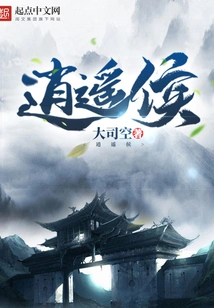
At the end of the Warring States Period, let's see how pig's feet can turn the tide and help the building before it collapses.
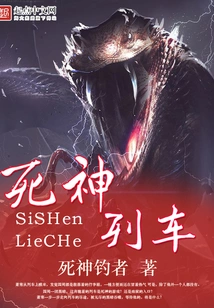
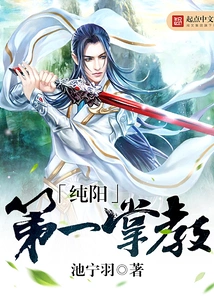
I read a book a long time ago, how could the people from the Central Plains not be able to defeat the people from Guanzhong? South Korea is a small country but has a lot of people.
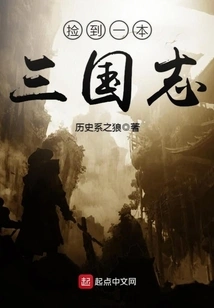

"Complete"
You Might Also Like
Zhao Was King During the Warring States Period
Ximengfu
Reborn Female General
Qianshan Tea Guest
The Story of Yuan Yao in the Three Kingdoms
Jack Love
The Three Kingdoms Began with Riding into Jingzhou Alone
Angry Eyebrows And Droopy Eyes
Ming Shizu
Flying Cable Car
Eastern European Eagle
Kalmar Alliance
Jingtai of the Ming Dynasty: I Am the Benevolent King of the Ages
Xiao Lanyi
Anti-qing 1850
The Three Fat Men By The River
Ten Kingdoms, Land, Mountains, Wind and Moon
Confused Little Lamb
Gou Became a Clan Member in the Late Ming Dynasty
Late At Night