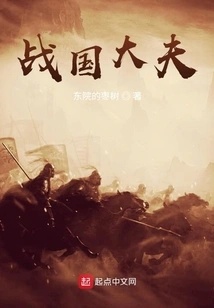
Warring States Doctor
by Jujube Tree In The East Courtyard
About This Novel
Zhi Lang accidentally traveled to the Zhi family of the Jin Dynasty at the end of the Spring and Autumn Period, and became a doctor with thousands of feudal households. At the time when the four ministers of the Jin Kingdom are doing their best, two years later, the Zhi family will be destroyed by Zhao, Wei and Han, creating the division of the Jin into three families, and the beginning of the Warring States Period. However, history changed with the arrival of Chiliang. Control the Zhi family, promote military and political reforms, promote new learning, and develop production. Zhilang took the Zhi family as the foundation, established the Zhi family in the Jin Dynasty, and opened a new Warring States period.
Official Sources
What Readers Think
Rating
Community(0)
Official(15)Scraped 2mo ago
Zhishi has always had the upper hand.
Although the Zhao family won in history, the Zhi family actually had the upper hand. The main reason was that Zhao Wuxie defended Jinyang for three years without breaking through. Therefore, the Zhi family was killed by the three families, and then the three families were divided into the Jin Dynasty. The Spring and Autumn Period ended and the Warring States Period began.
I don't want to rate it anymore, sigh, pig horns are a bit naive, dog licking, and slave life. This reminds me of a young child using his mother's mobile phone to reward a female anchor with millions of hard-earned money.
If you don't like it, give it three stars.
I couldn't make it to the end, but the protagonist's setup in the early stage was too poor. There is neither the custom of the Spring and Autumn Period, nor the arrogance of modern time travellers, "I won't care about the flood after I die." The so-called treating others with leniency, backhandedly falling below the wisdom of people of two eras, killing unknown prisoners, and refusing to surrender, what the hell is that? It's okay if you don't put away your sword after the first battle. If someone tries to kill you, you'll push him back. I can only say that it was probably worn by a Japanese player who had a good life as a kid. In this case, I wish the author to get up to the next level.
There are too few updates and it's not satisfying. When will it be released?
1. 770-740 BC: In 771 BC, King Ping of Zhou moved eastward. King Qin of Wei, Jin and Zheng made the most profits and gained a prominent position. Other countries had not yet carried out reforms and no powerful overlords had emerged. Ranking of national power: Wei, Jin, Zheng, Qi, Song, Lu Approximate population: 60w 50w 50w 60w 50w 40w 2. 740-685 BC: (Zheng Zhuanggong Xiaoba) During this period: Qin and Chu had just begun to expand, Jin fell into civil strife, Qi had not yet reformed, Zheng Zhuanggong became the minor hegemon in the Central Plains, Song State expanded its territory, and once competed with Zheng for the minor hegemony in the Central Plains. Ranking of national power: Zheng, Chu, Qi, Song, Lu, Wei Approximate population: 80w 60w 60w 60w 45w 40w Open Kandian Express and view high-definition pictures 3. 685-642 BC: (Qi Huangong dominates) Duke Huan of Qi used Guan Zhong's reforms to unite the nine princes, rule the world, and dominate the Central Plains for forty years; the state of Chu expanded strongly and competed with Qi for hegemony in the Central Plains; the state of Jin emerged from civil strife, and Duke Xiang of Jin expanded rapidly; Princess Mu of Qin ruled the state of Qin; and the state of Song also developed. National power ranking: Qi, Chu, Jin, Qin, Song, Zheng Approximate population: 120 100 80 60 70 60 Open Kandian Express and view high-definition pictures 4. 642-632 BC: After the death of Duke Huan of Qi, the state of Qi fell into a long-term civil strife; there was a power vacuum in the Central Plains, and Duke Xiang of Song attempted to take over Duke Huan of Qi's banner of respecting the king and repelling the barbarians and competing with Chu for hegemony in the Central Plains. National power ranking: Chu, Jin, Qin, Qi, Song, Lu Approximate population: 150 100 80 100 100 60 Open Kandian Express and view high-definition pictures 5. 632-611 BC: (Dong Wen of Jin dominated, and Duke Mu of Qin dominated Xirong) The Chu State defeated the Song State and continued to dominate the Central Plains. The Song State was defeated and its national power declined. Jin's son Chong'er succeeded to the throne, namely Jin Wengong. He defeated the Chu State in the Battle of Chengpu and Jin Xianggong continued to dominate. Qin Mu's Duke dominated Xirong and expanded the territory thousands of miles away. Ranking of national power: Jin Chu Qin Qi Lu Song Approximate population: 160 250 100 120 70 90 Open Kandian Express and view high-definition pictures 6. 611-579 BC: (King Chuzhuang dominates) After the death of Duke Wen of Jin, the king of the country did not matter; King Zhuang of Chu succeeded to the throne, reformed his country at home, and expanded externally to conquer the Central Plains. He defeated Jin in the Battle of Bi and became the overlord of the Central Plains; after the death of Duke Mu of Qin, the hegemony of Qin declined. National power ranking: Chu, Jin, Qi, Qin, Song, Lu Approximate population: 280 210 120 100 90 80 Open Kandian Express and view high-definition pictures 7. 579-546 BC: (Jin Duke Duke regained his hegemony) Jin Jinggong destroyed the Di Kingdom and united with Wu and Chu. Jin Aogong continued to advance, and the Jin Kingdom's hegemony reached its peak; Wu Guoshou Meng became king and became strong; the Chu Kingdom was attacked on both sides, and the Central Plains Annihilation Conference was held. The Song Dynasty mediated between Jin and Chu and developed. National power ranking: Jin Chu Qi Qin Wu Song Approximate population: 250 300 150 110 80 90 Open Kandian Express and view high-definition pictures 8. 540-512 BC The power of Jin's ministers increased and they began to split; Qi Jinggong worked hard to govern and strengthen the country, trying to restore Qi Huangong's hegemony; Wu quickly became stronger and continued to attack Chu, and Chu was tired of dealing with Wu and began to support Yue to contain Wu; during the period of King Yunchang of Yue, Yue began to become stronger and had constant conflicts with Wu. National power ranking: Jin Chu Qi Wu Qin Song Approximate population: 350 300 200 90 110 100 Open Kandian Express and view high-definition pictures 9. 512-474 BC (Wu King Helu dominates) King Helu of Wu used Wu Zixu to reform and Sun Wu trained his army and horses to conquer the capital of Chu. King Wu Fu Chai went north to fight for hegemony and reached its peak. Chu State was almost destroyed. Shen Baoxu went to Qin State for help to restore Chu. Qin State obtained the Shang Dynasty; National power ranking: Wu Jin Qi Chu Qin Yue Approximate population: 150 400 200 300 120 70 Open Kandian Express and view high-definition pictures 10. 473-453 BC (Yue King Gou Jian dominates) Gou Jian, the king of Yue, destroyed Wu, annexed the state of Wu, and went north to fight for hegemony, making the country strong; the competition between the ministers and officials of the Jin state became more and more fierce, and it was on the eve of splitting; King Zhao and King Hui of Chu worked hard to govern, and the Zhaohui Zhongxing appeared; the king of Qin did nothing; after the death of Qi Jinggong, Qi fell into civil strife. National power ranking: Yue Chu Jin Qi Qin Song Approximate population: 160 400 450 250 150 120 Open Kandian Express and view high-definition pictures The Spring and Autumn Period and the Warring States Period were a period of integration of the Chinese nation and collective territorial expansion; a transition period from slavery to feudalism; a period from the Great Split to a period of unification; and also a period when a hundred schools of thought contended for the most inclusive and splendid Chinese civilization!
Logic can
The Spring and Autumn Period written in this book is okay, but there are still many poisonous points: 1. It's really a trap to mention that change first. You have to be prepared before doing anything. Just after conquering the Zhao Kingdom, the people inside are unpopular, the outside is decadent, there is no support from talents, and there is no outline for change. It is really poisonous to make changes as soon as you take office without knowing anything; 2. Zhao Ying is a trap. She is just a princess captured by an enemy country. With the Zhao family gone, she has no use anymore. However, a lot of drama has been added. Several chapters are written in succession, some of which are about curing diseases and some about resolving the knots in the heart. I really can't stand it anymore. From now on, the protagonist will fight in all directions, and that's not just killing enemies every day; 3. The protagonist is too tough and there are no talented people to help. Traveling back in time is great, and has thousands of years of experience, but that's all. Being so tough on Wei and Han, and unifying the Jin Kingdom. If it were that simple, the Qin Empire would not have six generations of wise kings, countless good generals, and great talents like Shang Yang and Zhang Yi. You know, the Chu State was the strongest at the time, followed by the Qi State, and they all had borders with the Jin State. The writing of this book is still very good, and it gives people a feeling of Spring and Autumn Period. However, the character of the protagonist is too vague. It can be described by following the characters of King Qin Huiwen and King Qin Zhaoxiang, which would be much simpler.
No wonder there is no rating
It's obvious that the protagonist is too cowardly or arrogant to do anything practical.
Could the Warring States period be reformed like this? This is still a slave society, brother
. . . . . .
. . . . . . . . . . . . . 😄😄😄😄😄😄😄😄😄😄😄😄😄😄You don't know who I am.
Is anyone there?
The writing is good, why don't I recommend it?
Why not updated?
Rating
Community(0)
Official(15)Scraped 2mo ago
Zhishi has always had the upper hand.
Although the Zhao family won in history, the Zhi family actually had the upper hand. The main reason was that Zhao Wuxie defended Jinyang for three years without breaking through. Therefore, the Zhi family was killed by the three families, and then the three families were divided into the Jin Dynasty. The Spring and Autumn Period ended and the Warring States Period began.
I don't want to rate it anymore, sigh, pig horns are a bit naive, dog licking, and slave life. This reminds me of a young child using his mother's mobile phone to reward a female anchor with millions of hard-earned money.
If you don't like it, give it three stars.
I couldn't make it to the end, but the protagonist's setup in the early stage was too poor. There is neither the custom of the Spring and Autumn Period, nor the arrogance of modern time travellers, "I won't care about the flood after I die." The so-called treating others with leniency, backhandedly falling below the wisdom of people of two eras, killing unknown prisoners, and refusing to surrender, what the hell is that? It's okay if you don't put away your sword after the first battle. If someone tries to kill you, you'll push him back. I can only say that it was probably worn by a Japanese player who had a good life as a kid. In this case, I wish the author to get up to the next level.
There are too few updates and it's not satisfying. When will it be released?
1. 770-740 BC: In 771 BC, King Ping of Zhou moved eastward. King Qin of Wei, Jin and Zheng made the most profits and gained a prominent position. Other countries had not yet carried out reforms and no powerful overlords had emerged. Ranking of national power: Wei, Jin, Zheng, Qi, Song, Lu Approximate population: 60w 50w 50w 60w 50w 40w 2. 740-685 BC: (Zheng Zhuanggong Xiaoba) During this period: Qin and Chu had just begun to expand, Jin fell into civil strife, Qi had not yet reformed, Zheng Zhuanggong became the minor hegemon in the Central Plains, Song State expanded its territory, and once competed with Zheng for the minor hegemony in the Central Plains. Ranking of national power: Zheng, Chu, Qi, Song, Lu, Wei Approximate population: 80w 60w 60w 60w 45w 40w Open Kandian Express and view high-definition pictures 3. 685-642 BC: (Qi Huangong dominates) Duke Huan of Qi used Guan Zhong's reforms to unite the nine princes, rule the world, and dominate the Central Plains for forty years; the state of Chu expanded strongly and competed with Qi for hegemony in the Central Plains; the state of Jin emerged from civil strife, and Duke Xiang of Jin expanded rapidly; Princess Mu of Qin ruled the state of Qin; and the state of Song also developed. National power ranking: Qi, Chu, Jin, Qin, Song, Zheng Approximate population: 120 100 80 60 70 60 Open Kandian Express and view high-definition pictures 4. 642-632 BC: After the death of Duke Huan of Qi, the state of Qi fell into a long-term civil strife; there was a power vacuum in the Central Plains, and Duke Xiang of Song attempted to take over Duke Huan of Qi's banner of respecting the king and repelling the barbarians and competing with Chu for hegemony in the Central Plains. National power ranking: Chu, Jin, Qin, Qi, Song, Lu Approximate population: 150 100 80 100 100 60 Open Kandian Express and view high-definition pictures 5. 632-611 BC: (Dong Wen of Jin dominated, and Duke Mu of Qin dominated Xirong) The Chu State defeated the Song State and continued to dominate the Central Plains. The Song State was defeated and its national power declined. Jin's son Chong'er succeeded to the throne, namely Jin Wengong. He defeated the Chu State in the Battle of Chengpu and Jin Xianggong continued to dominate. Qin Mu's Duke dominated Xirong and expanded the territory thousands of miles away. Ranking of national power: Jin Chu Qin Qi Lu Song Approximate population: 160 250 100 120 70 90 Open Kandian Express and view high-definition pictures 6. 611-579 BC: (King Chuzhuang dominates) After the death of Duke Wen of Jin, the king of the country did not matter; King Zhuang of Chu succeeded to the throne, reformed his country at home, and expanded externally to conquer the Central Plains. He defeated Jin in the Battle of Bi and became the overlord of the Central Plains; after the death of Duke Mu of Qin, the hegemony of Qin declined. National power ranking: Chu, Jin, Qi, Qin, Song, Lu Approximate population: 280 210 120 100 90 80 Open Kandian Express and view high-definition pictures 7. 579-546 BC: (Jin Duke Duke regained his hegemony) Jin Jinggong destroyed the Di Kingdom and united with Wu and Chu. Jin Aogong continued to advance, and the Jin Kingdom's hegemony reached its peak; Wu Guoshou Meng became king and became strong; the Chu Kingdom was attacked on both sides, and the Central Plains Annihilation Conference was held. The Song Dynasty mediated between Jin and Chu and developed. National power ranking: Jin Chu Qi Qin Wu Song Approximate population: 250 300 150 110 80 90 Open Kandian Express and view high-definition pictures 8. 540-512 BC The power of Jin's ministers increased and they began to split; Qi Jinggong worked hard to govern and strengthen the country, trying to restore Qi Huangong's hegemony; Wu quickly became stronger and continued to attack Chu, and Chu was tired of dealing with Wu and began to support Yue to contain Wu; during the period of King Yunchang of Yue, Yue began to become stronger and had constant conflicts with Wu. National power ranking: Jin Chu Qi Wu Qin Song Approximate population: 350 300 200 90 110 100 Open Kandian Express and view high-definition pictures 9. 512-474 BC (Wu King Helu dominates) King Helu of Wu used Wu Zixu to reform and Sun Wu trained his army and horses to conquer the capital of Chu. King Wu Fu Chai went north to fight for hegemony and reached its peak. Chu State was almost destroyed. Shen Baoxu went to Qin State for help to restore Chu. Qin State obtained the Shang Dynasty; National power ranking: Wu Jin Qi Chu Qin Yue Approximate population: 150 400 200 300 120 70 Open Kandian Express and view high-definition pictures 10. 473-453 BC (Yue King Gou Jian dominates) Gou Jian, the king of Yue, destroyed Wu, annexed the state of Wu, and went north to fight for hegemony, making the country strong; the competition between the ministers and officials of the Jin state became more and more fierce, and it was on the eve of splitting; King Zhao and King Hui of Chu worked hard to govern, and the Zhaohui Zhongxing appeared; the king of Qin did nothing; after the death of Qi Jinggong, Qi fell into civil strife. National power ranking: Yue Chu Jin Qi Qin Song Approximate population: 160 400 450 250 150 120 Open Kandian Express and view high-definition pictures The Spring and Autumn Period and the Warring States Period were a period of integration of the Chinese nation and collective territorial expansion; a transition period from slavery to feudalism; a period from the Great Split to a period of unification; and also a period when a hundred schools of thought contended for the most inclusive and splendid Chinese civilization!
Logic can
The Spring and Autumn Period written in this book is okay, but there are still many poisonous points: 1. It's really a trap to mention that change first. You have to be prepared before doing anything. Just after conquering the Zhao Kingdom, the people inside are unpopular, the outside is decadent, there is no support from talents, and there is no outline for change. It is really poisonous to make changes as soon as you take office without knowing anything; 2. Zhao Ying is a trap. She is just a princess captured by an enemy country. With the Zhao family gone, she has no use anymore. However, a lot of drama has been added. Several chapters are written in succession, some of which are about curing diseases and some about resolving the knots in the heart. I really can't stand it anymore. From now on, the protagonist will fight in all directions, and that's not just killing enemies every day; 3. The protagonist is too tough and there are no talented people to help. Traveling back in time is great, and has thousands of years of experience, but that's all. Being so tough on Wei and Han, and unifying the Jin Kingdom. If it were that simple, the Qin Empire would not have six generations of wise kings, countless good generals, and great talents like Shang Yang and Zhang Yi. You know, the Chu State was the strongest at the time, followed by the Qi State, and they all had borders with the Jin State. The writing of this book is still very good, and it gives people a feeling of Spring and Autumn Period. However, the character of the protagonist is too vague. It can be described by following the characters of King Qin Huiwen and King Qin Zhaoxiang, which would be much simpler.
No wonder there is no rating
It's obvious that the protagonist is too cowardly or arrogant to do anything practical.
Could the Warring States period be reformed like this? This is still a slave society, brother
. . . . . .
. . . . . . . . . . . . . 😄😄😄😄😄😄😄😄😄😄😄😄😄😄You don't know who I am.
Is anyone there?
The writing is good, why don't I recommend it?
Why not updated?
Featured in 2 Booklists
Official(2)
This book is very good. I have read it before, but I have always forgotten to save it. I recently found it again, but the update is not very good. I will save it now and wait to see the update later before deciding whether to kill it or put it away.



Watching it now, not bad


You Might Also Like
Zhao Was King During the Warring States Period
Ximengfu
The Rise of the Warring States Strategist
Morrowind Paradise
The Rise of the Middle Ages
A Little Knowledge
Reborn Female General
Qianshan Tea Guest

Eastern European Eagle
Kalmar Alliance

From King Wu's Defeat of Zhou, a Thousand-year-old Family Was Established
Flowers Are Not Flowers On A Moonlit Night
I Was in Japan During the Warring States Period
General Of Central Hunan
A Thousand-year-old Family That Started in the Yin and Shang Dynasties
Floating Dreams And Three Lowly Guests
Little Lord of Spring and Autumn
Red Tiger
At the End of Qin, I Became a Son of the Plane
Soldier King 2