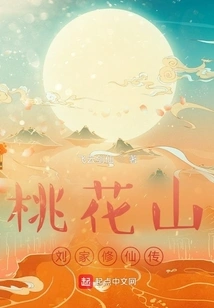
The Story of Immortality of the Liu Family in Peach Blossom Mountain
About This Novel
This book tells the story of a young man from a small Qi-refining family who led his family to fight against the heavens and the earth, open up new territories, and travel across the sea of stars to become the top immortal clan in the universe. He is also one of the supreme giants in the world of cultivating immortals in the human race and the universe. The protagonist himself has good looks, incredible luck, and a happy life as a cultivator!
Official Sources
What Readers Think
Rating
Community(0)
Official(69)Scraped 1mo ago
It's becoming more and more unreliable
The first part is okay, but the further you go, the worse it becomes. You have a family with the highest combat power and you keep compromising with the clan members. Not to mention that most of the family relies on the protagonist to develop. The more you write, the more outrageous it becomes. It's a shame that I have followed the book now. I will not read the later ones and abandon the book.
Online family culture system template
Family system template: Task system: required tasks and optional tasks: There are tasks that everyone in the family must complete. Mandatory tasks should be divided into age groups and cultivation levels. Otherwise, they will easily die young. Contribution points will be awarded for completing the tasks. Optional tasks are usually posted by families or tribesmen. Tribesmen can choose to accept the task and complete it to obtain corresponding contribution points. The contribution points are awarded by the publisher. Contribution points: System clan members hand over personal items to the family to obtain contribution points. Clan members need to spend contribution points to redeem the items, but they are slightly lower than the market price. The difference is made up by the family's public clan assets to ensure that clan members give priority to handing over items. The rules for exchanging special items, such as strategic materials such as Foundation Establishment Pills, require that the cultivation level is reached, the age is appropriate, and the contribution points are reached, it will be on a first-come, first-served basis, regardless of qualifications, to ensure fairness and maintain unity. [Unless in times of family crisis, qualifications will not be given priority when redeeming strategic items] Family contribution points can be passed on to immediate family members after the death of a clan member, and their descendants who are minors will receive and use them under the supervision of the family. Loans of contribution points can only be made between immediate family members within five generations. This prevents someone from making a desperate move and borrowing contribution points from other members of the clan far beyond their ability due to the same clan bond. In the end, it drags down other clan members on a large scale and affects the unity of the family. Clan members are divided into levels, and treatment is divided into levels. [Ensuring fairness can not only promote the hard work of the tribe, but also concentrate resources to cultivate hard-working and outstanding tribesmen. Clan level: ordinary, elite. Treatment classification: first-level treatment, second-level treatment, direct lineage treatment. [The treatment for direct lineage is between the second-level treatment and the second-level double treatment] Clan level: Ordinary tribesmen enjoy first-level family treatment and salary; when a tribesman reaches a specified level within the specified age and cultivation level [such as: mid-stage Qi training level], they will be promoted to elite disciples and enjoy second-level treatment; Family competition: It is stipulated that clan competitions will be held every once in a while [such as three years], and the top ten [top hundred or top thousand] clansmen of the specified age and cultivation level will enjoy double the second-level treatment of their own realm. At the same time, tribesmen of the same level are allowed to challenge tribesmen who enjoy double the treatment. If the challenge is successful, they will be replaced, ensuring that the tribesmen who win will not slack off. Ordinary tribesmen who have not reached the cultivation level within the specified age can only receive the first-level treatment of their own cultivation level in the future. For example, if they do not reach the qi-training stage within the specified age, they can only receive the lowest level of qi-training level treatment. Even if they reach a higher level of cultivation, they will still receive the first-level treatment of their own cultivation level if they exceed the age [unless there is an unexpected encounter or a late bloomer becomes a direct lineage, then they will enjoy the level 1 treatment of the direct lineage. [The direct lineage treatment is between the second-level treatment and the second-level double treatment. The direct lineage children of the family also need to participate in the competition. If they cannot obtain the ranking, they can only enjoy the direct lineage treatment and cannot obtain the direct lineage double reward, and will be surpassed by other clan members] Divide direct veins, branch veins, and collateral veins: [Establish the family order to prevent clan members from fighting for power, destroying fairness, and dividing the family, such as fighting for the clan leader] Direct lineage, branch lineage, and side lineage are divided by cultivation, not blood relationship. The system of direct lineage descending and branching is implemented to ensure the fairness and vitality of the family. The person in charge of the family is always the first priority. For example, if your cultivation reaches a certain level [late stage of Qi training], you can become a direct lineage, and your descendants and great-great-grandsons will enjoy the treatment of direct lineage within five generations. If no one from the direct line to the great-great-grandson reaches the standard of becoming a direct lineage within five generations, the direct lineage will be reduced to a branch lineage. The direct lineage directly enjoys the treatment of the highest level direct lineage in the family [If you cannot get the ranking in the grand competition, your treatment will be lower than that of other clan members, and you can't blame other clan members for working harder than you] People from the branch lineage tribe, and those who are not direct lineage cultivators are all branch lineage members. The characters are ranked by generation, and the direct lineage is arranged according to the family sequence. For other non-direct lineage tribesmen, young people of the right age have detected that their spiritual roots can be cultivated, and their generations are divided according to the order of the direct lineage of that year. For example, which generation the direct lineage is the youngest in that year will be divided according to which generation. At the beginning, all members of the branch tribes enjoyed the lowest treatment of the family, first-class treatment. Sideline, sideline clan members have no generation, they are the mortal blood of the family, and cannot practice [the family has bloodline detection methods and heart-asking talismans or formations to ensure that the family bloodline is not mixed with people with ulterior motives] People from the side lineage can also obtain family contribution points for their meritorious service, which can be used by themselves or passed on to future generations. The family's young children of appropriate age are uniformly educated by the family to cultivate loyalty, hard-working spirit, etc. Among the clan members. The family set up various ministries, The powers and responsibilities are clearly defined, with one chief, two deputies, and several other deacons. The person in charge of the department is a direct descendant, and the conditions are based on cultivation, contribution, and personal ability. The clan leader selects the best clansman among the direct lineage, taking into account the experience of serving in various ministries, familiarity with family affairs, high cultivation, and great contribution. (In some families, there are elders who are promoted to elders when they reach the level of cultivation, which is similar to the promotion of direct lineage) The head of the family and the main person in charge of each department are held by direct descendants, and in the system of direct descendants and descendants, clan members are divided into grades, salaries are divided into grades, and family competitions are held. Promote family vitality, ensure fairness and justice, ensure that the best talents in the family are all direct descendants, and ensure that the person in power of the family will always be the best person in the family. Only clan members who meet the family's contribution, cultivation, and talents can hold family positions. The direct generals were promoted to the Jin Dynasty, the clan members were divided into different levels, salaries were divided into grades, and the family competitions and talent assessments made it impossible for family leaders to appoint positions according to their proximity, thus reducing the fight for power and forming cliques, fairness and justice, and promoting family unity. The system of extending favors among clans and entering into the ancestral marriage system: Other cultivating families and mortal families in the territory implement the Tuen Order, and the property must be equally divided among all children, and the families must be divided. Excellent foreign surnames with spiritual roots in the territory can join the family or marry into the family, and future generations must change their surname to the family name. [If you don't change your name, you can't completely assimilate. With different imprints, there may be splits. Some families allow descendants to not change their names after they enter the family. This is a bit of a poisonous family culture] Splitting families and marrying into the family through favors can prevent the emergence of new wealthy cultivating families and sects in the territory. Family members are encouraged to marry more wives and have more concubines, and have more children. The more children they have, the greater the rewards. The population base of the family is the foundation of the family. The greater the population, the more monks will be born. [Poison point: 1* The family blindly annexes other families, exceeding its own digestion capacity. 2* If only the surname is changed, the descendants will not be assimilated by blood marriage, and they will also become members of the family clan, a pseudo-family culture wearing the cloak of the family. 3* The family expansion is too radical and exceeds the digestion capacity. For example, the number of family members is too small, but it occupies a large territory and is mainly managed by outsiders]
It is most suitable to choose based on family contribution
The exchange of important strategic materials for the family must be based on contribution, not qualifications or proximity. This rule must be clearly incorporated into the family's core rules, told to everyone, and made a habit, so that people can be convinced and the family can be united. Only if it is based on the family's contribution and is implemented resolutely, there will be no serious jealousy among the clan members if one's own private property is used to give to one's relatives, or it is considered that it should not be used by relatives and should be shared with everyone. If the contribution is not enough, no matter how senior you are, other tribesmen will not be able to open their mouths and exchange it no matter how much they discuss it. With the reasons of blood relationship, seniority, and qualifications, there will be more and more similar problems in the future. The clan members will constantly question the higher-ups. Even if the facts are right in front of them, they may not believe it, or they may not want to believe it, pretending to be deaf and dumb. There will be constant conflicts within the family, and they will compete for power. Treat contribution points as the only currency for the circulation and exchange of family materials. If you don't have contribution points, you can't enjoy the resources within the family. Others have contributed more points and you can spend them however you want. This is freedom. There is no need to make irresponsible remarks. Your own money cannot be used by your relatives, so what is the use of these contribution points?
Contribution destruction
Because the protagonist has grown rapidly and has a lot of private wealth, and the protagonist supports his relatives to practice, other tribesmen feel unbalanced and think that these wealth should be distributed to everyone. Because the protagonist spends his own property to advance his relatives quickly, other members of the family are dissatisfied, and then they destroy the family contribution exchange system and exchange strategic items for clan members who have not made enough contributions. Putting the emotions and desires of the tribe above the family system, and not using the system to restrain the selfish desires of the tribe, but blindly compromising, and one's own money depends on the face of the tribe. In order to eliminate the dissatisfaction caused by the jealousy of other tribesmen, they compromise and break the rules, seriously damaging the interests of other tribesmen. What is the use of this kind of family contribution system? If this is the case, then why do other people hand over the property they have earned through hard work to the family in exchange for contribution points, and then let some people exchange low contribution points for resources that far exceed their value, constantly sucking blood. The development and growth of the family depends entirely on the protagonist. The protagonist hands over a large amount of wealth to the family in exchange for contribution points that have little effect on him. The family has almost no help to the protagonist. In this case, the protagonist uses his own wealth to help his relatives practice, but the clan members are dissatisfied. So what is the point of this kind of family?
The writing is so boring and boring.
The author's writing is too boring and lacks feeling
The writing is very good, and I like family stories myself. Please continue to update.

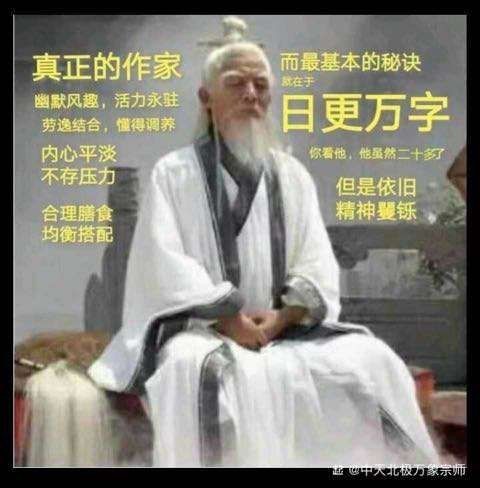

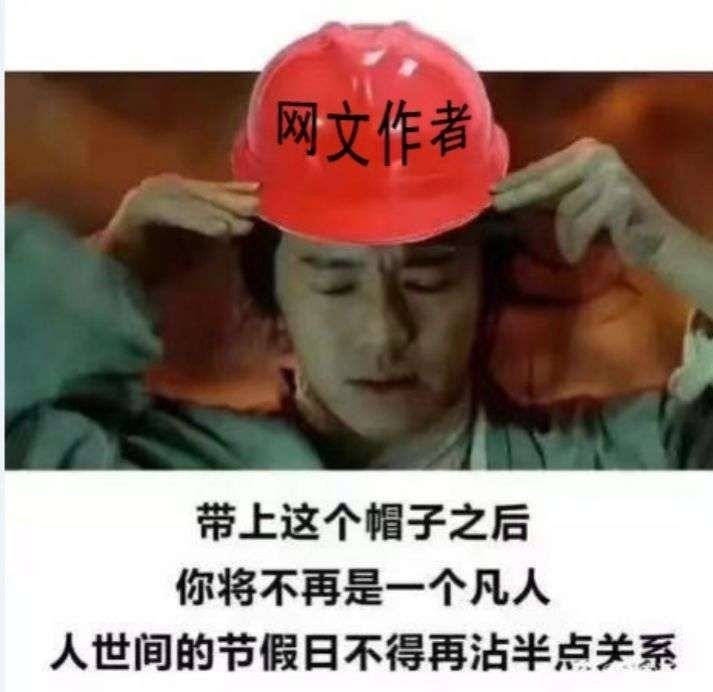
I have only read the first few pictures now. They are not bad. I prefer reading family stories. I hope the author can arrange a medium-sized plug-in for the protagonist. If you plug-in and your qualifications are not too high, how can you earn money with geniuses and big family addresses?
Primary school students' writing style
I couldn't resist the first chapter. . . Speaking of which, when having a meal, do the names of the dishes have to be written in such detail? Also, since she is an aunt, why do I need to introduce it in such detail? Do I have to write down the age of each relative?
Also, how could a Xiuxian family be called daddy? The author is a bit too careless about details, and the timeline is too tight and slow.
Come on, come on, come on, come on, you are the best
Rating
Community(0)
Official(69)Scraped 1mo ago
It's becoming more and more unreliable
The first part is okay, but the further you go, the worse it becomes. You have a family with the highest combat power and you keep compromising with the clan members. Not to mention that most of the family relies on the protagonist to develop. The more you write, the more outrageous it becomes. It's a shame that I have followed the book now. I will not read the later ones and abandon the book.
Online family culture system template
Family system template: Task system: required tasks and optional tasks: There are tasks that everyone in the family must complete. Mandatory tasks should be divided into age groups and cultivation levels. Otherwise, they will easily die young. Contribution points will be awarded for completing the tasks. Optional tasks are usually posted by families or tribesmen. Tribesmen can choose to accept the task and complete it to obtain corresponding contribution points. The contribution points are awarded by the publisher. Contribution points: System clan members hand over personal items to the family to obtain contribution points. Clan members need to spend contribution points to redeem the items, but they are slightly lower than the market price. The difference is made up by the family's public clan assets to ensure that clan members give priority to handing over items. The rules for exchanging special items, such as strategic materials such as Foundation Establishment Pills, require that the cultivation level is reached, the age is appropriate, and the contribution points are reached, it will be on a first-come, first-served basis, regardless of qualifications, to ensure fairness and maintain unity. [Unless in times of family crisis, qualifications will not be given priority when redeeming strategic items] Family contribution points can be passed on to immediate family members after the death of a clan member, and their descendants who are minors will receive and use them under the supervision of the family. Loans of contribution points can only be made between immediate family members within five generations. This prevents someone from making a desperate move and borrowing contribution points from other members of the clan far beyond their ability due to the same clan bond. In the end, it drags down other clan members on a large scale and affects the unity of the family. Clan members are divided into levels, and treatment is divided into levels. [Ensuring fairness can not only promote the hard work of the tribe, but also concentrate resources to cultivate hard-working and outstanding tribesmen. Clan level: ordinary, elite. Treatment classification: first-level treatment, second-level treatment, direct lineage treatment. [The treatment for direct lineage is between the second-level treatment and the second-level double treatment] Clan level: Ordinary tribesmen enjoy first-level family treatment and salary; when a tribesman reaches a specified level within the specified age and cultivation level [such as: mid-stage Qi training level], they will be promoted to elite disciples and enjoy second-level treatment; Family competition: It is stipulated that clan competitions will be held every once in a while [such as three years], and the top ten [top hundred or top thousand] clansmen of the specified age and cultivation level will enjoy double the second-level treatment of their own realm. At the same time, tribesmen of the same level are allowed to challenge tribesmen who enjoy double the treatment. If the challenge is successful, they will be replaced, ensuring that the tribesmen who win will not slack off. Ordinary tribesmen who have not reached the cultivation level within the specified age can only receive the first-level treatment of their own cultivation level in the future. For example, if they do not reach the qi-training stage within the specified age, they can only receive the lowest level of qi-training level treatment. Even if they reach a higher level of cultivation, they will still receive the first-level treatment of their own cultivation level if they exceed the age [unless there is an unexpected encounter or a late bloomer becomes a direct lineage, then they will enjoy the level 1 treatment of the direct lineage. [The direct lineage treatment is between the second-level treatment and the second-level double treatment. The direct lineage children of the family also need to participate in the competition. If they cannot obtain the ranking, they can only enjoy the direct lineage treatment and cannot obtain the direct lineage double reward, and will be surpassed by other clan members] Divide direct veins, branch veins, and collateral veins: [Establish the family order to prevent clan members from fighting for power, destroying fairness, and dividing the family, such as fighting for the clan leader] Direct lineage, branch lineage, and side lineage are divided by cultivation, not blood relationship. The system of direct lineage descending and branching is implemented to ensure the fairness and vitality of the family. The person in charge of the family is always the first priority. For example, if your cultivation reaches a certain level [late stage of Qi training], you can become a direct lineage, and your descendants and great-great-grandsons will enjoy the treatment of direct lineage within five generations. If no one from the direct line to the great-great-grandson reaches the standard of becoming a direct lineage within five generations, the direct lineage will be reduced to a branch lineage. The direct lineage directly enjoys the treatment of the highest level direct lineage in the family [If you cannot get the ranking in the grand competition, your treatment will be lower than that of other clan members, and you can't blame other clan members for working harder than you] People from the branch lineage tribe, and those who are not direct lineage cultivators are all branch lineage members. The characters are ranked by generation, and the direct lineage is arranged according to the family sequence. For other non-direct lineage tribesmen, young people of the right age have detected that their spiritual roots can be cultivated, and their generations are divided according to the order of the direct lineage of that year. For example, which generation the direct lineage is the youngest in that year will be divided according to which generation. At the beginning, all members of the branch tribes enjoyed the lowest treatment of the family, first-class treatment. Sideline, sideline clan members have no generation, they are the mortal blood of the family, and cannot practice [the family has bloodline detection methods and heart-asking talismans or formations to ensure that the family bloodline is not mixed with people with ulterior motives] People from the side lineage can also obtain family contribution points for their meritorious service, which can be used by themselves or passed on to future generations. The family's young children of appropriate age are uniformly educated by the family to cultivate loyalty, hard-working spirit, etc. Among the clan members. The family set up various ministries, The powers and responsibilities are clearly defined, with one chief, two deputies, and several other deacons. The person in charge of the department is a direct descendant, and the conditions are based on cultivation, contribution, and personal ability. The clan leader selects the best clansman among the direct lineage, taking into account the experience of serving in various ministries, familiarity with family affairs, high cultivation, and great contribution. (In some families, there are elders who are promoted to elders when they reach the level of cultivation, which is similar to the promotion of direct lineage) The head of the family and the main person in charge of each department are held by direct descendants, and in the system of direct descendants and descendants, clan members are divided into grades, salaries are divided into grades, and family competitions are held. Promote family vitality, ensure fairness and justice, ensure that the best talents in the family are all direct descendants, and ensure that the person in power of the family will always be the best person in the family. Only clan members who meet the family's contribution, cultivation, and talents can hold family positions. The direct generals were promoted to the Jin Dynasty, the clan members were divided into different levels, salaries were divided into grades, and the family competitions and talent assessments made it impossible for family leaders to appoint positions according to their proximity, thus reducing the fight for power and forming cliques, fairness and justice, and promoting family unity. The system of extending favors among clans and entering into the ancestral marriage system: Other cultivating families and mortal families in the territory implement the Tuen Order, and the property must be equally divided among all children, and the families must be divided. Excellent foreign surnames with spiritual roots in the territory can join the family or marry into the family, and future generations must change their surname to the family name. [If you don't change your name, you can't completely assimilate. With different imprints, there may be splits. Some families allow descendants to not change their names after they enter the family. This is a bit of a poisonous family culture] Splitting families and marrying into the family through favors can prevent the emergence of new wealthy cultivating families and sects in the territory. Family members are encouraged to marry more wives and have more concubines, and have more children. The more children they have, the greater the rewards. The population base of the family is the foundation of the family. The greater the population, the more monks will be born. [Poison point: 1* The family blindly annexes other families, exceeding its own digestion capacity. 2* If only the surname is changed, the descendants will not be assimilated by blood marriage, and they will also become members of the family clan, a pseudo-family culture wearing the cloak of the family. 3* The family expansion is too radical and exceeds the digestion capacity. For example, the number of family members is too small, but it occupies a large territory and is mainly managed by outsiders]
It is most suitable to choose based on family contribution
The exchange of important strategic materials for the family must be based on contribution, not qualifications or proximity. This rule must be clearly incorporated into the family's core rules, told to everyone, and made a habit, so that people can be convinced and the family can be united. Only if it is based on the family's contribution and is implemented resolutely, there will be no serious jealousy among the clan members if one's own private property is used to give to one's relatives, or it is considered that it should not be used by relatives and should be shared with everyone. If the contribution is not enough, no matter how senior you are, other tribesmen will not be able to open their mouths and exchange it no matter how much they discuss it. With the reasons of blood relationship, seniority, and qualifications, there will be more and more similar problems in the future. The clan members will constantly question the higher-ups. Even if the facts are right in front of them, they may not believe it, or they may not want to believe it, pretending to be deaf and dumb. There will be constant conflicts within the family, and they will compete for power. Treat contribution points as the only currency for the circulation and exchange of family materials. If you don't have contribution points, you can't enjoy the resources within the family. Others have contributed more points and you can spend them however you want. This is freedom. There is no need to make irresponsible remarks. Your own money cannot be used by your relatives, so what is the use of these contribution points?
Contribution destruction
Because the protagonist has grown rapidly and has a lot of private wealth, and the protagonist supports his relatives to practice, other tribesmen feel unbalanced and think that these wealth should be distributed to everyone. Because the protagonist spends his own property to advance his relatives quickly, other members of the family are dissatisfied, and then they destroy the family contribution exchange system and exchange strategic items for clan members who have not made enough contributions. Putting the emotions and desires of the tribe above the family system, and not using the system to restrain the selfish desires of the tribe, but blindly compromising, and one's own money depends on the face of the tribe. In order to eliminate the dissatisfaction caused by the jealousy of other tribesmen, they compromise and break the rules, seriously damaging the interests of other tribesmen. What is the use of this kind of family contribution system? If this is the case, then why do other people hand over the property they have earned through hard work to the family in exchange for contribution points, and then let some people exchange low contribution points for resources that far exceed their value, constantly sucking blood. The development and growth of the family depends entirely on the protagonist. The protagonist hands over a large amount of wealth to the family in exchange for contribution points that have little effect on him. The family has almost no help to the protagonist. In this case, the protagonist uses his own wealth to help his relatives practice, but the clan members are dissatisfied. So what is the point of this kind of family?
The writing is so boring and boring.
The author's writing is too boring and lacks feeling
The writing is very good, and I like family stories myself. Please continue to update.
I have only read the first few pictures now. They are not bad. I prefer reading family stories. I hope the author can arrange a medium-sized plug-in for the protagonist. If you plug-in and your qualifications are not too high, how can you earn money with geniuses and big family addresses?
Primary school students' writing style
I couldn't resist the first chapter. . . Speaking of which, when having a meal, do the names of the dishes have to be written in such detail? Also, since she is an aunt, why do I need to introduce it in such detail? Do I have to write down the age of each relative?
Also, how could a Xiuxian family be called daddy? The author is a bit too careless about details, and the timeline is too tight and slow.
Come on, come on, come on, come on, you are the best
Featured in 1 Booklist




You Might Also Like
Reborn Female General
Qianshan Tea Guest

Jiupinxian Road
Morning Cang
Cultivation: Start with the Medicine Boy
Mahayana Venerable

Beast-controlling Fairy Clan
Zhongtian Ziwei Emperor

Tianhai Xiantu
Fallen Leaves Blowing Maple
Rebuilding the Xiuxian Family
Lord Of Jiuxuan Mountain

Beast-controlling Fairy Clan: I Control All Spirits and Prove Immortality
Qingjing Stone 1
Qinghe Immortal Clan
Listening To The Rain In My Dream
Rebirth of the Li Family Immortal Road
Seeker

Cultivation of Immortality: Starting from Fu Cultivation
Stay Until The End Of Time