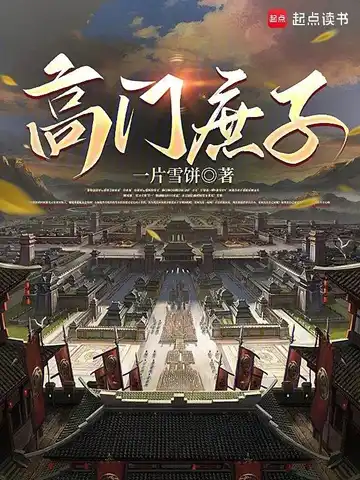
High-Ranking Concubine
高门庶子
- Status
- Completed
- Length
- 1.8M Words
- Genre
- Historical
- Subgenre
- Alternate History
- Updated
- 5mo ago
- Source
- Qimao
Stats
All-time: Popularity, Must-read votes.
482Chapters
410kPopularity
7.9kReaders
5kMust-read votes
9.2Score
3.1kRatings
Tags
Synopsis
More by this author

Readers also read
 The Three Kingdoms Began with Deceiving Jia Xu
 Changning Imperial Army
 I Opened a Pawnshop in Datang
 Three Kingdoms: I Am Really a Book Boy
 Back to the Three Kingdoms as a Mighty General
 Jumping Around the World
 The God-Level Prince of the Tang Dynasty
 Ming Dynasty: I Slept with Xu Miaojin at the Beginning, but My Father Zhu Yuanzhang
 Fake Eunuch: the Prince Is Actually a Daughter
 Traveled Through Time and Became a Useless Prince
 The Ming Dynasty Reborn: At Three Years Old, I Ascend the Throne and Become Emperor
 The Emperor in White
 I Am Ma Su, Here at Jieting
 The First-Class Consort of the Song Dynasty
 The Ultimate Tyrant, Who Overthrew the Demon Queen Who Confused the Country at the Beginning
 The Best Crown Prince of the Tang Dynasty
 The First Prince Consort of Daxia
 The Opening of Da Qin Shocked All Schools of Thought
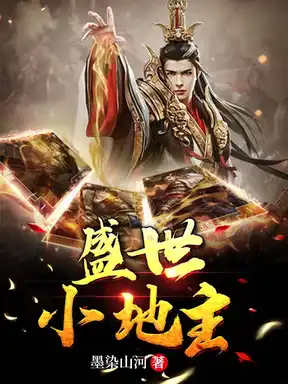 Prosperous Small Landowner
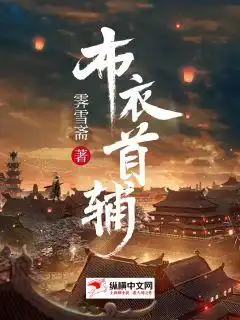 Commoner Chief Assistant
Reader comments 50
Google Translate
As a bookworm of more than ten years, you can tell after reading a few chapters whether a book is good or bad. I finished reading this book in 3 days. I basically read it every day at 2-3 am, waiting for updates. I rarely feel this way anymore. Although the protagonist is too wise and powerful, and everything is considered, there is no forced intelligence on the supporting characters. Many character creations and plot thinking are described and shaped based on interests and standpoints. Reading the whole book can greatly improve political understanding, the core essence of interpersonal communication, and the author's unique perspective on the real history of the real world, which is very inspiring. Part of the plot (such as the protagonist's policy essay "The Wealth of Nations") was originally thought to be based on Adam Smith's "The Wealth of Nations", but in fact it was just a borrowed name, and overall it still fits the development of the fictional dynasty in the middle and late Yu Dynasty. The political commentary and policy points put forward in the petition) obviously refer to "The Ming Dynasty 1566" "Changing rice to mulberry, solving the dilemma", and the words "carrying the nine states and thousands of directions" and "bullying the sky" are used in the Ming Dynasty 1566. The overall plot is very exciting, with two core events, the "Defense of Shuofeng" and "Reform of the Farming System". The former builds personal reputation, forms a solid alliance with the Sixth Prince, and gathers a group of close generals through the war, laying the foundation for the implementation of the reform. ; The reform of the farming system is a difficult but correct thing. In the real history of all dynasties, because the civilization of the Central Plains was an agricultural civilization, wealth was mainly inherited in the form of land, so the later feudal dynasties would basically reach the peak of land annexation, leaving the people without land. Therefore, all dynasties have tried to reform, either to increase the population or to increase taxable land, but almost without exception, most of the reforms were bloody and failed. This was a strong counterattack by vested interest groups (nobles, aristocratic families, small and medium-sized landowners, etc.), So the reform of the farmland system was inevitable. Facing many difficulties, this is also the most wise point of this book. How to reasonably solve the resistance to reform, the Xungui Group in this book (similar to the Guanlong Noble Group in the Sui and Tang Dynasties, or the Huaixi Group in the Ming Dynasty) and the aristocratic families are the biggest obstacles. The protagonist first revolutionized his own family (the Song family in Huai County, aristocratic family). He did not directly sacrifice his own family, but very wisely exchanged benefits for benefits to mobilize the enthusiasm of the clan members. After his own family succeeded in the pilot, he then promoted it to the world, and other There is nothing to say. In this story, the author takes advantage of the struggle between the two kings to seize the throne and the distrust of the old emperor to eliminate the strength of the vested interest groups in the form of military struggle and establish the King of Jin as the emperor (the one who loses the throne between the two kings) formed a "holding the emperor to order" "Princes" situation, on the one hand, there is no obstruction from vested interest groups, on the other hand, with the help of ruling legal principles and military power, the official team can form a united front, which will inevitably lead to the implementation of farming reforms across the country, and eventually become an economic power and unify the world. Overall it's very exciting and worth watching again!
To be honest, the writing is okay. There is no obvious right or wrong in this book. It's just that the positions are different. The emperor doesn't want the son he doesn't like to kill his two sons he likes. The two sons compete for the throne. The protagonist wants to be a famous minister like Zhuge Liang who will be famous throughout the ages. Then he assists the emperor's disliked son. The protagonist's calculation is to follow the bull, but as you watch the later, you feel an uncomfortable feeling, that is, uncomfortable with the protagonist. In fact, I want to see the kind of story that is originally for each other's position, but finally breaks through the bottom line for the purpose.
As an old bookworm, I think this book has been reaching its peak from the beginning to now, and I hope it doesn't end unfinished! I have never reviewed any books, why? I think time travel books can't be random. The protagonist can have modern thinking but it's impossible not to integrate it with the times. So far, this book has a good integration of ancient and modern thinking. I hope it won't be unfinished! !
The first part is really interesting, but the second part is too casual about the royal family, which made me feel unbearable when I saw the chapter names. Playing with power is the basic tone in the first half, which is very exciting. In the second part, it is directly suppressed violently, making the royal family kneel down. Cao Cao, Sima Yi, these heroes have to do enough to be awesome on the surface. Your protagonist wants to become the first minister of Dayu, and he is more arrogant than them, but his methods are so low-level and too fragmented.
The first hundred chapters are okay, not too flawed. The next question comes 1. Shuofeng City is easy to attack but difficult to defend. It is a strategic location and the terrain is unsafe to defend. However, the city wall is weak and short. How did it stop an army of 300,000? According to the author's description, there were several additional lines of defense built outside the city wall. It is a bit unclear. The main defense of Shuofeng City was 20,000 to more than 100,000, including civilians. 2. The author describes that the male protagonist likes Xinyue but insists on hanging out with the maid (this is a rather disconnected part, and the plot after chapter 100 is very abrupt) 3. The emperor's three-soul separation begins with the emperor dreaming of a traitor who bewitched the prince to kill his grandson. After various signs, he pointed his sword at the male protagonist and Wei Yisheng. Through various events, the two became members of the King of Wu's party. The emperor initially wanted to establish the king of Jin, but later wanted to establish the king of Wu. The emperor fiddled with the king of Wu. He turned his back on Wei Yisheng because the emperor felt that no one could control the hero and wanted him to stay in the north. (When I saw this, I thought that the emperor had accepted his fate. After his death, the palace would be stained with blood, but I think the author's writing was very awkward. He said that he would take the hero away before his death, but I think the situation is gradually getting out of control.)
The author really doesn't know how to write about wars. Tens of thousands fight hundreds of thousands. There is no strategy, no battle scenes, no cooperation between the army and the people, and no character highlights. With a stroke of his pen, a few months later, he won inexplicably.
A novel without depth,
If it wasn't time travel, I think it would be great. Time travel would seem contradictory. It doesn't necessarily mean turning against the family, but it can't be written in such a way that the story feels like it's very immersive. By the time you get to chapter 50, you've only met your family a few times, so how can you get the emotional card? It's worse than not wearing any clothes. If you don't wear them, you don't have any clothes, and you don't have the knowledge. I'm confused.
It's been a long time since I've had a book that kept me entertained from beginning to end. This is the first time a book made me take the initiative to look up the meaning of classical Chinese words in the book! ! Great book!
Too much writing