


Blue Velvet Dust
蓝色绒尘
- Status
- Completed
- Length
- 720k Words
- Genre
- Realist Romance
- Subgenre
- Realist Stories
- Updated
- 8mo ago
- Source
- Qimao
Stats
All-time: Popularity, Must-read votes.
228Chapters
12kPopularity
1.2kReaders
878Must-read votes
8.0Score
6Ratings
Tags
Synopsis
More by this author
Readers also read
 After Her Rebirth, She Forced Her to Marry the God of War, the Emperor's Uncle
 Exclusive Limited Love: Divorce Lawyers Please Come into Your Arms
 The Ingenuity of a Great Nation
 Orion's Pretty Wife
 Arrow of Dawn
 The Charming Daughter-In-Law of a Rough Man's Family
 I Compile Ancient Books for China
 Wearing Sixty: What's Wrong with the Female Supporting Role in the Control Group Being so Arrogant?
 After Marrying the Prince's Brother
 Suddenly a Spring Breeze Comes
 Late Spring Dawn
 After the Secret Marriage, the Actor Pestered Me Every Night to Announce the Official Announcement
 After Rebirth, They All Want My Love
 A Noble Girl from a Peasant Family
 Little Lady, the Overlord Has Caught You and Brought You Home.
 Eighty True Daughter: Divorce in Three Days? It's Difficult!
 Chasing the Spring Breeze Together
 Lights Like Smoke
 After Wearing the Book, I Was Spoiled by the Boss and Cried
 Pluto's Cub Is Three and a Half Years Old
Reader comments 3
Google Translate
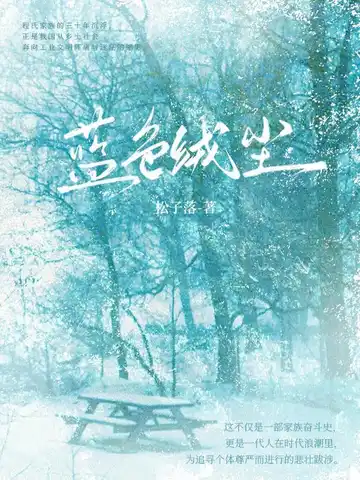
The image of "blue lint dust" in the title of the book is used throughout the book. It is not only the lint dust on the factory denim, but also the traces floating in the air and attached to the workers' bodies that cannot be washed away. This book uses a large number of dialects, is highly regional and professional, and the details in the text are authentic and credible. The author chooses to place the narrative perspective on the Cheng family from Sichuan and Chongqing. The arrogant and arrogant Cheng Lao is caught up in the limelight but is obsessed with gambling and bankrupts his family; Xu Bi, who wants to harm everyone's paternalism, Pei Shu, who has a Qiong Yao-style romance that is not in line with the life of the times, and Cheng Zhi, who grew up in a factory and saw through his family's lies and soberly searched for himself... There are many characters in the novel. The Cheng family is a typical Chinese-style "internal conflict" family, relying on each other and tormenting each other. "I love you, but it seems that I can only love you when I am far away from you." Family members living under the same roof may not have similar views. The novel takes the ups and downs of the Cheng family over the past few decades as the main story line, but it is not just a simple description of the family's story. Every character in the book is typical and vivid. Cheng Heyong, the youngest child in the family, has high expectations from the family. He has a kind of martial arts atmosphere. As the most promising person in the family, he consciously assumes the responsibility of bringing the entire family from the mountain village into the city. He was one of the earliest representatives of the group of people who moved from rural areas to cities during the reform and opening up. He possessed the necessary adventurous spirit for entrepreneurs. He dared to venture out and fight hard. He had a large group of brothers and believed that family and brothers were bigger than small families. He did catch up with the trend of the textile industry and opened a factory to accept foreign trade orders. Cheng Heyong's entrepreneurial history also represented my country's booming industrial economy at that time. The youngest Cheng is the "backbone" of the family and a tragic hero kidnapped by face and loyalty. As a nephew, Cheng Wanli is completely different from Cheng Lao Yao. It was Cheng Lao Yao who initially led him into the denim manufacturing industry. He was both his father, his master, and later his competitor. Cheng Wanli has stronger ambitions and hidden capitalist ideas. He comes from the working class, but he believes that workers are tools for his own benefit and does not possess warmth. Cheng Lao is still bound by clan ties and family affection. Cheng Wanli can only be used, but he has become the richest man in the family. This dramatic plot arrangement is full of the author's strong irony towards this phenomenon. As the youngest child in the family, the heroine Cheng Zhizhi is very contemporary. The author chose to start from the time when the protagonist was a baby, and began to observe the changes in the Cheng family and society through the perspective of a child. This is not only the personal growth of Cheng Zhizhi, but also reveals a spiritual dilemma of young people in small towns in big cities. Cheng Zhi's act of "cutting off relatives" bravely broke the traditional ideological concept of "the biggest family member" and adopted another approach that was completely opposite to that of his cousin Cheng Hexia and was not gentle. She has maintained her individual dignity and is no longer a vassal of her parents and elders. Her relationship with her parents is twisted, and a huge gap between two generations can be seen in her. At the same time, there is a certain tragedy in Cheng Zhi's body. She has always lived in the shadow of a non-existent "brother" created by her elders. She has witnessed the ups and downs of Cheng's youngest brother. Being too independent has allowed her to gain herself, but she has also lacked ties with relatives and friends. She has always been lonely, but this loneliness is a choice she made after careful consideration. Every time the Cheng family gets together during the Chinese New Year, it is a reshuffle of classes, with some rising and others falling. The author uses a cold and restrained writing style to describe the pain of the development of the times, but there is no lack of warmth for the workers in his writing, which has a "realistic pain and human warmth". The novel spans nearly thirty years and covers the complete transformation cycle of the Pearl River Delta manufacturing industry. The fate of the three generations of the Cheng family is not an "isolated story" but a "slice of the fate of a generation of migrant workers." The thoughts and thoughts of the characters in the story have the characteristics of the times, and the themes expressed in it are universal. It can be said that "Blue Velvet Dust" is not only a realistic novel, but also a mirror of the times, using individual destiny to write through the spiritual history of the times.
What "Blue Velvet Dust" shows is not a linear evolution from tradition to modernity, but a more complex and tragic picture: when the blood ethics of farming civilization encounter the cold laws of industrial civilization, individuals are often squeezed in the double gap, becoming drifters who cannot be fully accommodated by the two identities of "sons and daughters of the soil" and "factory workers." The author uses the core image "blue velvet dust" throughout the book to exquisitely capture the texture of this existential dilemma. It is the denim dust that soaks into the hearts of rural youths in Sichuan day after day after entering the coastal garment factories. It is a concrete, tangible and inescapable class imprint. However, the author's writing goes beyond this. This "dust" has been sublimated into a spiritual existence - it is the trauma and burden inherited within the family, the dust that has fallen from the rapidly changing era and covered the fate of individuals. It is the trace of "originality" that Cheng Zhi and others cannot completely erase even if they go far away. The title of the book itself constitutes a sad metaphor: human struggle and struggle, to a certain extent, are like a Sisyphus-like effort to cleanse the blue velvet dust but knowing that it may stay in the body and mind forever. As the axis of the story, the youngest daughter Cheng Zhizhi is the most profound bearer and practitioner of this cleansing process. She started out as a calm, almost anthropological observer of the family, witnessing the sinking of her father's generation and the alienation of her peers. Her father fell from being the "backbone" of the family to the tragedy of local favors and face economy, her mother slowly but firmly awakened in silence and depression, and her cousin completely embraced the logic of capital and became a cold existence... The fate of these close relatives formed the initial coordinates for her understanding of the world, and gradually accumulated into the "dust" that she must escape or cleanse. Her "disconnection" is by no means a simple youthful rebellion or moral severance, but a sober and painful psychosurgery that targets the fate of the entire family and the attributes imposed by the times. It is an extreme struggle that attempts to strip off alien elements to confirm "I am who I am." The author's "calm, restrained, detailed realism style" exerts great narrative power here. There are no sentimental accusations or grand declarations. The turbulent waves of the times are transformed into actions repeated thousands of times in the workshop, silent stalemates at the family dinner table, subtle changes in the numbers on the remittance slip, and the spoken and unspoken words between relatives. It is this precise description of the folds of daily life that gives credibility to the tragedy of the characters who "have to do this". What we see is not a dramatic showdown between good and evil, but the twists and turns, compromises, twists and occasional glimmers of human nature under specific historical conditions and survival pressure. That "weak but stubborn force that still wants to 'become oneself' in the dust" seems particularly real and shocking because it is placed in such solid, trivial and even boring details of reality. "Blue Velvet" ultimately asks a question of modernity with universal significance: In a transitional era when traditional ties such as blood ties and geography are loosened, and new social identities are insufficient to provide complete meaning support, how do individuals settle themselves? Cheng Zhi's "self-cleansing" points to an almost existential choice - after breaking away from the dual definitions of family and factory, after the physical and spiritual imprint of "blue velvet dust" is partially and difficultly removed, what is left of "self", and can it be constructed? There may be no answer to this, but the questioning itself constitutes the most precious literary value of this work. From this, "Blue Velvet Dust" goes beyond an ordinary family novel or migrant literature. It is a precise slice of the spiritual drift of a generation, and a deeply empathetic and reflective literary exploration of the value of individual souls in the process of China's rapid urbanization and industrialization. It tells us that the story of those who moved from the countryside to the factory is not only economic and social, but more fundamentally, it is a hidden war about dignity, freedom and identity that takes place deep in everyone's heart. In this war, "blue velvet dust" is both the enemy and the witness, and the struggle of Cheng Zhi and others illuminates for all of us the dusty but unavoidable road to "becoming ourselves".
"Life hurts, I understand your pain, and let's think about the source of this pain together." The novel not only tells us that "character determines destiny, and times magnify choices", it also shows a diverse exploration of women's destiny. It explores how individuals find ways to place themselves under the great changes of the times. "Reunion" can be Cheng Hexia's return to stability, or Cheng Zhi's departure for independence. The multiple ways out itself reflect the openness and progress of values.