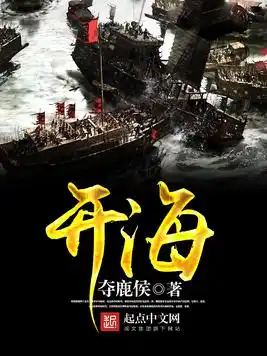
Open Sea
开海
- Status
- Completed
- Length
- 3.3M Words
- Genre
- Historical
- Subgenre
- Historical Transmigration
- Updated
- 2y ago
- Source
- Qimao
Stats
All-time: Popularity, Must-read votes.
1.5kChapters
101kPopularity
929Readers
1.8kMust-read votes
9.3Score
724Ratings
Tags
Synopsis
More by this author
Readers also read
 Da Yin Small Landowner
 Censor High Official
 The Princess of the Nine Kingdoms Is Lying to You, Do You Call This a Loser?
 Prisoner
 Dominance of North America: Starting with World War I Labor
 The Strongest Luo Chengzhi Swept the World
 Little Scholar in Civilian Clothes
 Daming: After Self-Destruction and Time Travel, Lao Zhu's Mentality Collapsed
 Major General Xiaoyao
 Scouts of the Tang Dynasty
 The Prince Is Fierce: the Waste Prince Creates a Technological Dynasty
 Training the Southern Song Dynasty
 From the Exiled Prince to the Eternal Tyrant of the Tang Dynasty
 Empire Food Phase
 Rise of Wolfthorn Empire
 The Best Fake Eunuch
 Rebirth of the Deposed Prince: I Became a Genius in Civil and Military Affairs
 Datang: Take the Prince to Listen to Music at the Beginning
 Beiyuhou
 The Prince of Liangshan in Water Margin
Reader comments 9
Google Translate
When describing the characters, the author used pig's feet to tell a very wonderful metaphor, which made me amazed. "Opening the Sea" Pig's Foot said: "Chen has no family background. He only knows how to train some formations and teach the flag troops proficient skills. He knows nothing about military training. But Brother Zhang, you always feed them grass, and when the war starts, you hope that they will fight for you like wolves. How is this possible? They eat grass, and when they go to the battlefield, they can only run faster than you like a horse, and they can't catch up!"
The novel's descriptions of the military household system, geographical customs, and war scenes in the late Ming Dynasty are detailed and rigorously researched, especially the depiction of the development of firearms and military reforms, giving the story a strong sense of historical reality. The protagonist Chen Mu's transformation from the confusion of a modern time traveler to the active integration into ancient society is natural. It not only retains the characteristics of modern thinking, but also conforms to the logic of the times and avoids "cheating" growth. Through the collision of the age of navigation and technological change, the author attempts to explore the evolution of the destiny of the nation and the world pattern. The plot of farming and military reform in the early stage is compact and realistic, but the plot of conquering the world in the later stage develops too fast and has a tendency to be "obscene". For example, elements such as steam engines and railways are oversimplified. Some dialogue descriptions are monotonous, the connection between the main plot and the side plots is confusing, and there are word errors (such as the misuse of "Kinki"), which weakens the smoothness of the text. The slow-burning style of the novel and the lack of "slap in the face" are not friendly to readers who pursue a fast pace, so read it according to your interests.
This novel is more like a history book than a novel. The author's writing style is a bit too good, and his historical skills are also very good. This actually makes people uncomfortable to watch. The classical Chinese writing is very good, as if the ancients are really talking. But just because these are so well written, people can't stand them. After all, although when we read novels, we don't want to read those trivial texts, we don't want to read essays either. To read this book, you must have an understanding of the history at that time, as well as overseas history at that time. If you don't really like history, you won't be able to read this book. It's too boring and plain. And most of them are in classical Chinese. If you don't study them carefully, you won't understand what they are saying at all. So I read hundreds of chapters and gave up.
Sai Fu Gong and the middle-aged god are highlights.
This is a manual that introduces history.
It would be nice if the text were as concise as the table of contents. .
The plot develops too fast
I thought this author felt very familiar, and it turned out to be the author of The Unruly Thief. The naughty thief has not finished updating it before, so I just watched it. Very well written. In this previous work, the protagonist has more choices in the timeline. One thing the author deserves recognition is that many of the contents are based on research and are not random writing. This does not mean that historical novels should be very rigorous, but at least they should not go against common sense, so the author is very commendable for this. Judging from the content, although there is a lot of fictitious content, at least it is not random writing. The main characteristic of the author's articles is that they are written carefully and pay attention to the cohesion and rhythm of the plot. It's better in the new book.
Pretty good