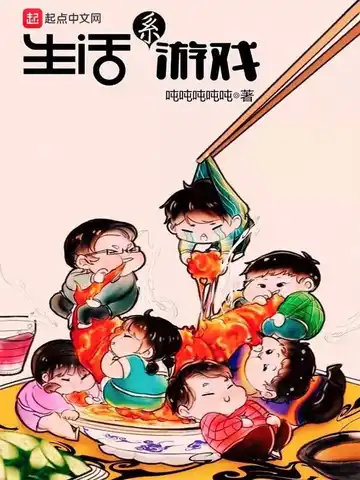
A Slice-of-Life Game
生活系游戏
- Status
- Completed
- Length
- 2.5M Words
- Genre
- Urban
- Subgenre
- Urban High Martial Arts
- Updated
- 2y ago
- Source
- Qimao

Synopsis
All-time: Popularity, Must-read votes.
932Chapters
396kPopularity
1.7kReaders
11kMust-read votes
9.6Score
2.3kRatings
More by this author


Readers also read
 When the Heavenly Master Comes Down from the Mountain, I Have Six God-Level Masters
 Making My Debut at the Diva's Concert
 The Guardian Dragon
 The Craziest Doctor-In-Law
 After the Disbandment, the Song "Boundless Sky" Became Popular All over the Internet!
 School Beauty, Stay Away! This Reborn Me Just Wants to Make Money
 Hong Kong Crossover: Rising to the Top of Wo Shing Wo
 Money Eye
 A Fallen Top-Tier Star's Rise to the King of Entertainment
 My Beijing Girl
 The Most Powerful Cultivator in History
 The Immortal King's Daddy
 Supreme Cultivation
 Back to 1990: I Open My Eyes on the Day My Wife's Tragedy Begins
 I'm a Villain, so Kidnapping the Heroine Is Reasonable, Right?
 The Age of Great Medicine
 The Power to Rule All, Starting with a First-Class Merit
 I Build Starships from Trash
 The First Son-in-Law
 The Teenage Fortune Teller
Reader comments 50
Translated by Google Translate
There's really nothing innovative about Chinese food, just the same thing over and over again. 1. Stir-fry--heat the oil in the pan, pour in the food and seasonings, and stir quickly over high heat until cooked. Divide into stir-fry, stew, stir-fry, etc. 2. Roast - add water or stock to stir-fry and cook over low heat until the food is thoroughly flavored and chewy. There are braised in red, white, dry and so on. 3. Steaming - a method in which food is placed in a steamer with high heat and water is boiled, and the heat of the water vapor is used to mature it. It can be divided into steamed, steamed with rice flour, steamed with stuffed rice, etc. 4. Frying - put the food into a large amount of boiling oil, and use the heat of the oil to mature the food in a short period of time and turn it golden brown. 5. Exploding - the food is cooked quickly by using high heat to heat oil, hot sauce, or hot soup. It can be divided into oil stir-fry, sauce stir-fry, soup stir-fry, etc. 6. Fry--fry the food in a pan with a little hot oil. It can be divided into raw fried, dry fried, etc. 7. Bake - season the food and place it on the grill grid or in the oven, and heat it until it is cooked through. It can be divided into dry roasting, raw roasting, charcoal roasting, etc. 8. Pickling - wash and drain the food, put it in a container, and pickle the food with salt or soy sauce to add flavor. It can be divided into salt pickling, sauce pickling, etc. 9. Braised food - put raw or cooked food into boiling marinade to cook the food into a special flavor. 10. Smoking - after the food is cooked, put tea leaves, pine branches, brown sugar and other fuels lit below and smoke it until it becomes a sauce yellow. It can be divided into raw smoked, cooked smoked, etc. 11. Frozen - Boil the food, season it, add foreign vegetables or pectin powder and cook it into a soup, wait for it to solidify and it will be frozen. 12. Mixing--mix the raw vegetarian or cooked meat with seasonings and mix well, and then it is ready to eat. It can be divided into cold and hot dishes. 13. Stew--cook several kinds of food separately or half-cooked, and then stir-fry, roast or boil them together. 14. Boil - Pour the food into the boiling soup from the edge of the pot. When it boils again, add chopped green onion and minced ginger and pour the soup and food into the soup bowl. 15. Slurry--thicken the gravy with tamarind or pour hot oil to make the dish look smooth and delicious when served. It can be divided into oil, vinegar, gravy, etc. 16. Blanch - put the food into boiling water or boiling oil until half cooked, remove and drain, then return to the pot for other cooking. 17. Stew - fill the food with water and put it into the pot, or add onion and ginger wine to taste, and simmer over low heat until the food is cooked. 18. Boil - put the food into a pot with appropriate amount of cold or boiling water and cook or boil it until soft. 19. Stew - fry, roast or boil the food first, add a small amount of stock, and simmer over low heat until the soup dries up and the vegetables are cooked through. 20. Baking - season the meat and wrap it in tin foil, bury it in a pile of hot salt or wrap it in gauze, bury it in hot green onions, and cook it slowly over low heat. 21. Rinse--Cut the food into thin slices, rinse it back and forth in the boiling soup, and eat with the mixed seasoning sauce. 22. Soaking - put fruits and vegetables into a container with salt, sorghum wine, cold boiled water, rock sugar, and spices and soak them for a while before eating. There are two types: salt water soaking and sweet and sour soaking. 23. Drunkenness - Meat dishes are soaked in good wine for a while, then steamed or eaten raw, which is called drunkenness. Such as drunken chicken, drunken shrimp, etc. 24. Boil - put food into boiling water or boiling soup to cook it in a short time. 25. Bake - season the food and place it on a pan or grill, then slowly dry the food over low heat. 26. Simmer - put the food into the pot and cook it slowly over low heat until it becomes cooked or becomes a thick soup. 27. Wind - Food is marinated in salt, wine, and spices and dried in the shade. The wind is used to completely dry out the moisture of the food so that it can be stored for a long time. 28. Crispy--Fry the food in hot oil, take it out and let it cool, then fry it again over low heat to make it crispy or add balsamic vinegar to slowly simmer it until crispy. 29. Zao - Dried fish or fresh meat soaked in distiller's grains to make it last longer, steamed with condiments when eaten. 30. Sweet - Add appropriate amount of sugar to food to soak it or boil it into soup or bake it into cakes. 31. Bake--after preparing the main dishes, put them into bowls in order without them being scattered, put condiments and condiments on them, steam them in a steamer, and put them upside down on the plate when eating. 32. Assemble - cook the meat and vegetable dishes separately, slice or block them, and arrange them on a large plate in an orderly manner. Also known as cold cuts or platters. 33. Soup ---- Also known as paste or thick soup, it is a method of cooking soup in which the ingredients are boiled and then thickened. 34. Sauce - food is soaked in soy sauce or bean paste to add flavor and then heated and cooked. 35. Stir-fry--Put a small amount of oil in the pot, then put the food into the pot, stir-fry with a spatula, and use low heat to drain the food and season it. 36. Color----Salad oil, fried green onions, good for removing fishy smell and improving fragrance. There are 36 basic cooking methods, and these are not considered combinations. Steaming and then frying, and frying and steaming have different textures. Don't forget that this is just an introduction.
A simple, warm and funny slow-paced life novel, very interesting~~
Let's start with the review: It's very beautiful and warm. This is a food system that was completed in 20 years, and it seems that people can still be immersed in it now. People depend on food, and delicacies have always been the pursuit of many people. The author did not write plots such as pretending to be slapped in the face or business war planning. He focused on the plain and warm daily life. He used dishes full of memories to connect the rise and fall of the protagonist's family for hundreds of years, showing the power of inheritance. At the same time, the delicate writing style describes the dishes with color and taste, which makes people have endless aftertaste even though they have not seen or tasted them (although I don't know how much of what is described in the article is true or false, but it looks like it). Although I felt that there were some problems while reading, the flaws did not affect the overall reading. The quality was quite good. Since I have read it, I believe it will also bring a good reading experience to some people.
The author's writing style is relaxed and humorous, and the narrative is straightforward but not pale. He writes about the ups and downs of life in just a few strokes, and occasionally one or two paragraphs are even more touching. What I write about is not only food, but also history, inheritance, and memories containing joys and sorrows. There are just a lot of minor flaws. The word count is forced to be low, typos are also a headache, and there are some small holes that have not been filled in. It is still a bit regretful.
First, what is a game? Is this world a metaverse or a game life? Second, the three concepts are incorrect. The protagonist is not a good cook at all, and relies on cheating to become a chef. As a result, he often scolds "games" when he is stupid. I personally hate the protagonist who is not good at it, but scolds others when they have problems. Third, the whole article is oriented toward daily life, and the food descriptions are not very food-heavy. The protagonist's words such as "dog shit" and "fart" are highlighted, which is off-appetizing.
The author is really speechless when he can directly kick him out of the group and disqualify him just because his moderators and alliance leaders also like another novel.
I think it's pretty good, but there are still a lot of holes that haven't been filled in, and the climax is a bit bland, but overall it's still a very good food article.
Five brushes. In my opinion, the best food article. The faults do not hide the good points. It is difficult to find in other articles the inheritance of food culture and the intertwining of family ties in the context of the times, which brings a touch of touch. Although it is systematic, it is not abused. It is one step at a time.
It's very interesting, but I'm not very satisfied with Xia Xia. I wish I could learn cooking with the protagonist. It's not that the protagonist can't teach Bai An, so he should go to other places to learn cooking.
Very well written. It is said to be a food system article, but it is not actually about food, but about inheritance. The system is just a tool to understand things in the past. So I hope those who want to read the cool article can save it. It is not a one-way article.