Self-improvement Creates Wealth
自我提升创造财富
The author of the book you are following is not updated enough? Have time but no books to read? In my spare time, I read the hard-core book list from cognition to wealth recommended by the platform to improve myself, increase my foundation and create wealth. Unconsciously, the boss is actually me? ? ! ! !

You can read this one, but there are several others that I haven't found yet. Recommendations are welcome.
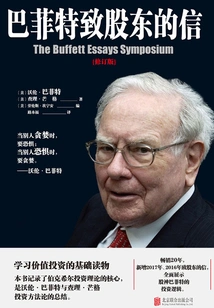
Investors must be familiar with this! There is also a Snowball book that allows you to watch the big guys from the front row!
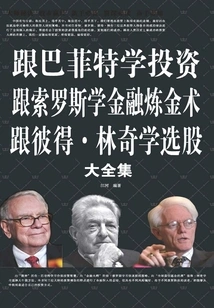
I haven't read the content, but from what the title says, it should be interesting.
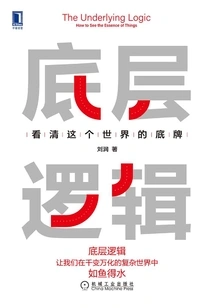
If you only teach you the "dry stuff" (methodology) from all walks of life, it is just "teaching people how to fish". Once there are any changes in the environment, the "dry stuff" is no longer applicable. But if what you are taught is the underlying logic, it is like "teaching a man how to fish." You can use the unchanged underlying logic to deduce a methodology that adapts to the current situation. Therefore, only by mastering the underlying logic, and only by exploring the constants amid ever-changing changes, can we dynamically and continuously see the essence of things clearly. In this book, I summarize the content of the underlying logic described in "5-Minute Business School" and share with you the underlying logic in five aspects: right and wrong, thinking about problems, individual evolution, understanding others, and social collaboration, to help you see the world's trump cards.

A young man who was deeply troubled by low self-esteem, incompetence and unhappiness came to challenge after hearing a philosopher's proposition that "the world is extremely simple and everyone can be happy". The two started thinking and debating back and forth. After night after night, the young man began to think, why "the so-called freedom means being hated by others"? The question is not what the world is like, but what you are like.
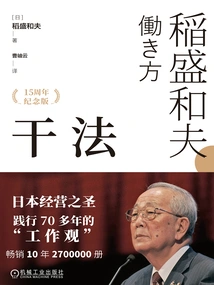
"The Way of Stewardship" is the first complete explanation of the views and practices of work by Inamori Kazuo, the sage of Japanese management. "The Dry Method" is not only a summary and sharing of Mr. Inamori's more than 70 years of work experience, but also a correct philosophy proven by the successful practice of many companies. Literally, "The Way of Work" seems to be about how to work effectively, but the focus of this book is to promote people to pay attention to the "view of work" in their outlook on life, and this issue has great and profound practical significance today.
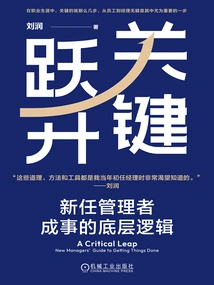
Many new managers and even senior managers will have this kind of confusion: they always feel that doing it themselves is more efficient and more controllable than directing others to do it. Worry that your own decisions will be questioned or that your subordinates' abilities and influence will exceed yours. There are employees whose commitment and performance are less than satisfactory, yet you have to rely on them. Is the company a family? Can leaders and employees be friends? How to build a healthy and efficient team? Going from individual contributor to team manager is a critical career move. It not only means a change in working methods, but also an innovation in management thinking. Based on more than 20 years of management experience, the author has refined a set of "underlying logic" to help managers rise, including "mental methods" and "sword methods". The former covers responsibility leap, communication leap, relationship leap and self-leap, while the latter elaborates on the four roles that managers should play: drummer, coach, political commissar, and conductor. This set of logic will break the "common knowledge" of many new managers and even senior managers, leading them to a more efficient and humane management approach. May you avoid detours and successfully complete key leaps.
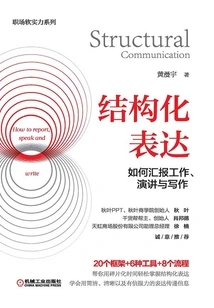
Learning structured expression well will help us improve communication efficiency in the workplace, improve communication effects, and effectively solve various communication problems. Using various workplace communication situations as examples, this book systematically introduces the principles, requirements and tools of structured expression, and provides a detailed analysis of the techniques, processes and frameworks for applying structured expression in specific communication situations such as reporting work, communicating with customers, telling stories, giving speeches, and writing. This book is suitable for working people, especially newcomers to the workplace. Through systematic reading or search-based reading with questions, readers will quickly improve their ability to express themselves in a structured way and easily solve various problems in workplace communication.

This book focuses on comprehensively training cognitive thinking and quickly improving brainpower, helping readers understand themselves, the environment, and wealth, and comprehensively improve readers' learning, thinking, and problem analysis abilities. The author has a broad mind, has unique insights into people and human nature, has reconstructed logic for cognition and thinking, and has unique methods for efficiency and wealth. Reading this book is both a brainstorming journey and a cognitive enrichment visit.
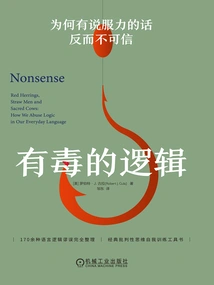
"Toxic logic" can be seen everywhere in our lives. How much of what you see and hear every day can stand up to scrutiny? Do you often feel that what others say is not quite right, but you can't find a way to refute it? You must hope to quickly and accurately identify the logical fallacies hidden behind the various rhetoric you see every day. This book is the "Dictionary of Fallacies" you need. This book is a masterpiece about logical fallacies in everyday language. In less than 200 pages, the author explains more than 170 logical fallacies in language by category, including appeals to emotions, hints, incorrect reasoning, ambiguity, oversimplification, and wrong comparisons... This book can be used as a self-examination and prevention manual to help you not to be easily persuaded by toxic logic, and to better organize your own language to convince people with your reasoning.
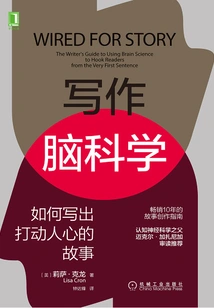
What does the brain seek in every story it is exposed to? What makes a good story successful? What makes readers want to stop reading? "The Brain Science of Writing" reveals these cognitive mysteries to us - a magic weapon that can turn things around for everyone who writes. What a successful author must do is stimulate the natural desire in the reader's brain to know what will happen next. The book is supported by new breakthroughs in the field of brain neuroscience and many examples from novels, scripts and short stories. It uses the experience of the brain as the entry point to analyze the story from a revolutionary perspective. Lock in the cognitive properties of the brain and tell writers how to write engaging stories.
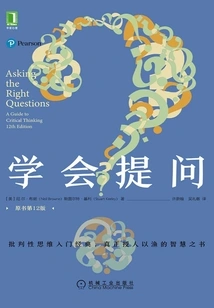
Especially suitable for application in the following fields. General studies teachers facing students' questions about what they can learn from the course in their first class can have students read this book, which will provide clear and concise answers to their questions. English teachers can also use this book when training students to write expository essays in the classroom, not only as a model for evaluating various arguments before crafting an essay, but also as a checklist of problems to avoid during the writing process. This book can also be used as core material in courses designed to develop students' critical reading and thinking skills.

Starting from the five parts of account positioning, establishment, account creation, operation, and monetization, combined with a large amount of practical experience, the countermeasures taken by self-media people at different stages of self-media development are summarized and analyzed. This book not only summarizes successful experiences, but also reflects on the lessons learned from failures. It aims to explore practical methods to improve the success rate of accounts in the era of self-media. It is an essential tool book for self-media practitioners and readers who are interested in self-media related knowledge to quickly understand the entire process of self-media operations.
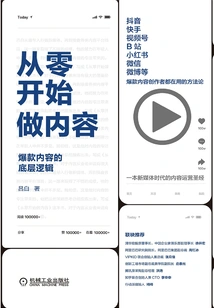
What is the content? How to create content? Are you suitable for a career in content? WeChat public accounts are popular, Toutiao is popular, Toutiao is popular, Douyin, Kuaishou, Xiaohongshu are popular... From the text era to the video era, the media and carriers for disseminating content have become faster, but the essence of the content has never changed. "Creating Content from Scratch: The Underlying Logic of Popular Content" is a summary of the author's many years of practical experience in the content industry. It covers the essence and core of content operations. Starting from what content is, it extracts the underlying logic, strategies and methods of popular content, and dismantles a large number of classic cases and cases of its own operation, so that readers can better apply it.
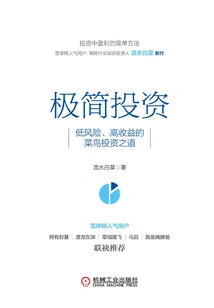
It's neither difficult nor easy, and it's still possible if you work hard. The so-called low risk means capital preservation first; the high return is based on obtaining an annual return of 8% to 10%, which is much higher than the return of most financial products, and at the same time there is a certain probability of achieving financial freedom; the rookie investment method is a method that can be invested without investing too much time and energy, and without the help of professionals. The "skills" mainly recorded in "Minimalist Investment: Low-risk, High-yield Rookie Investment" are a summary of the author's long-term investment practice. This low-risk, high-return investment strategy can be achieved by a rookie with some effort.
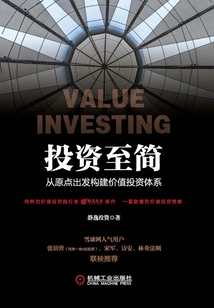
"Investment Made Simple" is divided into four chapters: Chapter One starts from the starting point of "Investment is to give up one asset and obtain the discounted value of more future cash flows from another asset". It uses deductive thinking to derive important answers in all investments such as asset allocation, target selection, valuation methods, buying conditions, reasons for holding, selling timing, investment principles, asset views, risk views, business analysis methods, etc., And builds a complete investment system. The second chapter is about business insights, completing the qualitative analysis of the enterprise from four aspects: business model, development space, competition barriers, management quality and corporate culture. Chapter 3 is investment practice, which provides some important investment practice cases in our past, some of which are major investment opportunities, and some of which are lessons from mistakes. Chapter 4 is about rethinking and reunderstanding investment, including the understanding of people, thinking methods, and the nutrients drawn from our country's traditional culture.
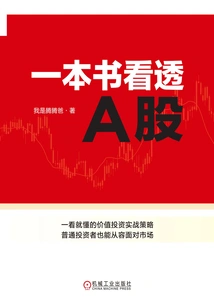
I would recommend this book to one of my favorite online writers, Zhai Zhu, who speculates in A-shares and updates frequently! Value investing is a profound knowledge, but it is explained in a simple way by Teng Teng's "A Book to Understand A-Shares", which forms a clear and interesting echo and contrast with the current turbulent market. The author adheres to the basic common sense of investment, returns stock investment to the essence of doing business, seizes a few key points in the market noise, pursues stable profits and excess returns, and advocates ordinary investors to give full play to their natural advantages, survive in the long term and defeat the market. This book is divided into five chapters and thirty sections: Chapter 1 focuses on the investment philosophy and methods of individual ordinary investors; Chapter 2 focuses on the methods and standards of stock selection, starting from both qualitative and quantitative directions, and ultimately solves the problem of how to value enterprises; Chapter 3 focuses on the essence and experience of reverse investment; Chapter 4 focuses on the construction of an investment trading system and investment psychology; Chapter 5 focuses on investment thinking in the most important, common, and popular industries and sectors in the market. This is a book written for value investors, but it is worthy of reading and thinking by all investors in the A-share market.
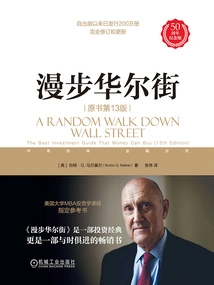
As a classic that has been best-selling around the world for more than 40 years, the biggest feature of this book is that it keeps pace with the times. The 11th edition adds a lot of valuable new materials from beginning to end to discuss exchange-traded open-end index funds and some investment opportunities, including investment opportunities in emerging markets, especially China, and a new chapter discusses the pitfalls and prospects of the latest investment strategy of "smart beta." Malkiel is both an outstanding professional investor and an accomplished economist. In this book, he seamlessly combines investment theory and practice, leading to fundamental analysis and technical analysis from solid foundation theory and castle-in-the-air theory. He also tells about the famous investment bubbles and speculative frenzy in financial history. The writing is elegant and fluent. The writing is both academic and popular, both profound and convincing, and guides readers step by step to cross the market with confidence.
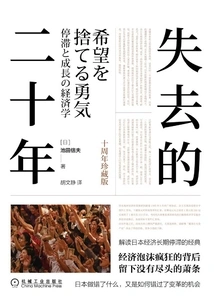
Japan has been stuck in a state of economic stagnation for two consecutive decades, known in history as the "lost twenty years." Although there are many researchers, they lack a real understanding of Japanese society and are more speculative and conjecture, and Japan's own reflective voice is rarely introduced. "The Lost Twenty Years" fills this gap. Readers can see how the Japanese clearly interpret the ins and outs. The author's dual identities as an economist and a media person give this book unique insights. He subverts many of the world's traditional views on the Japanese economy from the perspective of Japan's current situation, history, and economics.
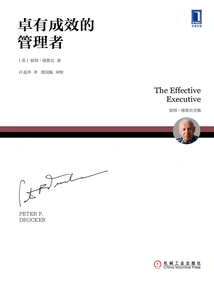
Drucker tells readers with outstanding wisdom: Not only those who manage others can be called managers. In today's knowledge society, knowledge workers are managers. The work of managers must be effective, and effectiveness can be learned. The book has 7 chapters in total. The first five chapters focus on how managers manage themselves; the last two chapters focus on how managers make decisions. The management concepts proposed in this book can stand the test of time and practice. This book has become a must-read for many business managers around the world.