Fission and Reconstruction: the Power, Survival and Taste of Chinese Civilization
裂变与重构:中华文明的权力、生存与滋味
The political code between the bricks and stones of the city wall, the imperial game in the tea cup, the cultural genes in the imperial examination papers - this book list enters the big history from a micro perspective. Zeng Guofan's philosophy of survival in the cracks of officialdom, the rise and silence of Yangzhou merchant gangs in the flow of silver, the social tearing under the Taiping Rebellion, and the "art of being ruled" when people faced power in the late Qing Dynasty... These works re-examine traditional narratives from a new perspective, showing how Chinese civilization continues to adjust itself amidst power changes, economic transformation, and cultural collisions. From the peaceful afterglow of the empire in Bashu to the agitation of new ideological trends on the streets of May Fourth, history here is not a thin chronology, but a living scene full of fireworks.
 1
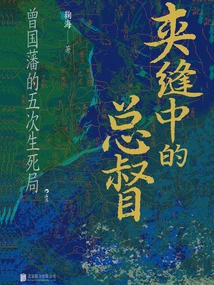
1夹缝中的总督:曾国藩的五次生死局
Ju Hai
This book shows Zeng Guofan's last twenty years of life and the turning point of the great changes in the late Qing Dynasty. In just twenty years, Zeng Guofan was promoted from Minister Ding You to Governor of Liangjiang, Governor of Zhili, and Bachelor. Accompanying this honor is a mountain of pressure and unbearable life and death suffering that ordinary people cannot bear. During this period, Zeng Guofan had no fewer than five brushes with death, either actively or passively. The commander-in-chief, who seemed to have great power, had to struggle between the forces of all parties and crack down one tough nut after another. What is it that repeatedly forces him into desperate situations of life and death, and what keeps him from dying? This is exactly the question this book seeks to answer. As the author said, "This is forced by both personal circumstances and the trend of the times." The author closely follows Zeng Guofan's five major life-and-death situations, using memorials, diaries, family letters, letters, and records from relatives and friends as core materials to explore the historical background, his own situation and psychological state of the life-and-death situations he was caught in at each stage of his life, and reveal how a late Qing commander-in-chief dealt with the complex relationship between himself and the times, family affairs and state affairs, desire and power. Although this book examines Zeng Guofan's different approaches and mentality in dealing with different life and death situations, no matter how the situation changes, he is still Zeng Guofan, and a certain persistence in his heart has never changed. Therefore, what this book will discuss is not only the times and its "changes", but also its "unchangedness" in the great changes. Perhaps, inner perseverance is the true strength of Zeng Guofan's spirit, and it is also the significance of us re-examining Zeng Guofan's spiritual legacy.
This book shows Zeng Guofan's last twenty years of life and the turning point of the great changes in the late Qing Dynasty. In just twenty years, Zeng Guofan was promoted from Minister Ding You to Governor of Liangjiang, Governor of Zhili, and Bachelor. Accompanying this honor is a mountain of pressure and unbearable life and death suffering that ordinary people cannot bear. During this period, Zeng Guofan had no fewer than five brushes with death, either actively or passively. The commander-in-chief, who seemed to have great power, had to struggle between the forces of all parties and crack down one tough nut after another. What is it that repeatedly forces him into desperate situations of life and death, and what keeps him from dying? This is exactly the question this book seeks to answer. As the author said, "This is forced by both personal circumstances and the trend of the times." The author closely follows Zeng Guofan's five major life-and-death situations, using memorials, diaries, family letters, letters, and records from relatives and friends as core materials to explore the historical background, his own situation and psychological state of the life-and-death situations he was caught in at each stage of his life, and reveal how a late Qing commander-in-chief dealt with the complex relationship between himself and the times, family affairs and state affairs, desire and power. Although this book examines Zeng Guofan's different approaches and mentality in dealing with different life and death situations, no matter how the situation changes, he is still Zeng Guofan, and a certain persistence in his heart has never changed. Therefore, what this book will discuss is not only the times and its "changes", but also its "unchangedness" in the great changes. Perhaps, inner perseverance is the true strength of Zeng Guofan's spirit, and it is also the significance of us re-examining Zeng Guofan's spiritual legacy.
Zeng Guofan in the cracks is you and me struggling with life. Take off the cloak of a saint and disenchant Zeng Guofan! Works by Ju Hai, a cutting-edge historical writer.
 2
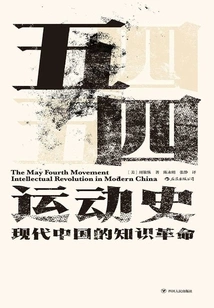
2五四运动史:现代中国的知识革命
(us) Zhou Cezong
This book is the representative work of the famous historian Mr. Zhou Cezong. The book is divided into two parts. The first part describes in detail the origin, social support and development of the May 4th Movement, and clarifies how the "May 4th" incident initiated by students gradually expanded into a national political patriotic movement. The second part analyzes the impact of the May 4th Movement on politics, society, literature and ideological fields, and comprehensively and systematically discusses the New Culture Movement, the literary revolution and various social and political trends of the time. The author cited detailed information and objective arguments, and conducted in-depth analysis and research on the social functions and historical destiny of the new intellectuals. This book presents a complete historical picture of the May Fourth Movement.
This book is the representative work of the famous historian Mr. Zhou Cezong. The book is divided into two parts. The first part describes in detail the origin, social support and development of the May 4th Movement, and clarifies how the "May 4th" incident initiated by students gradually expanded into a national political patriotic movement. The second part analyzes the impact of the May 4th Movement on politics, society, literature and ideological fields, and comprehensively and systematically discusses the New Culture Movement, the literary revolution and various social and political trends of the time. The author cited detailed information and objective arguments, and conducted in-depth analysis and research on the social functions and historical destiny of the new intellectuals. This book presents a complete historical picture of the May Fourth Movement.
The painstaking work of a giant historian who abandoned politics to pursue studies, and an authoritative May Fourth study in overseas sinology circles, presents a complete historical picture of the May Fourth Movement.
 3
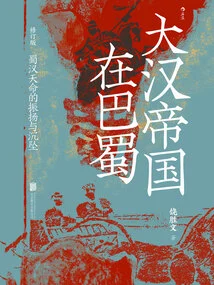
3大汉帝国在巴蜀(修订版)
Rao Shengwen
This book takes the rise and fall of the Shu-Han regime during the Three Kingdoms period as the main line, and uses smooth writing to activate that period of history. In a vivid historical process, it highlights the significance of those people and events, and responds to the historical pursuit of "understanding the changes in ancient and modern times" in a work of chronological history. This book is both academic and readable. It provides a thorough discussion on the themes of destiny, legality and political rise and fall. It also provides unique insights into some controversial issues such as the authenticity of the Yidai Edict, the gains and losses of "Longzhong Dui", the conflict between light and dark in the Battle of Xiangyang, the reasons for the failure of the Battle of Yiling, the myth of Yong'an Tuogu, the political issues of the Sun-Liu alliance, Zhuge Liang's strategic review of the Northern Expedition, etc. In addition to being more concise in terms of writing, the revised version also provides supplementary analysis of details such as Li Yan's case and Jiang Wei's plan to restore the country.
This book takes the rise and fall of the Shu-Han regime during the Three Kingdoms period as the main line, and uses smooth writing to activate that period of history. In a vivid historical process, it highlights the significance of those people and events, and responds to the historical pursuit of "understanding the changes in ancient and modern times" in a work of chronological history. This book is both academic and readable. It provides a thorough discussion on the themes of destiny, legality and political rise and fall. It also provides unique insights into some controversial issues such as the authenticity of the Yidai Edict, the gains and losses of "Longzhong Dui", the conflict between light and dark in the Battle of Xiangyang, the reasons for the failure of the Battle of Yiling, the myth of Yong'an Tuogu, the political issues of the Sun-Liu alliance, Zhuge Liang's strategic review of the Northern Expedition, etc. In addition to being more concise in terms of writing, the revised version also provides supplementary analysis of details such as Li Yan's case and Jiang Wei's plan to restore the country.
Zhang Fan and Luo Zhenyu, professors of the Department of History at Peking University, recommend the history of the Three Kingdoms, which is both academic and interesting, and the history of Shu and Han that uses "politics" to resolve the chaos of the Three Kingdoms.
 4
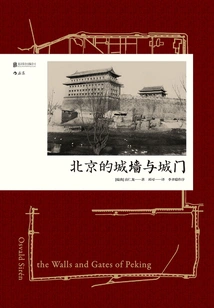
4Beijing City Walls and Gates
History北京的城墙与城门
(sweden) Xirenlong
This book truly restores the remaining Beijing city walls and gates in the 1920s. Through field visits and investigations, the author was impressed by the magnificence of these magnificent monuments, and also sighed at their current state of decline. In addition to investing the romance and feelings of an art historian in his descriptions, Xi Renlong also adheres to rigorous research methods: digging out the complicated records of city walls and gates in Chinese historical documents, surveying and measuring the dimensions of each section of the city wall and each tower, and observing and recording The current status of the city walls, city gates and surrounding streets and countryside, real-life photos of the city walls and gates, and detailed architectural details of the city gates from various angles make this investigation note reach a very high level in terms of literature, science, and history.
This book truly restores the remaining Beijing city walls and gates in the 1920s. Through field visits and investigations, the author was impressed by the magnificence of these magnificent monuments, and also sighed at their current state of decline. In addition to investing the romance and feelings of an art historian in his descriptions, Xi Renlong also adheres to rigorous research methods: digging out the complicated records of city walls and gates in Chinese historical documents, surveying and measuring the dimensions of each section of the city wall and each tower, and observing and recording The current status of the city walls, city gates and surrounding streets and countryside, real-life photos of the city walls and gates, and detailed architectural details of the city gates from various angles make this investigation note reach a very high level in terms of literature, science, and history.
This book truly restores the remaining Beijing city walls and gates in the 1920s. A landmark work on the history of Chinese architecture, many hand-drawn drawings and real old photos restore the beauty of the old Beijing city.
 5
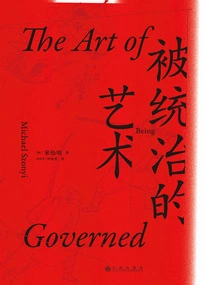
5被统治的艺术:中华帝国晚期的日常政治
(added) Song Yiming
This book uses the coastal guard station of the Ming Dynasty as the background to analyze the interaction between military households and the government under the Ming Dynasty's hereditary military household system. It focuses on describing and summarizing how military households who are obliged to serve in the military seek advantages and avoid disadvantages, and formulate various strategies to optimize their own situation. They neither blatantly defied authority nor obeyed, but operated in the "middle zone" between resistance and obedience in order to minimize the costs and maximize the benefits. This book is divided into three parts, telling the lives of Fujian military households in their hometown, guard station and military camp respectively. A major feature of this book is that it uses a large number of family trees, local chronicles, oral histories and other folk materials to tell many interesting stories that happened in the lives of military households. Real and vivid cases, supplemented by rigorous and detailed examination, constitute this social history book that tells the history of the people themselves.
This book uses the coastal guard station of the Ming Dynasty as the background to analyze the interaction between military households and the government under the Ming Dynasty's hereditary military household system. It focuses on describing and summarizing how military households who are obliged to serve in the military seek advantages and avoid disadvantages, and formulate various strategies to optimize their own situation. They neither blatantly defied authority nor obeyed, but operated in the "middle zone" between resistance and obedience in order to minimize the costs and maximize the benefits. This book is divided into three parts, telling the lives of Fujian military households in their hometown, guard station and military camp respectively. A major feature of this book is that it uses a large number of family trees, local chronicles, oral histories and other folk materials to tell many interesting stories that happened in the lives of military households. Real and vivid cases, supplemented by rigorous and detailed examination, constitute this social history book that tells the history of the people themselves.
Professor Song Yiming, Director of the Fairbank Center at Harvard University, is a brand-new masterpiece. Starting from the daily politics of the Ming and Qing Dynasties, it examines the unspoken rules deeply rooted in Chinese society, such as "the top is followed by the other, the bottom is countermeasures" and "system arbitrage".
 6
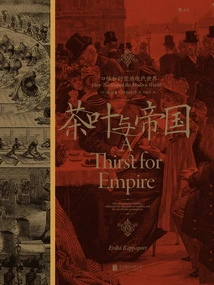
6茶叶与帝国:口味如何塑造现代世界
(us) Erica Rapaport
Tea has always been one of the most popular commodities in the world. Over the centuries, profits from growing and selling tea funded wars and fueled colonial activities, while tea cultivation also brought about dramatic changes in land use, labor systems, market operations, and social hierarchies that are still present today. This book provides an in-depth historical look at how men and women changed global tastes and habits through the tea industry in Europe, Asia, North America, and Africa. Author Erica Rappaport points out in this book that from the 17th to the 20th century, the borders of the tea industry and the British Empire overlapped, but were never completely aligned. She also highlights the economic, political, and cultural forces that enabled the British Empire to dominate, but never fully control, the production, trade, and consumption of tea worldwide. She also delves into how Europeans embraced, appropriated, and transformed Chinese tea culture to create widespread demand for tea in Britain and other global markets, and to establish plantation economies in South Asia and Africa. The tea industry was one of the first colonial industries, with merchants, growers, promoters and retailers using imperial resources to pay for global advertising and political lobbying. Tea inspired business models that still exist today and are critical to understanding how politics and propaganda influence international economies.
Tea has always been one of the most popular commodities in the world. Over the centuries, profits from growing and selling tea funded wars and fueled colonial activities, while tea cultivation also brought about dramatic changes in land use, labor systems, market operations, and social hierarchies that are still present today. This book provides an in-depth historical look at how men and women changed global tastes and habits through the tea industry in Europe, Asia, North America, and Africa. Author Erica Rappaport points out in this book that from the 17th to the 20th century, the borders of the tea industry and the British Empire overlapped, but were never completely aligned. She also highlights the economic, political, and cultural forces that enabled the British Empire to dominate, but never fully control, the production, trade, and consumption of tea worldwide. She also delves into how Europeans embraced, appropriated, and transformed Chinese tea culture to create widespread demand for tea in Britain and other global markets, and to establish plantation economies in South Asia and Africa. The tea industry was one of the first colonial industries, with merchants, growers, promoters and retailers using imperial resources to pay for global advertising and political lobbying. Tea inspired business models that still exist today and are critical to understanding how politics and propaganda influence international economies.
This book takes an in-depth historical look at how the tea industry in Europe, Asia, North America, and Africa changed global tastes and habits. Tea has built an empire on which the sun never sets, carrying the grand narrative of hundreds of years of globalized trade in the modern world.
 7
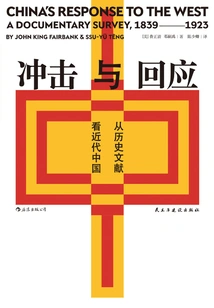
7Impact and Response
History冲击与回应
(u. S.) Fairbank Deng Siyu
Under the framework of the "impact-response" model, this book attempts to analyze an important clue in China's modern history: in the face of the strong expansion of the West, how did the Chinese elite understand this unfamiliar civilization and how to survive the country's culture, politics, and social system. By selecting some core historical materials and classic chapters from modern historical documents, this book gives a panoramic view of the exploration of the path to modernization by several generations of pioneers in modern China.
Under the framework of the "impact-response" model, this book attempts to analyze an important clue in China's modern history: in the face of the strong expansion of the West, how did the Chinese elite understand this unfamiliar civilization and how to survive the country's culture, politics, and social system. By selecting some core historical materials and classic chapters from modern historical documents, this book gives a panoramic view of the exploration of the path to modernization by several generations of pioneers in modern China.
Fairbank edited and wrote the introduction, which is a perfect combination of literature collection and commentary in the field of modern Chinese thought.
 8
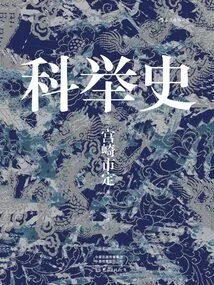
8科举史
(japan) Miyazaki City
This book is the culmination of Miyazaki City's research on imperial examinations. The author combs through the talent selection system in ancient China, from the Xiaolian Ke in the Eastern Han Dynasty to the Nine-Rank Officials' Law in the Wei and Jin Dynasties, and finally developed into the imperial examination system. Taking the imperial examination in the Qing Dynasty as an example, the author introduces in detail the procedures and details of the imperial examination, as well as the use of other official appointments other than the imperial examination. It elaborates on the profound impact of the imperial examination system on Chinese society since the Ming and Qing Dynasties.
This book is the culmination of Miyazaki City's research on imperial examinations. The author combs through the talent selection system in ancient China, from the Xiaolian Ke in the Eastern Han Dynasty to the Nine-Rank Officials' Law in the Wei and Jin Dynasties, and finally developed into the imperial examination system. Taking the imperial examination in the Qing Dynasty as an example, the author introduces in detail the procedures and details of the imperial examination, as well as the use of other official appointments other than the imperial examination. It elaborates on the profound impact of the imperial examination system on Chinese society since the Ming and Qing Dynasties.
The masterpiece of Miyazaki Ichisada, a famous Japanese sinologist, was collected in his later years. This book takes you through the imperial examination system and explains its profound impact on Chinese society since the Ming and Qing Dynasties.
 10
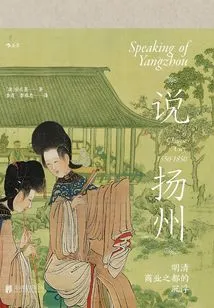
10Talking About Yangzhou: the Ups and Downs of the Commercial Capital of Ming and Qing Dynasties
History说扬州:明清商业之都的沉浮
(australia) Andongli
The name "Yangzhou" carries thousands of years of historical and cultural resonance. When talking about Yangzhou, images of artists, literati, big businessmen, beautiful waterways, bridges, gardens, and a history full of romance or tragedy all come to mind. This book is a "biography" that records all aspects of Yangzhou, telling readers how the city re-emerged from the flames of war at the turn of the Ming and Qing Dynasties, reaching its peak in the 18th century and becoming an important commercial capital; and how it gradually faded amidst historical accidents and inevitability, leaving only a few cultural fragments connecting the past with today. The author An Dongli has devoted more than ten years to researching this city, consulting a large number of historical books, local chronicles, poems and notes of contemporary people, filling in countless moving and real details for his grand writing structure, and restoring the true urban texture of Yangzhou during the Ming and Qing Dynasties. In this vivid urban picture, China's great changes in the late imperial period are also vividly displayed on the page.
The name "Yangzhou" carries thousands of years of historical and cultural resonance. When talking about Yangzhou, images of artists, literati, big businessmen, beautiful waterways, bridges, gardens, and a history full of romance or tragedy all come to mind. This book is a "biography" that records all aspects of Yangzhou, telling readers how the city re-emerged from the flames of war at the turn of the Ming and Qing Dynasties, reaching its peak in the 18th century and becoming an important commercial capital; and how it gradually faded amidst historical accidents and inevitability, leaving only a few cultural fragments connecting the past with today. The author An Dongli has devoted more than ten years to researching this city, consulting a large number of historical books, local chronicles, poems and notes of contemporary people, filling in countless moving and real details for his grand writing structure, and restoring the true urban texture of Yangzhou during the Ming and Qing Dynasties. In this vivid urban picture, China's great changes in the late imperial period are also vividly displayed on the page.
"Having dreamed of Yangzhou for ten years and winning the lucky reputation of a brothel" tells readers how this city re-emerged from the war at the turn of the Ming and Qing Dynasties, and the decline and rebirth of a commercial city in the pre-globalization era.
 11
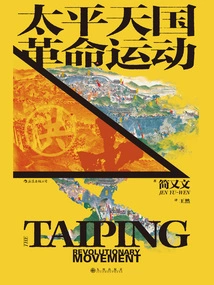
11太平天国革命运动史
Jian Youwen
This book covers the entire Taiping Rebellion. The author reconstructs the movement from the perspective of the Taiping Army. Through field visits and investigations, he collected Taiping Army cultural relics such as manuscripts, leaflets, seals, rubbings, coins, etc., Combined with historical documents and foreign language materials, to reveal the realistic foundation of the rise of the Taiping Rebellion. He examined the Taiping Army's military operations from both daily military operations and long-term strategic goals, and analyzed the Taiping Army's main strategic mistakes and Hong Rengan's later contributions.
This book covers the entire Taiping Rebellion. The author reconstructs the movement from the perspective of the Taiping Army. Through field visits and investigations, he collected Taiping Army cultural relics such as manuscripts, leaflets, seals, rubbings, coins, etc., Combined with historical documents and foreign language materials, to reveal the realistic foundation of the rise of the Taiping Rebellion. He examined the Taiping Army's military operations from both daily military operations and long-term strategic goals, and analyzed the Taiping Army's main strategic mistakes and Hong Rengan's later contributions.
A landmark work in the field of Taiping Rebellion research, the author recreates the movement from the perspective of the Taiping Army, through field visits and investigations, and Shi Jingqian wrote a preface to recommend it.