A Good Read About Chinese History
好读的中国史
An easy-to-understand and interesting history of China.
 1
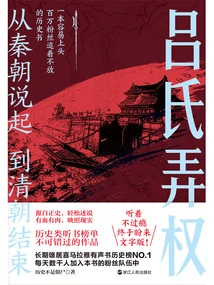
1从秦朝说起,到清朝结束(四):吕氏弄权
History Is Not A Zombie
After Liu Banglong passed away, the civil and military officials of the Manchu Dynasty supported Liu Ying as emperor. However, Lu Fei, who had been trapped in the Qin camp and held captive in Pengcheng, knew in his heart that he could only protect himself if he had great power. His extreme desire for power was ready to act, and at this moment he finally showed his fangs. After killing Zhao Wang Ruyi and Mrs. Qi with cruel means, Lu Fei came to power for nearly eight years. He first killed the former young emperor Liu Gong, and then established the second young emperor Liu Hong, playing with imperial power and holding hands. Lu Pheasant continues to produce Liu's heirs, allowing the Lu family to claim the title of queen. The Liu family's world is about to become the Lu family's world. Where will the Han Dynasty go... The author of this book uses easy-to-understand language to portray the characters of Lu Pheasant's dynasty and after. Lu Pheasant spared no effort to use his same-sex children to encroach on the power of the Han Dynasty. Until the end of his life, he was still carefully arranging his funeral arrangements to ensure the status of the Lu family. However, what she doesn't know is that the power that has been dormant for several years will come back, and what she did during her lifetime was just a passing cloud in history. Take history as a mirror and reflect history into reality. Through this book, we can easily grasp the main thread of history, happily experience historical stories, establish a correct view of history, and live a good life today.
After Liu Banglong passed away, the civil and military officials of the Manchu Dynasty supported Liu Ying as emperor. However, Lu Fei, who had been trapped in the Qin camp and held captive in Pengcheng, knew in his heart that he could only protect himself if he had great power. His extreme desire for power was ready to act, and at this moment he finally showed his fangs. After killing Zhao Wang Ruyi and Mrs. Qi with cruel means, Lu Fei came to power for nearly eight years. He first killed the former young emperor Liu Gong, and then established the second young emperor Liu Hong, playing with imperial power and holding hands. Lu Pheasant continues to produce Liu's heirs, allowing the Lu family to claim the title of queen. The Liu family's world is about to become the Lu family's world. Where will the Han Dynasty go... The author of this book uses easy-to-understand language to portray the characters of Lu Pheasant's dynasty and after. Lu Pheasant spared no effort to use his same-sex children to encroach on the power of the Han Dynasty. Until the end of his life, he was still carefully arranging his funeral arrangements to ensure the status of the Lu family. However, what she doesn't know is that the power that has been dormant for several years will come back, and what she did during her lifetime was just a passing cloud in history. Take history as a mirror and reflect history into reality. Through this book, we can easily grasp the main thread of history, happily experience historical stories, establish a correct view of history, and live a good life today.
After Liu Banglong passed away, the civil and military officials of the Manchu Dynasty supported Liu Ying as emperor. However, Lu Fei, who had been trapped in the Qin camp and held captive in Pengcheng, knew in his heart that he could only protect himself if he had the power. His desire for power was ready to act, and at this moment he finally showed his fangs.
 2
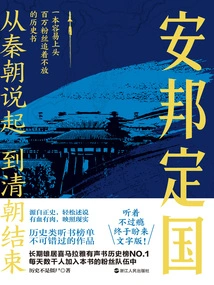
2从秦朝说起,到清朝结束(三):安邦定国
History Is Not A Zombie
A book to understand the conspiracies and intrigues from troubled times to peaceful times! The Han Dynasty was established, and after Liu Bang ascended the throne, he interpreted what it means to "hide the birds and hide them, and the rabbits and dogs to cook them". He wants to eliminate the generals who helped him conquer the world one by one, and he also wants to balance the various forces. At the same time, we also have to face the border crisis brought by the Huns. During the years when Liu Bang became emperor, he completed his role transformation from a knight-errant to an emperor, and the civil and military ministers also took different destinies in this era. And China finally entered the glorious Han Dynasty! The author of this book uses easy-to-understand language to deeply portray the personalities of various characters during Liu Bang's reign. A large number of ancient masters of state governance have appeared on the stage, such as Xiao He and Zhang Liang. The founding heroes such as Han Xin, Peng Yue, and Ying Bu were eliminated one by one. When Liu Bang eliminated his major worry, his life also came to an end. Behind him, the Lu family was in power, and the country of Han Dynasty was in danger. Take history as a mirror and reflect history into reality. Through this book, we can easily grasp the main thread of history, happily experience historical stories, establish a correct view of history, and live a good life today.
A book to understand the conspiracies and intrigues from troubled times to peaceful times! The Han Dynasty was established, and after Liu Bang ascended the throne, he interpreted what it means to "hide the birds and hide them, and the rabbits and dogs to cook them". He wants to eliminate the generals who helped him conquer the world one by one, and he also wants to balance the various forces. At the same time, we also have to face the border crisis brought by the Huns. During the years when Liu Bang became emperor, he completed his role transformation from a knight-errant to an emperor, and the civil and military ministers also took different destinies in this era. And China finally entered the glorious Han Dynasty! The author of this book uses easy-to-understand language to deeply portray the personalities of various characters during Liu Bang's reign. A large number of ancient masters of state governance have appeared on the stage, such as Xiao He and Zhang Liang. The founding heroes such as Han Xin, Peng Yue, and Ying Bu were eliminated one by one. When Liu Bang eliminated his major worry, his life also came to an end. Behind him, the Lu family was in power, and the country of Han Dynasty was in danger. Take history as a mirror and reflect history into reality. Through this book, we can easily grasp the main thread of history, happily experience historical stories, establish a correct view of history, and live a good life today.
The Han Dynasty was established, and after Liu Bang ascended the throne, he interpreted what it means to "hide the birds and hide them, and the rabbits and dogs to cook them". He wants to eliminate the generals who helped him conquer the world one by one, and he also needs to balance the various forces.
 3
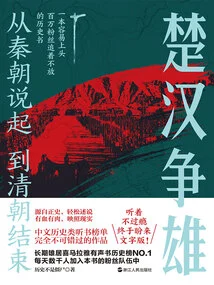
3从秦朝说起,到清朝结束(二):楚汉争雄
History Is Not A Zombie
At the end of the Qin Dynasty, as two important forces in the anti-Qin uprising, Liu Bang and Xiang Yu stepped onto the stage of history coincidentally. After several years of competition, Liu Bang finally won the victory with the help of many civil servants and generals. The author of this book uses easy-to-understand language to deeply portray the personalities of each character in the conflict between Chu and Han. A large number of ancient masters of state governance have appeared on the stage, not to mention Xiang Yu and Liu Bang, but also Han Xin, Zhang Liang, Xiao He and other figures have become famous throughout the ages. Take history as a mirror and reflect history into reality. Through this book, we can easily grasp the main thread of history, happily experience historical stories, establish a correct view of history, and live a good life today.
At the end of the Qin Dynasty, as two important forces in the anti-Qin uprising, Liu Bang and Xiang Yu stepped onto the stage of history coincidentally. After several years of competition, Liu Bang finally won the victory with the help of many civil servants and generals. The author of this book uses easy-to-understand language to deeply portray the personalities of each character in the conflict between Chu and Han. A large number of ancient masters of state governance have appeared on the stage, not to mention Xiang Yu and Liu Bang, but also Han Xin, Zhang Liang, Xiao He and other figures have become famous throughout the ages. Take history as a mirror and reflect history into reality. Through this book, we can easily grasp the main thread of history, happily experience historical stories, establish a correct view of history, and live a good life today.
At the end of the Qin Dynasty, as two important forces in the anti-Qin uprising, Liu Bang and Xiang Yu stepped onto the stage of history coincidentally. After several years of competition, Liu Bang finally won the victory with the help of many civil servants and generals.
 4
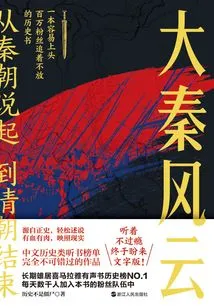
4从秦朝说起,到清朝结束(一):大秦风云
History Is Not A Zombie
Qin Shihuang defeated the six kingdoms, established a centralized feudal dynasty, and created a unified situation in Chinese history. Among them, many important figures and events became the key to pushing history forward, such as Lu Buwei, Li Si, Chen Sheng, Wu Guang, Liu Bang, Xiang Yu and other figures, as well as events such as the First Emperor's tour and the Dazexiang Uprising. The author of this book uses easy-to-understand language to introduce the important nodes of the Qin Dynasty from its establishment, development to disintegration in a story-like manner, and uses history as a mirror to reflect history into reality. This allows us to easily grasp the main thread of history, happily experience historical stories, establish a correct view of history, and live a good life today.
Qin Shihuang defeated the six kingdoms, established a centralized feudal dynasty, and created a unified situation in Chinese history. Among them, many important figures and events became the key to pushing history forward, such as Lu Buwei, Li Si, Chen Sheng, Wu Guang, Liu Bang, Xiang Yu and other figures, as well as events such as the First Emperor's tour and the Dazexiang Uprising. The author of this book uses easy-to-understand language to introduce the important nodes of the Qin Dynasty from its establishment, development to disintegration in a story-like manner, and uses history as a mirror to reflect history into reality. This allows us to easily grasp the main thread of history, happily experience historical stories, establish a correct view of history, and live a good life today.
Qin Shihuang defeated the six kingdoms and established a centralized dynasty, creating a unified situation in Chinese history...
 5
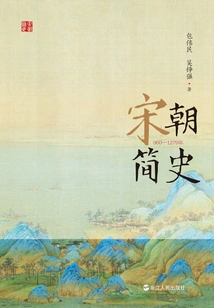
5宋朝简史
Bao Weimin Wu Zhengqiang
Why did the Song Dynasty, on the one hand, suffer from the ridicule of poverty and weakness of previous dynasties, but on the other hand, it achieved unprecedented achievements in spiritual temperament, ideology and culture? Well-known scholars of Song history, Bao Weimin and Wu Zhengqiang, looked back at the ups and downs of the Song Dynasty over the past 300 years to gain a glimpse into the historical texture and trace the code of its rise and fall. Looking back at the ups and downs of the dynasty over the past 300 years, the Song Dynasty succeeded the turbulent times of the late Tang Dynasty and established the country, but it never fully recovered the vast territory of the Han and Tang Dynasties. It suffered the "Jingkang Disgrace" and was robbed of half of its rivers and mountains, and settled south of the Qinling Mountains and the Huaihe River. Politically, it valued culture over military affairs, and strategically defended itself internally and externally. The Song Dynasty was surrounded by powerful enemies all day long, until it perished due to the rise of the Mongolian cavalry. But it was the same Song Dynasty that was considered to have opened up a "new situation" in the historical evolution of China's imperial dynasty, whether it was the political maturity of scholar-bureaucrats, the strengthening of the refined and restrained characteristics of agricultural civilization, the significant development of the commodity economy and handicraft industry, the numerous inventions in the technical field, and the epoch-making innovations in the ideological field. How is it that the same Song Dynasty, on the one hand, was ridiculed by poverty and weakness in previous dynasties, but on the other hand, it achieved unprecedented achievements in spiritual temperament, ideology and culture? To answer this question, we need to peer into the fabric of history and trace the codes of rise and fall.
Why did the Song Dynasty, on the one hand, suffer from the ridicule of poverty and weakness of previous dynasties, but on the other hand, it achieved unprecedented achievements in spiritual temperament, ideology and culture? Well-known scholars of Song history, Bao Weimin and Wu Zhengqiang, looked back at the ups and downs of the Song Dynasty over the past 300 years to gain a glimpse into the historical texture and trace the code of its rise and fall. Looking back at the ups and downs of the dynasty over the past 300 years, the Song Dynasty succeeded the turbulent times of the late Tang Dynasty and established the country, but it never fully recovered the vast territory of the Han and Tang Dynasties. It suffered the "Jingkang Disgrace" and was robbed of half of its rivers and mountains, and settled south of the Qinling Mountains and the Huaihe River. Politically, it valued culture over military affairs, and strategically defended itself internally and externally. The Song Dynasty was surrounded by powerful enemies all day long, until it perished due to the rise of the Mongolian cavalry. But it was the same Song Dynasty that was considered to have opened up a "new situation" in the historical evolution of China's imperial dynasty, whether it was the political maturity of scholar-bureaucrats, the strengthening of the refined and restrained characteristics of agricultural civilization, the significant development of the commodity economy and handicraft industry, the numerous inventions in the technical field, and the epoch-making innovations in the ideological field. How is it that the same Song Dynasty, on the one hand, was ridiculed by poverty and weakness in previous dynasties, but on the other hand, it achieved unprecedented achievements in spiritual temperament, ideology and culture? To answer this question, we need to peer into the fabric of history and trace the codes of rise and fall.
Why did the Song Dynasty have the ridicule of poverty and weakness in previous dynasties, but on the other hand it achieved spiritual temperament? With the Song army being completely annihilated in the Battle of Yashan, the Zhao and Song Dynasty, which had been in existence for more than 300 years, finally perished.
 6
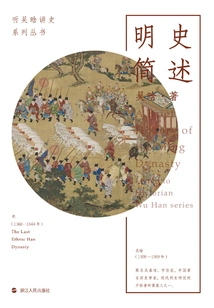
6听吴晗讲史:明史简述
Wu Han
This book is divided into upper and lower parts. The first part is "A Brief Introduction to the History of Ming Dynasty" and the second part is "Details of Ming Dynasty Society". The above part is a transcript of an academic lecture delivered by Wu Han at the Central Advanced Party School. It briefly and clearly summarizes the history of the Ming Dynasty and analyzes some of the most critical issues in the history of the Ming Dynasty. The second part selects Wu Han's important articles on the history of the Ming Dynasty. The content covers the study of all social strata in the Ming Dynasty and restores every detail of the life and production process from the Ming Dynasty bureaucrats to ordinary people. The upper and lower volumes jointly present a three-dimensional picture of China in the Ming Dynasty.
This book is divided into upper and lower parts. The first part is "A Brief Introduction to the History of Ming Dynasty" and the second part is "Details of Ming Dynasty Society". The above part is a transcript of an academic lecture delivered by Wu Han at the Central Advanced Party School. It briefly and clearly summarizes the history of the Ming Dynasty and analyzes some of the most critical issues in the history of the Ming Dynasty. The second part selects Wu Han's important articles on the history of the Ming Dynasty. The content covers the study of all social strata in the Ming Dynasty and restores every detail of the life and production process from the Ming Dynasty bureaucrats to ordinary people. The upper and lower volumes jointly present a three-dimensional picture of China in the Ming Dynasty.
This book is divided into upper and lower parts. The first part is "A Brief Introduction to the History of Ming Dynasty" and the second part is "Details of Ming Dynasty Society". Excellent material for understanding and appreciating the social life picture of China in the Ming Dynasty!
 7
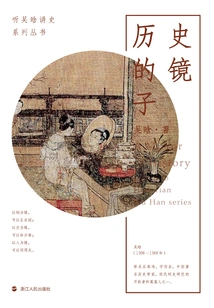
7听吴晗讲史:历史的镜子
Wu Han
This book is divided into two parts. The first part is "Mirror of History" and the second part is "Dengxia Collection". They are both collections of historical essays selected by Wu Han when he was still alive. Historian Wu Han has used his astonishing academic ability to survey thousands of years of ancient Chinese history. He has made observations from all angles and levels, presenting all aspects of ancient Chinese dynasties.
This book is divided into two parts. The first part is "Mirror of History" and the second part is "Dengxia Collection". They are both collections of historical essays selected by Wu Han when he was still alive. Historian Wu Han has used his astonishing academic ability to survey thousands of years of ancient Chinese history. He has made observations from all angles and levels, presenting all aspects of ancient Chinese dynasties.
Historian Wu Han used his astonishing academic ability to survey thousands of years of ancient Chinese history, observing from various angles and levels, and presenting all aspects of ancient Chinese dynasties.
 8
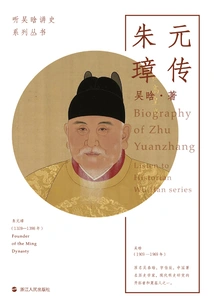
8听吴晗讲史:朱元璋传
Wu Han
This book is the biography of Zhu Yuanzhang, the founder of the Ming Dynasty. The famous historian Wu Han uses meticulous research and sharp writing to tell the legendary story of Zhu Chongba, a poor farmer who started from scratch from the bottom of society, fought back all the way, founded the Ming Dynasty, and became Zhu Yuanzhang, the founder of the Ming Dynasty. In the first half of his career, Zhu Yuanzhang struggled to start a business, and he was a foresighted and resolute hero. In the second half of his career, he personally formulated the basic political and social system of the Ming Dynasty. At the same time, he was also famous for his harsh punishments and high-pressure politics.
This book is the biography of Zhu Yuanzhang, the founder of the Ming Dynasty. The famous historian Wu Han uses meticulous research and sharp writing to tell the legendary story of Zhu Chongba, a poor farmer who started from scratch from the bottom of society, fought back all the way, founded the Ming Dynasty, and became Zhu Yuanzhang, the founder of the Ming Dynasty. In the first half of his career, Zhu Yuanzhang struggled to start a business, and he was a foresighted and resolute hero. In the second half of his career, he personally formulated the basic political and social system of the Ming Dynasty. At the same time, he was also famous for his harsh punishments and high-pressure politics.
It tells the legendary story of Zhu Chongba, a poor peasant who started from scratch from the bottom of society, fought back all the way, founded the Ming Dynasty, and became Zhu Yuanzhang, the founder of the Ming Dynasty.
 9
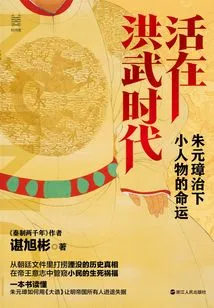
9活在洪武时代:朱元璋治下小人物的命运
Chen Xubin
This book peels off the thirteen cases written by Hongwu Emperor Zhu Yuanzhang in the "Da Gao", and elaborates on the ins and outs behind these cases that have no legal basis, common sense and logic. Starting from the military, land, political, legal and other policy systems of the early Ming Dynasty, we sort out the behavioral motivations of the people involved in the case, and interpret the basis and purpose of Emperor Hongwu's trial and judgment, thereby outlining the absurd fate and horrific living conditions of various characters in the Hongwu era, and reproducing the true face of Emperor Hongwu's "rule of law". In these cases, we can see the slaves of the guards who had no personal freedom, the farmers who were tied to the land and were not allowed to leave their hometowns, the old women who said wrong things and injured their neighbors and had their property confiscated, the scholars who did not want to be officials and had to cut off their fingers, the officials who followed reasonable case filing procedures but failed to guess the "holy will"... Through the careless fate of these little people, we see how a founding emperor with a brilliant mind deceived the controlling officials and spied on the people. These cases allow us to see another side of the "Hongwu rule".
This book peels off the thirteen cases written by Hongwu Emperor Zhu Yuanzhang in the "Da Gao", and elaborates on the ins and outs behind these cases that have no legal basis, common sense and logic. Starting from the military, land, political, legal and other policy systems of the early Ming Dynasty, we sort out the behavioral motivations of the people involved in the case, and interpret the basis and purpose of Emperor Hongwu's trial and judgment, thereby outlining the absurd fate and horrific living conditions of various characters in the Hongwu era, and reproducing the true face of Emperor Hongwu's "rule of law". In these cases, we can see the slaves of the guards who had no personal freedom, the farmers who were tied to the land and were not allowed to leave their hometowns, the old women who said wrong things and injured their neighbors and had their property confiscated, the scholars who did not want to be officials and had to cut off their fingers, the officials who followed reasonable case filing procedures but failed to guess the "holy will"... Through the careless fate of these little people, we see how a founding emperor with a brilliant mind deceived the controlling officials and spied on the people. These cases allow us to see another side of the "Hongwu rule".
This book strips away the twelve cases written by Hongwu Emperor Zhu Yuanzhang in the "Da Gao", and explains in detail the ins and outs behind these cases that have no legal basis, common sense and logic.
 10
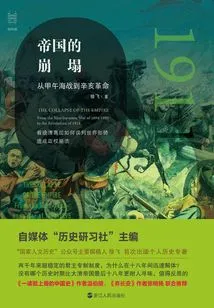
10帝国的崩塌:从甲午海战到辛亥革命
Xu Fei
This book is a new historical work by the young historian Xu Fei. This book will sort out and analyze the various misunderstandings of modernization by many important figures in the self-rescue movement of the late Qing Dynasty, and the historical process in which these misunderstandings pushed the Qing Dynasty towards its demise. No idea is created in a vacuum, and this book will also trace the origins and explore the origins of various misunderstandings. The Opium War opened the door to China, and China, which was closed and backward, suffered constant disasters. From the Sino-Japanese War of 1891 to the Revolution of 1911, the Qing Empire struggled to save itself. At the central level, there were enlightened Westernization leaders like Li Hongzhang and Yi? At the local level, there were pragmatic innovative forces like Zhang Zhidong and Liu Kunyi. Among the people, there were intellectuals like Kang Youwei and Tan Sitong who were passionate about saving the country. However, their various efforts failed to save this dying empire. Why is this? The self-rescue process of the Qing Empire was also China's effort to modernize. The fall of the Qing government was actually related to the Chinese people's misunderstanding of modernization at that time. The Qing government lacked reference coordinates at the critical moment and lost its way forward. A striking example is Kang Youwei's misunderstanding of the Western parliamentary system, and his reform plan was neither fish nor fowl. Even if Cixi had not launched a coup, the reform movement would have had no future.
This book is a new historical work by the young historian Xu Fei. This book will sort out and analyze the various misunderstandings of modernization by many important figures in the self-rescue movement of the late Qing Dynasty, and the historical process in which these misunderstandings pushed the Qing Dynasty towards its demise. No idea is created in a vacuum, and this book will also trace the origins and explore the origins of various misunderstandings. The Opium War opened the door to China, and China, which was closed and backward, suffered constant disasters. From the Sino-Japanese War of 1891 to the Revolution of 1911, the Qing Empire struggled to save itself. At the central level, there were enlightened Westernization leaders like Li Hongzhang and Yi? At the local level, there were pragmatic innovative forces like Zhang Zhidong and Liu Kunyi. Among the people, there were intellectuals like Kang Youwei and Tan Sitong who were passionate about saving the country. However, their various efforts failed to save this dying empire. Why is this? The self-rescue process of the Qing Empire was also China's effort to modernize. The fall of the Qing government was actually related to the Chinese people's misunderstanding of modernization at that time. The Qing government lacked reference coordinates at the critical moment and lost its way forward. A striking example is Kang Youwei's misunderstanding of the Western parliamentary system, and his reform plan was neither fish nor fowl. Even if Cixi had not launched a coup, the reform movement would have had no future.
It will sort out and analyze the various misunderstandings of modernization by many important figures in the self-rescue movement of the late Qing Dynasty, and the historical process in which these misunderstandings pushed the Qing Dynasty towards its demise. The self-rescue process of the Qing Empire was also China's effort to modernize.
 11
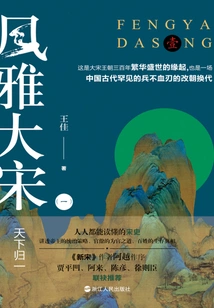
11风雅大宋(一):天下归一
Wang Jia
This book is a review of the history of the founding period of the Northern Song Dynasty. The author combines and compares the contents of official history and ancient notes to explain in detail the history from the founding of the Song Dynasty to its unification. Using rich historical materials and rigorous reasoning, it clarifies some people's views and prejudices about the Song Dynasty over the years, which is refreshing. The text is easy to understand and is both readable and academic at the same time. It is a rare popular history work.
This book is a review of the history of the founding period of the Northern Song Dynasty. The author combines and compares the contents of official history and ancient notes to explain in detail the history from the founding of the Song Dynasty to its unification. Using rich historical materials and rigorous reasoning, it clarifies some people's views and prejudices about the Song Dynasty over the years, which is refreshing. The text is easy to understand and is both readable and academic at the same time. It is a rare popular history work.
It is a review of the history of the founding period of the Northern Song Dynasty. It clarifies some of the views and stereotypes people have had about the Song Dynasty over the years, which is refreshing. The text is easy to understand and is both readable and academic at the same time. It is a rare popular history work.
 12
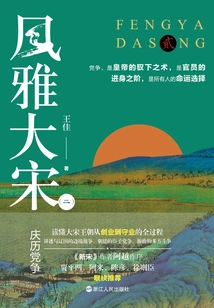
12风雅大宋(二):庆历党争
Wang Jia
This book is an overview of the history of the Northern Song Dynasty from Song Zhenzong to Song Renzong. The author combines and compares the contents of official history and ancient notes to explain in detail the history of the Song Dynasty from starting a business to keeping a business. Using rich historical materials and rigorous reasoning, it clarifies some people's views and prejudices about the Song Dynasty over the years, which is refreshing. The text is easy to understand and is both readable and academic at the same time. It is a rare popular history work.
This book is an overview of the history of the Northern Song Dynasty from Song Zhenzong to Song Renzong. The author combines and compares the contents of official history and ancient notes to explain in detail the history of the Song Dynasty from starting a business to keeping a business. Using rich historical materials and rigorous reasoning, it clarifies some people's views and prejudices about the Song Dynasty over the years, which is refreshing. The text is easy to understand and is both readable and academic at the same time. It is a rare popular history work.
A review of the history of the Northern Song Dynasty from Song Zhenzong to Song Renzong. The author combines and compares the contents of official history and ancient notes to explain in detail the history of the Song Dynasty from starting a business to keeping a business. Using rich historical materials and rigorous reasoning, it clarifies some of people's views and prejudices about the Song Dynasty over the years.
 13
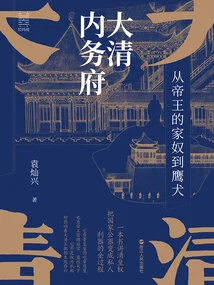
13大清内务府:从帝王的家奴到鹰犬
Yuan Canxing
A book to understand the people and things that really affected the emperor's behavior. This is a palace service organization, but it is also an institution close to the emperor. The people here are far away from government affairs, but they are extremely powerful. This is the Ministry of Internal Affairs of the Qing Dynasty. Yuan Canxing, the author of "Two Hundred Years of Military Aircraft Department" and "Changes in the Tang Dynasty", is a new author. This book uses a popular style to unfold the status and role of the Ministry of Internal Affairs in the history of the Qing Dynasty and the stories that happened, showing an institution that everyone is familiar with but full of mystery. The Ministry of Internal Affairs had important functions in the Qing Dynasty. It was the emperor's imperial agency and served the emperor. Everything from the emperor's food, clothing, housing and transportation to his private treasury was under the control of the Ministry of Internal Affairs. The Ministry of Internal Affairs is so powerful that only ministers trusted by the emperor can be in charge of the Ministry of Internal Affairs. The Ministry of Internal Affairs has a large organization, involving Jiangnan Weaving Bureau, Jingshifang (eunuch), Shengjing Internal Affairs Office, Imperial Tea Kitchen and many other institutions, and it obtains money through various channels. Many wonderful stories have been told in the history of the Ministry of Internal Affairs.
A book to understand the people and things that really affected the emperor's behavior. This is a palace service organization, but it is also an institution close to the emperor. The people here are far away from government affairs, but they are extremely powerful. This is the Ministry of Internal Affairs of the Qing Dynasty. Yuan Canxing, the author of "Two Hundred Years of Military Aircraft Department" and "Changes in the Tang Dynasty", is a new author. This book uses a popular style to unfold the status and role of the Ministry of Internal Affairs in the history of the Qing Dynasty and the stories that happened, showing an institution that everyone is familiar with but full of mystery. The Ministry of Internal Affairs had important functions in the Qing Dynasty. It was the emperor's imperial agency and served the emperor. Everything from the emperor's food, clothing, housing and transportation to his private treasury was under the control of the Ministry of Internal Affairs. The Ministry of Internal Affairs is so powerful that only ministers trusted by the emperor can be in charge of the Ministry of Internal Affairs. The Ministry of Internal Affairs has a large organization, involving Jiangnan Weaving Bureau, Jingshifang (eunuch), Shengjing Internal Affairs Office, Imperial Tea Kitchen and many other institutions, and it obtains money through various channels. Many wonderful stories have been told in the history of the Ministry of Internal Affairs.
This book unfolds the status and role of the Imperial Household Office in the Qing Dynasty in history and the stories that happened in a popular style, showing an institution that everyone is familiar with but full of mystery.
 14
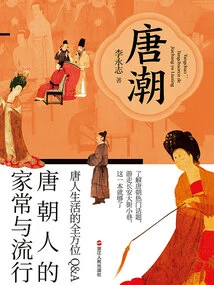
14唐潮:唐朝人的家常与流行
Li Yongzhi
The splendor of the era cannot be separated from the people living in this era. However, important details of ordinary people's lives such as their food, clothing, and leisure entertainment are often inadvertently ignored. As an introductory book for understanding life in the Tang Dynasty, "Notes on Life in the Tang Dynasty" attempts to recreate the real life of the Tang people thousands of years ago through nearly a hundred practical issues related to the survival and life of ordinary people from ten aspects including food culture, clothing and beauty, home life, travel guides, weddings and funerals, interpersonal workplaces, culture, education and entertainment, festival customs, urban construction, and institutional security, and then explore the original appearance of that era. Starting from the readers' interests, it reads a large number of historical materials and the research results of later generations, and uses concise and humorous writing style and analytical narrative to outline scenes of the Tang Dynasty people's daily life and popularity in the great era.
The splendor of the era cannot be separated from the people living in this era. However, important details of ordinary people's lives such as their food, clothing, and leisure entertainment are often inadvertently ignored. As an introductory book for understanding life in the Tang Dynasty, "Notes on Life in the Tang Dynasty" attempts to recreate the real life of the Tang people thousands of years ago through nearly a hundred practical issues related to the survival and life of ordinary people from ten aspects including food culture, clothing and beauty, home life, travel guides, weddings and funerals, interpersonal workplaces, culture, education and entertainment, festival customs, urban construction, and institutional security, and then explore the original appearance of that era. Starting from the readers' interests, it reads a large number of historical materials and the research results of later generations, and uses concise and humorous writing style and analytical narrative to outline scenes of the Tang Dynasty people's daily life and popularity in the great era.
The splendor of the era cannot be separated from the people living in this era. However, important details of ordinary people's lives such as their food, clothing, and leisure entertainment are often inadvertently ignored.
 15
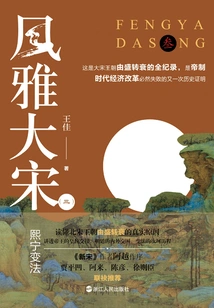
15风雅大宋(三):熙宁变法
Wang Jia
This book is an overview of the history of the Northern Song Dynasty from Song Renzong to Song Shenzong. The author combines and compares the contents of official history and ancient notes to explain in detail the history of the Song Dynasty from starting a business to keeping a business. Using rich historical materials and rigorous reasoning, it clarifies some people's views and prejudices about the Song Dynasty over the years, which is refreshing. The text is easy to understand and is both readable and academic at the same time. It is a rare popular history work.
This book is an overview of the history of the Northern Song Dynasty from Song Renzong to Song Shenzong. The author combines and compares the contents of official history and ancient notes to explain in detail the history of the Song Dynasty from starting a business to keeping a business. Using rich historical materials and rigorous reasoning, it clarifies some people's views and prejudices about the Song Dynasty over the years, which is refreshing. The text is easy to understand and is both readable and academic at the same time. It is a rare popular history work.
This book is an overview of the history of the Northern Song Dynasty from Song Renzong to Song Shenzong. The author combines and compares the contents of official history and ancient notes to explain in detail the history of the Song Dynasty from starting a business to keeping a business.