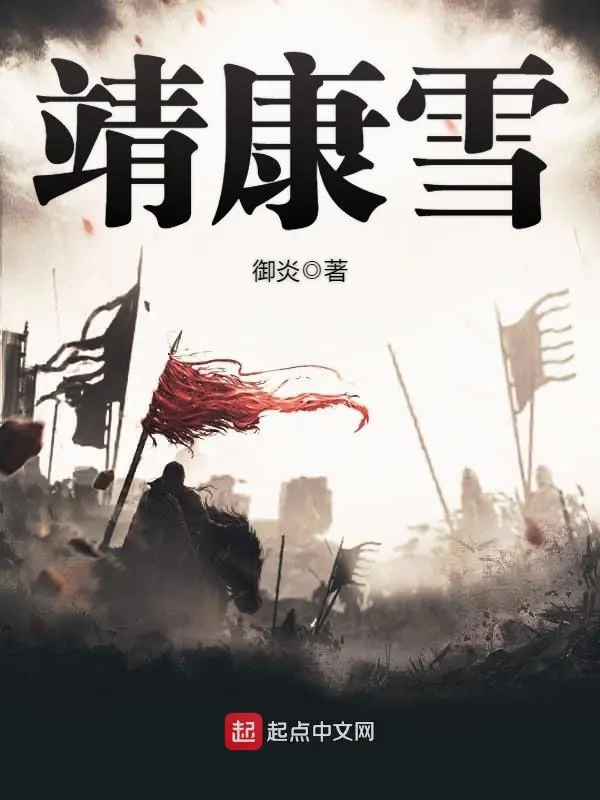
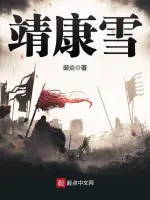
Jing Kangxue
靖康雪
- Status
- Completed
- Length
- 1.1M Words
- Genre
- Historical
- Audience
- Male
- Subgenre
- Song-Yuan-Ming Dynasties
- Updated
- 10y ago
- Source
- Qidian
Stats
0Monthly votes
4.3kRecommends
11.1kFans
390Chapters
Tags
Synopsis
Reader comments
In booklists 5


Those In-Depth Historical Articles and Other Fairy Tales
Those articles outline an era, with iron blood and tenderness. Is it the spring rain in March in Bianjing or the snow in the twelfth lunar month in Kyoto. It has the painting style of the prosperous Tang Dynasty, the iron bones of the Qin people, or the subtle tunes of the scholars of the Song Dynasty. Hey, I found a few good non-history books and added them to my list, meow.
11Books7Follows8yUpdated

There Are Always Some Books You Like to Read, I Hope You Like Them Too😊
These are just some of the books I like to read, a bit complicated, but the writing is pretty good.
59Books5Follows5moUpdated

The Book Must at Least Be Interesting. Friends Who Like Reading, Please Come In
Interesting book
27Books5Follows2yUpdated
A Book That I Can't Help but Look Back on from Time to Time
When I'm short of books, I'll click on the books I reviewed
27Books3Follows8yUpdated
Make You Happy and Sad
Let's move ourselves with them, share our history, and feel different emotions.
6Books0Follows9yUpdated
Readers also read
 1914 Begins with the Rejection of the Schlieffen Plan
 Talker in the Song Dynasty
 Please Call Me Your Majesty the Tsar
 In the Red Mansion: Escort Daiyu to Beijing at the Beginning
 The Reborn Fashion King
 Bashu
Bashu
 I Want to Be the First Assistant
 Tokyo: Starting from Pretending to Be a Boyfriend
 Fusion of Wolf Spider Genes, Killing Like Crazy on the Russian-Ukrainian Battlefield
 General of the Song Dynasty
 Daming Under Facebook
 Training Da Song
 The Heroic Ambitions of the Late Eastern Han Dynasty
 Wanli 1592
 Xuande
 I'm Not Yuan Shu
 He Can Replace It
 Lanfang
 Zhenguan Strategy
[Comment] In fact, the Kingdom of Jin is really fragile
The Jin Kingdom was different from the Song, Xia and other dynasties that had been established for hundreds of years. It only took a decade to rise and relied on the power of a violent tiger to rely on the river. The two hundred-year-old dynasties of Liao and Song were swallowed up and became a big fat man in one bite. But the biggest problem for the nouveau riche is that their foundation is too weak. The biggest problem of the Kingdom of Jin is that its population is too small - the population here does not refer to the entire population. Rather, it refers to the main ethnic group of the Jin Kingdom. Jurchens. When the Jin Kingdom was founded, the population of Jurchen households was only tens of thousands. By the time Wu Qimai came to power, the national Jurchen population was estimated to be approximately 130,000 households. As of the most prosperous Tianhui in the Jin Kingdom five years ago, the Jurchen population in the country did not exceed 150,000 households. Calculated based on an average of six people per household (this is calculated based on the survival rate, if it is based on the birth rate, it is at least double). If the full number is calculated, the total number of Jurchens, mature Jurchens, mixed-race Jurchens, and naturalized Jurchens (non-Jurchens. Naturalized Jurchens, such as the famous Wanyan pharmacist) adds up to less than one million. These Jurchens, who are less than one million, rule nearly ten million Khitan, Xi, Bohai, Shiwei, and Han people in the country... Among the Jurchens who are less than one million, the real backbone is the strong men after excluding the elderly, women and children, the disabled, and the weak. This group of people is only 200,000, and those suitable for military warfare are as high as the sky, which is about 150,000. The 150,000 Jurchen Golden Army is the real backbone supporting Ruoda's empire.
After reading the author's works on Eastern Han Dynasty, Wanli, and Jiajing, I admired him very much, so I continued to look for other works by the author and came across this one. To be honest, I feel that the main character is very arrogant and verbose, and the schizophrenic tangle is used more than in subsequent works. I really can't take it anymore. It seems that the master has also grown up step by step... Seeing the inner tug-of-war of the protagonist, there is always an inexplicable feeling. Many times, after more than ten chapters, the protagonist is still tug-of-war in his heart. For an instant, he feels like he is standing still and has watched everything before. To be honest, I don't understand what the protagonist is afraid of. If you don't do anything, there is still a high probability that you will die. It's useless to be afraid. It gives me the feeling that the protagonist prefers the coward's way of death to the hero's way of death. They all die anyway... As for the abuser or the death of someone, I don't think it matters. If you don't encounter difficulties, you won't be called the protagonist. To be honest, I didn't feel much when Cuicui died. Maybe it was because there wasn't much description. Instead, the protagonist kept reminiscing after his death, which made me think Cuicui might be good... The image of Cuicui is too vague. I really can't feel sorry for it like others, but I can also feel some of the characters. Jin Zhi... I don't know if Qidian deleted chapters or something. I seem to have missed Jin Zhi's plot and have no idea how she met the protagonist. In short, everything about this book is great. The only thing that I can't stand is the inner tug-of-war of the protagonist. Before I gave up and finished reading, I really couldn't see the "transformation" and stayed in the same place... But this problem disappeared in subsequent books... Let's wait for the author's novels after he is older...
[Comments] Some suggestions
Granular gunpowder. The method of making granular gunpowder is no less than reinventing gunpowder. It can greatly increase the range of artillery and also greatly increases the risk of explosion. However, compared with the power of the main charge, a small risk is nothing at all. There are two methods for making granular gunpowder, Chinese and Western. The Western method is more industrialized and complicated, so it should not be advocated. Here is an introduction to the Chinese production method, which originated from the famous general Qi Jiguang. First, mix the gunpowder evenly and stir-fry it dry (you read that right, you didn't know how to refer to the movie "Mine Warfare"). Next, mix the gunpowder into a puree, and use your hands to knead it into a ball without breaking up. Then dry the gunpowder mud in the shade, be sure to dry it in the shade! Then it can be crushed and sifted through a sieve. The big ones are sent to artillery, the small ones are sent to musket battalions, and the powdered ones are used as ignition powder.
[Comment] The development direction of pig-footed cavalry - wing cavalry
Polish Hussars, the pinnacle of classical cavalry "We saw... The hussars coming at a gallop. God, it was so shocking! They came through the smoke and the sound of their hooves was deafening, like a thousand blacksmiths striking their hammers. We saw... Jesus Maria! The spears (javelins) of the elite troops were broken like straws, as if they were swept away by the storm, for glory! Gunfire flashed before them! They charged at the Swedes! They broke into the Swedish cavalry (ceremony)…. Overwhelmed them! They rushed into the enemy's second regiment (the majority) - completely overwhelmed! The resistance collapsed, disintegrated, and their advance was as easy as marching down a boulevard. They have cut through the entire enemy army effortlessly! Next target: the Horse Guards, where King Carlo of Sweden (Ode) is located. And the enemy guard has been shaken! " Description by Henry Sienkievich. I was shocked and intrigued by the fact that the hussars were able, as it happened, to repeatedly defeat much larger numbers of enemies with much lighter losses, and that they suffered astonishingly low losses in the face of the artillery fire of infantry phalanxes protected by pikemen. At Kircholm, for example, the Poles lost around a hundred killed and 200 wounded, while the Swedish losses were estimated at between six and nine thousand. The first was firearms, which had very limited benefits at the time. Second, the Hussars had a way of minimizing the damage caused by firearms. It is best to think of a concrete example, a typical situation in the 16th and 17th centuries. At this time, the infantry prepared for battle in a more slender formation than in the past (in the early 16th century, some infantry phalanxes were 50 people in a row and 50 people in a column. 10 Columns were common. The more slender 6 columns (or up to 10 columns) had the advantage of allowing more people to participate in the battle on the front line, plus some convenience in movement). The musketeers were protected by at least three layers of spearmen. The number of columns was determined by the low firing frequency of the firearm at the time, sometimes as low as every two minutes. The number of spearmen was reduced purely to resist the terrible cavalry at the minimum. The ratio between the two has changed from 1:1 to 2:1, or even lower. In order to maintain uninterrupted firepower, Western Europe developed the "counter-march" infantry tactic. After firing, go back and reload. The only thing required is to maintain backward transition space between columns. When this plan works, the entire formation can fire continuously every 20 seconds, while a single line can fire an average of two minutes. The distance between "Foote" columns is 1.5 Meters. One reason for this is that space is needed to reload ammunition; the second reason is to be able to retreat behind the line after firing. The pikemen only covered the musketeers when there was a threat from fearsome cavalry or enemy pikemen. In this way, an infantry regiment of 600 men was arranged in nine columns, occupying a front of about 100 meters. During this period they fought in formations of 3 or 4 columns (although they could be deeper). Let's assume they are arranged in 4 columns. The distance between horses is at least one horse's length (that weird moment just before impact - wider after that). Such distance allows: ——Turn backwards, so that the advance or charge can be interrupted at any time without causing confusion. - The view makes it possible to maintain the sequence. The distance between each row is 4 meters (4 rows of 200 people) (riders are three meters apart). Of course, those at the forefront are also the ones most exposed to infantry firepower. The rear row is somewhat covered. At Kircholm, the Poles suffered approximately a hundred killed and 200 wounded, while Swedish losses were estimated at between six and nine thousand. 1605. The Grand Duke of Lithuania, Jan Karol Chodkiewicz, served as the commander-in-chief of the Royal Army of the Republic of Poland. He once used 3,000 cavalry to attack 10,000 Swedish elite infantry and 8,000 Swedish knights in Gilholm (now in Latvia). As a result, all the enemies were annihilated with less than 2,000 casualties. The others are the Battle of Cecora. First Chocim War, Second Chocim War, Siege of Vienna. In Klusen, a thousand-man cavalry team killed thousands of Prussian English and Scottish mercenaries in a frontal assault within 30 minutes. They stripped off their armor and fled in panic. Poles are not raised by humans
[Comment] What should I say~~
In fact, the author cares too much about the so-called portrayal of 'ordinary people'! From the moment he traveled to the past, everything he said and did was extraordinary, because that is the essence of our 21st century education.
I was quite upset that you wrote Qin Qiong to death in "Story of Zhenguan", but I can tolerate it. In "Jingkangxue", you wrote "Cui Cui" to death again. You are unswervingly on the path of sadistic writing! If you had Lu Shu's system, you would be indestructible, you know? Let's see who else you write to death in Wanli 1592
[Comment] Actually, it would be good to imitate Yue Fei
In view of the outstanding achievements of the Yuejia Army in history, the Beiwei Army played a great role. Although it was an elite cavalry with less than a thousand people, it still made the Jin people fearful. So in the face of the early attack of the Jin people, the 100,000-strong army that destroyed the Song Dynasty, the Han servant army exceeded 70,000 people, and the Jurchen clan numbered only tens of thousands. The 2.3 Million Jurchen cavalry, when the war started, especially in the first large-scale battle, had to beat the Jurchens painfully, and even beat the Jurchens to let him know that there were still people in the Song Dynasty who could fight and were not afraid of death. A certain number of casualties would make the Jurchens fearful. In the battle, a small number of elite cavalry is very important (use it well like the Yue Family Army in history). In the early days, there was little cavalry and there was nothing you could do. It would be great to imitate Yue Fei and fight a group of Han puppet troops and seize thousands of Jurchen war horses. The cavalry must be absolutely elite, able to fight and dare to fight. It is also possible to withstand the first wave of Jurchen attacks. I read on hundreds of forums about the Sino-Japanese War of 1894. The Qing army (Huai army) defended Pyongyang and fought a good battle. The Japanese suffered a lot of casualties. As a result, one of the generals who fought in the previous battle was killed in action. If you dare to fight, the outcome may change. You may surrender without fighting, seek absolute humiliation for peace, or simply perish.
There is no such leader of the Forbidden Army as Lin Chong in history.
[Comment] I suggest the author to read "The Great Ming Wolf Rider"
To deal with the Jurchens, we should be as simple and crude as Shi Dayong. Massacre the city when it's time to massacre it, bury it alive when it's time to bury it, and cook it when it's time to cook it.
To put it bluntly, the main reason for the suffering the protagonist suffered in the previous chapters was because of himself, so when I saw the death of the protagonist's master, Cuicui, and the suffering in Yuejiazhuang, I didn't feel any sympathy for the suffering. It should have been like this. Cuicui was not tainted, but I felt that it was not right. It should have been more miserable. This level did not inspire the protagonist's bloody nature at all. Also, it's really a bit cliché
[Comment]hahaha
He was so angry that he leaned against the railing, and the misty rain stopped. Looking up, looking up to the sky and roaring, with strong feelings. Thirty years of fame and dust, eight thousand miles of clouds and moon. Don't wait any longer. The young man's head will turn gray, and it will be so sad! The shame of Jingkang has not yet been resolved; the hatred of the ministers, when will it be extinguished? Driving a long car, crossing the gap in Helan Mountain. The ambition is to eat the meat of Huns when they are hungry, and to drink the blood of Huns when they are thirsty. Waiting to start over, clean up the old mountains and rivers, and face the sky.
The story the author wants to tell is quite good. After reading this book and Qiming, I always feel that the author's writing style or writing style is not in line with my taste. I think it may be because I don't have a delicate heart. So much so that I feel that the author's writing style is a bit literary and youthful, and Qiming gives me the feeling that the author's storytelling level can be higher.