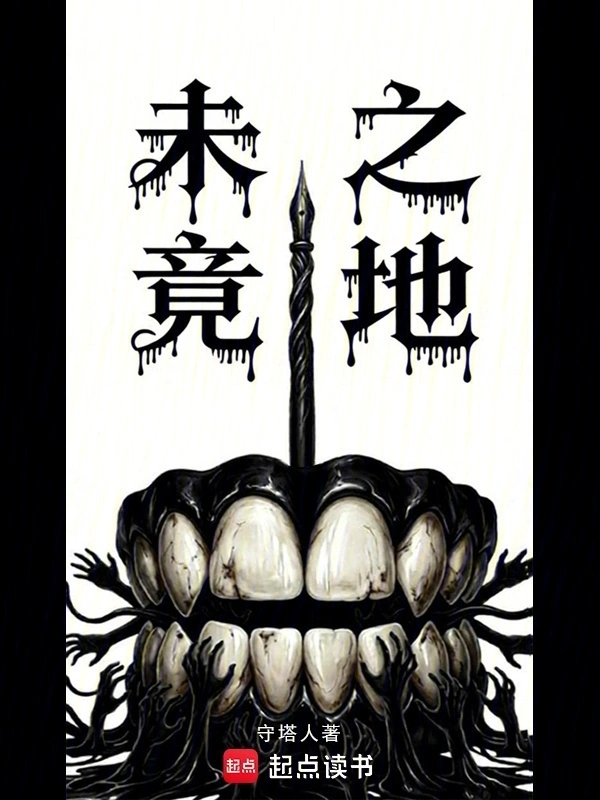
Unfinished Land
未竟之地
- Status
- Ongoing
- Length
- 69k Words
- Genre
- Western Fantasy
- Audience
- Male
- Subgenre
- Mystic Fantasy
- Updated
- 5d ago
- Source
- Qidian
Stats
0Monthly votes
256Recommends
0Fans
22Chapters
Synopsis
Reader comments
Readers also read
 The Alchemist Girl Is Becoming a God
 Open Your Adventure Log
 I Won the Favor of Ms. Quiet
 Kobold Wizard: What the Hell Is Your Attainment Status?
 Siheyuan: Start by Picking up Attributes
 Night Without Borders
 How Can You Become an Immortal If You Don't Have Money?
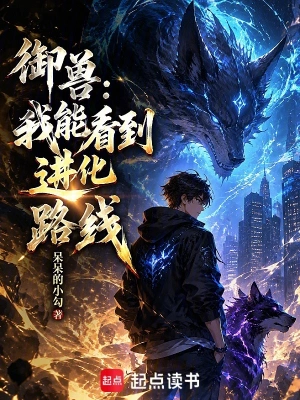 Beastmaster: I Can See the Evolutionary Path
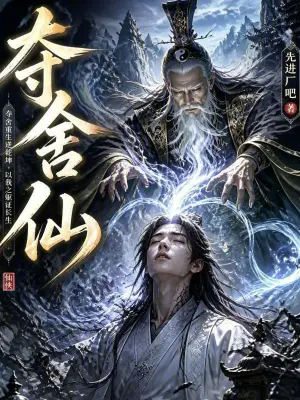 Immortal Who Seizes the Body
 Xuanjian Immortal Clan
 In the Name of Supernatural Power
 Linsheng
Wordfold Narrative Handbook
Preface | When stories are no longer products on the assembly line In the past hundred years, novel creation has gradually formed a set of industrial standards: beginning, succession, transition, three-act play, and hero's journey. We are used to starting from a point, following a line, and arriving at the end point. This narrative mode is so dominant that we rarely question its legitimacy. Why have linear stories dominated humanity for thousands of years? The answer may be cruel and simple: because it replicates our lives. From birth to death, from the beginning to the end, time flows in one direction. This is the underlying logic engraved in our genes, and it is also the fate that we are unable to escape. Because of this, humans have developed an almost pathological obsession with this one-dimensional narrative - it makes us feel safe and familiar, as if we are reading our own epitaph. But at the same time, another more primitive and restless desire is also growing secretly. Why is the "save/load" mechanism in video games so addictive? Why do time travel in movies and rebirth and revenge in novels always easily ignite the audience's adrenaline? Because we instinctively resist "the final word." We hope that even if there is only one chance in a billion, we can return to that fork in the road and overturn that wrong decision. This obsession with "what if..." Is the psychological soil of "word wrinkles". In the digital age, this desire has become even more explicit. We skip reading on social networks and swipe between short videos. Our attention is no longer a one-way river, but a turbulent ocean. The old narrative container can no longer hold the soul of modern people. "Word Folds" is not a show of skill, but a response to this collective anxiety that spans millennia - our desire for a second chance in words. What's more interesting is that this desire has actually been suppressed in the history of literature, because the mainstream narrative has always led us to "seek upward". Looking at human civilization, whether it is Eastern or Western, almost all mythological systems are like this. People look up at the stars, fear the gods, and pray for transcendent power. In these stories, humans are humble ants and gods are unattainable wills. Whether it is the reincarnation of heaven in Chinese mythology or the Twilight of the Gods in Western European mythology, the core of the story is always "seeking upward" - we long to be saved, judged, and watched. The "Word Fold" completely flips this power structure. It places readers and authors at an absolute high level, and treats the world described as a low level. This is a "seeking down" narrative: we assume that the world is real, and as creators, every casual comment and every casual thought by us is an irreversible oracle or disaster for that world. Two realities exist simultaneously, and we have the power to fold them. Chapter 1|Core Concept: Words are existence, time is folds In traditional literary concepts, words are the carrier and reality is the ontology. But in the text fold system, this relationship is completely reversed. 1.1 The Ontology of Text [Theoretical Explanation] In this system, text exists. Every character, every building, and every heartbeat in the story is made up of specific characters. Once a word is written, it gains the legitimacy of existence; once a word is modified, reality will change on a physical level. This requires the author to take every punctuation mark as seriously as the Creator, because what you write is the law. [Special Instructions] There are no atoms in Dictionary Town, only strokes. When townspeople are born, the midwife will write a line in the household registration book: "This person has a gentle personality and is five feet tall." This person really has a gentle personality and a height of five feet. One day, a careless clerk made a wrong stroke when transcribing, and wrote "mild" instead of "violent". That night, the whole town fell into an unprecedented mania until the typo was corrected. The townspeople were shocked: they were not alive, but written. 1.2 The Topography of Time [Theoretical Explanation] Traditional physics and literature assume that time is linear (A→B→C). Although science fiction introduces time travel, it is usually accompanied by huge paradoxes (such as the grandfather paradox). Text folds propose the concept of "time is a face". Imagine a piece of paper filled with events. You crumple it up and unfold it. The countless creases left on the paper are "folds". You can overlap any two points on the paper (such as point A and point C), and then point B, which is originally between them, will be "folded" into the inside of the paper. The collapsed plot does not disappear, it is just temporarily invisible and can be re-expanded at any time. [Special Instruction] Ella wrote in her diary: "Meet you at the old place at three o'clock tomorrow." The next morning, she changed her mind and scrawled out "three o'clock" with a pen and changed it to "four o'clock". The moment she painted it out, the world split apart. One Ella went to the same place at three o'clock and missed the opportunity; the other Ella went at four o'clock and met the person she wanted to see. The blacked-out "three points" were not physically deleted, it was just folded into the interlayer of time and became a buried history. 1.3 Collaborative Reading [Theoretical Explanation] In the world of word folds, the author is no longer the only creator, and the reader is no longer a passive consumer. The author is responsible for setting up the initial stage and rules, and readers become the "high-level existence" of this world through reading, staying, commenting and even imagining. Every interaction they have is like a pebble thrown into the water, causing ripples called "gibbering" and disturbing the reality in the story. This is a kind of cooperative reading, and the final shape of the story is determined by the joint will of the author and the reader. [Special Signal] On the wall of an abandoned museum, there is a line of vague words engraved on it: "A blue painting once hung here." When tourists pass by, they often guess on the guestbook next to it: some say it is the sea, some say it is cornflowers. Many years later, when the museum was renovated, workers shoveled open the wall and actually discovered an oil painting. It is an indefinable blue, like the darkness of the deep sea and the sky at noon. It is as if the canvas absorbs all readers' imaginations and solidifies them into entities. Interlude|A complete microscopic demonstration In order to make the above concept more concrete, let's take a look at a complete microstory. In this story, word-as-presence, folds, anchors, and apexes will all work together. There is an infinitely extending piece of white paper, on which is written a minimalist world: only one long street, one bookstore, and one clerk. Every morning, the first thing the clerk does is to open the heavy "Morning News" at the door and read the first sentence: "It's sunny today." As this sentence is read, the sun fills the street, and the world officially starts. This sentence "It's sunny today" is the anchor point of this world, which defines the basic parameters of reality. One day, a "visitor" who does not belong to this world passed by. He casually wrote a comment in the corner of the "Morning News": "What will happen if it rains?" This comment immediately became the second anchor point. When the clerk read it, the sky froze for a second, and then a drop of icy rain fell. The world has shifted for the first time, and this is the power of collaborative reading. On the third day, when the clerk was writing a personal diary, he crossed out the original word "Qing" and changed it to "Snow" because he was in a low mood. The moment he crossed out the word "Qing", time was wrinkled. The originally sunny timeline did not disappear, but was folded deep into the texture of the paper. The current world has two realities superimposed at the same time. In order to prevent the world from collapsing due to logical conflicts, the clerk found a book deep in the bookshelf that had never been opened. There is only one word on the cover: "Conservation." As long as this book is placed on the counter, all the folded chaos will be forcibly suppressed, maintaining the stability of the surface. This book is the pinnacle of the world's folds. Many years later, the visitor passed by again and was surprised to find that the phrase "What will happen if it rains" has become a local rain praying mantra that has been circulated for hundreds of years. He didn't know that it was his random writing that started the first and most important wrinkle in the world. Chapter 2|Basic Building Blocks: Anchors and Vertices After understanding the core concepts, we need specific tools to operate the world. Text folds are mainly supported by two components: anchor points and fold vertices. 2.1 Anchor Points Anchor points are fixed coordinates in the story structure. It can be: - a recurring image (like a black cat); - a key line; - a specific date; - even a specific smell. The function of an anchor point is to provide a "grasp". When you want to collapse time, you must have more than two anchor points as connection points. Without an anchor, the story is just a puddle of mud, unable to do anything structurally. A good anchor point must be open. It cannot be written down and must leave room for reinterpretation. 2.2 Fold Vertices If the anchor points are ordinary nails, then the fold vertices are steel nails. They are the tallest beings in the story, usually at the top of all folds of time. The character or object at the apex has "cross-fold consistency" - no matter how folded or confusing the story line below is, the apex always remains awake and retains all memories. The vertex role is like the stage manager, or the underlying code of the program. They usually do not participate in specific worldly disputes, but are responsible for performing mandatory sutures when the logic of the story is about to collapse. Giving a certain character "peak" status is the highest privilege reserved by the author, and it is also the last line of defense to keep the world from collapsing. Chapter 3 | Narrative Strategy: How to Fold Your Story 3.1 World Building: Establishing the "Authenticity Contract" Before you start writing, you must reach a tacit understanding with the reader: this world is real. Think of it not as a fictional backdrop, but as a physical space made of words. The first few thousand words at the beginning are crucial. You need to prove to the reader through details that the physical rules here are rigorous and the words have weight. Once this contract is established, the subsequent folding operation will be shocking. 3.2 Anchor Layout: Drawing a Fold Map Before you start writing, it is recommended that you draw a "fold map" first. Mark a few core anchor points that you plan to set up, and plan potential connections between them. The process of writing is actually connecting lines between these anchor points. Remember not to consume all the anchor points at once, just like playing chess, keep your backhand. 3.3 Folding Rhythm: Controlling Entropy Increase Folding is not as messy as possible. The wrinkles in the early stage should be slight, just hinting at the instability of reality; In the mid-term, the intensity can be increased to bury important plots and create suspense; In the later stage, the apex characters need to be used to tie up the scattered wrinkles. If it is too confusing at the beginning, readers will feel dizzy and give up reading. 3.4 Reader Interface: Designing "Babble" In order for cooperative reading to happen, you need to reserve an "interface" in the text. This could be a seemingly innocuous description, or a character's sudden confusion. When readers make comments or associations in these places, you need to respond to these voices subtly in subsequent chapters. Let readers feel that their thinking has indeed changed the character's situation. Chapter 4|Advantages and Challenges 4.1 Advantages 1. Infinite re-reading value: Each fold will produce a new level of meaning, and readers can discover completely different truths in different fold paths. 2. Inclusive subject matter: Whether it is science fiction, fantasy or realism, it can all be rewritten within this framework. 3. Reader stickiness: The sense of participation will turn into loyalty, and readers will change from "audience" to "believer". 4.2 Challenges 1. Extremely high structural control: As the story becomes longer, the number of anchor points and folds will increase exponentially, and the author can easily fall into logical confusion. 2. Maintenance of authenticity: Once the author breaks the rule of "words exist" for the convenience of the plot, the entire building will collapse instantly. 3. Uncertainty of interaction: Readers' reactions are often difficult to predict, requiring the author to have strong on-the-spot adaptability. Chapter 5 | Advice for first-time tryers If you are ready to try this genre, it is recommended to follow the following steps: 1. Start small: Don't write a million-word masterpiece at the beginning, write a short story first, and practice anchor point setting and folding skills. 2. Make the rules clear: Make it clear in the first three chapters how the world operates, and don't make things mysterious. 3. Reserve vertices: When designing the character, plan in advance who will be the final observer or stitcher. 4. Embrace burial: Don't be afraid to delete or hide plots, buried plots are treasures for the future. 5. Accept the loss of control: If the reader makes an unexpected interpretation, go with it, that is the most fascinating part of the folds. Conclusion | About this experiment and "File No. 00" (Not published to this platform) We live in an era that is coerced by "certainty". Whether it's real life or fiction, everything seems to be doomed. The folds of text provide a rebellious outlet: it admits that mistakes can be corrected, that the buried past still exists, and that every tap in the reader's hand may rewrite reality. In my own creative journey, I have been deeply tempted by this possibility. When writing the novel "File No. 00", I decided to use "text folds" as the basis of the entire work and conduct the first systematic practical test. This is a bold attempt and a cruel self-challenge. I tried to verify in this story: when words become physical rules, when time is allowed to fold, and when readers' comments turn into gibberish, how far can this world go? To be honest, it doesn't present a flawless ending. In the 800,000-word experiment, I encountered unexpected dilemmas—the increase in logical entropy, the lack of interaction, and the difficulty of maintaining the authenticity of the world in loneliness. But this is the value of experimentation. "File 00" is not only a novel, it is also a detailed experimental report, recording the landforms, climate, and the traps I personally stepped on in this new world. I did not provide a standard answer because I am also looking for an answer. I wrote this manual and shared the experience of "File 00" not to declare a victory, but to inspire others. I hope this seed about "folds" can take root and sprout in the hands of more creators, folding into a more magnificent picture than I could imagine.