Thousands of miles of beacon smoke last for thousands of years, and the rise and fall of the battlefield determines the dynasty.
This book is mainly based on official revision history such as "Sui Shu", "Old Tang Shu", "New Tang Shu", "Song History", "Ming History", "Qing History Manuscript" and "Zi Zhi Tong Jian", and also draws on various reliable historical materials to support each other, adhering to the general principles. The creation principle is to be true to the facts and not to stick to the trivial matters. It eliminates the dramas of later generations such as "The Romance of the Sui and Tang Dynasties". There is no time travel or golden finger fictional setting. The text is marked with the precise year number and month, and the millennium conquest epic is completely unfolded.
The story begins in the early Sui Dynasty with Yang Jian replacing Zhou and establishing the Sui Dynasty, crossing the Yangtze River to destroy Chen, and unifying the north and the south. It details the hidden dangers of corvee service in the prosperous age of the founding emperor; to Emperor Yang's three expeditions to Goguryeo, which depleted the country and the world. Rebels were everywhere, Wagang, Dou Jiande, and Du Fuwei were competing for the throne. Zhang Xutuo died in battle at Dahai Temple. The sudden change in Yanmen sounded the death bell of the Sui Dynasty. Li Yuan raised troops in Taiyuan, starting the century-old foundation of the Li and Tang Dynasties.
From then on, Zhenguan expanded the border, An-Shi chaos in the Tang Dynasty, the Five Dynasties separatist disputes, the long-term confrontation between the Song, Liao and Western Xia Jin, the Mongol cavalry unified China, the Red Turbans overturned the Mongolian Yuan Dynasty in the late Yuan Dynasty, the fierce battles in the northern frontier of the Ming Dynasty and the anti-Japanese resistance in the southeast, the bloody battles of the Ming and Qing Dynasties, and finally concluded with the continuous wars in the late Qing Dynasty, Puyi's abdication, and the end of the feudal dynasty.
The book meticulously restores the pre-war preparations, battlefield battles, and post-war developments of each war. It not only describes the heroic heroics of famous generals in their bloody battles, but also records the misery of ordinary people displaced in troubled times. The intrigues of the court and the fighting on the battlefield are intertwined. It does not deliberately pile up the feeling of fast-food Internet writing, but faithfully reproduces the original appearance of the war in the cold weapon era. In the continuous flames of war, it reveals the deep roots of the cycle of rise and fall of dynasties in the past.
 Red Mansion: Start Escaping and Farming from the Equipment Bar
 After Lying in Bed for Three Years, He Was Forced to Help the Han Dynasty
 Fu Ming 1627
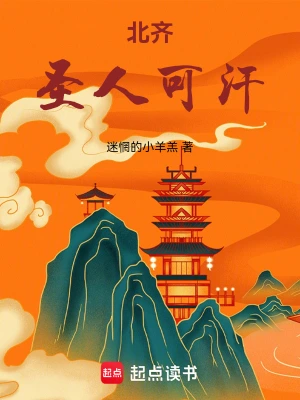 Northern Qi, Sage Khan
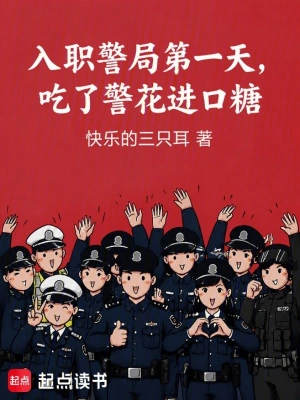 On My First Day at the Police Station, I Ate Imported Candy from a Police Beauty.
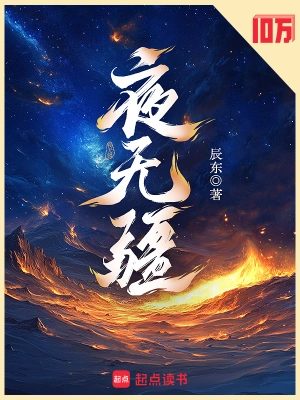 Night Without Borders
 Xuanjian Immortal Clan
 My Girlfriend Cheated on Her and Got Pregnant, and I Ran Away Nine Months Later
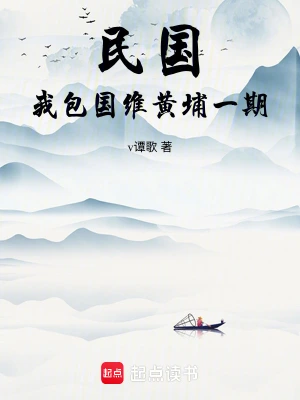 During the Republic of China, I Baoguowei Huangpu Phase I
 Sword and Candle Wilderness
 Primordial Law
 Linsheng