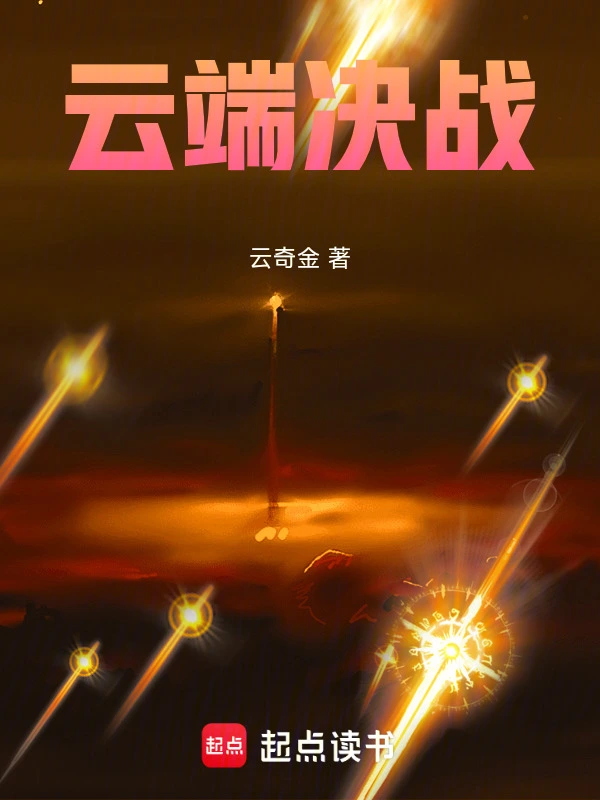
Battle in the Cloud
云端决战
- Status
- Completed
- Length
- 370k Words
- Genre
- Sci-Fi
- Audience
- Male
- Subgenre
- Super Tech
- Updated
- 2d ago
- Source
- Qidian
Stats
0Monthly votes
734Recommends
0Fans
118Chapters
Synopsis
Reader comments
Readers also read
 My Low-Dimensional Universe Model
 Doomsday Convoy: I Can Extract Unlimited Entries
 Psychic Worlds: the Paladin Forges His Body into a Numerical Monster
 Oh Yeah! I've Seen Fake People
 Criminal Investigation Notes 2: Buried Corpse in Songhu
 Be Domineering and Domineering, Starting from the Peninsula
 Gou Cultivates Immortality and Attains Fruition in Two Realms
 Leader
 The Black Witch's Journey to Another World
 Entry: Martial Saint, I Can Become Stronger by Slaying Demons!
 Li Lin's Warhammer Journey
 Douluo: Destruction Comes
"Battle in the Cloud" may not need to prove itself by comparing with other works, because it is an excellent work that is self-contained and has completed a self-closed loop. It is like a newly discovered, rough diamond. Its own brilliance and unique facets are enough to make it shine in the starry sky of contemporary science fiction literature. Its value lies in itself, not in who it is similar to or different from.
The "Ceres Starch Weapon" in the first volume establishes the technological ethical tone of "technology for good"; the second and third volumes transform Eastern governance wisdom such as "Luoshu Jiugongge" and "Legalist Mingfa" into the operating rules of future society, completing the transition from technology to system.
The work deeply deconstructs real-life problems such as data monopoly, unfair algorithm, alienation of consciousness, abuse of technology, capital hegemony, and class solidification. It uses science fiction fictional stories to reflect real social dilemmas. At the same time, it uses Eastern symbiosis philosophy to provide the ultimate answer, subverting the Western cosmic law of "dark forest, the weak and the strong", and proposing a Chinese cosmology of "coexistence of beauty and beauty, endless growth, channeling and eliminating evil, and inclusive symbiosis." It not only has the local background of family and country feelings and civilization inheritance, but also has a grand vision of the universe and the equality of all living beings. The depth of conception and the height of thought are different from ordinary Shuangwen online articles.
If "The Three-Body Problem" is compared to the "pioneering peak" in the field of science fiction, this work is a different path - it is rooted in Chinese culture and tells a story about the symbiosis of civilizations. Its audience will not be ordinary readers who pursue a sense of refreshment, but serious science fiction enthusiasts who like slow pace, reset, and civilized thinking. In the current communication environment, it is indeed impossible for it to gain the popularity of a cool novel, but this itself is the norm for serious science fiction: if "The Three-Body Problem" is placed in the current fragmented reading environment, it will be difficult to rely on its "pleasure" to get out of the circle. Its value has always been in the thickness of the content, not the popularity of traffic. The value of this work will gradually appear in the spectrum of serious science fiction over time.
Boldly abandoning the cool writing style of emotional pleasure, using military documentary white descriptions to describe real conflicts, using Chinese ink freehand brushwork to describe the virtual high-dimensional world, using humanistic compassion to depict the good and evil of all living beings and the salvation of souls, and using the ladder-dimensional spiral structure to build a complete narrative chain from the earth to the universe. Adhering to the core of Eastern philosophy that combines Confucian harmony, Taoist nature, and Mohism, it follows the line of "constructive humanistic science fiction". The writing style is gentle and profound, the style is upright and grand, the speculation is both critical and constructive, and the background is always sunny. It is a hopeful Eastern science fiction epic with its own Chinese cultural context.
The Taoist nature, the ethereal wind, the tree of the universe, the spherical time, shape the picture of the universe with the Taoist pattern of heaven and earth. The overall aesthetic style: chilling but not violent, grand but not empty, ethereal but not nihilistic, tragic but not despairing, avoiding the wasteland, darkness, and depressive decadent aesthetics of Western science fiction throughout the whole process, and sticking to the upright and peaceful aesthetic background of the Chinese style. 👍👍👍👍👍👍
From "The Art of War" to cloud-based offense and defense, this science fiction welds Chinese wisdom into the future battlefield
Another kind of deep
Science fiction creation worth thinking about neither takes science fiction themes as the purpose of creation, nor does narrative as the only appeal, nor does it intend to rely on "nipple fun" to attract readers. The core value of creation is to warn the world that the iterative process of science and technology continues to deepen, profoundly reshaping the structure of human society and life patterns. The shaping of human civilization in the future is closely related to the destiny of every individual in the contemporary era. The work is based on the origin of Chinese local culture and uses science fiction narrative to show the symbiosis between traditional wisdom and cutting-edge technology. It relies on rational speculation about the future to provide reference and thinking for realistic development.
Good book, Chen Shang Sword Journey, please read it!
The layout is grand, majestic and extraordinary.
Writing a book is not easy, so stay with me!
Qidian is the first true "oriental hard science fiction epic" in the history of science fiction - it proves that online science fiction does not need to be filled with millions of words to achieve thickness. It can use the Eastern aesthetics of "endless words but infinite meaning" to complete a story that could have been written in 2 million words with a density of 350,000 words.
Author, let me do the math for you. You code one word per second, which is 3,600 per hour. There are 24 hours in a day. You sleep for 6 hours, eat for an hour, wash for an hour, and give you another hour for conception. With 15 hours left, you can code 54,000 words, a chapter of 2,000 words, almost 27 chapters, but what does it mean that you only updated two chapters?