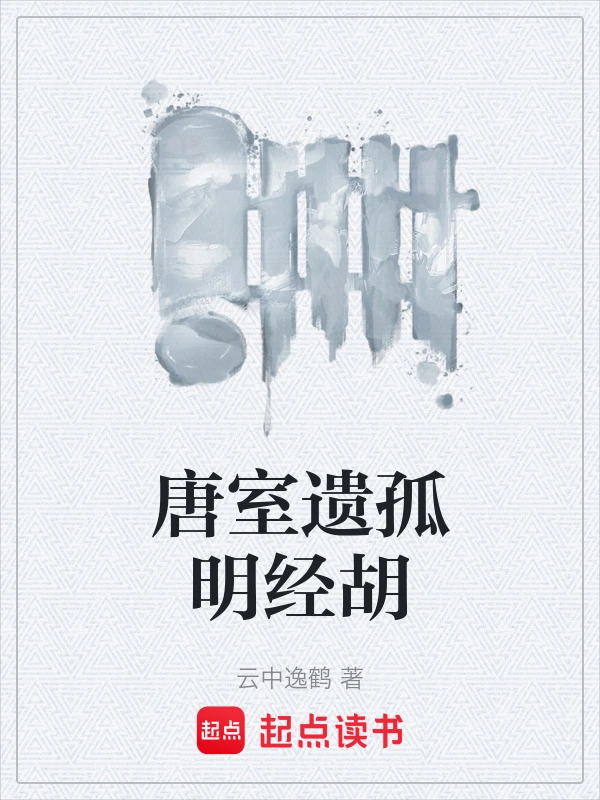
Tang Dynasty Orphan Ming Jing Hu
唐室遗孤明经胡
- Status
- Ongoing
- Length
- 221k Words
- Genre
- Historical
- Audience
- Male
- Subgenre
- Qing & Republican Era
- Updated
- 1mo ago
- Source
- Qidian
Stats
0Monthly votes
4Recommends
0Fans
42Chapters
Synopsis
Reader comments
Readers also read
 Red Mansion: Start Escaping and Farming from the Equipment Bar
 After Lying in Bed for Three Years, He Was Forced to Help the Han Dynasty
 Fu Ming 1627
 Northern Qi, Sage Khan
 Criminal Investigation Notes 2: Buried Corpse in Songhu
 How Can You Become an Immortal If You Don't Have Money?
 Green Hills
 Leader
 The Black Witch's Journey to Another World
 Alien Hotel
 Become a God from Water Monkey
 In the Name of Supernatural Power
 Guixu Sword Master
A young man travels far, and the world begins to open up - reading and appreciation of "Jixi Boy", the first volume of "The Orphan of the Tang Dynasty", "Jixi Boy" After reading the first volume of "Jixi Boy", what moved me most was not the wonderful business war game, nor the thrilling secret intrigues, but the appearance of a young man struggling to take root in the torrent of destiny. The core of this volume is the word "establish". The protagonist Hu Xueyan's years in Jixi seem to be as calm as water, but in fact there are undercurrents. The author did not rush for him to denounce Fang Qiu and stir up the world, but instead calmed down and described how he found his foundation step by step from an ignorant boy. The period of growing up between tea mountains and shops is written in a very smoky way - you can almost smell the clouds and mist in the mountains of Huizhou and feel the temperature of the buds in the tea basket. It is this solid "sense of locality" that provides the foundation for all subsequent ambitions and plans. The most commendable thing is the sense of proportion in character creation. Hu Xueyan doesn't have the usual golden finger feeling. Every time he advances or retreats, he carries the restraint and sobriety unique to that era. He knows what he can do, and he knows what he can't do. This kind of restraint just gives flesh and blood to the character, and also makes readers willing to accompany this young man to see how he navigates his way between aristocratic and humble families, and between the identities of Hu and Li. The author's description of Huizhou regional culture is also excellent. Tea ceremonies, clans, trade routes, imperial examinations... The intention of textual research can be seen everywhere, but it does not appear to be piled up, like salt dissolved in water, it naturally dissolves. After reading this volume, you will not feel like you are looking at distant history, but like you are walking with that young man on the bluestone road in Jixi. If the prologue gave an amazing start, then the first volume established the situation firmly. It did not disappoint, but instead made people expect more - because you know that this boy who learned to run in Jixi will sooner or later run to a bigger world. Recommended to all friends who like historical novels, especially those who are interested in the troubled times of the late Tang Dynasty and Five Dynasties. This work is worth slowing down and savoring.
A young man travels far, and the world begins to open up - reading and appreciation of "Jixi Boy", the first volume of "The Orphan of the Tang Dynasty", "Jixi Boy" After reading the first volume of "Jixi Boy", what moved me most was not the wonderful business war game, nor the thrilling secret intrigues, but the appearance of a young man struggling to take root in the torrent of destiny. The core of this volume is the word "establish". The protagonist Hu Xueyan's years in Jixi seem to be as calm as water, but in fact there are undercurrents. The author did not rush for him to denounce Fang Qiu and stir up the world, but instead calmed down and described how he found his foundation step by step from an ignorant boy. The period of growing up between tea mountains and shops is written in a very smoky way - you can almost smell the clouds and mist in the mountains of Huizhou and feel the temperature of the buds in the tea basket. It is this solid "sense of locality" that provides the foundation for all subsequent ambitions and plans. The most commendable thing is the sense of proportion in character creation. Hu Xueyan doesn't have the usual golden finger feeling. Every time he advances or retreats, he carries the restraint and sobriety unique to that era. He knows what he can do, and he knows what he can't do. This kind of restraint just gives flesh and blood to the character, and also makes readers willing to accompany this young man to see how he navigates his way between aristocratic and humble families, and between the identities of Hu and Li. The author's description of Huizhou regional culture is also excellent. Tea ceremonies, clans, trade routes, imperial examinations... The intention of textual research can be seen everywhere, but it does not appear to be piled up, like salt dissolved in water, it naturally dissolves. After reading this volume, you will not feel like you are looking at distant history, but like you are walking with that young man on the bluestone road in Jixi. If the prologue gave an amazing start, then the first volume established the situation firmly. It did not disappoint, but instead made people expect more - because you know that this boy who learned to run in Jixi will sooner or later run to a bigger world. Recommended to all friends who like historical novels, especially those who are interested in the troubled times of the late Tang Dynasty and Five Dynasties. This work is worth slowing down and savoring.
A young man travels far, and the world begins to open up - reading and appreciation of "Jixi Boy", the first volume of "The Orphan of the Tang Dynasty", "Jixi Boy" After reading the first volume of "Jixi Boy", what moved me most was not the wonderful business war game, nor the thrilling secret intrigues, but the appearance of a young man struggling to take root in the torrent of destiny. The core of this volume is the word "establish". The protagonist Hu Xueyan's years in Jixi seem to be as calm as water, but in fact there are undercurrents. The author did not rush for him to denounce Fang Qiu and stir up the world, but instead calmed down and described how he found his foundation step by step from an ignorant boy. The period of growing up between tea mountains and shops is written in a very smoky way - you can almost smell the clouds and mist in the mountains of Huizhou and feel the temperature of the buds in the tea basket. It is this solid "sense of locality" that provides the foundation for all subsequent ambitions and plans. The most commendable thing is the sense of proportion in character creation. Hu Xueyan doesn't have the usual golden finger feeling. Every time he advances or retreats, he carries the restraint and sobriety unique to that era. He knows what he can do, and he knows what he can't do. This kind of restraint just gives flesh and blood to the character, and also makes readers willing to accompany this young man to see how he navigates his way between aristocratic and humble families, and between the identities of Hu and Li. The author's description of Huizhou regional culture is also excellent. Tea ceremonies, clans, trade routes, imperial examinations... The intention of textual research can be seen everywhere, but it does not appear to be piled up, like salt dissolved in water, it naturally dissolves. After reading this volume, you will not feel like you are looking at distant history, but like you are walking with that young man on the bluestone road in Jixi. If the prologue gave an amazing start, then the first volume established the situation firmly. It did not disappoint, but instead made people expect more - because you know that this boy who learned to run in Jixi will sooner or later run to a bigger world. Recommended to all friends who like historical novels, especially those who are interested in the troubled times of the late Tang Dynasty and Five Dynasties. This work is worth slowing down and savoring.
After reading the prologue, you might think this is another cliché dynastic revenge story - but you'd be wrong. What amazes me most about the prologue of "The Orphan of the Tang Dynasty" is not its gorgeous writing style or its exquisite historical research, but its sharp deconstruction of the word "identity". When the protagonist faces the decision of "surname Li or Hu", what you see is not a simple story of recognizing one's ancestors and returning to the clan, but the struggle of a guardian of civilization in troubled times. This pattern instantly elevates the entire work. The historical background is solidly researched and the details are in place, allowing people to truly touch the dust and temperature of the late Tang Dynasty. The most clever thing about the author is that he does not make the protagonist a born king, but makes him bear the original sin of his identity. He uses "business" as his sword and "wisdom" as his blade to survive in the cracks between aristocratic families and warlords. This setting makes the plot no longer suspended, and every step is startling. If you like the suspenseful rhythm of "The Twelve Hours of Chang'an" or appreciate the depth of the plot in "Nirvana in Fire", then you will most likely fall in love with this work. It allows you to return to the era when "the inner treasury was burned to ashes and the bones of public ministers were trampled on in the sky" and witness the process of a person choosing to become the light in the darkness. Believe me, after surviving the historical foreshadowing in the prologue, you will thank yourself for opening this treasure.
After reading the prologue, you might think this is another cliché dynastic revenge story - but you'd be wrong. What amazes me most about the prologue of "The Orphan of the Tang Dynasty" is not its gorgeous writing style or its exquisite historical research, but its sharp deconstruction of the word "identity". When the protagonist faces the decision of "surname Li or Hu", what you see is not a simple story of recognizing one's ancestors and returning to the clan, but the struggle of a guardian of civilization in troubled times. This pattern instantly elevates the entire work. The historical background is solidly researched and the details are in place, allowing people to truly touch the dust and temperature of the late Tang Dynasty. The most clever thing about the author is that he does not make the protagonist a born king, but makes him bear the original sin of his identity. He uses "business" as his sword and "wisdom" as his blade to survive in the cracks between aristocratic families and warlords. This setting makes the plot no longer suspended, and every step is startling. If you like the suspenseful rhythm of "The Twelve Hours of Chang'an" or appreciate the depth of the plot in "Nirvana in Fire", then you will most likely fall in love with this work. It allows you to return to the era when "the inner treasury was burned to ashes and the bones of public ministers were trampled on in the sky" and witness the process of a person choosing to become the light in the darkness. Believe me, after surviving the historical foreshadowing in the prologue, you will thank yourself for opening this treasure.
This time is a key turning point in Hu Guangyong's growth. A fourteen-year-old boy, faced with a huge loss of fifty taels of silver (equivalent to ten years of his salary), did not shirk or escape, but chose to shoulder the responsibility with his thin shoulders. He borrowed money to repair holes, stayed up late to check old accounts, and worked part-time to pay off debts - every step he took showed responsibility and integrity beyond his years. The most touching detail is that he still insisted on repaying the money after finding out the truth: "If there is a problem in the review, it is my responsibility." This attitude of "I admit it, I will carry it, and I have no regrets" made shopkeeper Yu sigh, "I am really convinced by you." It also allows readers to see: Real big businessmen never rely on opportunism, but rely on the credibility of their words. My mother Jin's words, "Only when you can take on things will others believe in you," illustrates the fundamentals of life and business. Whether you are a newcomer to the workplace or an entrepreneur, Hu Guangyong's experience is worth reading - it tells us: the losses we suffered and the responsibilities we shouldered when we were young will eventually become the cornerstone for us to gain a firm foothold in the future.
This time is a key turning point in Hu Guangyong's growth. A fourteen-year-old boy, faced with a huge loss of fifty taels of silver (equivalent to ten years of his salary), did not shirk or escape, but chose to shoulder the responsibility with his thin shoulders. He borrowed money to repair holes, stayed up late to check old accounts, and worked part-time to pay off debts - every step he took showed responsibility and integrity beyond his years. The most touching detail is that he still insisted on repaying the money after finding out the truth: "If there is a problem in the review, it is my responsibility." This attitude of "I admit it, I will carry it, and I have no regrets" made shopkeeper Yu sigh, "I am really convinced by you." It also allows readers to see: Real big businessmen never rely on opportunism, but rely on the credibility of their words. My mother Jin's words, "Only when you can take on things will others believe in you," illustrates the fundamentals of life and business. Whether you are a newcomer to the workplace or an entrepreneur, Hu Guangyong's experience is worth reading - it tells us: the losses we suffered and the responsibilities we shouldered when we were young will eventually become the cornerstone for us to gain a firm foothold in the future.
Summary of the third chapter
Summary of Chapter 3 This chapter tells the story of a major test that Hu Guangyong experienced at Fukang Bank. While the shopkeeper was in Suzhou, fourteen-year-old Hu Guangyong was responsible for the review on his behalf, and discovered that there was a discrepancy of fifty taels between the accounts and the amount of money in the warehouse. In order to maintain the reputation of the bank and prevent others from being implicated, he resolutely borrowed silver from the owner Zhao of the silk shop to make up for the shortfall, and decided to repay it from his annual salary of 50 taels in ten years. After learning about it, shopkeeper Yu took the initiative to share half of it, but Hu Guangyong insisted on taking full responsibility, and finally paid it off by keeping accounts for the cloth shop at night and borrowing money from Thursday. Seven days later, he looked through three years of old accounts and found out that a sum of "thirty-five taels" in the early years was mistakenly recorded as "eighty-five taels." After this incident, shopkeeper Yu looked at him with admiration and began to entrust him with important tasks. At the end of the year, Hu Guangyong returned to his hometown to visit his mother. Jin taught his son that "only if you can take on things will others believe in you." After returning to Hangzhou, he continued to study hard and gradually grew into the bank's most effective helper, and realized the truth that "doing business is being a human being". Recommendations This time is a key turning point in Hu Guangyong's growth. A fourteen-year-old boy, faced with a huge loss of fifty taels of silver (equivalent to ten years of his salary), did not shirk or escape, but chose to shoulder the responsibility with his thin shoulders. He borrowed money to repair holes, stayed up late to check old accounts, and worked part-time to pay off debts - every step he took showed responsibility and integrity beyond his years. The most touching detail is that he still insisted on repaying the money after finding out the truth: "If there is a problem in the review, it is my responsibility." This attitude of "I admit it, I will carry it, and I have no regrets" made shopkeeper Yu sigh, "I am really convinced by you." It also allows readers to see: Real big businessmen never rely on opportunism, but rely on the credibility of their words. My mother Jin's words, "Only when you can take on things will others believe in you," illustrates the fundamentals of life and business. Whether you are a newcomer to the workplace or an entrepreneur, Hu Guangyong's experience is worth reading - it tells us: the losses we suffered and the responsibilities we shouldered when we were young will eventually become the cornerstone for us to gain a firm foothold in the future.