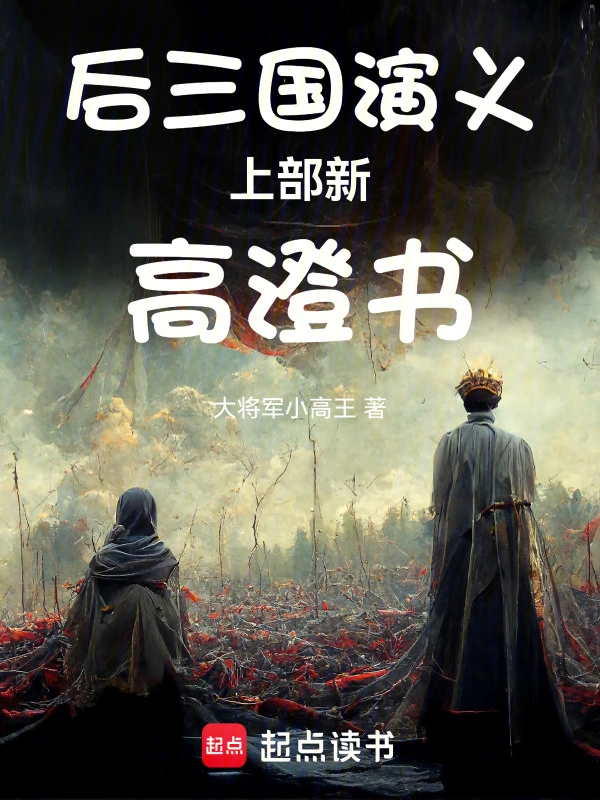
When Gao Cheng Had a Time Machine in the Post-Three Kingdoms Era
当高澄有了后三国时代的时光机
- Status
- Ongoing
- Length
- 1.1M Words
- Genre
- Historical
- Audience
- Male
- Subgenre
- Jin-Sui-Tang Dynasties
- Updated
- 18h ago
- Source
- Qidian
Stats
0Monthly votes
1.7kRecommends
0Fans
339Chapters
Synopsis
Reader comments
Readers also read
 Red Mansion: All the Flowers in the Garden Are My Green Plums
 In the Ming Dynasty, the Days When the Cows and Horses Turned Over
 Chronicles of the Red Mansion
 I Asked You to Save Twelve Hairpins, but You Put Aside This Unlimited Explosive Force
 Ordinary People: Start from the Yanjiabao Branch
 Museum Night Shift Rules
 Tokyo: I Am This Kind of Person, but You Are Not This Kind of Person
 I Made up Magic and Taught the World-Destroying Witch?
 Lucky Player
 Senior Sister, Please Listen to My Explanation
 Nanming Swordsman
 I Asked You to Find a Bodyguard. What the Hell Are You from the Motherland?
Gao Cheng's novels
Gao Cheng was a powerful official in the Eastern Wei Dynasty and the founder of the Northern Qi Dynasty. He surrendered to Gao Aocao when he was 10 years old. At the age of seventeen, he took charge of the Ministry of Personnel, abolished the practice of seniority promotion, and selected officials through assessment; at the age of twenty, he completed the "Lin Zhi Ge", which became the source of law in the Sui and Tang Dynasties. At the age of twenty-three, he took full charge of the affairs of the Eastern Wei Dynasty. He minted coins for trade, opened up salt fields, relaxed cultural controls, reformed officialdom, and made up for the shortcomings of Gao Huan's neglect of internal affairs. The national power increased steadily. At the age of twenty-six, he put down Hou Jing's rebellion, won great victories in the battles of Hanshan and Yingchuan, restrained the clan nobles internally, took back military power, and defeated the Western Wei and Nanliang in succession externally, and the national power of the Eastern Wei Dynasty reached its peak. At the age of twenty-nine, he was in full power and only needed the Zen throne to found the country and proclaim himself emperor. However, he was suddenly assassinated by a Shannu, and his ambitions came to an abrupt end. His lifelong achievements laid the foundation for the founding of the Northern Qi Dynasty. He was a heroic figure who had been underestimated for a long time. This novel breaks the conventions of historical biographies, using Gao Cheng and Yu Wentai as sworn brothers, their love with Qin'er, their childhood sweethearts with Yuan Shanjian, a pair of domineering powerful ministers and the CP of the puppet emperor, and the subtle changes in their parents, brothers and sisters. It deeply describes Gao Cheng's growth experience and great achievements, and tries its best to show the reform path of Yu Wentai and Gao Cheng.
I wish your masterpiece will be famous and popular for a long time 🎁🙏
About Romance of the Three Kingdoms + Gao Cheng's novels
I write about Gao Cheng naturally because I like him. No matter how you look at him, it is also my dream to write a Gao Cheng novel. Of course, my history does not allow me to only write about Gao Cheng, so I added other historical figures to the core of "The Biography of Gao Cheng, the Powerful Minister of the Wei Dynasty", and finally began to write the post-Romance of the Three Kingdoms. This novel mainly wants to objectively show Gao Cheng's character and great achievements, and show how to unify the Sui and Tang Dynasties. Another reason is that the records in "Book of Wei", "Book of Northern Qi" and "Book of Zhou" are just like novels. It is better to imitate Luo Guanzhong's "Romance of the Three Kingdoms" and write a "Romance of the Later Three Kingdoms", divided into upper and lower parts. The protagonists in the upper part are Gao Cheng and Yuwentai, and the lower part uses the six kings of Wenxiang and the emperors of the Northern Zhou Dynasty to construct a thorough Yuwentai VS Gao Cheng. There is another reason. I think there are relatively few biographies of Gao Cheng and most of them are time-travel works. I plan to write a very long historical novel that details Gao Cheng. I have not written about power ministers in the past two years, fulfilling my childhood dream of a pair of domineering power ministers and a puppet emperor. (In fact, when I was a child, I wrote a lot of fictitious articles about the Queen Mother, the Emperor, and the powerful ministers. After writing it, I found that it was all idealization. I decided to write a historical novel starting from this year, so that it can be both serious and humorous. Finally, I want to create a million-dollar masterpiece, which is the entire book "The Romance of the Three Kingdoms". Gao Chengshu attached these few words at the end of the upper part. The article I wrote last month is to do my best to help Gao Cheng publicize it, that's all. Thank you for your support. The author will work hard to save the manuscript. I will definitely polish the work seriously in two or three months. Therefore, if you understand the history of the Southern and Northern Dynasties, I may have missed the historical facts. I will work on it later. It takes time. I welcome your comments.
Post-Three Kingdoms era
The Three Kingdoms after the Southern and Northern Dynasties refers to the historical stage after the split of the Northern Wei Dynasty, when the three major regimes, the Eastern Wei (the predecessor of the Northern Qi), the Western Wei (the predecessor of the Northern Zhou), and the Nanliang (the predecessor of the Southern Chen Dynasty), competed for hegemony. The Northern Wei unified the north, and the Sui and Tang Dynasties unified the country. The core period of existence was from the split of the Northern Wei in 534 AD to the destruction of the Northern Qi by the Northern Zhou Dynasty in 577. The complete historical line extended to the completion of the unification in 589 when the Sui Dynasty defeated the Chen Dynasty. The Northern Wei Dynasty unified the north in 439 AD through the conquests of Emperor Taiwu Tuoba Tao, ending the chaos of the Sixteen Kingdoms, and formed a north-south confrontation with the Liu Song Dynasty in the south. In order to defend against Rouran's invasion, the Northern Wei Dynasty set up six military towns in northern Xinjiang: Woye, Huaishuo, Wuchuan, Fuming, Rouxuan and Huaihuang, collectively known as the Six Towns. The officers and soldiers in the six towns were originally mainly the noble sons of Xianbei. They were respected in status and given priority in promotion. They were the military pillars of the Northern Wei Dynasty. In 493 AD, Emperor Xiaowen moved the capital to Luoyang to implement a comprehensive Sinicization reform, solidifying social classes with the clan system. After moving the capital, the political center moved southward. The political status of the six towns dropped sharply. The promotion channels for soldiers were completely monopolized by clans. Food and salary were withheld all year round. Criminals and refugees continued to be sent to border towns. The living environment of the soldiers and civilians in the six towns continued to deteriorate. Class conflicts and ethnic conflicts had been backlogged for thirty years, which became the core hidden danger of the Northern Wei rule. In 523 AD, the soldiers and civilians of Huaihuang Town launched a mutiny because they were denied food due to famine. Woye Town broke the Liuhan Baling Mausoleum and immediately raised troops, and the six-town uprising broke out. The Central Army of the Northern Wei Dynasty was defeated after repeated battles, and finally colluded with Rouran to attack from the north and the south before suppressing the uprising in 525, and demoted 200,000 people from the six towns and moved them to Hebei for resettlement. Hebei suffered a severe drought, and it was impossible to make a living after being settled down. Du Luozhou and Ge Rong successively raised armies again. The war swept Hebei and Shandong, and the central government of the Northern Wei Dynasty completely lost control of the local area. Er Zhurong, the chief of Qihu, used Jinyang as his base, recruited strong men to form an elite cavalry, and emerged as the strongest military force in the north during the counter-insurgency process. The middle and lower-level officers of the six towns, including Gao Huan and Yu Wentai, also gradually emerged during the war. In 528 AD, Empress Dowager Hu poisoned Emperor Xiaoming and Yuan Xu to establish a young emperor. In the name of revenge, Er Zhurong led his army into Luo and sank Empress Dowager Hu and the young emperor into the Yellow River. He then sent troops to massacre more than 2,000 members of the clan and courtiers of the Northern Wei Dynasty in the wilderness of Heyin. This is known as the Heyin Incident in history. After this battle, the Sinicized gentry and the central bureaucracy of the Northern Wei Dynasty were completely destroyed, and the imperial power existed in name only. Er Zhurong supported Yuan Ziyou as Emperor Xiaozhuang and returned to Jinyang to control the government. In the following years, he successively put down the Ge Rong uprising, repelled Chen Qingzhi's Northern Expedition in Nanliang, put down the Guanlong rebellion, and basically unified the entire northern territory. In 530 AD, Emperor Xiaozhuang Yuan Ziyou planned to kill Er Zhurong. Three months later, Er Zhu Zhao captured Luoyang and killed Emperor Xiaozhuang. The Erzhu group controlled the affairs of the Northern Wei Dynasty, but its brutal rule caused widespread dissatisfaction in the world. Gao Huan, who was born in Liuzhen, took the opportunity to recruit more than 100,000 people from Ge Rong's old tribe, and used Jizhou as his base to launch an army to attack the Erzhu family. In 532 AD, he defeated the Erzhu family's coalition forces at the Battle of Hanling, entered Luoyang and eradicated the Erzhu family's influence, supported Yuan Xiu as Emperor Xiaowu, and sat in Jinyang as the prime minister to control the government. At the same time, after the assassination of He Bayue in the Guanlong area, the Wuchuan Military Group elected Yu Wentai as its commander-in-chief, quelled the Guanlong separatist forces, and formed an independent military force centered on Chang'an. In 534 AD, Emperor Xiaowu Yuanxiu was unwilling to be a puppet, broke with Gao Huan and fled west to Chang'an to join Yuwentai. Gao Huan immediately supported Yuan Shanjian as Emperor Xiaojing, moved the capital to Yecheng, and was known as the Eastern Wei Dynasty in history; In 535 AD, Yuwentai poisoned Yuan Xiu, who had intensified conflicts with him, and established Yuan Baoju as the emperor, making his capital Chang'an, which was known in history as the Western Wei Dynasty. The Northern Wei Dynasty, which was founded for 148 years, was officially destroyed. The north was divided into two, and the three kingdoms were formally formed. After the split between the Eastern and Western Wei Dynasties, Gao Huan and Yu Wentai fought for the northern orthodoxy and fought five large-scale decisive battles at Xiaoguan, Shayuan, Heqiao, Mangshan, and Yubi. Both sides won and lost, and both sides consumed huge amounts of national power, forming a long-term confrontation. After Gao Huan died of illness, his eldest son Gao Cheng took charge of the affairs of the Eastern Wei Dynasty. He rectified the civil service internally, revised the "Lin Zhi Ge", reformed the currency system and salt administration, and steadily improved the national power of the Eastern Wei Dynasty. Externally, he suppressed Hou Jing's rebellion and took advantage of the civil strife in Nanliang to capture the Huainan region. Yu Wentai implemented the land equalization system in Guanzhong, established the government and military system, promulgated the "Six-Article Edict" to rectify the administration of officials, and established the Guanlong ruling group. The national power of the Western Wei Dynasty turned from weak to strong. In 548 AD, Hou Jing launched a rebellion after surrendering to the Liang Dynasty, conquered Jiankang and starved Emperor Wu of Liang to death. The economy and gentry power in the south of the Yangtze River suffered a devastating blow, and the rule of the Southern Liang Dynasty collapsed. The Western Wei Dynasty took the opportunity to capture Yizhou and Xiangyang, greatly expanding its territory; the Eastern Wei Dynasty also occupied Huainan, and the balance between the north and the south was completely broken. In 550 AD, after Gao Cheng was assassinated, his younger brother Gao Yang proclaimed himself emperor on Wei's behalf and established the Northern Qi Dynasty; in 557 AD, Yu Wentai's son Yuwen Jue proclaimed himself emperor on his behalf and established the Northern Zhou Dynasty; in the same year, Chen Baxian put down Hou Jing's rebellion and his descendant Liang proclaimed himself emperor and established Nan Chen. The iteration of the Three Kingdoms regime was completed. The Northern Qi Dynasty occupied the rich areas of the Central Plains and had the strongest national power in the early stage. However, in the later period, the government was corrupt and the clans were fighting, and the national power continued to decline. The Northern Zhou Dynasty relied on the Guanlong Group to consolidate the army and build military power, and the national power steadily increased. The territory of the Southern and Chen Dynasties shrank significantly, and they could only rely on the Yangtze River to protect themselves. In 577 AD, Emperor Wu of the Northern Zhou Dynasty, Yuwen Yong, led his army to destroy Qi and unified the north, ending the Three Kingdoms pattern. In 581 AD, Yang Jian established the Sui Dynasty on behalf of Zhou Dynasty. In 589 AD, the Sui army went south to destroy Chen, and the country was reunited. The post-Three Kingdoms era came to an end.
This historical fan work tells the story of how Yu Wentai and Gao Cheng grew up to be powerful officials, both enemies and friends.
Check in
Exploding the sense of existence "Pleiades Star Official's Monster Hunt"
Happy birthday to the protagonist in the book, Brother Cheng
I write this today not for plot or textual research, but just to say: Brother Cheng, happy birthday. In total, as of today, the text has already reached 800,000 words. What is the concept of 800,000 words? It's the sound of keyboard typing in countless late nights, it's the process of a character standing up from the page, and it's the journey of me slowly getting to know this controversial young man after 1,500 years. When I first started writing, I didn't expect to go this far, but I just had a feeling in my heart that the few pens in the history books couldn't contain this person. Speaking of which, I was once a person who read history books. "Book of Northern Qi", "History of the North" and "Zizhi Tongjian", read over and over again, digging into the details of the words in the chronicles and biographies, and looking up papers and research for the contradictions recorded in one place. Gao Cheng has never been a "perfect man" in history books. It can even be said that he is extremely controversial and has many doubts. Some people say that he is a young genius. He entered the court to assist the government at the age of fifteen, rectified the official administration, reformed the selection of officials, and formulated the "Lin Zhi Ge", twisting the court of the Eastern Wei Dynasty into a rope, and paving all the way for the founding of the Northern Qi Dynasty; others said that he was arrogant and domineering, and had no superiority. He said in front of the emperor, "Why does your Majesty want to fight against evil?", Which disgraced Emperor Xiaojing. Some people say that he is wise and decisive, knows people well and uses them well, and Cui Jishu, Cui Xian, Yang Min and other capable officials are all used by him; others say that he is mean and suspicious, has a violent temper, and lacks a bit of warmth towards his subordinates and brothers. Not to mention the ink on personal ethics: the incident with Zheng Dache when he was a boy, his attitude towards the Yuan family, and the ending of his mysterious death at the hands of the Shannu - there is a lot of mystery and different opinions. He in the official history is like a painting that has been repeatedly altered by later generations. In some places, there is heavy ink and heavy color, in some places there is too much white space, and in some places, there is a clear tendency for a winner to write. I used to be obsessed with "What is the real Gao Cheng like?" I want to dig out a complete person from the gaps in historical materials, want to figure out the motivations behind every decision he made, what he was thinking at the moment before his death, and what kind of emperor he would have been after he ascended the throne if he had not been assassinated. But the more I read, the more I understand that history books will never give you all the answers. It gives you achievements, evaluations, and timelines, but it doesn't give you a sigh in the middle of the night, a heartbeat in your youth, or a moment of relaxation under heavy pressure. Later I started writing novels. As soon as I stepped into the world of the novel, I suddenly felt relaxed. It turns out that I don't have to hold on to the "official historical basis" and worry about the authenticity of a record for half a month. I can complete the things that are not written in the history books bit by bit. I can write about the way he drank with his uncle with a wine bowl at the Xindu military camp when he was ten years old; I can write about him sitting alone on the porch late at night, looking at the moon and thinking about his thoughts; I can write about his awe and alienation when facing his father, and his harshness and protectiveness when facing his younger brothers; I can write about the childishness that has not faded hidden under his young and mature shell. It feels really good to write about him. You write about him giving advice in the military tent, at the age of eleven or twelve, talking to a group of veterans who have been in the army for half their lives, with clear logic and sharp edge, which is refreshing; you write about him rectifying corruption in the court, overturning a pile of old fried dough sticks with one stroke, acting vigorously and without mercy, it is refreshing ; You write about him being irritating to the heavens and the earth, even daring to speak harsh words to the emperor, being extremely arrogant, but turning around and being able to do things beautifully and make everyone shut up, which is very satisfying; you even write about the moments when he loses his temper, plays tricks, and is a bit neurotic, and when he is possessed by the king of jokes and chokes people to death with one sentence, it is also very satisfying. Because this character itself is full of tension. He is not a model of a wise king in the traditional sense, nor is he a pure villain. He is who he is - extremely smart and extremely proud; sharp enough to hurt people, but also too fragile to hide. He is like an unsheathed knife, so bright that it dazzles the eyes and is so sharp that it cuts your hands. You know that it will break sooner or later, but you still can't help but be attracted by that light. After writing 800,000 words, the most intuitive feeling is: this person becomes more alive the more he writes. In the beginning, he was just a name, a list of political achievements, and a few labels in the history books; as it was written, he would raise his eyebrows and smile in front of his uncle, stare at the manhole in a daze late at night, soften his mind because of his brother's coquettish words, and drink silently without talking when he was under great pressure. He has warmth, breathing, shortcomings, and weaknesses. This feeling is amazing. You created him, and it seems like he walked out of time, borrowed your pen, and finished what he had not finished. People often ask me, what kind of person is Gao Cheng in your eyes? I said, he is not a bad person. Not really. History has put many labels on him: powerful minister, rebellious son, domineering, arrogant... But if you peel off these labels and look inside, you will find a person with a very pure background. He is openly bad, arrogant, and calculating. He does not harm others in a sinister way, and does not hide his sword behind his smile. He fights for what he wants, and gets angry with anyone he doesn't like. His emotions are all written on his face, like a spoiled but extremely smart child. He is indeed a bit "crazy". This is not a scolding of him, but a reference to the unstable, almost crazy tension in his temperament. One moment he is chatting and laughing with you, and the next moment he may get angry because of a single sentence. One moment he is seriously discussing military affairs, and the next moment he may throw out a shocking joke that makes everyone in the room unable to answer. His emotions came and went quickly, like a summer thunderstorm, crackling down, only to clear up again in the blink of an eye. This kind of "psychosis" is a shortcoming in ordinary people, but in him, it becomes the most vivid part. He has the typical problems of an aristocratic prince - his eyes are higher than his head, he is picky, he cannot bear to be wronged, and he cannot tolerate fools. But he is not the kind of playboy who only wants to have fun. He was able to take on tasks and withstand pressure. He helped his father stabilize the rear when he was a teenager. In his early twenties, he held the entire Eastern Wei Dynasty in his hands. He laid most of the foundation for the founding of the Northern Qi Dynasty. It is not an exaggeration to say that he is the founder of Northern Qi. Without Gao Cheng's early rectification and preparation, Gao Yang's later proclaimed emperor would not have been so logical. Moreover, this person has a physique of a king. If you look through history books, you will find many records he left behind, which are very interesting to read in detail. When Emperor Xiaojing was drinking with Emperor Xiaojing and the emperor persuaded him to drink, he just said "Chengcheng advises your majesty to drink", which made the emperor tremble with anger. Emperor Xiaojing complained that he was being controlled by others, so he exploded on the spot and asked Cui Jishu to punch the emperor three times. The next day, he asked Cui Jishu to apologize - he was so arrogant and confident that he didn't even bother to pretend. There is also the line he said before his assassination, "I dreamed of this slave killing me last night," which is like a prophecy and is full of drama. When I write about him, I often laugh as I write. Can you imagine the scene: the young prince looks at people sideways, with a slight smile on his lips, and what he says can make people choke to death, but you can't do anything about him, because what he says is often right. He actually has a soft spot for people. He complained about his uncle Gao Chen, but he was close to him in his heart. He helps with his uncle's mischief, helps him with advice when his uncle is tempted, and the uncle and nephew climb over the wall to drink in the middle of the night. This is one of the few times when he can take off his disguise. To his brothers, he was really strict, but he was also really protective of his shortcomings. He personally taught his younger brothers Gao Jun and Gao Yan how to write, ride, and shoot. He never spoke softly, but took care of them every step of the way. To Cui Jishu and other close ministers, he is easy to handle with his mouth and trustworthy in his heart, otherwise he would not entrust so many private matters to him. He is not a cold-blooded person. He had just stood in that position since he was a child and was used to wrapping himself in a hard shell. The ten-year-old prince has to face the old fox in the army, deal with the undercurrent of the court, and bear the scrutiny and expectations of his father. If he hadn't been sharper, he would have been eaten alive long ago. So when I write about him, I can't help but write more about his fatigue. Write about his back copying books alone late at night, write about the daze in his eyes after drinking, and write about the unspoken words when he looked at the moon. He is too much like a bow that is always stretched. Everyone sees that he shoots accurately, but few people ask him if the string is tired. Three Eight hundred thousand words, which is neither long nor short. In these 800,000 words, he writes about his early talents as a young man, about his uncle and nephew drinking to relieve their worries, about his thunderous methods of rectifying officialdom, and about his clumsiness and confusion when facing emotions. I have written about the summer in Xindu, the winter in Jinyang, the horns in the military camp, and the lights in the palace. Many people ask me, isn't it tiring to write for such a long time? It's a lie to say I'm not tired. When I'm writing, I sit in front of the screen all night and can't type out a word; when I'm researching details, I flip through the information until my eyes are dazzled, just for a line or the name of an object; when the mood follows the character, he'll be sad and you'll panic, and he'll be happy and you'll be relieved. But more often than not, it's fun. It's fun to write about him strategizing, it's fun to write about him overpowering his opponents, it's fun to write about him letting go of his guard and showing off his boyishness, it's even fun to write about him hitting a wall, being frustrated, or being embarrassed—because it's true. A person of flesh and blood cannot always win, nor can he always be invulnerable. He will make mistakes, hesitate, be upset, and doubt himself late at night, but these will not affect his light, but will make that light more stable and deeper. I often feel that the process of writing novels is also a process of slowly coming to terms with the characters. At first, you looked at him with the bias of a history book. After reading and writing, you began to understand his choices, sympathize with his situation, and even forgive his mistakes. You know why he is arrogant, because he has the capital to be arrogant; you know why he is sensitive, because he has been at the forefront of the storm since he was a child; you know why he is particularly paranoid about certain things, because that is the source of his sense of security. 800,000 words, I accompanied him from the age of ten to his twenties, and watched him grow from a sharp-edged young man to a powerful minister who can hold up the entire world. This road was not easy for him to walk, and it was not easy for me to write it, but every time I look back, I feel it was worth it. What's even more valuable is having someone watch it together. Some people accompany him on this journey, some understand his vulnerability under his arrogance, some like his jokes, and some feel sorry for his tiredness. Every time I see people saying, "Brother Cheng is very handsome today", "It's so fun to watch this" and "I feel sorry for Brother Cheng", I feel very warm. It turns out that I am not the only one who has been moved by this character after thousands of years. Writing is never a one-man show for the author. The author writes, the readers read, and together we hold up the world and this person. Eight hundred thousand words is just a node, not the end. Brother Cheng's story is still long. He still has a long way to go, a lot of things to do, and many aspects that have not been written. I will continue to write. I also hope that everyone can accompany me and continue walking. Four Finally, I still want to go back to the four words "Happy Birthday". Gao Cheng in history died in the seventh year of Wuding at the age of twenty-nine. His life was like a shooting star, astonishingly bright but unfortunately short. He failed to wait until the day he ascended the throne, failed to see the founding of Northern Qi, and failed to see his sons grow up. His ending is hasty, sloppy, and full of doubts, like an unfinished book that ends abruptly at the most exciting place. But his excellence is engraved in his bones. He himself is excellent, and so are his sons. Gao Xiaoyu is both civilized and military, with extraordinary bearing; Gao Xiaowan is upright and daring; not to mention Gao Changgong, the title of King Lanling has been passed down for more than a thousand years. Under the mask, he is as talented and strong as his father. There is also Gao Yanzong, who later stepped forward in the crisis and was also a man of iron bones. These sons all have his shadow. There is his appearance, his bravery, his pride, and the unyielding spirit in his bones. The men of the Gao family have always been dazzling and tragic. They are like a fire that burns hotly but burns out quickly. But it is precisely because it is short that it makes people miss it even more. Today is his birthday. Without thinking about the subsequent outcome or the conclusion of history, I just wished him: Happy birthday. I hope he doesn't have to be the impeccable prince of Bohai, or that powerful general, but just an ordinary Gao Zihui for a day. You can have a good drink with your uncle, you can make trouble with your brothers, you don't have to calculate people's hearts, you don't have to be wary of plots, you can bask in the sun, be in a daze, and do something useless that only makes you happy. I hope his strength will not be let down, his fatigue will be seen, and his pride will be caught. I wish him to always be that young man with bright clothes and angry horses, sharp eyebrows, always have the confidence to challenge the world, and always have the moment to let down his guard. Eight hundred thousand words is just the beginning. The road ahead is still long, let's write slowly and walk slowly. Brother Cheng, happy birthday. May you have peace every year. Today I present a tribute of twelve to fifty thousand words.
Thoughts on the post-Romance of the Three Kingdoms
It is planned that the upper part will be written by Gao Cheng and the lower part will be written by Wen Xiang and the Six Kings. The upper part will tell both the biography of Gao Cheng and the history of the Three Kingdoms.
Writing a book is not easy, so stay with me!
Excellent literary talent and sophisticated word choice!
Check in
Breaking a sense of presence in "Pleiades Star Official's Monster Hunt"