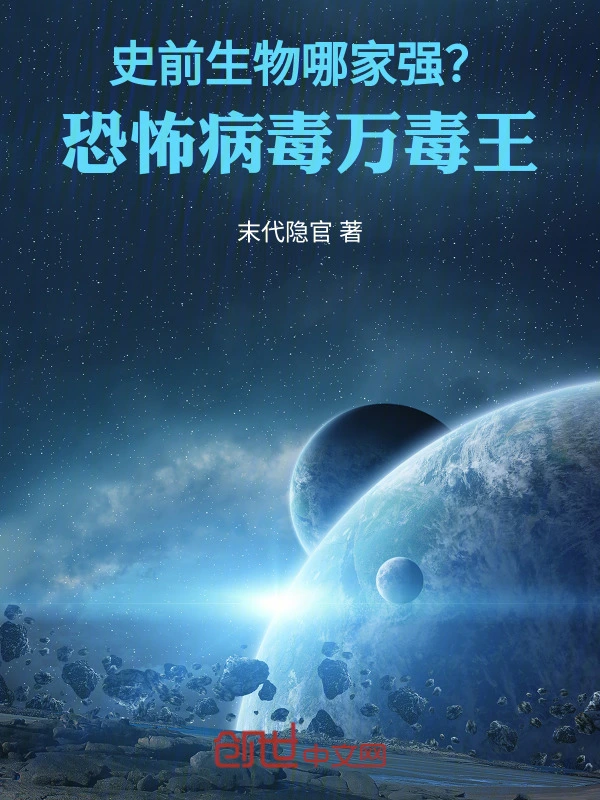
Which Prehistoric Creature Is Stronger? Terror Virus King of All Poisons
史前生物哪家强?恐怖病毒万毒王
- Status
- Ongoing
- Length
- 69k Words
- Genre
- Urban
- Audience
- Male
- Subgenre
- Urban Superpowers
- Updated
- 3mo ago
- Source
- Qidian
Stats
0Monthly votes
25Recommends
7Fans
29Chapters
Tags
Synopsis
Reader comments
Readers also read
 China Entertainment: This Top-Notch Character Is Too Stable
 Stranger!
 Department of Abnormal Pathology
 Evil Gourmet: This Person Has a Very High Food Quotient!
 Criminal Investigation Notes 2: Buried Corpse in Songhu
 After the Creation of the World, Did I Become an Extraterrestrial Demon?
 Fantasy: Starting from Dialogue Elixir to Enlighten All Things
 Leader
 The Black Witch's Journey to Another World
 From the Scapegoat to the Black-Hearted Taoist Master!
 With a Daily Payment of 10 Million, I Will Build a Special Zone in Dashan
 Ming Dynasty: the First Assistant of a Poor Family
 Douluo: Jiancao Is Gone, and the Silver Dragon Finally Regrets It
 Douluo: Sacrifice Yourself to Become a God, I Become a Taoist
 Douluo: Simulated Love, Starting with Swordsmanship and Becoming a God
 Douluo: the Soul Penetrates Gu Yuena and Slaps Na'er in the Face at the Beginning
 Gao Wu: He Kills You at the Beginning, Who Dares to Fight Him?
 Big Lord: Check in at the Beginning! Immortal Killer
 Comparison of the Two Douluo: Gu Yuena, the Daughter-In-Law of the Tang Family at the Beginning
 Douluo Dragon King: Wuhun Golden Eyes, I Am the Dragon King
Are viruses biological organisms? Conclusion + popular explanation Core conclusion Mainstream biology: Viruses belong to "marginal life/life-like organisms" and are not considered complete independent organisms To put it simply: they are not considered organisms when left alone. They only show life characteristics after entering cells to parasitize them. 1. Characteristics consistent with life (like a living thing) 1. Has genetic material: DNA or RNA; 2. Can mutate, evolve, and has genetic diversity; 3. Can use host cells to proliferate and replicate; 4. Has a specific structure (protein shell + genetic material). 2. Does not meet the core standards of biology (not like biology) 1. Cellless structure (cells are the basic unit of life, bacteria, fungi, animals and plants all have cells); 2. Inability to metabolize independently: no enzyme system, unable to eat, breathe, or produce energy independently; 3. Completely inert without living cells, will only stand still like crystals; 4. Cannot grow and divide independently, must kidnap host cells to reproduce. 3. Two classifications in the academic world 1. Organisms in the narrow sense (cell organisms): viruses❌ do not belong 2. Life systems in the broad sense: viruses✅ are classified as non-cellular organisms Minimalist memory Cell organisms: able to live, metabolize and reproduce on their own Virus: can only "steal" other people's cells to survive, and is a parasitic marginal body of life.
Are viruses biological organisms? Conclusion + popular explanation Core conclusion Mainstream biology: Viruses belong to "marginal life/life-like organisms" and are not considered complete independent organisms To put it simply: they are not considered organisms when left alone. They only show life characteristics after entering cells to parasitize them. 1. Characteristics consistent with life (like a living thing) 1. Has genetic material: DNA or RNA; 2. Can mutate, evolve, and has genetic diversity; 3. Can use host cells to proliferate and replicate; 4. Has a specific structure (protein shell + genetic material). 2. Does not meet the core standards of biology (not like biology) 1. Cellless structure (cells are the basic unit of life, bacteria, fungi, animals and plants all have cells); 2. Inability to metabolize independently: no enzyme system, unable to eat, breathe, or produce energy independently; 3. Completely inert without living cells, will only stand still like crystals; 4. Cannot grow and divide independently, must kidnap host cells to reproduce. 3. Two classifications in the academic world 1. Organisms in the narrow sense (cell organisms): viruses❌ do not belong 2. Life systems in the broad sense: viruses✅ are classified as non-cellular organisms Minimalist memory Cell organisms: able to live, metabolize and reproduce on their own Virus: can only "steal" other people's cells to survive, and is a parasitic marginal body of life.