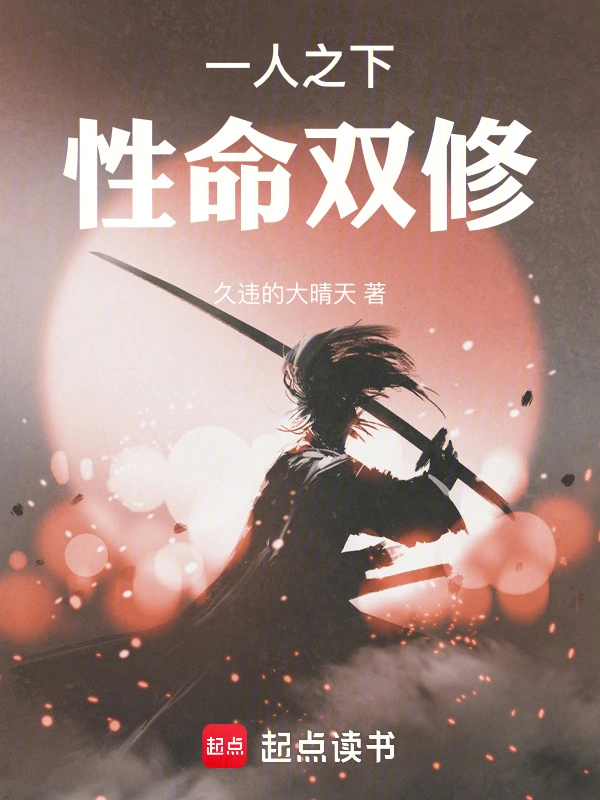
Under One Person: Starting from the Dual Cultivation of Life and Life
一人之下:从性命双修开始
- Status
- Ongoing
- Length
- 585k Words
- Genre
- Light Novel
- Audience
- Male
- Subgenre
- Fan Fiction
- Updated
- 1d ago
- Source
- Qidian
Stats
Tags
Synopsis
Reader comments
In booklists 5

☄️Recommended List of New Books in the Second Dimension˙ⱉ˙ฅ
Seeking collection Buddhist update Thank you for your support
Book List of Potential Masterpieces
Discover some books that have the potential to become popular. The comments are based on your true feelings when reading them. I hope that book friends who can resonate with you will join us and dig for treasures together.
Fan Book List, Reject AI, Mainly Includes Mystery, Under One Person, Red Mansion, Etc.
I looked up the most recent fan book lists and found that they were almost two or three years old. Some of the newer books were basically not included, so I created a book list for recommendations. Ratings are purely subjective, mainly based on the fluency of writing, characterization, etc. Some themes, such as Red Mansions, are relatively strict with the branch, so there will be situations where the works are obviously better than other fan-themed works, but the scores are the same. This is als

Personal Reading List
Personal reading list, afraid of forgetting
Taishi Jing…………
Personally I feel more interested in
Readers also read
 Conquer the Comic World Starting from Bone King
 Become a Serious Person Starting from Hokage
 New Age Melancholic Warrior
 Douluo Jueshi: I, the Last Natural Disaster
 On My First Day at the Police Station, I Ate Imported Candy from a Police Beauty.
 All Heavens: Liver Experience Begins from Under One Person
 Under One Person: My Name Is Zhenjun Huiyuan!
 My Girlfriend Cheated on Her and Got Pregnant, and I Ran Away Nine Months Later
 During the Republic of China, I Baoguowei Huangpu Phase I
 Under One Person: a Thief Can Travel Thousands of Miles Without Making Any Mistakes!
 Analyzing the Ninja World from Konoha
 Regulus of Hogwarts: Lord of the Stars
 Devouring the Starry Sky: I Have a Godzilla Clone
 Under One Person: I, Zhang Zhiwei, the Arrogant Zhang
Brother, if you want to open a new book, do it well. I have read that the quality of your books is acceptable, and there will definitely be a market for good stories. You must have confidence and not be too impatient.
Can't you finish the last book first?😐
I started to update the new book, and I stopped updating the old book. I have to give myself the hat of a eunuch, right?
It's very possible that it was written and then stopped, so replace it with a new one.
After reading ten chapters, there is no highlight at all. Why do so many people give it good reviews?
I prefer the previous one by Zhang Zhiwei
Did the author want to make the male protagonist a saint? Can anyone explain to me, I came here to read a novel, and I don't want to spend money to see a saint written by someone.
It's too watery, and it's starting to get fancy. That demonic form doesn't match the style of the Three Reverses at all.
The setting is not good, now soul travel is really poisonous.
The introduction made me laugh
What is the dual cultivation of life and death? Is it both mysterious and mysterious? What is this
I have read more than 20 chapters, all of which are about cultivation. Brother, I have read your practice. Can I also practice it? I'm reading a novel, no wonder it's not popular, it's too boring
It's hard for this writer's book to become popular. The two books have the same world view. They are actually not the same story. There is no connection at all. It's very easy to create drama.
There is too much written about the practice setting concept, which makes it seem boring.
Heavenly Master hasn't finished updating that book yet.
If the previous book was not finished well, I would not be able to order a single chapter of this book.
Just drink some water. Once the water has cooled down, you will feel better.
The plot is a bit weaker The protagonist himself has a lot of inner feelings.
The writing is very good, and the author even tries to teach us how to practice the three levels of rebirth.
What else can you learn about the three levels of rebirth in dual cultivation of life and life?
It is enough to practice the dual cultivation of life, dragon, tiger and quanzhen. The third level of rebirth is just a technique. If you go to Longhu to learn the Golden Light Curse, or to Quanzhen to learn the Inner Alchemy, you will naturally have the means to protect your way to a higher level. The means of protecting your way in Zhenxuan Sect are all derivatives, and you don't need to learn any special skills.
It's a pity that the magic form is in the form of an angel. The devil's horns become longer and grow into a circle. It's too weird. The plot of using angel magic to save people feels very strange and awkward. Is the protagonist a Taoist? I feel that dragon transformation is more handsome. In Yinglong's Dharma, the devil's horns are directly absorbed and assimilated into dragon horns. Yinglong also has wings. This is equivalent to completely digesting this into his own thing. Why rely on the angels of the West? If he is in the third level of reverse birth, he can also write about transforming into a dragon with his body, just like the all-round improvement of the dragon magic.
Hey, this book has a lot of ambiguous plots between the protagonist and the female partner. The protagonist's childhood sweetheart Lu Linglong and the protagonist feel that they will be together in the future. Even every woman the protagonist meets now is ambiguous with the protagonist.
The Directory and the Mask of the Godhead really matched up, and the author really got it right.
You must be sick, what I wrote before is okay, I have to get a Dharma image
WC really accepted the Heavenly Master
I just asked about Doubao in Chapter 97. Although he is old, he becomes more and more honest as he gets older, which gives him a different feeling
The author wanted to make some extra chapters in the last book. There were a lot of holes left unfilled and many things left unexplained.
True and False Monkey King
Add more refinement! More refinement! More refinement! The core path: the steps of mind cultivation "from outside to inside, going deep layer by layer". Huaguo Mountain is about confronting delusions, Guanyin is about meditation and introspection, Heaven is about the spiritual observation, Tang Monk is about maintaining righteous thoughts, Earth is about cutting off the roots of delusions, and Tathagata is about the appearance of truth. The chapter 58 of "Journey to the West", "Two minds confuse the universe, and it is difficult for one body to cultivate true tranquility" has pointed out the essence - the six-eared macaque is not an external demon, but is transformed by Sun Wukong's "two minds". It is the fundamental conflict between the inner true nature and delusion of the cultivator. 1. Huaguo Mountain - Seeing the False Self: The first appearance of delusional thoughts, facing the second mind. Huaguo Mountain is Sun Wukong's "hometown" and also the starting point for his original state before being enlightened - the indulgence of the mind and the rise of the sky to become a saint. The six-eared macaques "set up a separate team to obtain Buddhist scriptures" in Huaguo Mountain. This scene has a profound meaning of alchemy. Delusion arises from this place: Huaguo Mountain symbolizes the practitioner's foundation of "acquired consciousness". The six-eared macaques occupy the Huaguo Mountain, which means that the false mind (false self) arises from the most familiar and deep-rooted habits of practitioners. As the Alchemy Sutra says, "All kinds of demons arise from the mind." Delusions are not external, but come from the depths of one's heart. The false self is realistic: the six-eared macaque and the real Wukong have the same image and the same sound, and their abilities are almost the same. It symbolizes that after a certain stage of practice, the delusion of the practitioner has been disguised so exquisitely that it is almost indistinguishable from the true nature. This is the "demon realm" where "refining qi and transforming into a spirit" in alchemy practice is most likely to occur - when the essence gradually becomes sufficient and magical powers gradually become apparent, the delusional mind will also "upgrade" and confuse the real with the fake. Seeing the false self is the starting point of practice: practitioners must first return to their own "Mountain of Flowers and Fruits" - that is, face their deepest habits and desires - in order to discover the existence of the "false self". If you don't dare to return to Huaguo Mountain, you will never be able to detect the troubles of two minds. 2. Avalokitesvara - Meditation and Introspection: Compassionate observation, calmness and observation. Avalokitesvara Bodhisattva is famous for his pure bottle of nectar and compassionate Dharma Eye in Nanhai Dojo. The Monkey King comes here to distinguish between true and false, but Guanyin "cannot distinguish". The profound meaning of this plot is: Vipassana is the only way to distinguish the true: the word "Guan" in Guanyin itself means "contemplation" and "inside view". In alchemy practice, this corresponds to the calming skill after "concentrating into the Qi Cave" - the practitioner collects the mind, looks inward, and uses "wisdom light" to illuminate the scene inside the body. Avalokitesvara's "inability to distinguish" does not mean incompetence, but a hint: preliminary vipassana skills alone are not enough to distinguish the most subtle differences between true nature and delusional mind. Compassion is the prerequisite for insight: Guanyin does not make judgments easily, but recommends going to heaven, the underworld, and the Tathagata to seek verification at all levels. This symbolizes that practitioners should maintain an attitude of "non-attachment and non-rejection" in tranquility - neither rushing to deny delusions (compassion) nor being confused by delusions (wisdom), but gradually deepening in the way of "stopping and observing". Guanyin predicts but does not tell the truth: In the original work, Guanyin has already calculated that "your master is in trouble", which implies that when the Vipassana skill has reached a certain level, the practitioner has actually "vaguely perceived" the truth and falsehood, but more in-depth skills are needed to fully confirm it. Third, heaven - the manifestation of the soul: to illuminate evil with righteousness, it is still short of the end. Heaven is a symbol of order and law in Taoist cosmology. The Jade Emperor governs all spirits, and King Li Tian has a demon mirror. When the real and fake Monkey King came here, the demon mirror "revealed two indistinguishable ones", and even the gods in heaven could not tell the difference. It has a special meaning. The demon mirror symbolizes the "light of the soul": in alchemy, the soul is the light of innate innocence, which can illuminate all illusions. The demon mirror cannot reveal the true or false, implying that when the cultivator is "refining Qi and transforming into the spirit", although the original spirit has begun to show its light, it has not yet reached the ultimate perfection, and it is still powerless to face the most subtle confusion of "two minds". Heaven represents "laws" and "rules": the order of heaven symbolizes the "progressed method" in cultivation-the use of rules and laws to restrain the mind. But the confusion between two minds goes beyond what can be solved by external laws, because the delusional mind and the true mind have "the same image and the same sound", and external rules cannot separate them. Limitations of Heavenly Court: Heavenly Court cannot distinguish true from falsehood, which means that those who only rely on "action methods" - such as meditation, qi movement, acupuncture, etc. - Will encounter bottlenecks at a certain level, and must enter a deeper "inaction" realm to break through. Fourth, Tang Monk - Maintaining righteous thoughts: the human eye is mortal, and obsession is an obstacle. Tang Monk, as the core of Buddhist scriptures, represents the "righteousness" and "will power" of the cultivators. But in the incident of the real and fake Monkey King, Tang Seng was completely unable to tell the difference, and even recited a tightening curse to punish the real Wukong. This plot has alchemy meaning. Righteousness does not equal true knowledge: Tang Seng's "rightful mind" is a firm wish to learn scriptures, but this wish is mixed with persistence (prejudice against Wukong and adherence to the precepts). In alchemy, this corresponds to the practitioner's "acquired consciousness" - although he has the intention to pursue the Tao, he is still affected by acquired habits and discrimination and cannot see the truth. The Tightening Curse symbolizes "controlling thoughts with thoughts": Tang Monk recited the Tightening Curse to punish the "fake Wukong" (actually the real Wukong), which symbolizes the practitioner's attempt to use "one thought" to suppress "another thought" - this is exactly the taboo of "stopping delusion with delusion" in Alchemy. As the "Tai Shang Jing Jing Sutra" says: "When desire does not arise, that is true tranquility." True purity does not mean using thoughts to eliminate thoughts, but that thoughts naturally do not arise. Tang Seng's Dilemma: When it is difficult to distinguish between true and false, the most common mistake that practitioners make is "forced judgment" - judging true and false based on subjective likes and dislikes, which often results in the opposite. Fifth, the underworld - cut off false thoughts: deep in the netherworld, listen carefully to the true knowledge. The underworld is the place of reincarnation. Ksitigarbha Bodhisattva vows that "if hell is not empty, I will never become a Buddha." After listening to it, he would know whether it was true or false, but he "did not dare to tell the truth." The meaning of this layer is extremely subtle. True Listening symbolizes "innate true knowledge": True Listening can "lower down and listen" and hear all the sounds in the three realms. It symbolizes the true knowledge of "knowing without learning and being able without thinking" possessed by the innate soul of the cultivator in deep tranquility - that is, what Wang Yangming calls "good knowledge" and Dan Dao's so-called "spiritual awareness in the "Xuan Guan Yi Jie"". The profound meaning of "dare not tell": Listening to know the truth but not daring to reveal it, symbolizes that although the cultivator has "perceived" the nature of truth and falsehood in deep tranquility, the acquired consciousness (the "power of aspiration" and "discrimination" represented by Ksitigarbha Bodhisattva) is not enough to carry this truth. As the Alchemy Sutra says, the scene when the "Xuan Guan Yi Qi" first opens will dissipate immediately if you grasp it with consciousness. The underworld symbolizes "cutting off the root of delusion": The underworld governs life and death, symbolizing that practitioners must go deep into the root of life and death - that is, the deepest attachments and fears - in order to truly cut off the root of delusion. The book of life and death has long been crossed out by Sun Wukong, implying that if practitioners can transcend the attachment to life and death, their delusions will lose their footing. Sixth, Tathagata - the true nature of Tathagata: seeing through the two minds, the true self appears. Tathagata Buddha is the final judge. He saw through the six-eared macaque based on the theory of "four great monkeys". With the golden bowl covered, the fake monkey showed its original shape. This is the highest level of the entire path of discernment. The Tathagata symbolizes the "true nature": In the context of the integration of Buddhism and Taoism, the Tathagata is the "true nature" - the true nature of neither birth nor destruction, neither increase nor decrease. The Tathagata can distinguish between true and false, because the nature of the Tathagata itself is the origin of "knowledge and awareness". The delusional mind arises from the true heart, and naturally cannot escape the observation of the Tathagata. The profound meaning of the theory of "two minds": Tathagata initially pointed out that "you are all of one mind, let's see the two minds competing", which directly revealed the essence of the problem - the battle between the true and false Monkey King is not a fight between two monkeys, but a self-struggle after "one mind" split into "two minds". This is completely consistent with the core concept of alchemy: "the heart is dead and the spirit is alive": only when the "two hearts" are reduced to "one heart" and the acquired consciousness abdicates, can the innate soul "live". The golden bowl symbolizes "returning to one's roots and restoring life": the Tathagata covers the six-eared macaque with the golden bowl, symbolizing the return of delusional minds to the true nature. The golden bowl is a symbol of "perfection". Practitioners must eventually bring back all their delusional thoughts to their "original nature" and reach the state of "returning to the root is tranquility, and tranquility is restoration of life" in the Tao Te Ching. Wukong kills the six-eared macaque - the real self kills the false self: In the end, it was Sun Wukong who killed the six-eared macaque with his own hands. This blow was not caused by "external forces", but the awakening and determination of his true nature. In the practice of alchemy, this corresponds to the key breakthrough of "refining the spirit and returning the emptiness" - the practitioner uses the light of true nature to destroy the delusional mind, and the delusional mind naturally dissipates, like the rising sun. Summary: This path reveals a core truth: to distinguish truth from falsehood, one does not seek outwardly, but goes deep inward - from confronting delusions (Huaguo Mountain), to observing quietly (Guanyin), to observing the soul (Heaven), to firm mindfulness (Tang Monk), to cutting off the roots of delusion (Underworld), and finally returning to the true nature (Tathagata). Just as the poem at the end of "Journey to the West" says: "When the spirit returns to the heart, it is necessary to meditate, and the six consciousness dispelling elixirs will be formed by themselves." When the erroneous movements of the six consciousnesses (eyes, ears, nose, tongue, body and mind) cease, the true nature will naturally appear, and the golden elixir will naturally be achieved.
Remarks after seeing almost 80 chapters
It's almost Chapter 80. The author's subject matter is acceptable, but it's too watery and the pace is too slow. For example, the current apprenticeship ceremony and trivial matters, such as toasts from peers, are just a few chapters long. In fact, for many chapters, just looking at the titles is enough.
Okay, okay, you finished that book hastily, right?
All the brothers gave this book negative reviews, and the previous book was hastily finished. Let me give the author a suggestion: write the Little Heavenly Master from the previous book into the original world view.
Your two chapters are worse than one. I want to vote for you but I feel like you have written too little.
I really liked the last book, so I gave it a subscription and a monthly pass. I was a little sad that it didn't finish well in the end.