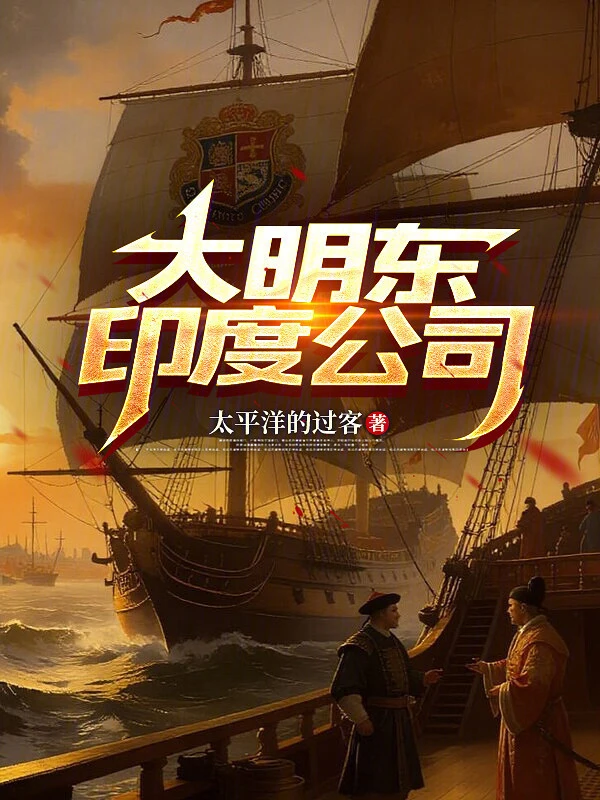
Ming East India Company
大明东印度公司
- Status
- Ongoing
- Length
- 301k Words
- Genre
- Historical
- Audience
- Male
- Subgenre
- Song-Yuan-Ming Dynasties
- Updated
- 2mo ago
- Source
- Qidian
Stats
0Monthly votes
984Recommends
11Fans
117Chapters
Tags
Synopsis
Reader comments
Readers also read
 Northern Qi, Sage Khan
 Red Mansion: Start Escaping and Farming from the Equipment Bar
 Fu Ming 1627
 After Lying in Bed for Three Years, He Was Forced to Help the Han Dynasty
 Criminal Investigation Notes 2: Buried Corpse in Songhu
 Late Ming Dynasty: Lion of East Asia
 Traveling Through 1570: the Rise of South America
 Leader
 The Black Witch's Journey to Another World
 The Republic of China: Rise from the County Seat
 I'm an Emperor in Africa
 1912 Starting from Southeast Asia
The author who does not understand economics, the production economy at that time simply did not allow such a split of money. Remember, the monthly salary of Ming Zhengzheng was two to three taels, and he would make a lot of money when he came up. There are also things that can be done with two thousand taels of silver by borrowing soldiers from the guard station, but it costs 40,000 taels. I don't even understand the blood tax theory
Read the first chapter
It is said that because the imperial court did not allow trade with Japanese pirates, the protagonist's family went bankrupt and he seemed to be a traitorous businessman.
I haven't read it yet, but should the name be called the West India Company? India was to the west of the Ming Dynasty 🙂
America and Europe should decide whether they want to be emperor or something else.
In Wanli, potatoes, corn, peanuts and sweet potatoes are all available in the new year.
Don't understand economics, don't understand politics, have whimsical ideas
Let me start with a conclusion: from the 15th to the 16th century, the great fortune ships of the Ming Dynasty (especially the Zheng He treasure ships) were generally much larger than the mainstream European sailing ships in terms of length, width, and displacement. The difference could be several times or even an order of magnitude; by the middle and late 16th century, the European Galen ships gradually approached or even caught up with the medium fortune ships in some indicators, but they were still smaller than the top blessing ships/treasure ships of the Ming Dynasty. 1. Ming Dynasty Fu Chuan (including treasure ships) Fu Chuan is the main ocean-going ship type in the Ming Dynasty. It has a pointed bottom, tall, solid and suitable for deep sea. Zheng He's treasure ship (a very large fortune ship in the early 15th century), recorded as: 44 feet 4 feet long, 18 feet wide (Ming Dynasty feet), modern conversion: about 140-150 meters long, 55-60 meters wide; Displacement: academic controversy, conservative 2000-3000 tons, some opinions are up to 10,000 tons, sails: 9 masts and 12 sails, can carry a thousand people No. 1 Dafu Ship (Warship/Fengzhou) in the middle and late Ming Dynasty: length: about 55–65 meters, width: about 15–20 meters, draft: about 4–6.6 Meters, Displacement: about 1000–1500 tons Ordinary Fuzhou (No. 2-6): Length: 20–40 meters, displacement: 200–800 tons 2. Western sailing ships (Europe) in the 15th and 16th centuries (1) Caravel (15th century, commonly used by Columbus and Vasco da Gama), length: 20–30 meters, width: 6–8 meters, displacement: 50–150 tons , Representative: Columbus "Santa Maria", about 19 meters long, 108 tons (2) Carrack (Carrack, 15th to early 16th century, large merchant ship/warship) length: 30-45 meters, width: 10-14 meters, displacement: 600-1200 tons, representative: British "Mary Rose", 32 meters long, 600 tons (3) Galleon (Galleon, the main Spanish/British ship in the mid-to-late 16th century) length: 45–55 meters, width: 12–16 meters, displacement: 800–2000 tons, representative: British "Sea King" (1637), 51 meters long, about 1500 tons 3. Intuitive comparison (magnitude in the same period) 1405 (Zheng He) vs. 1492 (Columbus) Treasure ship: ≈140m×55m, 2000 tons+ Santa Maria: ≈19m×6m, 108 tons Conclusion: Treasure ship volume/displacement is about 15–20 times that of Columbus' flagship Mid-to-late 16th century (Mingfu ship vs Ou Galen Ship) Ming No. 1 Fu Ship: ≈60m×18m, 1200 tons Spanish Large Galen: ≈50m×15m, 1500 tons Conclusion: The Captain Fu Ship is slightly larger, with a similar displacement; but still smaller than the Zheng He Treasure Ship Conclusion: Early 15th century: Ming Dynasty Fu Ship (treasure ship) was ahead in crushing class, and Western ships were only one-tenth of its size. 16th century: European Galenic ships quickly caught up, approaching the mid-level fortune ships of the Ming Dynasty, but still not as good as the top fortune ships/treasure ships of the Ming Dynasty. Advantages of Fuzhou ship: large size, good stability, watertight compartments, suitable for ocean going; Advantages of European ship: narrower and longer, fast speed, good headwind maneuverability.
Anchor, if you write like this, be careful of being reported. Cross-Strait issues,
The name is very cheap.
It's better to look up the origin and history of your book's title.