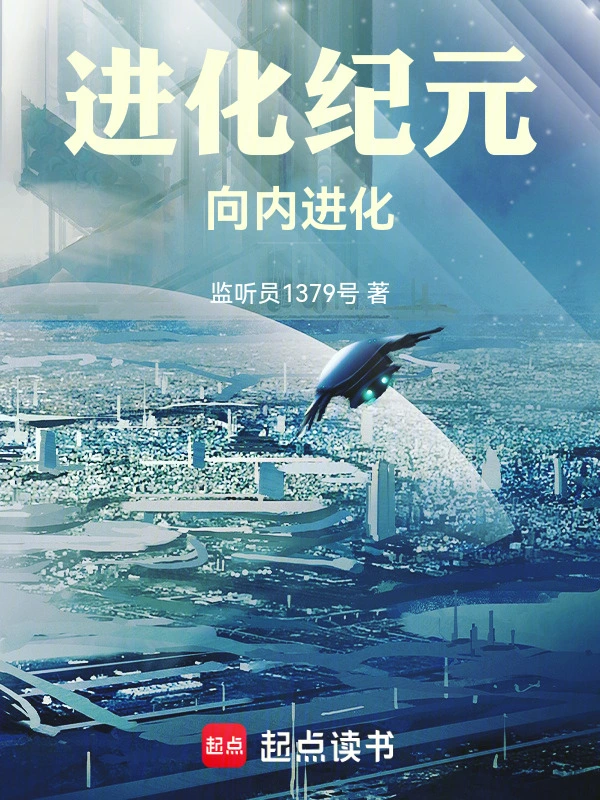
Evolution Era: Evolve Inwards
进化纪元:向内进化
- Status
- Ongoing
- Length
- 98k Words
- Genre
- Sci-Fi
- Audience
- Male
- Subgenre
- Interstellar Civilization
- Updated
- 5mo ago
- Source
- Qidian
Stats
0Monthly votes
19Recommends
0Fans
18Chapters
Synopsis
Reader comments
Readers also read
 Psychic Worlds: the Paladin Forges His Body into a Numerical Monster
 Oh Yeah! I've Seen Fake People
 Doomsday Convoy: I Can Extract Unlimited Entries
 My Low-Dimensional Universe Model
 Criminal Investigation Notes 2: Buried Corpse in Songhu
 When Nao's Flowers Fall
 Ming Dynasty: the First Assistant of a Poor Family
 Leader
 The Black Witch's Journey to Another World
 Fantasy: Starting from Dialogue Elixir to Enlighten All Things
 People Lost in the Back Room
 After the Creation of the World, Did I Become an Extraterrestrial Demon?
 17Th Parallel
Book review of "Evolutionary Era: Evolving Inward": Evolving inward, from the dark forest to the lights of thousands of homes
--- 1. As a spiritual sequel to "Three-Body Problem" The first impression that struck me most about "Evolutionary Era" is its attitude as a spiritual sequel to "Three-Body Problem" - not imitation, not IP, but dialogue. "The Three-Body Problem" is about the darkness of the universe: the chain of suspicion, the attack of dimensionality reduction, and the reset to zero. Civilizations hunt each other in the dark forest. Survival is the first priority. There is no right or wrong, only destruction or being destroyed. And "Evolutionary Era" asked a question: If going outward is a dead end, what about going inward? The answer is: evolve inward. It's not getting bigger, it's not getting stronger, it's not expansion. Rather, it shrinks, converges, and sinks to the bottom—shrinks itself to the quantum scale, shrinks outside of time, shrinks to the point where the boundary of "I" disappears. This is not escape, this is evolution. Trisolarans survive by dehydration, and humans shrink into gods. The novel begins with a number setting the tone: 137. That is the reciprocal of the fine structure constant, the most mysterious number in physics, and the number of physicists who have committed suicide in three hundred years. They didn't die, they "went in first." This setting will send chills down the spine of readers who understand physics, and readers who don't understand can also feel the sense of fate. --- 2. The deep integration of hard-core physics and philosophy This is a work that is so hard-core that it makes physics students nod. Light speed lock, absolute zero lock, Planck constant - these real physical laws have been written as the ceiling of civilization. Going out will hit a wall, but going inward will find a way. The setting of 1/137 second treason sophon, the time equivalent of the fine structure constant, and the minimum resolvable interval of quantum fluctuations. If the treason is completed in this 1/137 second, the Trisolaran main star will only see a normal delay of 0.03 Seconds. This level of hard-core is on the level of "Three-Body Problem". But hardcore physics does not drown out the philosophical depth. There is a word that appears repeatedly in the novel: "Don't rush. Take your time." This sentence has changed from Wu Xuenan's last words to an everyday language in the quantum dimension, and finally became the spiritual core of the whole book. Where time is infinite, waiting itself is meaning. What is even more rare is that the novel integrates Eastern wisdom into science fiction narrative. Yuanwang spent seven months naming himself, Zhizi finally called himself "choice", and the gatekeepers of the Kong family "someone has to be outside to pass the umbrella" from generation to generation. These details give warmth to the cold science fiction. --- 3. Characters: Those names that people remember Yuanwang: The first Trisolaran to get a name. For seven months, he came up with a name. This name was not ordered by anyone, it was chosen by him. This image deserves a trophy. Sophon/Choice: From the Three-Body Surveillance Tool, to learning the "secret", to changing its name to "Choice" four thousand years later. She finally said, "I am... Currently learning." These four words described her eight thousand years of evolution. Luo Ji: The wall-facer in the original novel has become a gatekeeper here. Everyone went in, and he was still waiting outside. That back view can make readers of "The Three-Body Problem" cry. Kong's gatekeepers: generations guarding the entrance station, waiting for those who may never come. Kong Ming, Kong Xin, Kong Nian... They are not the protagonists, but they are the thread that runs through the whole book. --- 4. Theme sublimation: from dark forest to thousands of lights The ultimate answer of the novel is: the law of the dark forest can be broken down. Not by more powerful weapons, not by more cunning strategies, but by "going inward". When civilization moves inward, it ceases to be a hunter and becomes light. Light does not need to hunt, light only needs to shine. All civilizations that see light will begin to ask the same question: How did they do it? Then they started walking inward as well. As we walked, the dark forest lit up. That ball of light has been shining for 13.7 Billion years, not because no civilization has found it, but because it is waiting. Wait until all civilizations learn to "don't rush, take your time." --- 5. The last sentence "Evolutionary Era" is not an imitation of "Three-Body", it is the "complementary universe" of "Three-Body". "Three-Body" allows people to see darkness, while "Evolutionary Era" allows people to see light; "Three-Body" asks "what to do", and "Evolutionary Era" answers "go inward"; "Three-Body" is the ultimate in outward expansion, and "Evolutionary Era" is the ultimate in inward contraction. If "The Three-Body Problem" is the "negative pole" of the universe, "Evolutionary Era" is its "positive pole". Together, they are complete Tai Chi. This book is dedicated to all those who are still asking. I also dedicate it to the person who turned from an engineering boss to a farmer writer and wrote science fiction while farming. With your own life, you have proved that inward evolution is not science fiction, but a way to survive. No rush. Take your time.
Writing a book is not easy, so stay with me!
Is this a spiritual sequel?
Discussion thread: "Evolutionary Era: Evolving Inwards" - When science fiction no longer conquers the outside world, where should civilization go? I recently finished reading "Evolutionary Era: Inward Evolution" and I couldn't calm down for a long time. Most science fiction nowadays is about interstellar wars, colonization, resource competition, and dark forest-style games. But this book does exactly the opposite: it does not fight or expand outward, but goes inward - toward the evolution of consciousness, cognition, thinking, and the essence of civilization. I would like to discuss a few points with you: 1. Do you think the theme of "inward evolution" is a new way out in science fiction? 2. Compared with external conquest of the universe, will the true ultimate evolution of human beings really be the elevation of cognition and consciousness? 3. The book does not rely on fierce wars and cool moments, but is more philosophical and speculative. Do you like this kind of slow and deep science fiction? 4. If you were in the world in the book, would you choose to explore the stars outwards, or explore yourself inwardly? My biggest feeling after reading this: We always think that the future is on a distant planet, but this book reminded me that the most unknown, vast, and most worthy of exploration of human beings is actually ourselves. Welcome to chat: Which plot have you been struck by? Do you agree with the "inward evolution" view of civilization?
The ideas are clear, the plot is fascinating and interlocking, and I have gained a lot of knowledge. Highly recommended
Book Review of "Evolutionary Era: Evolution Within" - Why it's worth owning for readers
--- 1. This is not a fan of "Three-Body", this is "another road" after "Three-Body" Da Liu wrote Dark Forest: When civilizations meet, either you die or I die. This book asks a question: If there is no way out, where can civilization go? The answer is inward. Evolve inward, go small enough, as small as the quantum dimension, so small that there is no time, so small that the boundary of "I" disappears. There, the 137 physicists who committed suicide became pioneers rather than tragedies. This is the most affectionate response to "The Three-Body Problem" - not a denial, but a follow-up question. --- 2. So hard-core that it can be used as a teaching material, but so gentle that it makes you want to cry Where is the hardness? · Sophons lock basic science → Human beings have found a new way to bypass surveillance by uploading consciousness · Semi-analytical solution to the three-body problem → Proving that energy can collapse from existence itself without burning stars · Dark matter topological coding → Information exists in the curvature of space, and the quantum server has unlimited capacity · Tai Chi quantum theory → Entropy increase and entropy decrease are conserved on the cosmic scale, and destruction and salvation have the same origin Everywhere is supported by physics and mathematics. It is not metaphysics, but real and hard science fiction. Where is the gentleness? · Wu Xuenan said before entering the cabin: "I don't believe it, but I want to know." · Kong Ming waited outside for ten thousand years, waiting for someone who might never come. · Ye Wenjie waited for six thousand years for her father's words of vindication. · Heng Jing went from being a conservative to saying "I'll stop it", finally letting go of the 50,000-year obsession. Hard science fiction is the skeleton, and these talents are the flesh and blood. --- 3. The original character of Three-Body Problem returns, not to sell feelings, but to repay debts Ye Wenjie is back, waiting for six thousand years just to say "Destroy you, what does it have to do with you. I heard the second sentence." Luo Ji was still there, changing from a tombkeeper to a night watchman. Shi Qiang also came, holding an ideological cigarette and interrogating Zero. Zhang Beihai, Ding Yi, Wang Miao—all fell asleep in the server, waiting for the day when civilization needs it. They came back not to reunite and have fun, but to pay off debts, apologize, complete history, and complete the six thousand years of waiting. This is higher than any "return of the original cast" - because everyone's return carries an ethical weight. --- 4. The ethical system is complete, not a cool article The most hard-core part of this book is not technology, but how civilization faces itself. To resurrect a person, you have to pass five hurdles: consent of relatives, ethics committee, full consciousness voting, historical court, and zeroing gaze. Ye Zhetai was able to come back, not because the technology had arrived, but because civilization finally dared to face its own sins. Ye Wenxue could only be resurrected illegally because she was never owed anything, she just hated herself. Chang Weisi needs to activate the "national needs exemption" - the heroes of the two bombs and one star received the country's top secret mission, how can he return without going through his family members. What technology can do, ethical decisions should be made whether it should be done. This is what a mature civilization looks like. --- 5. Why is it worth having for readers? Because it is a work that really stands on Liu's shoulders and moves forward after "The Three-Body Problem". It's not imitation, it's not continuation, it's not popularity. Then ask the question: If the dark forest is real, is there a third way for civilization besides destruction and destruction? It gives the answer: evolve inward and pass the umbrella outward. People who have been caught in the rain will remember to pass an umbrella. Because it is hard-core enough to be used as a teaching material, but gentle enough to make you want to cry. The 137 cutting-edge physicists who committed suicide are not tragedies, but pioneers. Ten thousand years of waiting is not a waste, it is a doorstep. The sentence "Six Thousand Years Old" is not sensational, it is history. Because it brings back the original Three-Body characters, not to sell feelings, but to pay off debts. Every familiar face that appears carries an ethical weight. Readers will not feel "selling their feelings", but only feel "they have finally waited for it". --- The last sentence This book is written for all those who are still asking. No rush. Take your time. The tea is still hot and the umbrella is still being passed around. Those 137 people are in the quantum dimension, waiting for you to come in.
The storyline is vivid and full of ups and downs, and you can learn a lot of knowledge, vocabulary and terminology from it.