Twin Frequency
双生频率
- Status
- Completed
- Length
- 60k Words
- Genre
- Sci-Fi
- Audience
- Male
- Subgenre
- Evolution & Mutation
- Updated
- 8mo ago
- Source
- Qidian
Stats
0Monthly votes
2Recommends
0Fans
24Chapters
Synopsis
Reader comments
Readers also read
 Starting from the Foundation Phase and Launching the Moon Landing Plan
 Start Subverting the World from the Weapons Museum
 I Use Grammar Games to Save the World
 Li Lin's Warhammer Journey
 When I Turned Thirty, My Mother Started Introducing Me to Widows.
 Age of Mythology: I Can Upgrade Everything
 Academic Tyrant: All My Teachers Are Subject Experts!
 Become a God from a Dungeon Fighter
 American Comics, My Left Hand Insists That It Is Batman
 Night Without Borders
 How Can You Become an Immortal If You Don't Have Money?
 Green Hills
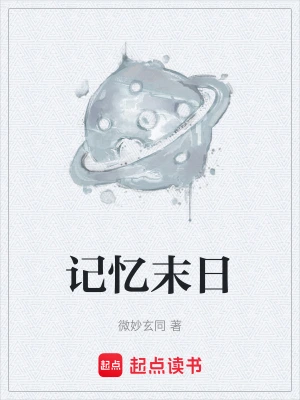 Memory Doomsday
 What's Missing: the Battle Between Perfection and Brokenness
 False Favorability
When memory becomes a cage, reality becomes a testing ground
In the neon depths of Eternal Night City, memories can be stored, traded, and even stolen. Until an auditor discovers that the end of mankind is not a prophecy, but a carefully choreographed "purification" test - and he himself is the "prototype" who records this extinction. When you open "Memory of the Doomsday", what comes to your face is not the common wasteland smoke, but a more refined kind of horror - it is deeply rooted in the most private area of human beings: memory. This work uses a highly original world view setting to construct a near-future society where memory is currency, identity, and truth. The author uses a brush as cold as a scalpel to cut through the most fragile nerves of civilization under the cyberpunk shell, leading readers to complete a thrilling speculation about "what it means to be human". Amazing setting: the strange universe of Memory Bank The novel grabs the reader's attention right from the beginning. The cold holographic screen of the Memory Bank headquarters and the misty neon lights of the eternal night city outline a highly developed but indifferent technological society with just a few strokes. Here, memory is no longer an ethereal mental activity, but a "data flow" that can be quantified, audited, and stolen. This core setting is not only novel, but also becomes the cornerstone that drives the development of all plots. When auditor Lin Mo receives a bizarre complaint claiming that "the memory of the future doomsday has been stolen," the story begins to tick like a delicate mechanical clock, and the bite of each gear is unexpected. The author's description of technical details is convincing. From "quantum entanglement residue" to "memory overload", from "Raven Protocol" to "No. 7", These terms are not exaggerated decorations, but layers of nested clues, which together weave a huge and dangerous web of conspiracy. Readers who follow Lin Mo's investigation are like playing a high-intelligence puzzle game. Each step of discovery makes the world view richer and the truth more terrifying. Narrative tension: a sinking psychological thriller The narrative rhythm of "Memory of the End" is textbook level. It does not rely on cheap action scenes, but creates tension through layers of progressive psychological oppression and cognitive subversion. From Lin Mo's initial professional doubts about "unreliable memory", to the horror when he discovered that his memory was blank for eight hours, to the shock when he witnessed the green plants turning red and the mysterious death of his colleagues, the reader's sense of security and the protagonist's cognition were slowly and completely disintegrated. The most amazing thing is the shocking reversal of the setting in the mid-term. When Lin Mo went through all the trouble to sneak into the 7th floor of the restricted area, only to find that tens of thousands of doomsday memory samples all labeled him as the "prototype", the shock of the collapse of his identity penetrated the back of the paper. The subsequent revelation that the memory bank is actually the "civilization purification" experimental site for alien civilization, and that humans are actually the "test units" under observation, elevates the story from the realm of suspense detectives to the philosophical level of the survival of civilization. This subversive experience of "I thought I was investigating the murderer, but found myself lying on the autopsy table" brought a rare reading impact. Character Arc: Finding the True Self in False Memories The shaping of the protagonist Lin Mo is a highlight of this book. He is not an invincible hero in the traditional sense, but a seeker trapped by the meaning of his own existence. As an auditor who believes in physical evidence, he is forced to search for the truth in the maze of memory; when he discovers that even his "self" is an implanted program, the pain and struggle at the soul level are vividly depicted. His growth arc is not to gain strength, but to grasp the subtle cracks left by his "true self" three years ago in absolute despair and complete a cognitive revolution toward death. Although the supporting characters are not much mentioned, they are all distinct. Chen Ming's desperate warning, Su Yu's silent protection and ultimate sacrifice, and even Li Zhe's face frozen in fear are all like sharp fragments piercing into the flesh and blood of the story. In particular, Su Yu's warning throughout—"Don't believe the memory you see"—becomes the keynote and the weak candle that guides the protagonist (and readers) forward in the maze of reality and fiction. Ideological core: a profound interrogation of free will "Memory of the End of the World" transcends the entertainment category of general science fiction suspense and touches on profound existential propositions. When memories can be tampered with, identities can be implanted, and even the fear of doomsday is a designed test item, what is left of human free will? Through the setting of the "memory plague" - human beings voluntarily go to destruction under the sweet temptation - it completes a sharp metaphor for contemporary society: Are we also living in "gentle experimental fields" composed of information cocoon rooms and consumerist narratives, willingly handing over our right to think? The end of the story is full of blank space and power. The erasure protocol was completed and the system declared victory, but in the depths of the blue light sea of the global memory network, the "viral memory" sent by Lin Mo and exchanged for Su Yu's life was turning into ripples and spreading quietly. This is complete despair, but also a slim hope; it is the finale of civilization, or it may be the prelude to awakening. This open and tense ending makes the contemplation after closing the page far more lasting than the tension while reading. The perfect fusion of Qidian style As a work in the context of Qidian, "Memory of the Doomsday" perfectly balances commerciality and literature. It has the fascinating strong suspense, fast pace and exciting design of online literature (such as Raven Protocol, restricted area exploration, system duel), while maintaining the rigorous setting, logical self-consistency and ideological depth of traditional science fiction. The "chapter break" at the end of the chapter always throws out new mysteries or reversals at the right time, making people want to stop. While the plot is running wild, the creation of atmosphere, polishing of details and portrayal of emotions are not absent, which reflects the author's mature narrative skills. General Comment "Memory of the End" is a rare masterpiece of science fiction suspense. It uses a "memory bank" to imprison the fate of the entire civilization, and uses a "doomsday test" to torture the reality of each individual. In this story, the most terrifying thing is not the natural disasters, but all the memories you rely on to understand the world, together with the understanding of "the reason why you are you", are all codes written by a higher will.