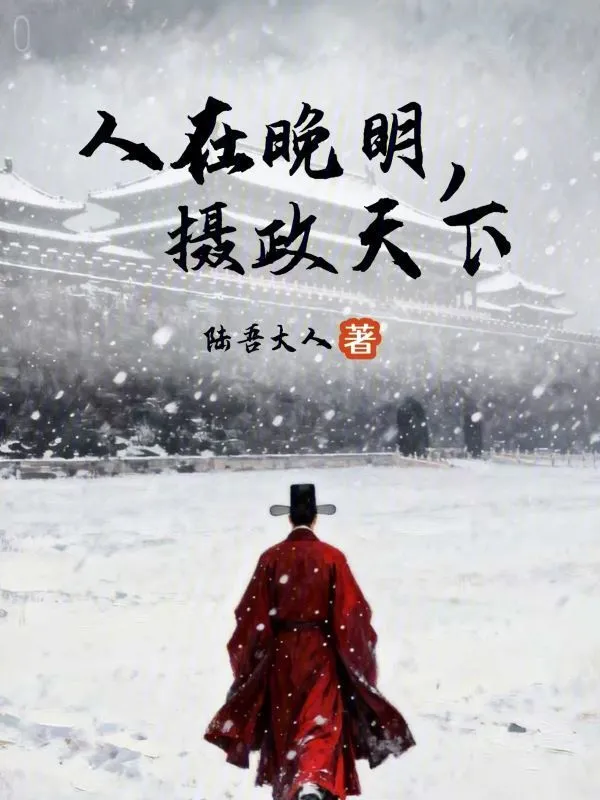
He Lived in the Late Ming Dynasty and Ruled the World
人在晚明,摄政天下
- Status
- Ongoing
- Length
- 175k Words
- Genre
- Historical
- Audience
- Male
- Subgenre
- Song-Yuan-Ming Dynasties
- Updated
- 7mo ago
- Source
- Qidian
Stats
0Monthly votes
205Recommends
2Fans
61Chapters
Tags
Synopsis
Reader comments
Readers also read
 Fu Ming 1627
 Northern Qi, Sage Khan
 After Lying in Bed for Three Years, He Was Forced to Help the Han Dynasty
 Red Mansion: Start Escaping and Farming from the Equipment Bar
 Things About the Two Song Dynasties
 Late Ming Dynasty: I Foresee the Future
 Late Ming Dynasty: Starting from Taking Refuge with the Warlords, He Strives to Dominate the World
 Ming Dynasty Endgame 1645
 Countryman's Ambition
 I Am a Tyrant in Nanming
 Late Ming Dynasty: Conquer Nurhaci at the Beginning
 Behead Jin
 Wulin Gaiden: I Work as a Busboy at Tongfu Inn
You can buy a piglet for 10 silver dollars, which can be sold for up to 400 silver dollars when resold abroad. The piglets here are human beings being trafficked. This human trafficking jointly led by the Manchu Qing regime and Western colonists led to countless Chinese people leaving their homes and suffering slavery and slaughter in foreign lands. All of this was actually a crime that had been laid before the Manchus entered the country. All seeds are recorded in the Batavia trade archives as early as 1624. We transported 42 Chinese slaves from Liaodong through the city of Jelanja. Most of them were women and teenagers aged 12-16 years old, with scars on their hands, feet and arms. The pricing standard was 14 reals for teenagers, and in the Manila slave market in 1624. The transaction records directly mark 35 Chinese slaves from Liaodong. Jianzhou Jurchen was awarded to Dutch merchants and then transferred to us. Most of them were women and teenagers, and their hands and feet had scars from imprisonment. This early trade model was not an exception. Research on the Chinese social structure in Batavia relied on the archives of the Guardian Palace to confirm that as early as 1623, Dutch colonists had robbed more than 1,400 Chinese.
Reprint: I witnessed the most shameful scene in Xiamen: Manchu officials colluded with foreign speculators and packed thousands of men, women and children into coolie ships known as the "Floating Hell". The victims were chained, packed like sardines in the cabin and given only a bowl of moldy rice a day. If anyone resisted, Qing soldiers would suppress them with muskets and whips. What is even more outrageous is that every coolie was forced to put his fingerprint on the deed of sale, and the contract was stamped with the official seal of the Qing government. A Portuguese trafficker proudly showed me the document: 'Look! This is a legal slave officially certified by the Qing Dynasty! In 1860, 16,000 Chinese laborers were shipped to Havana from the port of Xiamen alone. A U. S. Consular report showed that for every coolie shipped out, officials in the Qing Dynasty were paid $2. This means that the local government made more than $32,000 in profit from selling people that year. In April 1859, the coolie ship "Gertrude" set sail from Fuzhou to Peru. When the ship reached the Taiwan Strait, three hundred coolies broke their shackles and rioted. The captain immediately asked the Qing Navy for help. At dawn the next day, three Qing warships surrounded the sampan on which the fugitives were boarding. The generals of the Qing army shouted: 'By the order of the governor, destroy the rebels! ' Then he gave the order to fire. Cannonballs shattered wooden boats, and those who fell into the water were stabbed to death with hooked spears by Qing soldiers. The survivors were dragged back to the deck with chains pierced through their collarbones, and the sea was stained red with blood. I was onboard the Cohima and witnessed the entire massacre. The Qing generals and consuls boarded the ship and asked the captain for "counter-rebellion payment" - calculated on a per-capita basis, they charged 5 Mexican silver dollars for each coolie suppressed. In December 1861, the Taiping Army captured Ningbo. We found six "pig pig houses" at the base of the city wall, the largest of which, "De Ji Xing", imprisoned more than 800 coolies. These poor people were chained to wooden posts and covered with whip marks. When loyal king Li Xiucheng's troops broke open the prison door, the coolies knelt down and cried: 'Long live the Lord of Destiny! A British trafficker, James Hodge, resisted with a gun and was strangled to death with a chain by the angry coolies. We found bundles of deeds of sale in the warehouse, each stamped with the seal of the prefect of Ningbo. The contract clearly stated: 'The covenantor is willing to sell himself and go abroad to work for ten years, working twelve hours a day, and deciding whether to live or die. ' King Zhong immediately ordered all the contracts to be burned and announced to the whole city: 'Any foreigner who abducts Chinese children and sells them will be beheaded in public; Qingyao's Yamen will be executed at an early date for those who work with the traffickers. Our holy soldiers of the Celestial Dynasty will destroy the pig houses set up by Qingyao wherever they are conquered, and free the plundered people. However, the British ship repeatedly protected the slave ship from escaping, which is contrary to the true way of God! You should note: Anyone who dares to traffic in living beings within the territory of our heavenly kingdom, regardless of foreign merchants or officials, will be punished in accordance with the "Book of Heaven" - the first offender will be punished, the accomplices will be beheaded, and all property will be confiscated! Recently I heard that Qingyao sold prisoners of war to Peruvian mine owners, each worth eight dollars of silver. Such beastly behavior will bring the thunderous wrath of Heavenly Father! Charles Winchester, the former British deputy consul in Xiamen, admitted in court: 'Qing officials were the actual controllers of the coolie trade. They stipulated that each coolie ship must pay a "port tax" of 500 silver dollars, and a "worth tax" was collected on a per-capita basis. [Crying loudly]
Dragon set sticker
Recruiting for supporting roles: I respectfully invite all generals, pirate kings, and frontier officials to leave their names...
Except for the sudden need to bet there, everything else is fine. Although it is a short text, it can be read. Oh, by the way, the protagonist's master is not established very well. It kept blowing in the front, and as a result, the relief area stretched a bit. From a supporting role to a bit of a stranger, I have only read about 30 chapters so far, and there are some minor flaws in other places. But I can still read the same sentence and pass the time. It's okay to follow the rhythm without thinking.
The Manchus are a newly established ethnic group in 1952. They are the descendants of the Manchus who are willing to separate from the Manchus and accept transformation. It is not the Manchus who still sympathize with the Manchus. [Bia Ya][Eating Melon][Star Eyes] The Manchus were not a minority during the Qing Dynasty. The terms "Manchu" and "minorities" cannot be found in any document from the Qing Dynasty. In other words, the concepts of "Manchu" and "minorities" did not exist in the Qing Dynasty. These two terms, like the concept of "56 ethnic groups", only came into being after 1949. The Manchus appeared after 1949, and were the former Bannermen. Including the descendants of the Eight Banners Manchuria, the Eight Banners Mongolia and the Eight Banners Han Army. Do not treat the Eight Banners during the Qing Dynasty as a nation. This is a wrong starting point for applying ancient issues from a modern perspective. The Manchu and Qing dynasties ordered feet to be amputated and bound. Before, it was just foot binding. It was completely different. The Manchu and Qing dynasty were also afraid of the emergence of fierce men like Qin Liangyu.