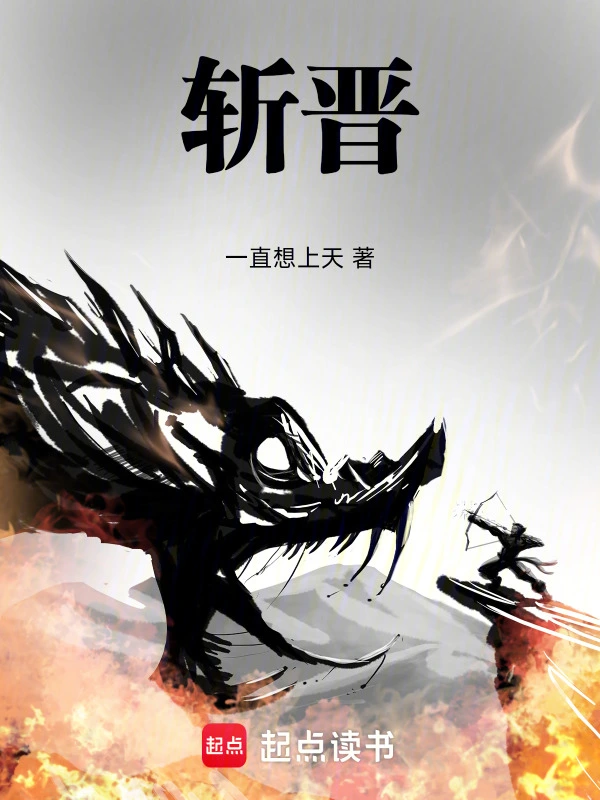
Behead Jin
斩晋
- Status
- Ongoing
- Length
- 107k Words
- Genre
- Historical
- Audience
- Male
- Subgenre
- Jin-Sui-Tang Dynasties
- Updated
- 3d ago
- Source
- Qidian
Stats
124Monthly votes
410Recommends
0Fans
51Chapters
Tags
Synopsis
Reader comments
Readers also read
 Fu Ming 1627
 Red Mansion Xiaoke
 I Am a Tyrant in Nanming
 At the Beginning, Please Ask Chongzhen to Abdicate!
 Daming: Attack, Emperor Yongle!
 Grandmother, Please Abdicate. I Want to Be the Crown Prince.
 The New Tang Dynasty Began with the Anshi Rebellion
 I Get a New Character Every Week
 Transform into Tang Monk and Become Stronger Starting from Covering the Sky to Obtain Scriptures
 I Want to Revive the Tang Dynasty!
 A Fierce Soldier in Jinyang in the Late Tang Dynasty
 Damn It, I Will Become the Ling Emperor of the Han Dynasty
 It's Not Easy to Be the Founding Prince.
First of all, Sima Yan chose Jia Nanfeng, not just because of the influence of the Jia family and Empress Yang. Sima Zhong was not a complete idiot. He had mediocre intelligence, lacked the ability to govern independently, was long in the palace, and had no understanding of human relations and government affairs. The ready-made template of the Eastern Han Dynasty is before us: the emperor lacks ability, and the queen and queen mother serve as agents of imperial power to support the court. The ancient concept was that husband and wife were one body: the kings of the clan and the ministers of foreign dynasties all had motives to usurp the throne. The power of the queen was dependent on the emperor himself. If the emperor fell, all the honor of the queen would be wiped out. In theory, the interests were deeply bound. Sima Yan's calculation in his mind was that if the prince himself was not good enough, he would need a smart and capable crown princess. In the future, the queen could take charge of the imperial power and coordinate with the important ministers to check and balance. Sima Yan most likely knew that Prince Sima Zhong cheated in the exam, but he was unwilling to overthrow the throne and chose to acquiesce, placing his hope in the emperor's grandson Sima Yun. But there is a huge premise here: the queen is only an agent, and the source of power is the emperor's imperial power, not her personal private property. In the early days of taking power, Jia Nanfeng actually understood this measure. After getting rid of Yang Jun, she did not monopolize all government affairs, but let Zhang Hua and Pei Yu go. Zhang Hua was born into a poor family of the common people. He did not have a strong family foundation and would not threaten the imperial power. He was capable and prestigious, which created a situation of "quietness between the government and the public" for nearly ten years during the Yuankang period. This paragraph is a real political achievement, not a glorification of historical records. As for the historical records about her jealousy, murder of pregnant concubines, and private life in the palace, this part must be discounted: "Book of Jin" was compiled by people from the Eastern Jin Dynasty, and Jia Nanfeng was a loser in a failed coup. The private ethics of a loser can easily be processed and magnified. The so-called extremely ugly appearance is also exaggerated by later generations. Most likely, it is just an ordinary appearance, far from the level of a top beauty, and it is definitely not appallingly ugly. The biggest constraint in her life is her mother Guo Huai. Guo Huai had spent his life in officialdom and understood the rules of power. He repeatedly warned Jia Nanfeng that he must treat Prince Sima Yu kindly and not touch the country's foundation. He also advocated a marriage between the Jia family and the prince to bind the interests of both parties. When Guo Huai was alive, Jia Nanfeng was still shackles of reality. When Guo Huai died, the constraints disappeared and the expansion brought by power came. She confused one thing: I have great power now, not because I, Jia Nanfeng, am the best in the world, but because I am Emperor Hui's queen. What she did: she lied that she had given birth to a son during Emperor Wu's death, and brought her sister Jia Wu's son Han Weizu into the palace to pretend to be the prince. She planned to depose Sima Yu and make this child with a foreign surname the crown prince. This step directly broke through the bottom line recognized by the entire Western Jin court, clan, and noble families. The prince is the foundation of the country. You can engage in palace struggles, exclude courtiers, and exert power, but everyone can tolerate it. But if you want to secretly exchange the power of the Sima family for the children of the Han family, all the kings of the clan will not accept it. It's like taking care of the family's money. The owner is still alive, but you plan to transfer the property to your natal nephew. The money belongs to the owner, you are just in charge of it, it does not belong to you. Of course, the Western Jin Dynasty itself was a powder keg full of explosives. Even if there was no such thing as deposing the prince, chaos would break out sooner or later. Sima Yan's layout itself has huge bugs: he wants to divide the clan kings, and the vassal kings hold military power and territory; the clans are powerful and expanded under the ninth-level Zhongzheng system; the problems of land, refugees, and border tribes all pile up. Yuanyasu's ten years of peace only temporarily suppressed the conflict, but did not completely resolve it. Jia Nanfeng just lit the fuse in advance. Even if she doesn't move the crown prince, as long as she dies or Emperor Hui dies, the prince with heavy troops will still seize power. Deposing the crown prince only gave ambitious people like King Zhao Sima Lun a perfect excuse to launch an army. Another point is that Sima Zhong did not only have one son, Sima Yu, and the historical records are incomplete. Many princes died young and the records are scattered. But Sima Yu was the prince whom Emperor Wu valued and publicly established during his lifetime. He had the most important status. If he moved him, it would shock the whole world. The power of the concubine is the agency granted by the emperor. You can use power and power to check and balance the court, but you must not mistake the trusteeship for your birthright. Once the country's foundation is touched, all the legitimacy of power collapses in an instant. Many people in later generations simply blamed Jian Nanfeng for the Eight Kings Rebellion and the Five Husbands Rebellion. In fact, they were simplifying history. The ten years of Yuan Kang were a rare and stable time in the late Western Jin Dynasty; but abolishing and killing the prince was a major political mistake that she could not wash away. The collapse of the Western Jin Dynasty was a general outbreak of institutional accumulation, and Jia Nanfeng was the trigger, not the only root cause.
Do you want to change the introduction?
I feel that this introduction does not have any important information, only the background of the times.
In the Western Jin Dynasty, you were either a soldier or a border soldier.