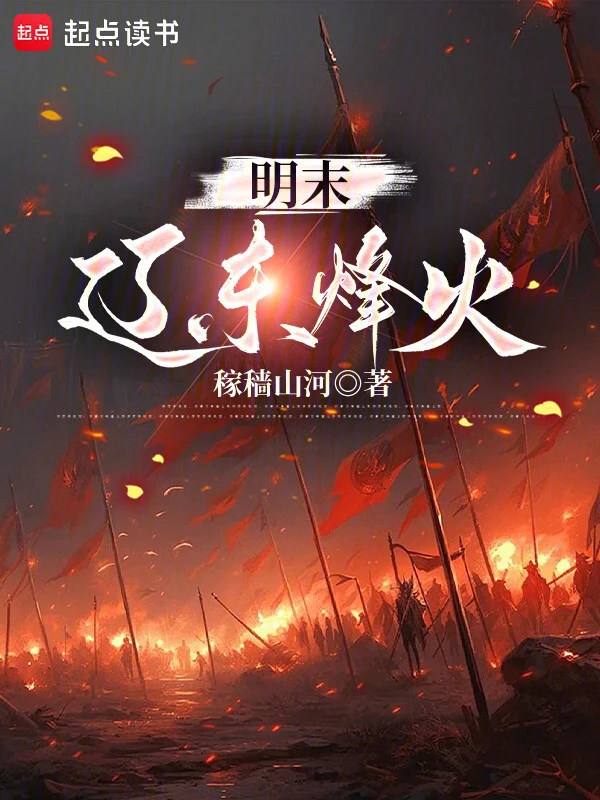
Late Ming Dynasty: Liaodong War
明末:辽东烽火
- Status
- Ongoing
- Length
- 752k Words
- Genre
- Historical
- Audience
- Male
- Subgenre
- Song-Yuan-Ming Dynasties
- Updated
- 9h ago
- Source
- Qidian
Stats
154Monthly votes
1.1kRecommends
543Fans
325Chapters
Tags
Synopsis
Reader comments
Readers also read
 After Lying in Bed for Three Years, He Was Forced to Help the Han Dynasty
 Northern Qi, Sage Khan
 Red Mansion: Start Escaping and Farming from the Equipment Bar
 Fu Ming 1627
 Criminal Investigation Notes 2: Buried Corpse in Songhu
 You Promised to Fight Against the Qing Dynasty and Restore the Ming Dynasty, but You Are Going to Camp in Jintian?
 The New Tang Dynasty Began with the Anshi Rebellion
 Leader
 The Black Witch's Journey to Another World
 Become an Official
 I Am a Tyrant in Nanming
 Overlord
 Liaodong Beacon Fire
About Li Chengliang
Regarding Li Chengliang's problem, I actually think it's not him himself, but the rigid system. Li Chengliang killed good people and took credit, but he did have this ability in fighting. This is a fact that cannot be denied. This was the case with the nine-border military system in the Ming Dynasty. During the Jiajing period, servants had become popular because the military household system was on the verge of collapse. Why was Li Chengliang able to work for so long? It was because his method was in the best interest of the court. That is: Withhold military pay to support the family members - the family members have a good record - get head rewards and buy and sell military industry - gain the respect of the emperor/the children of ministers receive military attack rewards → at the expense of the suffering of the people in Liaodong (the emperor can stabilize the border without spending much money , the minister got the spokesperson for military merit) He ruled the Liao Dynasty, and six generals were killed in six years of battle. Liaodong Town = Zero Yuan Purchase Base of Eastern Mongolia After he took office, he plundered the people, withheld military pay, and raised three thousand elite servants. The following are his achievements: During the Longqing period In the fourth year of Longqing, he won a great victory at Zhuoshan, beheading more than 580 people. In the sixth year of Longqing, he attacked the camp in Liaodong and beheaded more than 130 people. In the first year of Wanli, he attacked the Tatar barbarians and beheaded the seventy-fourth level. In the first year of Wanli, Wang Gao of Fushun was annihilated and more than 1,100 people were beheaded. In the second year of Wanli, the battle of splitting the mountain, beheading level 437. In the third year of Wanli, three hundred and seventy-five levels of suppressing the barbarians and beheading them. In the third year of Wanli, he attacked the native barbarians and beheaded him at the 180th level. In the fourth year of Wanli, he attacked Tuman Black Carbon and beheaded him at level 189. In the fifth year of Wanli, he attacked the native barbarians and beheaded more than 130 people. In the fifth year of Wanli, he attacked Tuman Miaohua and beheaded more than 140 people. In the fifth year of Wanli, he attacked the native barbarians with his son Deng and beheaded more than 250 people. In the sixth year of Wanli, he attacked the native barbarians and beheaded more than 300 people. In the sixth year of Wanli, he attacked the native barbarians and beheaded more than 470 people. In the sixth year of Wanli, he attacked the native barbarians and beheaded more than 160 people. In the sixth year of Wanli, he attacked the native barbarians and beheaded more than 280 people. In the sixth year of Wanli, he attacked the native barbarians and beheaded more than 180 people. In the sixth year of Wanli, the Battle of Gule Village (defeat Wang Gao), more than 1,100 people were beheaded. In the seventh year of Wanli, he attacked the native barbarians and beheaded more than 170 people. In the seventh year of Wanli, he attacked the native barbarians and beheaded more than 280 people. In the seventh year of Wanli, he attacked the native barbarians and beheaded more than 200 people. In the eighth year of Wanli, he attacked the native barbarians and beheaded more than 180 people. In the ninth year of Wanli, he attacked Tuman Black Carbon and beheaded more than 170 people. In the ninth year of Wanli, he attacked Tuman Black Carbon and beheaded more than 250 people. In the ninth year of Wanli, he attacked Tuman Black Carbon and beheaded more than 290 people. In the tenth year of Wanli, he attacked Tuman Subahai (formation beheaded Subahai himself) and beheaded more than 140 people. In the eleventh year of Wanli, the battle of Gulezhai (challenging Atai), beheading more than 1,300 people (including Jue Chang'an and Takeshi). In the fourteenth year of Wanli, he attacked Tuman Black Carbon and beheaded more than 190 people. In the 16th year of Wanli, he attacked Tuman Divination Platform Zhou and beheaded more than 280 people. In the seventeenth year of Wanli, he attacked Tuman Divination Platform Zhou and beheaded more than 250 people. Total: The above are the main military achievements of Li Chengliang during his first garrison in Liaodong (from the 4th year of Longqing to the 19th year of Wanli). The total number of beheadings was about 15,000. Historically, it was said that "a division must be victorious and powerful in the field", and he was awarded the title of Ning Yuanbo for his merits. The frequency and density of his achievements were unparalleled among the generals of the mid to late Ming Dynasty. I have made comparisons with Qi Jiguang many times in my book The Qi Jiajun had an annual salary of eighteen taels - the court could not afford it, and was always in debt The Qi Jiajun fought and cared for him at the same time - Chang'ang surrendered, and the horses did not dare to enter the Great Wall - the military households in Jizhen had no gains, and there was no way to rise to the rank of military merit - the emperor was safe but could not sacrifice Accusing the Imperial Ancestral Temple Multiple comparisons in the article The Qi Jiajun has strict laws - Li Chengliang indulges his soldiers The Qi Jiajun does not support his family/shares the joys and sorrows - Li Chengliang's camp is full of factions The book describes Li Chengliang as a tyrant, wily, calculating, ruthless and cruel regardless of the cost. The book also mentions many times that he committed suicide while taking advantage of the merit. I have never been subtle about this. So, this is not me whitewashing Li Chengliang, but me describing the shortcomings of a late empire. Li Chengliang became the commander-in-chief of Liaodong because of his cruelty and self-respect for raising bandits. The imperial court needed military generals like Li Chengliang, so he could prosper. Isn't his military policy the imperial court's recommended policy of using barbarians to control barbarians? Looking back at Qi Jiguang, he once proposed to train troops for ten years and go north to the grasslands to eliminate the disaster in one fell swoop, but Zhang Juzheng rejected it directly. Why? Did he not want to? There is no national power! This is a story about the twilight years of an empire. It cannot be solved by changing a general soldier. If Li Chengliang, Dong Yiyuan and others were replaced, they would not be half as good as Li Chengliang. After Li Chengliang left, Liaodong was replaced by ten generals! The life of the people in Liaodong is simply like hell. I use historical materialism to present the solution to the late Ming Dynasty in the form of a novel. The protagonist of the novel is a man who trains soldiers in a down-to-earth manner, gives hope to the people of Liaodong, and turns Chinese civilization around. Why should I make the protagonist time travel when he is five years old? (The fourth chapter enters the plot of Tong Jiading, which is not delayed at all, but the golden three chapters may make people feel that there is no real conflict) Why am I like this? I could write that the main character time-travels directly into Li Mansion's Tong Jia Ding, creating conflicts and hooks, but I don't want to do that. Because I want to give the protagonist a warm childhood, where his parents will love him even if he doesn't have enough to eat, so that when he becomes the master of the world in the future, his character will not be cruel. The characters in the book are all charming and have arcs. Don't take sides or try to be biased (such as the emphasis on the conflict between Hu and Han). Give me some more plots I designed: 1. Kill horses for the people and become the king of the world Ye He Jurchen donated 5,000 horses. Zhao Xia knew that he could not feed them all. However, during the war, the imperial army was approaching, and the horses were very useful. In the end, Zhao Xia decided to keep a thousand horses, and killed the rest for meat. The general begged, but Zhao Xia said: I would rather kill horses for the people than harm the people for the horses! After the general learned about it, he followed him wholeheartedly. After the people in the city learned about it, they spontaneously defended the city for Zhao Xia, and finally played a huge role at the critical moment. It's like Zhu Wenzheng guarding Hongdu. (In response to what Qi Jiguang said, strong weapons and strong fortresses are not as strong as the solidity of the people) 2. Lin Dan committed suicide Lin Dan Batur was destroyed by Zhao Xia in Eastern Mongolia, and Lin Dan Batur was lucky enough to escape. Later, Zhao Xia's soldiers went out to the northwest and forced him in front of the battle. Zhao Xia stepped forward and shouted, intending to make Lin Dan Khan surrender. Lindan Batur shouted: Submit? ! I am a descendant of Genghis Khan! The descendants of Genghis Khan will never be other people's pawns! Then he drew his sword and killed himself. Zhao Xia respected what he had done and hid him in the Hall and Forest with the gift of the Great Khan. He also ordered people to carve and enshrine him in the temples of the emperors of the past dynasties. There were dedicated people to worship him. The protagonist is to highlight a "benevolence", which is the benevolence that dares to be the first in the world, the benevolence that dares to take responsibility, and the benevolence that is rooted in the blood of traditional culture. To accept the filth of the country is to be called the master of the country. If you receive bad luck from your country, you will be the king of the world. This is a kind of great benevolence, completely different from the Virgin Bitch! The protagonist will kill, but he will definitely abide by the principles in his heart. There are many more plots that I can't spoil anymore. If you can stop by, thank you for your support. No matter what the score of this book is, I will update it to include both my thoughts on history and my longing for civilization. I also hope that everyone can get something of their own by reading the book, and it can be considered as my personal contribution to the progress of civilization.
China's problems are always farmers' problems. Only when farmers are rich can China truly become rich.
Recently I am reading Six Tao Wen Tao: discusses political strategy, emphasizing that governing the country and the people, appointing talents, and accumulating national strength are the basis for military victory. Wu Tao: Expounds military strategy, including war preparations, timing, enemy war plans and other macro strategies. Long Tao: Involves the organization, command, communications, selection and responsibilities of generals of the army. Hu Tao: Explain the use of battlefield environment (such as terrain, weather), as well as specific offensive and defensive tactics and formations. Bao Tao: Emphasis on flexible and maneuverable tactics, such as unexpected changes, ambushes, detours, etc. Quin Tao: Focus on the training, vigilance, marching and camping of the army, and the coordinated use of various arms (vehicles, infantry, and cavalry). The core ideas include "total victory" (pursuing victory at the minimum cost), "conquering the enemy without fighting" (avoiding war through political and diplomatic means), "knowing yourself and the enemy", etc. These concepts have had a profound impact on the military thinking of China and even East Asia in later generations. "Six Tao" and "Sun Tzu's Art of War" are included in the "Seven Books of Martial Arts", which are important classics for the study of ancient Chinese military theory. The book "Six Tao" is the first strategy book for military strategists. This book is different from Sun Tzu's Art of War. By studying the Six Tao, you basically master a military theoretical system, which is at the entry level of a general. After learning it, you can become a chief of staff, which is very useful!
I don't know how the protagonist will develop in the future
Whether you want to turn the tide or reopen the world, it cannot be solved by just training troops. Moreover, training troops requires money. Now it is no problem to train some elites from various Mongolian tribes. However, under the military system built by Nurhaci after unifying the Jurchens and the administrative system established by Huang Taiji, it is impossible to fight with a few elite servants. The soldiers must be trained in an organized manner according to the ideas of Qi Jiguang or Sun Chengzong, but this requires a lot of money and food, and sea trade alone should not be enough. At the same time, if you do not leave the Ming Dynasty in the early stage, you must have someone in the court and spend money to build relationships, otherwise you will be killed just by relying on your words. In the end, the protagonist deliberately created a Jurchen bloodline and a Jurchen wife. Did he want to join forces with the Ye He tribe to fight against the future Nurhachi, and later imitate Nurhaci and annex the Ming Dynasty from Liaodong? If you don't hate Boar Skin and Huang Taiji as much as you do, burning, killing, looting, killing grainless people, and robbing Han people as slaves, you won't be able to develop.
Insert the ward, wait until there are more words, then start killing
Was it revised and submitted by the author?
I remember reading a book last year with the protagonist named Zhao Xiazi Zangfeng, and it was also in the late Ming Dynasty🤔🤔
This book was very challenging to write.
The author also feels that the novel is not popular enough? My personal guess is that it is a question of [the time point of the novel]. What does the reader read? It feels good to watch it. It feels good to defeat the Qing Dynasty, to save the world, to carve up the world in the Age of Discovery, to start the industrial revolution, etc. In the last ten years of the Ming Dynasty, when Chongzhen said it was the most intense, the background that is most likely to inspire excitement is set and unfolded. But the author chose the time of the [Taoist] Emperor, and the salvation plan was too early, and the protagonist would most likely become another Zhang Juzheng. Taking Zhu Mingjuan's bird position will not please Ming fans (my Ming Dynasty is not yet hopeless, how can you usurp it?). If you don't take it, it will be an enhanced version of Zhang Juzheng, which is not enough to change the dynasty (and Zhang Juzheng's end will not make readers feel happy enough) It is very challenging to write serious themes in this time period.
Handsome man, you update a little bit, I feel like it's not enough.
Ask for some recommendation votes or something like that
200,000 Words, no traffic at all? Even the collection is only 300? I don't understand readers. The one I wrote last year has better traffic than this one? ? There are no comments, no recommendation votes, and I can't enter the pk. Are you going to read 30 more? What the hell? I can't understand it at all.... Is what I wrote too depressing? Accurate? I have self-doubt. Damn it, do I want to reach 4 million words in a single game?
After Jianzhou has fought and there are no major battles outside the customs, should we establish an officer corps + recruit soldiers to become a professional army? It seems that firearms cannot be promoted and we can only develop a field artillery system to blast vehicles and fortresses to support the infantry.
Author
Do all the novels you open have multiple female protagonists?
Author
Can you answer the previous question?
You have one chapter a day, it's so boring!
It would have taken more than ten years to defeat the Ming Dynasty in 1611.
The author created character cards
Author, how do you think the female characters are written?