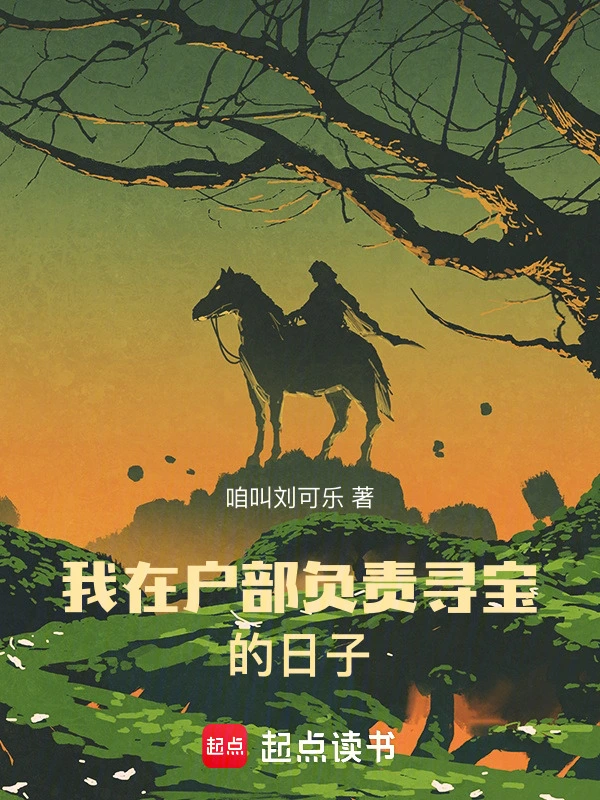
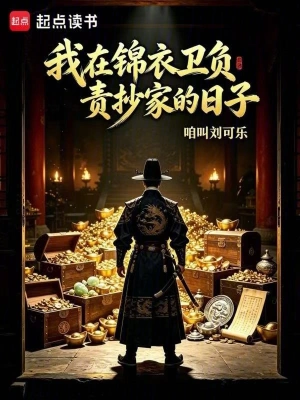
The Days When I Was in Charge of Treasure Hunting at the Ministry of Household Affairs
我在户部负责寻宝的日子
- Status
- Ongoing
- Length
- 15k Words
- Genre
- Historical
- Audience
- Male
- Subgenre
- Song-Yuan-Ming Dynasties
- Updated
- 10mo ago
- Source
- Qidian
Stats
0Monthly votes
72Recommends
0Fans
7Chapters
Synopsis
Reader comments
Readers also read
 In the Ming Dynasty, the Days When the Cows and Horses Turned Over
 An Important Town in the Residual Tang Dynasty
 Corpse Disaster 1916
 Chronicles of the Red Mansion
 Ordinary People: Start from the Yanjiabao Branch
 Summoner, Please Use the Italian Cannon.
 Ming Dynasty: the First Assistant of a Poor Family
 I Made up Magic and Taught the World-Destroying Witch?
 Lucky Player
 Li Lin's Warhammer Journey
 People Lost in the Back Room
 I Am the Only One Who Can Do It: My Information on Cultivating Immortals Is Refreshed Every Day
 Beautiful Clothes and Embroidered Spring Enter the Forest
 Demon Golden Boots
 The Days When I Was in Charge of Searching Homes in Jinyiwei
I have followed you for three books, and Jin Yiwei's copywriting is really good. The writing is absolutely great, and it also has the look of a movie! It's a pity that those people can't appreciate it. It's okay if they don't read the books on these rankings.
The third-rank commander wears a Feiluo robe dyed three times with madder, which is the same as the first- to fourth-rank civil servants. The flying fish suit from Zhang Jue's tomb in Jiajing collected in the Shandong Museum confirms the regulations of the "Da Ming Huidian". Its scarlet color inherits the tradition of the Zhou and Han Dynasties in favor of red, symbolizing the emperor's confidant, and forming a yin and yang complement to the emperor's crown suit, black clothes and woolen clothes. In the film and television drama "Under the Brocade", the color of the red robes of thousands of families is consistent with historical facts, but the commander level should be scarlet; the silver and white costumes of "The Spring Knife" completely deviate from the historical color spectrum, forming a strong contrast with the red python robes shown in "Out of the Police and Entering the Land". Thousands of households in the fifth rank have exclusive access to the vermilion spectrum, wearing bright red python clothes and Luan belts, with a pattern density of 2.3 Lines per square centimeter. The turquoise embroidery variant uses gradient overdying with mineral dyes, but it is rarely shown in film and television works. The digital printing process of the dance drama "Wang Yangming" caused the color scale to break, which is more than 40% different from the cultural relics. The black flying fish suit of the seventh-grade general flag uniform adopts the "alum dyeing method" of seven over-dyes. The hue value is CMYK (65, 50, 40, 70), and it shows a metallic luster under 300 lux light. Black symbolizes the North Star and the earth, and together with the Xiuchundao constitutes a symbol of power, Wanli's "Tiqi Private Server Case" proves the strictness of server color management. This system implies three levels of political logic: color monopoly forms a visual barrier, Feiyu clothing serves as a gift to strengthen the control of imperial power, and cosmological projection maintains the governance cycle. In recent years, costume dramas have become polarized: the color choice of "Under the Brocade" complies with regulations, but the silver and white costumes of "Xiu Chun Dao" subvert history and weaken the deterrent effect. A deeper flaw lies in the neglect of the regular uniform system. For example, in "The Elegance of the Ming Dynasty", the school captain is asked to wear the flying fish uniform on duty, which violates the record that "no uniform is allowed except for sacrifices and court meetings." The color system of brocade clothing is a microcosm of the political ecology of the Ming Dynasty. From the dyeing process to the pattern specifications, it all strengthens the ideology of the supremacy of imperial power. It can be called a political textbook written with needle and thread.