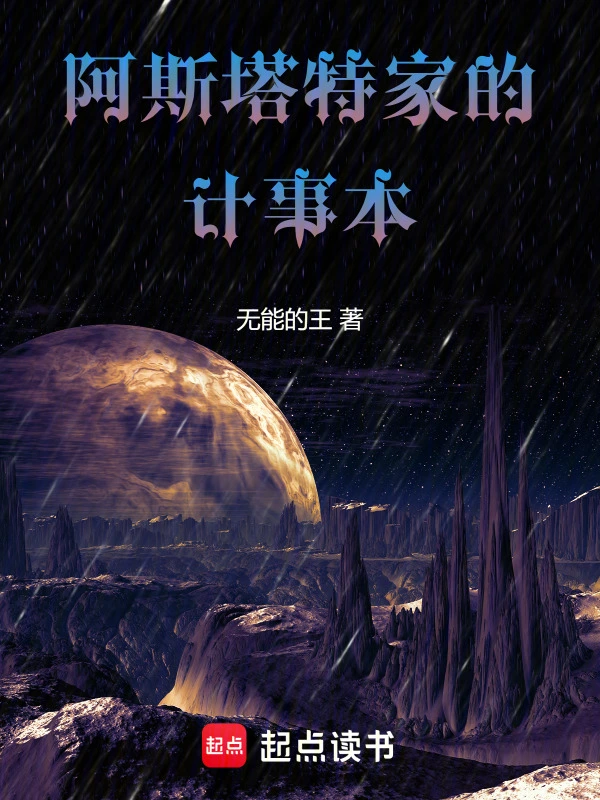
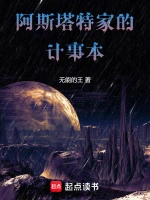
House Astartes' Planner
阿斯塔特家的计事本
- Status
- Ongoing
- Length
- 2.1M Words
- Genre
- Light Novel
- Audience
- Male
- Subgenre
- Fan Fiction
- Updated
- 1d ago
- Source
- Qidian
Stats
Tags
Honours
Synopsis
Reader comments
In booklists 6


Yinglong's Black Library Is Open
This is a personal book list that uses love to promote new books and serial works. Completed books will be deleted after a period of time. Please watch and collect. Recently, there have been more and more fantasy writing about dragons, and I have found more interesting books. Recently, there have been more and more COC steampunks. I just found out today that many old authors have opened new books and continue to find their favorite books. The quality of new books in Qidian History District conti
Books That I Have Found Good Recently
Mainly based on books that I think are good recently. Occasionally, I will recommend a complete classic (probably, maybe). I'm lazy, I'll write the book review later, that's it. (Maybe I won't forget) I just made up for it, don't cricket me behind my back
A Book That Readers of 10 Years Can Read
Good books caught in the vast sea of books, personal strength ratings, why inexplicably become the Warhammer category? Although I read a lot of books, the problem is that many of them are purely personal hobbies, which are equivalent to underwear and are not suitable for everyone to read emmm



Personal Preference
None yet


It's Not Fixed. I'll Read It If I'm Interested in It. If I'm No Longer Interested, I'll Delete It.
You can add or subtract at any time, just look at what you find interesting. The main style is light and fun, based on the games I'm currently playing, anime and other fan fiction I'm watching.

... Book List
...
Readers also read
 New Age Melancholic Warrior
 Douluo Jueshi: I, the Last Natural Disaster
 Conquer the Comic World Starting from Bone King
 Become a Serious Person Starting from Hokage
 Siheyuan: Start by Picking up Attributes
 Warhammer Survival Guide
 Warhammer: Khorne Is My Pick
 Beastmaster: I Can See the Evolutionary Path
 Immortal Who Seizes the Body
 Warhammer: Stars and Ants
 Warhammer: the Game Starts with a Broken Half-Immortal
 Warhammer: Shall I Sit on the Golden Throne Too?
 Abnormal World of Warcraft Stories
Everyone knows that the Warhammer world is abstract, but there is a reason why it is so abstract. Many books do not talk about the underlying logic of the abstraction of the empire, but only describe the abstract appearance. This book is very good in this regard. It describes both smart people and idiots, and also describes the roles played by various forces in an incident. Everyone's actions are for their own interests and are logical, which is very rare. Although the content is a bit verbose, it does not make people feel redundant. Overall, this book is the best of all the Warhammer books I have read.
I fed the full text to AI, and the evaluation was: something interesting
After thinking for 1m 57s I scanned a large section of the book carefully, and there is something... In this book. And it's a coincidence that it almost takes out and writes down the "things that the official mainline lacks" when we were talking about 40K just now. The author makes his goal very clear at the beginning: He feels that "Hammer Flavor" does not mean shouting about the crisis of annihilation every day, but that those absurd stereotypes can really operate in a system; this book is not simply about the Astartes fighting and killing, but about "to be a good war group, you must have good connections with the world." So the upgrade route of the protagonist Kaz is very weird. In the beginning: > I am an Astartes. Fighting is fun! Slowly becomes: > I am a Sergeant Astartes. Why should I control the Inquisitors, Mechanicum, Astra Militarum and local nobles? Later: > Why should I stage a coup? Then: > Why should I engage in military reform? Later: > Why am I considering the relocation of industrial production lines and the construction of the Chapter's home planet? 😭 And I'm not just making generalizations, writing has really come to this point now. After Kaz killed the orc warlord early on, he directly set a record for the fastest promotion to sergeant in the fourth company. In Chapter 131, Madasic even asked the young noncommissioned officer to lead more than a hundred Astartes from five different companies to carry out a joint operation - according to the book, this kind of scale should normally be led by the company commander, but Kaz's combat exploits and abilities are enough to shut up others. In Chapter 161, when Madasic said, "It's up to you," Kaz started to really "just do it." He discovered that the power structure of a hive city did not require knocking down door to door: > Control those who held power. Win over those who can be won over. Use Astartes' prestige to endorse local military leaders. Let them complete the internal integration. Clear the dissenters. Then complete the reorganization of the regime with the common interest of "returning to the empire". The book directly pushes Katz from a "tactical commander" to the position of organizer of political and military operations. Then at the Battle of Alevia, this man couldn't hold himself any longer. In Chapter 190, Kaz was already called "Commander Ka" by the locals and actually controlled nearly one-third of Alevia. He found that simply expanding the army was useless, so he began to promote military merit, rebuild the military system, reorganize industry, and organize a bunch of military leaders into a system that can fight; the author even made him clearly realize: before, he thought that the empire only piled up people, which was stupid. When he sat in this position, he discovered that there were structural reasons behind many of the empire's bad methods. I think this paragraph is particularly interesting. Because it is not: > "The time traveler understands modern military, so he beats the 40K natives." Instead, it starts to become: > "Travelers: Why are you so stupid?" Have been doing it for half a year: "... Bastard." "It turns out there is a pit here." "Ministry of Military Affairs, I'm sorry." "But you still have to change." This is much more comfortable. And his reforms really produced results. On the latest Alevia front, the subspace storm cut off imperial reinforcements and supplies. The system Kaz participated in establishing managed to sustain itself for a year; by Chapter 220, when external reinforcements were restored, the war had shifted from a strategic stalemate to a full-scale counterattack. The author makes it clear that Katz reorganized the Alevian army, which had originally been severely militarist, and his military reforms achieved initial success. This is in particularly strong contrast with the complaints we just complained about GW: This really allows "things to be done well". Not: > Kaz fought for a year. Four billion dead. Finally victorious. However, a larger orc fleet is coming! ! ! Instead: > Tactical experience has been accumulated. The way the army is organized has changed. The industrial system has been adjusted. The local people's concept of war has changed. After the next batch of imperial reinforcements arrived, I even thought: "Why are your Astra Militarum here different from us?" In other words, the characters really left traces on the world. This is exactly what we felt the official 40K lacked just now. There is one more thing I like. The author does not let Katz go all the way to "Motherhood of modern humanism." Madasic had actually been testing him: "It's good that you have compassion." But - An Astartes who was too human to be a leader. Because if you really sit in the position of company commander in the future, you will face decisions such as "sacrifice a hundred thousand people to save a billion" or "blow up a city to save a planet." So Madasic deliberately put the report of the Mechanicum's purge of local troops in front of Kaz to see if he could accept the fact that he had tried his best, but someone still had to die. Katz finally asked: > "Did I do my best?" "If I had to do it again, could I do better?" Madasic told him that at his age, no one could do it better. Then Kaz accepted: "I tried my best." This is much better than the kind of "the protagonist educates the whole galaxy with modern values". He did not transform 40K into modern society. But I am forced to understand why 40K became 40K little by little, while trying not to completely turn into an insect. I currently feel that this is the real core of this book. And it especially likes to write about what we just talked about: Clan politics. What does the mother star mean? Why can the Adeptus Mechanicus hold the Astartes by the neck? Why should a company commander know politics? Why can a debt of gratitude be exchanged for a ship? Why do some imperial departments seem to be mentally retarded? If you were in charge, you could only adopt a similar plan. Even the latest chapter has been written: After the battle in Alevia, the local intact Macarius heavy tank production line was dismantled and moved to the new home planet of Desolate Wings. After Kaz heard about his home planet, one second he was still thinking that industrial relocation was too troublesome, and the next second: > "Home planet?" "Our own territory?" "That's not tiring." "Move! Everything is mine!" The Mechanicus has packaged this favor project of "helping the war group move the production line" as a special construction project for Mars - Mars will pay, the sage will do the favor, and his mentor will also get a share of the profit. Author's summary: > "What is a win-win situation is that Mendica - the 32 great sages win twice." I really laughed when I saw this. This is how it felt when we discussed the Hurons earlier: The empire was not completely dysfunctional. It can even run very strong. But you have to understand: Who has authority; Who has what interests; Who owes favor to whom; Who is responsible for taking the blame; Which rule is the real red line; Which rule is "don't let me see it in person". So "humanity and sophistication" really turned into combat effectiveness. --- But it also has an obvious problem. The author is very talkative. It's really, really broken. A battle was fought: "Having said that, let's talk about the Imperial Grand Cannon." Then: "By the way, let's talk about the British Royal Navy." Again: "Speaking of this, we have to talk about the industrial structure of the Mechanicum." Again. After: "Gu Terra has a story..." You: "Brother, the enemy is still at the door." 😂 The author himself actually knows it. He made it clear in his chat that this book is about filling the world with "trivial stories about demigods", rather than writing another grand narrative. So I like this style of "sitting at a barbecue stall with an uncle who knows how to set up and bragging about his awesomeness for five hours", and the more I watch it, the more I like it. If you don't like it, you will be nagging to death in ten chapters. One more thing to note: Don't treat it as a 40K setting encyclopedia. The author mixes a lot of old settings, personal understanding, second creation deductions and some obviously wild things; and the author himself clearly admits that the GW settings are fighting each other, and he will choose one from different versions that he thinks is suitable for the story. So the best way to read it is: "Is this fan's 40K universe internally consistent?" Instead of: "Can this sentence be found on page 47 of the latest version of Codex?" According to the former standard, my current evaluation is quite high. And the most important thing is—— This book has only written chapter 221 and is not finished yet. The introduction talks about "from recruit to chapter leader". Now Kaz is only a non-commissioned officer, but he has already begun to coordinate campaigns for the company commander, carry out military reforms, move industrial production lines, and build the chapter's home planet. That is to say, the real one: > "The Plan of House Astartes" I'm afraid it's just the beginning. The front is actually more like: "How a Space Marine who unfortunately showed his management talents lost his life in combat". I think we can continue to look at it this way. There are several points in this book that are particularly worthy of separate review: Whose son is **Desolation Wings? Why is this fourth company so evil? And whether the author's political model of "the empire is actually maintained by a network of favors and interests" can be established. **I've seen quite a few clues about these three.
Perception
This book is more like a collection of the author's ramblings than a novel. From the various setting choices, it can be seen that there is understanding, but there are also many secondary settings. For example, the statement that a sword does more damage than a hammer... It can only be said that it is mixed in the author's ramblings, and it is difficult for me to tell whether it is a joke or the author really thinks so. In general, I can read it, but I can only read a little bit every few days. After all, the author's ramblings will be a bit annoying if he reads too much, especially since he often starts to go off topic while talking.
I would like to ask, does the author want to write for another ten years?
It's not good to watch. There is no plot progress in the first three chapters. The whole article is about the author talking about ancient times and talking to himself. It may be said that it is a disease of literary youth, but the writing style is not enough. It is too hysterical to say that it is popular science. Wouldn't it be nice to have this time to see Dutch?
I said why does this look familiar? It turns out to be my incompetent husband.
No wonder Ka Huang ended so quickly
It turns out that ten years of long-distance running has worn away all the passion. Only opening a new book can rekindle the passion.
It's really sad, 520 you don't love me, you didn't update 😭😭
Shennong: relatively average
It feels like a parallel-imported essay, using a second-person perspective and a narration-led way to describe the humanities of a civilization, or it can be said to be elaborating on an IP setting. It can be as small as a stone under your feet coming from a mountain that was weathered and shrunk many years ago. Important or unimportant, relevant or irrelevant, no matter what it is, it must be dismantled and crushed, and the key points will not be mentioned. There is no plot, the plot is stated straightforwardly, there are no inducements, conflicts, contradictions, and reversals. After reading the first ten chapters, there is nothing. It's more like a hot blood from a tiger's head and a tiger's brain, and it's not very readable. Identified as: Warhammer non-series pit entry operation guide. The food and grass are medium and high. If you have any objections, you can reply.
If you think about it, the Ishimura is also a kind of "Titanic" in a sense.
If you think about it, the Ishimura is in a sense a kind of "Titanic" (Thunder Alert) (Spoiler Alert) (Poor Writing Alert) The corresponding article content is chapters 416-476 of the novel, and the video number mentioned in this article is BV1tzd3BDEBp. I don't know if anyone has read the explanation that "Titanic is a religious film". It probably means that "Titanic" has many religious metaphors, symbolizing the "meeting of gods and humans." The heroine's fiancé Carl symbolizes a vulgar mortal, the heroine Ruth is a confused girl trapped in the cage of the world, and the hero Jack is the messenger sent by God to the mortal world, and his mission is to redeem Ruth. Jack has many qualities that are beyond ordinary people. He is handsome, smooth-talking, and loves life... As for the fact that he is a poor boy with nothing, that is the disguise of God's messenger in the world. So what does this have to do with the Ishimura account of this article? First of all, as the title of the script, the symbol of the Ishimura is not only the Vengeful Spirit and the Emperor's Dream mentioned in the text, but also obviously the Titanic, for two reasons. First, they all sank in the end; second, (Long live the Second Reich (crossed out)) they are the main places where the story takes place. Secondly, through analogy, it is not difficult to see that the ones who took Jack's script were the Emperor's Holy Grandson with the golden laurel pauldrons, the one who looked like the Warmaster Horus, the Orc Emperor's Hairplucker, the Regent of the Second Terra, the Supreme Elder of the Stick of Truth, the suspected Primarch of Alpharius, and the new chapter leader of Madasic's preference, Kaz Samar, the "Blade of the Hall of Destruction". Kaz's departure from the ship of the Redemption Angel (keywords: "redemption" and "angel") is the process of the "Son of God" falling to the mortal world. The God Emperor placed him in a chess game and asked him to bring salvation to the empire (referring to regaining the pocket empire, fighting bugs and undead). Amatras is Rod who entertains angels. Unlike in the original religious mythology, as an "unbeliever", he did not receive salvation from angels, but Kaz still gave him a foothold in Sodom (Phoenix) to run his family business. Again, Trois, the Poor Grace, the Word Bearers, who took the Ruth script, and the most important thing is Trois. At the beginning of the story, the seventeen-year-old girl Ruth faced her fate in confusion, just like the fallen angel Trois who wandered alone on the Stone Village after the explosion of Caliban. At this time, his position is unknown to both the readers and Kaz. Jack takes Ruth to experience the joy of life, and Kaz teaches Trois how to run a warband and how to face the current status of the empire. In the process, Trois passes the test of "God"; in the ice sea, Jack leaves the raw board to Ruth and blesses her, "You will be saved, you will live." Just as Kaz finally told Trois in a secret language that someone will return like lightning, reflecting the suffering of "God" to save the world. Trois failed to fight Kaz until the end. On the surface, it was because he was responsible for the fallen angels, but the deeper reason was that his mission had not yet been completed. He wanted to live with the mission entrusted to him by "God" and practice the blessings of "God". As for Xiao Qiong'en, he himself is an "angel" who has gone astray. He has a legitimate origin in "Heaven" (the war group). His fault is not too big (with half a rebel Epsilon, there is a chance to return to the war group, Qiong'en is at most a runaway). He can still return to the empire, so Kaz, the messenger of "God", redeems him and leads him to the right path. As a traitor, the Word Bearer, at the end of his life, asked the emperor for forgiveness by dying with the insect tide. "God" pardoned him and promised him to return to the Golden Throne. As for those Chaos factions who rebelled again, they obviously represent the hopeless Karl. God gave them a chance, but they themselves rejected it and led to their own destruction. No need to say much here. To sum up, Ishimura is actually a religious romance film about the encounter between Samar and the fallen angel Trois.
At least I've ordered all these chapters. Please add more 🙂
Md, after reading the incompetent Warhammer article, I can't stand other articles. I always feel that there is less sense. I like to read this kind of details about the life of a space warrior.
It's so outrageous, it's all popular science knowledge
After reading it for a while, I learned a lot of popular science knowledge about Warhammer, but I was confused by the story. Apart from knowing who the protagonist is, I don't know where he is or what he is doing. This novel must have been contaminated by Tzeentch 😭
The author is a typical "know too little and talk too much", talking about a lot of things and rarely having correct settings.
I have endured it until now, and I have to say a few words.
The reason why I can stick to the latest chapter is really because of the hope brought by the previous Warcraft Card King, which also makes me silently vote monthly. I have read a lot of Warhammer fandoms, and there are novice-type systems with various cheats or various hybrid fusion worldviews. There are also various people who are the parents and brothers of the original body, such as Can Can, Lord of Steel, Bat Father and so on. Various leaders, those who resist taxes, those who farm, and those who teach the Mechanicum. However, the vast majority of Warhammer novels are unable to be followed. The fundamental reason is that the Warhammer world is too big and there are too many related contents. It is easy to lose the initial appeal as you write later. In addition, there are too many homogeneous contents, and in the end it is impossible to retain readers. But until the latest chapter, which has 3,000 words of power armor, I really couldn't bear it anymore. Is the author writing a novel or a running account? There is a hammer here and there, a stick in the west, the preface does not match the postscript, and the rhythm is as bad as an old lady's foot wrap. It is not compared with other novels, just with the previous Kahuang. In the early stage, Kahuang farmed, fought, developed the economy, and gathered faith. Through victory after victory, he gained power and power step by step, and built the prototype of the empire step by step, until he became emperor amidst all kinds of twists and turns. It's not like this author can't write well. Could it be that after ten years, his level of writing has deteriorated further and further? Stop writing your daily account. If the author wants to write a side story and introduce these minutiae, just mention it in the main text. A long article of three thousand words can be written in a separate chapter. Not many readers click on your latest chapter early in the morning. They want to see your introduction from the 1st generation of power armor to the 7th generation of power armor. Just write three to four hundred words to introduce it. What is the purpose of writing three thousand words? Do you want to force away all the remaining studies? If nothing else, just let Katz, like Kahuang, fight, farm, and develop the economy. It's not like this has not been written before. This is the most basic rhythm. Just like Kaz was trained to extremes at the beginning, which was part of farming. And then because of this training, Kaz had abilities far beyond those of Astartes of the same age. This is cool. Then use this ability to fight wars and gain more benefits, which is also fun. Who doesn't like to seduce Khorne with a big muscle, only to turn around and fall into the arms of the Emperor? This is also cool. And then gain more political capital from this, gain more technology accumulation, larger territory, and various talents with distinctive personalities through exploration. This formed a positive cycle, pushing Kaz to the position of chapter leader step by step. Just like the King of Cards becomes the King of People. Whether you want to save the Human Empire, make the Emperor stand up from the golden toilet, or deal with various disasters sweeping the galaxy, isn't that what you can write about? But with the current writing method of three thousand words and one chapter of power armor, it will be the year of the monkey and the month of the horse until I write here? Do you really want to write for another ten years?
Thoughts
When I read it, I felt like it was a bit confusing. The whole story was full of background descriptions and the characters' psychological thoughts.
Difficult to stretch
What the hell are you writing? You're just talking to yourself. I don't know what you're doing. I'm here to see the development of combat farming, not to see you talking to yourself here.
I know why this author writes a paragraph at the beginning of each chapter. The latest two chapters directly prevent you from seeing the text without subscribing, so you don't know whether he is a fake or just pushing the plot.
What's going on? Don't ask for leave and just do it as a reader?
My favorite among Hammer's novels, it's joyful and invincible. The key is that I can't afford to be high-profile, I don't have pie-in-the-sky dreams of the original body, and I don't have the mechanical deus ex machina that weak authors love to use.
The plot is seriously stalled
I have read 18 chapters so far, most of them are about popular science, and there is very little plot advancement. It seems that what I am reading is not a novel, but the author's understanding of Warhammer. It is really boring (┯_┯)
Suddenly I realized what this book looks like
It's a bit like Lobster's Warhammer nonsense. It's suitable for me, a Yunzhui among Yunhammers. I know a little bit about the settings, but don't know the specifics. I just want to have fun and just talk.
Reading a novel is all about the story. If you have a few chapters where the narration talks about background settings and nonsense, it doesn't matter if the characters in the story talk to each other. If your narration talks nonsense, you might as well leave it to what the writer said. If you put it in the main text, it would be a bit unauthentic. There are also some settings that don't matter. After all, the empire is quite big. Who knows what kind of black technology there is, but similar to today's thermal reaction shield, he means to prevent damage through thermal reaction, not to say that small problems such as heat insulation should be avoided as much as possible. Take another look.
This article is actually more like storytelling or stand-up comedy than a novel. Maybe those who read online articles don't know much about this, but if you listen to a book, it's really like the old-fashioned storytelling that taxi drivers would listen to on the radio in the past. It's really exciting to bring in Shan Tianfang's tone. It's a pity that Qidian is unlikely to get him a set of this toy.
Food is tasteless, it is a pity to throw it away
It has been outputting content and popularizing science since the beginning, and there is no plot advancement at all. Shouldn't a complete world view and main line be slowly unfolded as one or several stories progress? It is long-winded from beginning to end.
I want to see this
This book can be considered the Warhammer Codex Astartes. If you follow the content and standards of this book, you may not necessarily become a big hit, but you will definitely be able to write something interesting.
Authors who listen to advice are good. As long as it can be linked to the plot, I have never objected to injecting divergent thinking. What I object to is pure water injection of divergent thinking that has nothing to do with it. The last chapter really hurt people's hearts, and the new chapter really boosts morale. It would be better if it stays like this tonight, come on 🙂🙂
This book is like a miscellany. Once you read it, you will feel comfortable, but if you don't, you will feel disappointed. The author's plot advances very well and can be naturally inserted into the gossip. You can absorb the plot while reading the bits and pieces of popular science and chatting. After reading it, you can understand what the protagonist is doing. Currently, the only drawback from my point of view is that there are too few updates.