


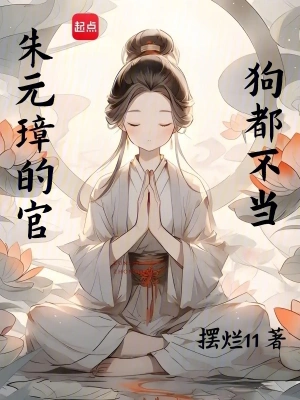
The Officialdom Under Zhu Yuanzhang, Not Even a Dog Would Take the Job
朱元璋的官,狗都不当
- Status
- Completed
- Length
- 822k Words
- Genre
- Historical
- Subgenre
- Song-Yuan-Ming Dynasties
- Updated
- 9mo ago
- Source
- Qidian
Stats
254Chapters
0Votes
6.5kRecs
63.5kFans
Tags
Synopsis
More by this author
In booklists 2


For Seasoned Readers With Nothing to Read
I've had a lot less time to read lately, and there are fewer books worth reading. Here are the ongoing novels I still follow after the authors' daily updates, along with completed novels I could happily reread. Hope this helps if you're looking for something to read.
18Books11Follows8moUpdated



Great Luo Starlight
They've all been on my bookshelf. I only keep books that are at least worth a read.
49Books7Follows1yUpdated
Readers also read
 My Father Is Wen Tianxiang, and We Win the Battle of Yashan from the Start
 A Guide to Building Civilization in a Primitive Tribe
 Daming: Asking for the Throne at the Beginning, Lao Zhule Went Crazy
 My Only Method: I Will Add More Points to Become Stronger at the End of Ming Dynasty
 A Record of a Mortal's Journey to Immortality: I Earn Immortality by Grinding Achievements for Rewards
 Northern Song Dynasty: I Spoiled the Future, and Zhao Kuangyin Broke Down
 I Transmigrated to the Ming Dynasty and Trained Old Zhu to Become a Great Navigator
 Lord Evolution
 A Record of a Mortal's Journey to Immortality: Choosing Hextech in the Chaotic Star Sea
 Sole Master of Mohism
 Ten Years as a Study Companion, and the Entire Court Begs Me to Shut Up
 Great Ming: I Asked You to Die in Protest, So Why Did You Really Die?
 Early Tang: From the Start, I Tell Li Er That I Am a Transmigrator
Reader comments 39
Google Translate
Zhu Yuanzhang didn't love the people very much, he just didn't treat bureaucrats as human beings.
Zhu Yuanzhang really didn't care much about the people. He just didn't treat bureaucrats as human beings. In his mind, only the descendants of the Zhu family are superior. Bureaucrats and martial artists are all slaves of their family. Those who work more and eat less are still worthy of living. If they want to compete with their descendants for food, they must be killed. As for the people, those are the ones who eat.
One by one they ran to find Zhu Chongba! Is that a tolerable person?
I just watched the beginning, and I can't figure out how the protagonist lives in the later stages.
It turned out to be Li Shanchang who discovered it. How can you hide from the next three major cases? Lao Zhu is not a wizard and will not kill you. The more you stand out, the faster you will die.
Traveling to the early Ming Dynasty, you only have three choices, okay. One is to kill the master who served Zhu Yuanzhang as an official with high merit. There is no doubt that this has been the case historically. The second is to kill Zhu Yuanzhang and become emperor himself. 3. Be a small landowner or commoner and live a stable life. If you dress up as a relative of Zhu Yuanzhang, just pretend I didn't tell you.
Traveling back in time to ancient times, those who can resist or not are gods and men. Who can bear it if they are cheated? If someone is on top of you, it depends on your mood whether he will kill you or not.
When the Ming Dynasty was founded, survival was all based on luck, and even honest and corrupt officials could die.
You can be an official in any dynasty, but you can't be in Zhu Yuanzhang's period. You have read many Ming Dynasty novels and you know that if the salary at that time is not corrupt, it is not even enough for a family of 3.5 People. They are often deducted and exchanged for other inedible food. They are sold for grains for the price of bone fractures. The most embarrassing thing is that if you are not capable, you will die easily, and if you are capable, you will be sent to be with Zhu Biao.
There used to be an anti-Zhu Yuanzhang novel. He was wearing modern equipment in the back garden of the Imperial City of Nanjing. The protagonist originally wanted to cooperate and win-win, but he didn't expect that the old pig would covet the things he took out, cut off his scientific knowledge, and round him up at all levels. After that, he fled to Yunnan, farmed and killed the dragon.
This introduction definitely shows that Pig's Foot is a gangster, who among the literary people would say that?
If the protagonist does not become the emperor, then the protagonist must carry out comprehensive changes that limit the emperor's rights. It is useless if the protagonist just copies the technology of later generations and adds a few reforms. If a country wants to produce a large number of original inventions and creations, it must carry out systematic changes in ideological foundation, political structure, legal system, social forces and other aspects. The reason why Britain was the first to enter the Industrial Revolution is that after experiencing the ideological changes of the European Renaissance, coupled with the British Glorious Revolution of 1688, the king's rights were further restricted. Britain established the framework of parliamentary sovereignty and the rule of law, and the bourgeoisie, the new aristocracy, and the king formed a check and balance, which allowed British civilians to gain unprecedented freedom. At this time, the degree of freedom of scholars, craftsmen, and farmers in Britain was higher than that of other European countries at the same time, and it was far more liberal than the civilians of China's Ming and Qing dynasties. The high degree of freedom of all British civilians fully inspired everyone's strength. The power of the Chinese emperor was not greatly restricted, and all officials, gentry and landlords were dependent on the imperial power. The freedom of civilians, who account for the vast majority of the country's population, is too low. This system inhibits innovation and hinders social development. China's Zhou Dynasty was a feudal system, and the central government could not control much of the local princes' affairs. The princes competed with each other. During this period, Chinese civilization truly allowed a hundred flowers to bloom. Most of the essence of Chinese civilization came from this period. During the Spring and Autumn Period and the Warring States Period, the "Mo Jing" recorded the principles of optics and mechanics, and the germination of geometry had emerged; the "Gan Shi Xing Jing" recorded astronomical observation data. But from the Qin Dynasty to the Qing Dynasty, there was almost no progress! The institutional innovation of the Spring and Autumn and Warring States periods stagnated after the Qin and Han Dynasties, lacking the ability to dynamically adjust. Since the Qin Dynasty, especially since the Han Dynasty deposed all schools of thought and only respected Confucianism, Chinese civilization has almost stood still and entered a dead end. The Zhou Dynasty and the Spring and Autumn Period and the Warring States Period were similar to the ancient systems of most European countries. They were all feudal systems. Even in successive years of war, less than 10% of the country's total population died directly or indirectly as a result of the war. But from the Qin Dynasty to the Qing Dynasty, every dynasty would kill half or more of the country's population due to war! What is even more tragic is that every time there is a change of dynasty, there is almost no progress in the system and culture! {"NickName":"Supervision and Restriction","UserId":406440657}