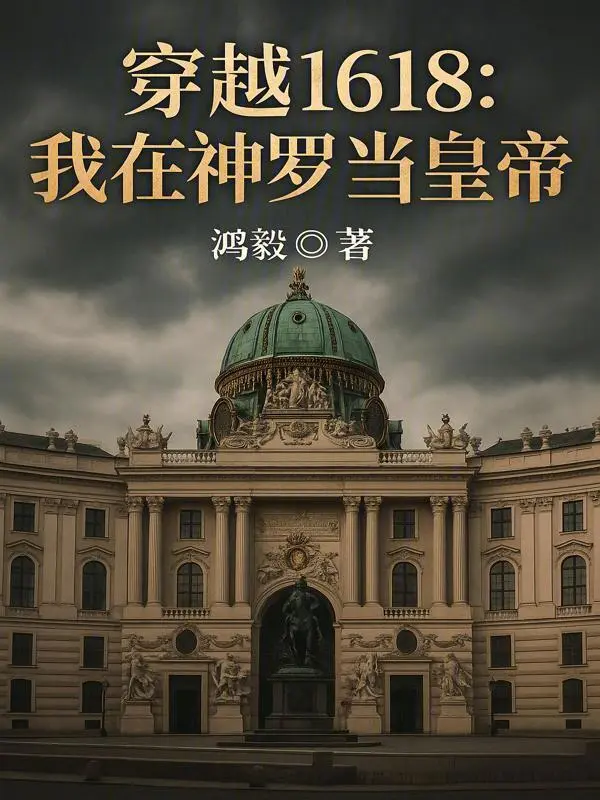
Time Travel 1618: I Am the Emperor of Shinra
穿越1618:我在神罗当皇帝
- Status
- Completed
- Length
- 688k Words
- Genre
- Historical
- Audience
- Male
- Subgenre
- Foreign History
- Updated
- 1mo ago
- Source
- Qidian
Stats
0Monthly votes
1.7kRecommends
3.3kFans
335Chapters
Tags
Synopsis
Reader comments
Readers also read
 Red Mansion Xiaoke
 At the Beginning, Please Ask Chongzhen to Abdicate!
 I Am a Tyrant in Nanming
 Fu Ming 1627
 Secret: Russell, Call Me Her Majesty the Queen
 Greece Recasts Rome
 Make Habsburg Great Again!
 Equipment Department Academic Master
 My Card Game
 1422: Restoration of Eastern Rome
 Japan's Warring States Period: the Rise of the Wakasa Tiger
 Please Call Me Your Majesty the Tsar
It's too difficult to get a Ph. D. In Tsinghua History Department. Did you know that Tsinghua World History got a B- in the fourth subject evaluation? I know you may want to create a persona of a top student from a prestigious university, but please do a little research on the academic situation in this country, and then compile it. Is this character good? If you really don't understand, you can just say that he has a PhD in history, and then you insist on saying that he has a PhD in history from Tsinghua University, which reveals that his knowledge reserve is very low and he has little understanding of academics, but he must pretend to be a fake person.
I searched for Ferdinand II. If the information this encyclopedia gave me is correct, this emperor was born in 1578. In other words, the protagonist will be 40 years old when he travels back in time. In addition, the protagonist did not inherit the memory, but only confirmed his identity based on the knowledge he learned. There will probably be a lot of words later to let the protagonist know what this body should know.
Statement on deletion and rewriting of the first ten chapters of this book
Dear readers, in response to the requests of readers, I have decided to start a large-scale revision of the first ten chapters of this book today, allowing the protagonist to inherit the memory of the original owner, and start the game in the third chapter to make the plot more compact. This workload is very large, so it is expected that the new chapters will be updated only the day after tomorrow. The previous plot modifications will not have any impact on the new plot. You can continue reading without worrying that some other settings or other people's views of the protagonist will change.
Why do those who write these care so much about their identity before time travel? Why would he make up a random piece of music for him? You don't care what it is, just start writing.
Make Habsburg great again!
Ferdinand II had an eldest son named John who died at birth. I think it's a better starting point to write this character book about the Habsburgs during the Thirty Years' War. By 1618 he was 15 years old.
I feel that if HRE wants to unify, it must defeat Britain, France, Russia and Turkey But if it wants to defeat Britain, France, Russia and Turkey, HRE must unify 🙂
The author can also try 17th-18th century Britain
The third golden chapter is about time travel and identity confirmation 😄😄
Putting aside their so-called word count, can your beginning give people some desire to read? At least create some conflict or something. I clicked to open the table of contents and saw the title of Chapter 4 "Confirming Identity", which made my cerebellum shrink. The golden chapter is Confirming Identity. It's almost ten chapters and I just left the house. What's the rest? It's all in Latin! Am I here to read the Latin translation?
The author, can I understand this: Many protagonists travel through the Middle Ages and claim to have received "divine inspiration" to develop technology and predict historical events. But if you behave too outrageously or have no background, you can easily be arrested and burned by the local Catholic Church😰😰
A certain iron-blooded friend compiled and simplified the information on the Thirty Years War🗂️
1. Background information After the 17th century, the German imperial power under the rule of the Habsburg Dynasty declined day by day, and the princes of various states became divided and ruled the roost. The princes who believed in Protestantism (Lutheranism, Calvinism) and the princes who believed in Old Christianity (Catholicism) competed for territory and opposed the emperor's autocratic power under the cover of religious disputes, and formed the "Protestant Alliance" (1608) and the "Catholic Alliance" (1609) respectively. The Habsburg dynasty tried its best to restrict Protestant activities and strive to regain the imperial power of the old church princes, and received support from the Pope, Spanish and Polish nobles. In order to dominate Europe, France tried to keep Germany divided and supported the Protestant princes to resist the imperial power; Denmark and Sweden had long coveted the German territories and ports in the North Sea and Baltic Sea; the Netherlands and the United Kingdom were unwilling to expand imperial power in Northern Europe, and the United Kingdom also attempted to weaken the power of Spain. These countries supported the Protestant Union. The Czech uprising against the Habsburgs in 1618 was the trigger for the Thirty Years' War. The Thirty Years' War was the total outbreak of various religious and international political conflicts in Europe for hundreds of years. As King Gustaf II of Sweden said in a letter to his Prime Minister: "The various small wars are here combined into a comprehensive European war." 2. Introduction to the process The Habsburg Alliance was composed of the Spanish and Austrian Habsburg dynasties, and was supported by the Pope of Rome, the German Catholic princes, and the Kingdom of Poland and Lithuania. Hold. The anti-Habsburg alliance was composed of France, Sweden, Denmark, the United Provinces (Netherlands), Britain and Russia, and was supported by the German Protestant princes and anti-Habsburg movements in Bohemia, Transylvania, and Italy. The Thirty Years' War began as a religious war between Protestants and Catholics, but later lost its religious character. It is a reflection of the far-reaching process of the emergence of capitalism and the formation of bourgeois nations, and is closely connected with the initial bourgeois revolutions in some European countries (the Dutch bourgeois revolution from 1566 to 1609, and the English bourgeois revolution from 1640 to 1660). The entire war was divided into four stages, namely the Czech stage (1618-1624), the Danish stage (1625-1629), the Swedish stage (1630-1635) and the pan-European melee stage (1636-1648). In the end, the Habsburg dynasty group was defeated and the participating countries signed the "Peace of Westphalia" in 1648, which lasted for thirty years. (1) Czech stage (Bohemian stage). Comprehensive anti-Austria In June 1619, the Bohemian rebel army marched to the outskirts of Vienna, the capital of the Habsburg dynasty, and negotiated with Ferdinand II, who had succeeded to the throne as Holy Roman Emperor at that time. Forced by the situation, Ferdinand pretended to agree to negotiate on the surface. In fact, he secretly sought help from the Catholic League and promised to transfer the title of Elector of the Palatinate to Maximilian I, Duke of Bavaria in the future in exchange for the Catholic League sending troops to help. Soon, the Catholic League sent 25,000 troops and sponsored the Holy Roman Emperor with a large amount of money. The rebels were forced to retreat to Bohemia in August of that year, and the Bohemian Assembly elected the Protestant Elector Friedrich V of the Palatinate as King of Bohemia that month. The Emperor's Counterattack As the Emperor of the Holy Roman Empire, Ferdinand certainly could not tolerate the Bohemians electing their own king, so he immediately sent troops to counterattack after lifting the siege of Vienna, and Spain, one of the Catholic Alliance, also sent troops to attack the Palatinate. On November 8, 1620, the allied forces of Bohemia and the Palatinate fought a decisive battle with the Catholic Allies commanded by Count Tilly at the Battle of White Mountain. Although the allied forces had a favorable location, they were ultimately defeated by the Catholic Allies due to backward equipment. Frederick V was forced to flee to the Netherlands, and Bohemia was reintegrated into the territory of the Holy Roman Empire. About three-quarters of the landowners in Bohemia fell into the hands of the nobles of the Holy Roman Empire. The Holy Roman Emperor even forced the people of Bohemia to convert to Catholicism, burned Bohemian books, and declared German as the official language of Bohemia. From 1621 to 1623, Count Tilly once again defeated the armies of the Protestant princes in the Palatinate. The first phase of the war, the Czech phase, ended with the victory of the Catholic Allies represented by the Habsburg royal family. (2) Danish stage. Anti-Austria in Europe Although the war in the Czech phase ended, France could not tolerate the resurrection of the Habsburg Empire under Charles V; and the Dutch Republic (Confederation of the Netherlands) went to war with Spain in 1568, which has not ended yet (Eighty Years War). King James I of England was worried about the fate of his son-in-law, Elector Friedrich V of the Palatinate; Denmark and Sweden were unwilling to see the Holy Roman Emperor once again exercise effective rule across the country. Thus, what was originally a war between the Bohemians against the Holy Roman Empire evolved into a widespread international war. In 1625, French Prime Minister Richelieu proposed that Britain, the Netherlands and Denmark form an anti-Habsburg alliance. Denmark would be responsible for sending troops, while Britain and the Netherlands would provide behind-the-scenes support. The second phase of the war, the Danish phase, officially began. Denmark sent troops In 1625, the Protestant King Christian IV of Denmark, with the support of Britain, France, and the Netherlands, launched an attack on the Holy Roman Emperor with the Protestant Alliance, and soon occupied the northwest of Germany. At the same time, the British army led by Mansfield occupied western Bohemia. This time the Protestant coalition was winning steadily, but in 1628, the Holy Roman Emperor hired mercenaries from the famous Bohemian noble Wallenstein. Wallenstein lived up to his expectations and defeated Mansfield at the Battle of Dessau Bridge in April of that year. He then defeated Denmark at the Battle of Wolgast and took control of Saxony. Denmark was forced to sign the Peace of Lübeck with the Holy Roman Emperor in May 1629 and promised not to interfere in German affairs again. The second phase of the war ended with the extension of the Holy Roman Emperor's power to the Baltic Sea. (3) Swedish stage. Sweden sends troops After the Holy Roman Empire won the second stage of the war, Wallenstein planned to build a powerful fleet in the Baltic Sea. The Swedish king was afraid that the Holy Roman Empire would surpass Sweden and gain a dominant position in the Baltic Sea. Therefore, with financial assistance from France, Sweden sent troops to land in Pomerania in July 1630, thus starting the third phase of the war - the Swedish phase. Defeat the Emperor The Swedish army, led by King Gustavus Adolf II, joined forces with the electors of Brandenburg and Saxony. On September 17, 1631, they defeated the army of the Holy Roman Empire at the Battle of Bradenfield and occupied Pomerania. In early 1632, the commander of the Holy Roman Empire Army, Count Tilly, was defeated and killed on the Lech River. The Swedish army occupied Mainz, and in April they captured Augsburg and Munich. At this time of critical survival, the Holy Roman Emperor once again appointed Wallenstein, who had been dismissed as commander-in-chief, to defeat Gustavus II at the Battle of Nuremberg. Wallenstein fought the Swedish army at the Battle of Lützen in November 1632, but Sweden won again. However, the Swedish army's leader, King Gustav II, was also killed in the battle. Counterattack again The Holy Roman Emperor took this opportunity to unite with the Spanish allies and defeated the Swedish army at the Battle of Nördlingen in September 1634, forcing the Swedish army to withdraw to the Baltic coast. Saxony and Brandenburg signed the Peace of Prague with the Holy Roman Emperor in May 1635. The third phase of the war, the Swedish phase, ended with the victory of the Habsburg Emperor. (3) European melee stage. France Sends Troops France was shocked by the Habsburg royal family's victory again. Previously, France itself was a Catholic country, and its internal nobles and Huguenots rebelled. It had only used fake help from other countries to weaken the strength of the Habsburg royal family. However, when Denmark, Sweden, and the Protestant princes of the Holy Roman Empire all failed, France finally directly sent troops under the leadership of Prime Minister Richelieu to join forces with Sweden to fight against the Habsburg royal family. From then on, the war entered the fourth stage - the stage of melee throughout Europe. France wins From 1636 to 1637, Spain sent troops to France, attacking the Holy Roman Empire from the north and the south, and once reached Paris, the capital of France, but was ultimately defeated by the French army. In 1638, the French army attacked the Basque region of Spain and was defeated in the Battle of Fuentravia; the French army sent troops to Catalonia to support the Catalan Uprising (1639-1651), which dealt a fatal blow to Spain and indirectly led to Portugal's separation from Spanish control. In August 1638, the French navy defeated the world-famous Spanish navy. In October 1639, the main force of the Spanish navy was annihilated by the originally unknown Dutch navy (Battle of Downs). In May 1643, the fourth Prince of Condé and the Viscount of Dureny jointly defeated the main force of the Spanish Army in the Battle of Rocroix. The French Army thus replaced Spain as the first army in Europe. Denmark joins the war In November 1642, the Swedish army defeated the Holy Roman Empire Army again at Bladenfeld. However, at this time, the Danish king was jealous of the Swedish army's results and feared that Denmark would be controlled by Sweden after it became stronger. Therefore, he took advantage of the Swedish army to invade South Germany and declared war on Sweden. Denmark defeated the combined fleet of Sweden and the Netherlands in 1644, but later the Danish navy was completely annihilated by the reorganized Swedish-Dutch fleet. After three years of war (1643-1645), the Swedish army successfully invaded Denmark by land and water, forcing Denmark to cease the war and sue for peace. Sweden wins In March 1645, the Swedish army defeated the Holy Roman Empire army in Bohemia. In August of that year, the French army defeated the Holy Roman Empire army at the Battle of Narlingen (the Second Battle of Nardlingen). Most of the German territory of the Holy Roman Emperor was occupied. In 1648, the French-Swiss coalition defeated the Holy Roman Empire at the Battle of Smarshausen and Reims. At the end of the war, both sides were severely weakened. As a result, in October of that year, the two sides reached a reconciliation agreement and concluded two peace treaties - the "Treaty of Osnabrück" and the "Peace of Münster", collectively known as the "Peace of Westphalia". The Thirty Years' War was completely ended. 3. The impact of war (1) On the world. The Thirty Years' War promoted the formation of modern European nation-states and was the beginning of modern European history. The conclusion of the Peace of Westphalia recognized many states under the Holy Roman Empire as independent sovereign states. As a result, a large number of independent sovereign states emerged in Europe. It established the principles of national territory, sovereignty and independence in international relations and is considered the beginning of modern international relations. (2) To Europe. Germany is divided. Dutch independence. The decline of Spain. France rises. Sweden rises. Tactical changes: During the war, various countries began to implement conscription and established standing armies and logistics systems so that the army could carry out protracted wars. The army was also gradually streamlined to meet the requirements of mobile warfare. The military reforms carried out by King Gustav II of Sweden were to replace spearmen with musketeers. Artillery was first used to conduct a concentrated fire attack, then cavalry was dispatched for assault, and finally the infantry was responsible for clearing the enemy's troops. The three-stage strategy became the standard strategy in subsequent wars.
I wish it would be longer
Hello, author. I like this book very much. How many words do you plan to write in this book? Can the word count be longer? I hope I can write at least 3.5 Million words, thank you!
There is too much popular science, a lot of verbosity, foreign language, and too many numbers. The background is lengthy and the theme is slowly advanced.
There was too much unnecessary description, so I couldn't grasp the key information when I was reading it. For example, in the chapters about the dinner party, it feels like the same words are always said in circles. Not to mention that after the dinner, I also wrote about other groups' opinions on the protagonist. As written this way, the plot progress is too slow.
Very professional author (relatively speaking)
? It's already time for the rise of Protestantism, and the protagonist is still strengthening theocratic power intentionally or unintentionally? Why, he doesn't plan to take over the interpretation of theocratic power in the future? The integration of politics and religion, look at the Ottomans in the past, and look at Iran now.
This is the first time I've seen the Thirty Years War type Yang Yi Yang 😌
Give a suggestion
Personally, I feel that I can trust the military capabilities of Tilly and Wallenstein. The fact that the former did not defeat Gustav II actually had more to do with his smaller number of troops. The latter didn't want to rebel at all.
I don't find this period of history very interesting. It would be better to write about Karl, the last emperor of the Austro-Hungarian Empire, who asked Austria-Hungary not to disintegrate.
The author probably hasn't read much relevant research.
The protagonist has achieved this kind of military reform, which is basically what he had in the later stages of the Changtu War.
By the way, I have written 100,000 words. Do you have a group?
Finally updated, I thought the author had already
Why is the author back? Why did it stop for so long?
Could it be that the author was made into a Gundam?