


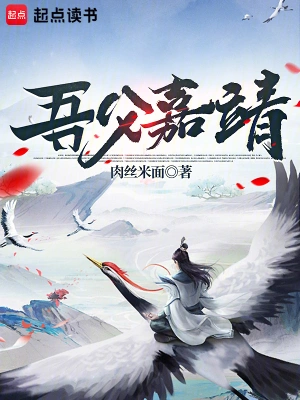
My Father, the Jiajing Emperor
吾父嘉靖
- Status
- Completed
- Length
- 897k Words
- Genre
- Historical
- Subgenre
- Song-Yuan-Ming Dynasties
- Updated
- 10mo ago
- Source
- Qidian
Stats
247Chapters
0Votes
11kRecs
39.3kFans
Tags
Synopsis
More by this author
In booklists 1
Readers also read
 My Only Method: I Will Add More Points to Become Stronger at the End of Ming Dynasty
 A Guide to Building Civilization in a Primitive Tribe
 My Father Is Wen Tianxiang, and We Win the Battle of Yashan from the Start
 Daming: Asking for the Throne at the Beginning, Lao Zhule Went Crazy
 A Record of a Mortal's Journey to Immortality: I Earn Immortality by Grinding Achievements for Rewards
 The Great Ming
 Emperor of the Great Song: 1066
 Lord Evolution
 A Record of a Mortal's Journey to Immortality: Choosing Hextech in the Chaotic Star Sea
 Northern Qi: My Father Is Emperor Wenxuan
 Is the Son of Heaven Born to Rule?
 Great Tang: You’re All Forcing Me to Become Emperor!
 Ming 1566: Regent of the Empire
 The Ming Dynasty's Censor
 The Ming Dynasty's Legitimate Heir
Reader comments 35
Google Translate
Have you ever been a prince? Some things are written randomly, taking it for granted
Bore explosion problem
Bore blasting was a global problem at the time, especially in Europe, where the metallurgical industry was immature. The gun blasting rate was actually very high, and it also caused serious accidents. In 1574, the Governor of the Spanish Netherlands ordered 300 cast iron cannons from the Liege Cannon Foundry. However, due to the lack of casting iron technical support, although these iron cannons were delivered on time, after testing, all of them exploded and no one was spared. Wathier Godefrin, the director of the cannon foundry and the cannon caster, was also arrested and imprisoned because of the failure of the cannon casting. Source Colin J. M. Martin—"Full fathom five wrecks of the Spanish Armada" The cast iron cannon artifacts from three periods, including the Inmarill Rose that sank in 1545; Gustav's leather cannon, and the Batavia that sank in the Netherlands in 1629, all have obvious traces of splicing. Most of the extant European wrought iron cannons from the late Ming Dynasty have barrels that are level with the barrel, and traces of gaps in the iron bars are clearly visible. This is irrefutable evidence that can be found online. European wrought iron cannons even mentioned in their own documents that they could not be loaded with high-pressure granular gunpowder, and they often exploded and the real King of Scotland was killed on the spot. The ratio of saltpetre to carbon to sulfur was 7.5:1.5:1 In the nineteenth century and 5:1:1 in the sixteenth century. Additionally, powder made in France and Italy at least up to the end of the sixteenth century was not grained.'' Morin "Morphology" Powdered gunpowder burns slowly and produces a lower chamber pressure. The energy of granular gunpowder is 1.5 Times that of powdered gunpowder, and the burning rate is 3 times that of powdered gunpowder. , As a result, Western European wrought iron cannons only used low chamber pressure powder gunpowder, and the chambers repeatedly exploded. It was still possible to replace them with granular gunpowder. During the British expedition to Cadiz in Spain in November 1625, due to the greed and embezzlement of military contractors, and the lack of management experience of state officials, who knew nothing about military logistics support, the British expedition not only lacked food and clothing, but also used shabby weapons. There were even many matchlocks that did not even have fire holes, so they could not be fired at all. The country invested a lot of money, but there were too many moths, which ultimately led to the failure of the war. During the Battle of Oudenaarde on July 31, 1667, 600 French heavy matchlock guns exploded on the battlefield in one day (Source: "Un probl ème opé rationnel du "the prac tife of a rtillerie" In 1621, Spain cast 150 new bronze cannons within two years. Due to the poor skill of the gunsmiths, these cannons were not cast well. Among them, 20 of 36 cannons were damaged when they were tested for the first shot. Although the British cast iron cannons in the 17th century had a temporary monopoly in Europe, unfortunately it was only in the early 17th century that there were records of the British adding limestone to blast furnace smelting, and it was not until the fall of the Ming Dynasty that they began to use coke for smelting. Fortunately, the British's high-quality low-sulfur and low-phosphorus iron ore helped them a lot. Otherwise, with their metallurgical technology, the iron cannons they cast would not be much better than those of Spain. Also, the Hongyi artillery introduced in the early days of Chongzhen exploded in front of all civil and military officials during the first test firing in the capital, and the remaining unexploded parts were sent to the Liaodong battlefield for use. European science and technology has also developed step by step. Some people think that Europe has been advanced for three to five hundred years or even longer because of its advanced science and technology in modern times. How is it possible that real life is not an instant improvement across eras by clicking "Upgrade" in a video game?
Sea ban and Japanese pirates
The purpose of the so-called "sea ban" in ancient times was to restrict and eliminate rebel forces, combat piracy and smuggling, and ensure social stability. The "Sea Ban" was only promulgated when there were Japanese pirates. Rather than "sea ban" first, there will be Japanese pirates. Don't reverse the causal relationship. Sea ban and seclusion are two different things. The direct cause of the Japanese rebellion was the civil strife in Japan. In order to make a living and seek wealth, the feudal lords, samurai and ronin who failed in the war organized into armed gangs and went to China's coastal areas with pirate merchants to carry out armed smuggling and robbery and other criminal acts Ming Dynasty literature is actually quite strict about nouns. Pirates, sea pirates, Japanese pirates and Japanese slaves all refer to completely different groups. Japanese pirates are divided into slave thieves and sub-thieves. The Ming Dynasty called these people differently. If they were pirate merchants, they were called pirates. If they are Japanese, they are called Japanese pirates. There is a clear distinction. For example, the Ming Dynasty court and the local chronicles of Zhejiang Province distinguished between Japanese pirates and pirate merchants who colluded with Japanese pirates. Wang Zhi was the largest pirate merchant on the southeast coast at that time. He raised a large number of Japanese pirates to cause trouble, but the record about him clearly stated that he was a pirate merchant, while the Japanese he raised were recorded as Japanese pirates. They have never been mixed together The Japanese can be divided into two types. One is the pirate group headed by Wang Zhi who has inextricable interests with the Japanese pirates. The other is the pirate group whose wives and children were held hostage by the Japanese pirates and forced to attack the town The Japanese pirates are the Japanese pirates as described in Jixiao's new book Military Training Records. The Japanese pirates are Japanese pirates. Forced Japanese pirates were classified as rescued people, while pirate groups were classified as rebels. They were not confused with each other The main force, logistics, bases, and channels for selling stolen goods were all provided by Japan. And the disappearance of coastal Japanese pirates had a great relationship with the changes in Japan. Since the establishment of the Tokugawa shogunate in 1603, the Warring States Period in Japan ended, and vassal states from all over the country collected troops and put them into the treasury. Ma Fang Nanshan Soon after, the Tokugawa shogunate issued a lock-down order. Japanese citizens were not allowed to run around. They stayed at home, men farmed and women weaved, and the economy was restored. Then look at historical data. Starting from 1603, the Japanese rebellion in the late Ming Dynasty began to slowly decrease. The last Japanese pirates seen in history books invaded the coast of Fujian in July of the fourth year of the Apocalypse (1624). From 1633 to 1639, the Tokugawa shogunate issued five consecutive lock-down orders. The Japanese pirates are completely extinct The direct cause of the Japanese pirate rebellion is the civil strife in Japan. At the end of the Yuan Dynasty, Japan split into the Northern and Southern Dynasties, and wars between the two sides continued. In order to make a living and seek wealth, the feudal lords, samurai and ronin who failed in the war organized into armed gangs and went to the coastal areas of China with pirate merchants to carry out armed smuggling and robbery and other criminal acts. Because the main force came from Japan, they were called Japanese pirates at the time Japanese pirates Ancient name) Japanese pirates (bandits or foreign invaders of national borders) Japanese pirates refer to the Japanese. Chinese people want to be Japanese pirates unless they have Japanese household registration. The Japanese pirates are composed of Japanese samurai ronin, Japanese pirates, and Japanese merchants Sea bans have been in place since the Song Dynasty😲😲 The "Book of Taizong" in "History of the Song Dynasty" records that Zhao Guangyi "banned sea merchants" in September of the second year of Yongxi (985). According to the "History of the Song Dynasty·Shihuo Zhi", Zhao Guangyi stipulated private trade with overseas countries in the early years of Taiping and Xingguo (976) Anyone who trades for more than 100 coins will be sentenced, and those who trade for more than 15 coins will have their faces tattooed and be exiled to the island. In other words, Zhao Guangyi not only completely banned overseas trade, but also completely banned land trade with foreign countries. He did not do it on a whim, but implemented it as a long-term national policy. In the fifth year of Chunhua (994), the ban was specifically reiterated, and the punishment laws were also very harsh. It was a crime to have more than 100 guan, and if the amount exceeded 15 guan, one would be tattooed on the face and sent to an island. Later, it was stipulated that those with more than 4 guan would be sentenced to one year in prison, and 20 guan would be sentenced to local service with tattoos on the face. The "History of Song Dynasty: The Benji of Emperor Gaozong" records that in the seventh month of the fourth year of Jianyan (1130), he "banned shipping merchants from Fujian, Guangzhou, Huaihe and Zhejiang to Shandong, and was considered to be the guide of Jinren Township". Not only that, he also issued an edict in August of the second year of Shaoxing (1132) to confiscate the ships of the coastal people and replace them every year to guard the dangerous sea lanes. In essence, it was not much different from the sea ban. According to the "History of the Song Dynasty·Shi Huo Zhi", Emperor Gaozong of the Song Dynasty established a market in the twelfth year of Shaoxing (1142), so he took wax tea as the basis of the market. All the crotch, cut, piece and collar, regardless of how high or low they were, were scrutinized by the officials, and smuggling into the sea was strictly prohibited." That is to say, the overseas trade of wax tea was prohibited.
The affairs of the world are planned and calculated, but the word "people" is nothing more than the people. No matter how civil servants, military officers, or heroes, they can't stop the people's concerted efforts. Modern children understand this, but few ancient emperors could fully understand it.
Thoughts after viewing
I have read more than 30 chapters and it is a good book. I personally feel that the protagonist pays too much attention to political dogfights. Various calculations are described in each court meeting with the expressions of all parties. Although this is normal, after all, political battles are inherently more verbal confrontations. However, in this way, the plot is a bit delayed. I want to see the protagonist become the emperor, which may take one to two million words. I think It would take at least 4 to 5 million words to see battleships with big cannons and queuing to kill. Although it is reasonable to write like this, I may have read too many cool articles in recent years, and now I feel uncomfortable reading this kind of (ps: In addition, I think that if you want to revive the Ming Dynasty, you must first do it with the belief of re-conquering the world. It is not a good choice to reveal political opinions from the beginning)
If the male protagonist reuses Zhang Juzheng, he should not always let him do this kind of charging into battle. It is better to treat it as a certificate of submission for the male protagonist or an opportunity to enter the eyes of the emperor and important ministers. If it is done too much, it will be too hateful and offending, and it may become Zhu Wan's second best. If he is to be trained as the future first assistant, he still needs to find someone else to rush into the battle and be the mouthpiece of the prince, so that Zhang Juzheng can offend less people. After all, the male protagonist may not be able to protect his own people now. Zhang Juzheng's words are suitable for the time being to hide in the rear and make plans, to observe politics step by step, to understand the world's current problems, to integrate the direction and measures of reform, and to prepare for the future. After all, he is not yet the Yuan Fu who will have insight into world affairs in the future. The male protagonist needs to find a knife to rush forward and hide himself and his future important ministers in the back. Gao Gong does this well and his character is also suitable.
Strengthen authority, rule and clan arrangements
Only reducing the benefits of clans has limited effect. If there are more clans in the future, they can arrange to form the "Zhu Family Army" (the lower-level clans in the fifth server have the least risk, and let the clans pay blood tax to reduce some of the population burden). Zhu Yuanzhang had a similar idea. As a result, because of Zhu Di and Zhu Yunwen, the Ming clan cannot be used later. It is a pity that these are all human resources! (Big In Volume 17 of the Ming Huidian, officials and gentry paid taxes as one, and even the vassal kings had to pay taxes. It was illegal to donate and annex land. Once someone reported that the whole family was exiled, the land was distributed to the surrounding people. However, later supervision and restrictions were relaxed, and it was useless to reduce the treatment of the clan in history. The Ming Dynasty finally died of poverty.) The clan could take the imperial examination, which was restored in the Wanli Dynasty. Even if you don't go to war, you can recruit workers in factories🏭, set up the Internal Revenue Service, and let the lower-level clans serve as violent tax collection teams. You can also set up a royal academy for the clans to study astronomy, geography, mathematics, medicine, physics, chemistry, machinery, art... To contribute to human civilization. To make contributions, don't forget to ennoble vassal kings overseas😏 When the clan has more members, you can also find these distant relatives to perform corvee service. The most important thing is that you don't have to pay 💰💰💰 Let the clan make money and respect the emperor😎 It's rare to be an emperor in time travel. If you can't make the capitalists jealous, the emperor will be in vain. The so-called "civilian group" is essentially a group of representatives of interests from different regions competing for power in the court. They are not monolithic. In the middle and later stages, party strife will only occur when the emperor's authority and control declines. If these groups of scholar-bureaucrats are divided, they can use the share dividends of some factories and chambers of commerce to win over them. "We must make many friends and few enemies." It can be improved. The status of the three ancestor gods Xuanyuan Huangdi, Fuxi, and Nuwa enhances the legitimacy of the protagonist's authority (the three ancestors are the protagonist's predecessors😏) and increases the cohesion and assimilation ability, which provides justice and legitimacy for the complete incorporation and assimilation of surrounding ethnic minorities. On the high ground of faith, we not only need local Taoism and other philosophical sects, but also have ancestral beliefs as firewalls😎, and they will not go astray as easily as religions🔥 In China, ancestral beliefs are very important. It is related to the legitimacy of the court, the authority of elders and parents, and the consensus of the people😊 Even if the feudal dynasty, Confucianism, and religion are gone in the future, the people of China can be reunited.
Long live Grandpa Mao
Gee, Zhang Juzheng is still young at this time. In 10 years or even 5 years later, his performance will not be like this. Now he is not the one who has no inner support, no trace of external desires, and is obsessed with the camera. The passion in his heart is still there. I hope that Zhang Juzheng will be written well and his characteristics will be written out, instead of being a flat character. After all, he is the prime minister who saved the time. I hope he can get along with the male protagonist as a monarch and his ministers.
I hope the author will not have a personality cult tendency. For example, with Zhang Juzheng, you need to treat each courtier according to the plot development in the novel. You can use both good and bad people, but you must know in your heart what interest groups they each represent.