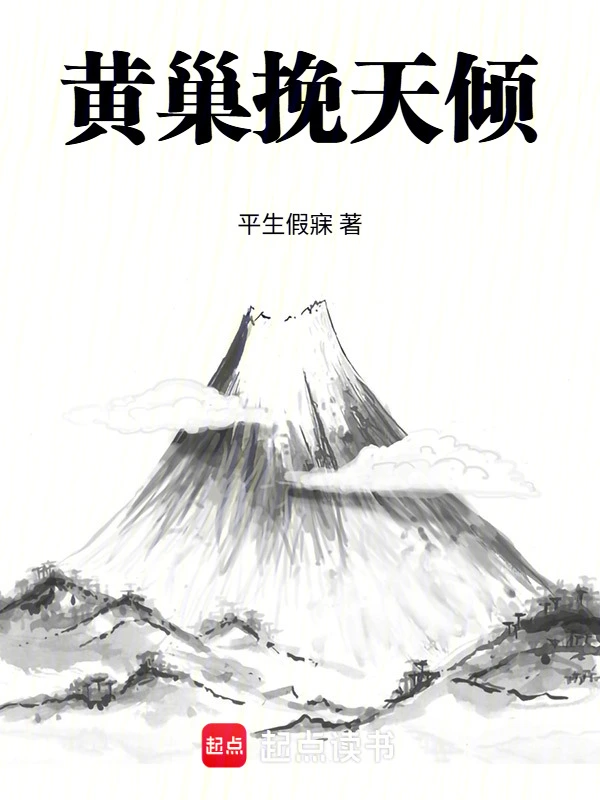
Huang Chao Holds the Sky
黄巢挽天倾
- Status
- Completed
- Length
- 1.1M Words
- Genre
- Historical
- Audience
- Male
- Subgenre
- Alternate History
- Updated
- 9mo ago
- Source
- Qidian
Stats
Tags
Synopsis
Reader comments
In booklists 3
Books That I Personally Find Interesting
Personally, I feel that as long as the writing is good and thoughtful, it is definitely a good book. Whether it is popular or not is another matter. (Some netizens asked why many of the recommended books were not included in V. I would like to say that there is no way, because many books have good settings and plots at the beginning, but they often say that either the characters have collapsed or the combat power has collapsed, or they are too boring to watch. For various reasons, I don't like

The Sea of Origin
General talent: Twitching hand Me: I feel that the rate of eunuchs will increase by 75% after entering this book list. That's it, I have been awarded the title of 'Eunuch Cultivator' Temporary 'lost person' Many books on the bookshelf have been lost. The starting point that was rarely used is now even less used. I lament. They are all apprentices, so funny. I almost never see apprentices. I usually only read the first few dozen chapters for inspiration. Even if I don't bother to go to pirated we


I Read and I Am Happy
Ha ha
Readers also read
 Talker in the Song Dynasty
 1914 Begins with the Rejection of the Schlieffen Plan
 In the Red Mansion: Escort Daiyu to Beijing at the Beginning
 Please Call Me Your Majesty the Tsar
 Never Walk Alone!
 They've All Reached the Capital, You Have to Surrender! ?
 The Empire Will Keep Winning
 Daming: Have I Become Wanli's Portable Grandfather?
 I Am Drawing a Hot-Blooded Episode in the Zhiyu Episode!
 Has the Han Dynasty Been Revived Today?
 Three Kingdoms, Me? a Perfect Strategy?
 Master, Gao Zai
Thousands of funds. If the future does not collapse, the next Wanli Mingjun will be you🫵🏻
Support
. .
Forced brainwashing, turning enemies into friends, deus ex machina?
Is brainwashing really that powerful? Can anyone explain to me if it can really be done to this extent? The protagonist's success in brainwashing the villain is the underlying logic of this book. If it can't be done, the whole book will collapse. To be honest, the author might as well provide a system, because it will make history anyway.
I haven't read it yet, but Huang Chao's biggest impact is to kill the clan almost to extinction, break the clan monopoly, and open up the path for civilians to rise. If relatively peaceful means are used and the clan's power is not greatly lost, then the revolution will not be complete. Just like India has not broken through and started over, there will be great resistance to subsequent development!
Does Sun Wukong really exist? Did Huang Chao really use big rocks to crush people in history? Probably neither. All the past characters we talk about are essentially processed based on current needs. What the real Huang Chao looks like has nothing to do with modern people. But the modern image of Huang Chao reflects the common thinking of modern people, that is, we want Huang Chao to be like this, not what he really is. So why debate the scriptures? Today I am cheering for Sun Dasheng, but the monster has returned again. Today's cheers are soaring to the sky, but some things have returned.
First of all, I have never been an author, but I want to say, is it difficult to write a hundred chapters a day ? It's not that I'm being unreasonable. After all, I said at the beginning that I've never been an author.
Grass jelly so far
In just a dozen chapters, the protagonist's encounters and plans in Chang'an are clearly described. If it were another Paijie or a master, this content would be enough to be put on the shelves. However, there is still a conflict in the description of official politics and military hegemony. I would like to know how the author plans to deal with it in the future. For example, in the Northern Song Dynasty Time Travel Guide, the time traveler wanted to rebel and then entered the officialdom to seek release. As a result, he was transferred by the court every time as soon as he built the place.
Huangchao burns the sky
Huang Chao: This was never what I wanted. I never thought about launching an attack with my Hundred Sons Regiment. Together we created a prosperous era. But you betrayed me, betrayed us all, you indulged those corrupt officials and lied to your ministers. Datang only has one chance to revive, if you don't seize it, then let me do it! Let the war begin, from Hainan Island to the Anxi Protectorate, let Kyushu boil, let Chang'an burn, even if I shed my last drop of blood, I will see the Tang Dynasty revive again! If I can't save him from your failure, then let the world burn!
I have heard a saying that the integrity of the country depends on whether the emperor served as an official in the previous dynasty. If you take the salary of the previous dynasty and then revolutionize his life, it seems that you will be criticized on a small scale.
Huang Chao's role in history can be called a crime that will last forever, and it is even irreplaceable in the entire history of China. Many people think that without Huang Chao, we would be no different from India now, completely interrupting the monopoly of knowledge and class.
I read twenty chapters in one go and let me share my thoughts.
I read twenty chapters in one go and let me share my thoughts. First, from the beginning, the author's entry point is very clever. Huang Chao, a famous rebel thief, suddenly became a newcomer in the officialdom. This contrasting setting is very interesting and clever. It can be seen that the author has carefully designed it. Second, from the perspective of the rhythm of writing, it is also compact, natural and just right. It neither makes people feel delayed nor rushed. Third, judging from the writing style and the shaping of each character in the first small copy, each character is full and three-dimensional, and it can be seen that the author is also extremely sophisticated. ,,,, To sum up, it seems to be a masterpiece of novels dating back to the Tang Dynasty. Even in the historical area where there are many masters, in this field in the late Tang Dynasty, you can still strive to be among the best. Of course, the premise is that the author can continue the level of the opening chapter. I am more curious about whether the author is the trumpet account of an acquaintance. I don't feel like a newcomer. I hope I can blow your socks off.
I took my sword to cut for three days, but I couldn't cut down a street in Chang'an With one stroke of their pen, corpses littered both sides of the Yellow River.
Historical records record that Huang Chao cannibalizes human flesh (official and unofficial history is unknown). Thinking about it, it's impossible. It's possible that those under his control actually ate human flesh, but how is it possible that Huang Chao is the boss?
Don't talk about why I rebelled, just talk about the performance of my rebellion, and I'll get rid of you!
The events and characters that really had an impact on the demise of the family.
The demise of an aristocratic family is a long-term historical process involving multiple factors such as politics, economy, system and military. The following are the key events and characters that really had an impact on the demise of the family: 1. Key events 1. Wu Zetian's reform and suppression of the clans - "Surname Records" and the imperial examination system: Wu Zetian abolished the "Clan Chronicles" and revised the "Surname Records", reclassifying the surname levels based on official positions, breaking the traditional monopoly of clans. She vigorously promoted the imperial examination system, added palace examinations and martial arts examinations, provided a path for advancement for children from poor families, and weakened the control of aristocratic families on official careers. - Cleaning up the Guanlong Group: Wu Zetian used political means to clean up the Guanlong Group (such as the Changsun Wuji family), supported poor bureaucrats, and ended the situation of "no poor families in the upper class". 2. Anshi Rebellion (755-763) - Collapse of economic foundation: The war caused severe damage to the northern economy. The manor economy and land annexation model of the aristocratic families were unsustainable, and the equal land system completely collapsed. - Reshaping of the political landscape: centralization of power weakened, vassal towns formed, aristocratic families lost control of local areas, and their political privileges were gradually replaced by emerging military groups. 3. Huang Chao Uprising (875-884) - Direct attack and cultural destruction: Huang Chao's rebel army used the slogan of "equal peace" to massacre gentry bureaucrats on a large scale and burn family trees, causing the "Five Surnames and Seven Hopes" and other top clans to be severely damaged. For example, after Huang Chao invaded Chang'an, "the bones of public ministers were trampled all over the streets", and officials of third rank and above were almost slaughtered. - Collapse of economic and social order: The uprising destroyed the farm economy of aristocratic families, accelerated class mobility, and made it gradually become a reality that "scholars are selected regardless of family background, and marriage is regardless of family background." 4. The Disaster of Baima Post (905) - Zhu Wen purged the court: Zhu Wen paved the way for usurping the Tang Dynasty and killed more than thirty important officials of the family (such as Pei Shu, Dugu Sun, etc.) At Baima Post in Huazhou and threw their bodies into the Yellow River. This incident completely ended the influence of the family in the central government and cleared the way for the rise of the Han family. 2. Key figures 1. Wu Zetian - Through institutional reforms and political purges, the political foundation of the family was shaken, and the imperial examination system became the mainstream method of selecting officials. 2. Huang Chao - Use violent means to directly destroy the economic and cultural foundation of the family, break the solidification of classes, and accelerate the disintegration of the clan system. 3. Zhu Wen - Launched the Baimayi disaster, completely eliminated the remaining power of the family in the court, ended the clan politics, and opened a new era of power in the Five Dynasties and Ten Kingdoms. 4. The promoters of the imperial examination system (such as Emperor Yang of the Sui Dynasty, Emperor Taizong of the Tang Dynasty, Wu Zetian) - The improvement of the imperial examination system made it possible for children from poor families to pass the examination and enter officialdom, gradually replacing the monopoly of official positions by aristocratic families. 3. Underlying reasons - Changes in the economic foundation: After the collapse of the equal land system, aristocratic families lost their land privileges, and the manor economy was difficult to maintain. - System transformation: The imperial examination system replaced the nine-rank Zhongzheng system, breaking the restrictions of family status and promoting social mobility. - Military and political turmoil: The separation of vassal towns after the Anshi Rebellion and the regime changes in the Five Dynasties and Ten Kingdoms caused the family to lose a stable political environment. - Changes in cultural concepts: the social custom of "recruiting scholars regardless of family background" has formed, and the concept of family status has gradually faded. Summary The demise of the aristocratic family was the result of the superposition of multiple factors from the Tang Dynasty to the Five Dynasties: Wu Zetian's institutional reform weakened its political privileges, the Anshi Rebellion destroyed the economic foundation, Huang Chao's uprising dealt a fatal blow, and Zhu Wen's Baimayi disaster was the final political liquidation. This process marked China's transformation from clan politics to bureaucratic politics, and laid the foundation for the Song Dynasty's situation of "scholar-bureaucrats co-ruling the world". How did this process turn to the monopoly of the aristocratic, religious, gentry and industry alliances? The demise of aristocratic families and the formation of the monopoly of industry alliances between aristocrats, religions and gentry are two stages of the same historical process. Their turning logic can be summarized as **"filling the power vacuum" and "resource reorganization"**. The following are the specific evolution paths and mechanisms: 1. Transformation of the economic base: the collapse of the manor economy and the rise of commercial capital 1. Changes in the land system - After the Anshi Rebellion, the land equalization system collapsed, the manor economy disintegrated, and land privatization accelerated. In the Song Dynasty, the policy of "no suppression of annexation" was implemented, and land was concentrated in the hands of the emerging landlord class (such as bureaucrats, businessmen, and monasteries), forming a "tenancy system" economic model. - Temples occupied large amounts of land through donations, purchases, etc. In the Tang Dynasty, temples across the country occupied 15 million acres of land (about 5% of the total cultivated land), becoming the economically privileged class. 2. Commercial monopoly and industry alliance - The commodity economy was prosperous in the Song Dynasty, and profiteering industries such as tea, salt, and iron were monopolized by the government or privileged groups. For example, the tea system (tea monopoly) requires tea merchants to pay high "imitation taxes" to the government, forming a pattern of "mutual benefit between government and businessmen". - Guild organizations (such as tea merchants and salt merchants) form industry monopoly alliances by controlling supply sources, dividing markets, and setting prices. According to the "Song Hui Yao Collection" records, the Bianjing Tea Merchant Guild "lost 600,000 yuan every year to confiscate the envoys" in exchange for government protection. 2. Institutional vacuum and power redistribution 1. The imperial examination system gave birth to the gentry class - The scale of imperial examination admissions expanded in the Song Dynasty (an average of about 360 scholars were admitted annually, far exceeding the annual average of 30 in the Tang Dynasty). After passing the imperial examination and becoming officials, scholars from poor families married local landlords and businessmen to form a "gentry alliance." For example, after Fan Zhongyan's family rose to prominence through the imperial examination, they united with Suzhou landlords to establish a "Yizhuang" to control the local economy and culture. - The gentry monopolizes local judicial, education, and tax collection rights through informal systems such as "township covenants" and "ethnic rules." 2. Religious forces filled the power vacuum - Buddhist and Taoist temples in the Tang Dynasty not only had economic privileges, but also controlled the number of monks and nuns through the "ultimatum" system and formed independent religious groups. For example, Zen monasteries accumulate wealth and participate in local affairs through the "paying equal attention to agriculture and Zen" model. - During the Five Dynasties and Ten Kingdoms period, the Qian regime of Wuyue State supported Buddhism and built more than a thousand temples. Temples became the core force of local economy and politics. 3. Military separatism and local autonomy 1. The legacy of the feudal separatist regime - After the Anshi Rebellion, the military, political and financial powers of the feudal towns were controlled by the Jiedushi, and during the Five Dynasties and Ten Kingdoms period, it further evolved into an independent kingdom. For example, Jingnan Jiedushi Gao Jixing monopolized the salt and iron trade by controlling water transportation along the Yangtze River, forming the "Gao Family Regime." - In order to maintain the separatist regime, the vassal towns formed interest alliances with local powerful and religious leaders. For example, Youzhou Jiedushi Liu Rengong cooperated with the Huayan Sect of Buddhism to plunder private wealth through the "Kuo Qian Order". 2. Militarization of self-defense organizations - During the war, local powerful forces formed "rebels" and "group training", which gradually evolved into armed groups. For example, at the end of the Tang Dynasty, Yang Xingmi's "Black Cloud City" soldiers in Huainan were funded by local powerful men and businessmen, forming a military-economic alliance. - These armed groups became regional monopolies by controlling salt and iron production areas and trade routes, and bargaining with the central government. 4. Cultural Reconstruction and Ideological Control 1. The combination of Neo-Confucianism and gentry culture - Song Dynasty Dynasty emphasized "preserving natural principles and destroying human desires", sanctifying the ethical outline, and providing a theoretical basis for the gentry to monopolize local order. For example, Zhu Xi formulated the "Family Rites" to standardize the clan system and strengthen the gentry's control over the grassroots. - By establishing academies (such as Yuelu Academy) and printing classics, the gentry monopolized the power of cultural interpretation and rejected heterodox ideas. 2. Toolization of religious ideologies - The Zen Buddhism's "no writing" propagation method was used by the gentry to control people's thoughts; the Taoist Fulu Sect intervened in local affairs by "expelling evil spirits and curing diseases." For example, in the Song Dynasty, the Zhang Tianshi family in Longhu Mountain was ennobled by the imperial court and monopolized the right to issue Taoist talismans. - The temple combines religious rituals with local economy (such as temple fairs and markets) through activities such as "Water and Land Dharma Assembly" and "Life Release Assembly" to strengthen its social influence. 5. Typical cases: "Salt and Iron Tea" Monopoly Alliance in the Song Dynasty 1. Salt and Iron Monopoly - The government set up the "Salt and Iron Division" to monopolize production, and merchants had to purchase "salt and iron tea" to sell. For example, Jiezhou Salt Pond is controlled by the government, and Hedong merchants obtained management rights by bribing officials, forming the "Hedong Salt Merchant Group". - Salt merchants colluded with the gentry to obtain huge profits through the "compromise method" (exchanging grain and grass for salt). During the reign of Emperor Renzong of Song Dynasty, salt tax accounted for 40% of the national treasury revenue. 2. Tea guild monopoly - The tea merchant guild in the Song Dynasty controlled the entire chain of tea purchase, processing and sales, suppressing individual tea farmers. For example, the Fujian Jianzhou Tea Merchants Association stipulates that "non-members are not allowed to sell tea," forcing tea farmers to sell tea at low prices and resell it to Bianjing at high prices. - Guilds conspired with local officials to restrict tea circulation areas through the "Tea Law" and form a regional monopoly. Summary: The transformation logic of the monopoly form After the demise of the aristocratic families, the formation of the monopoly of the industry alliances of aristocrats, religions and gentry is the result of the interweaving of economic, political, and cultural factors: - Economic level: The combination of land privatization and commercial capital gave birth to industry monopoly alliances; - Political level: The weakening of central power and local separatism provide space for the rise of local forces; - Cultural level: The imperial examination system and religious ideology were reconstructed to form a new basis for legitimacy. This transformation marks the evolution of Chinese society from "hereditary monopoly of clans" to "joint monopoly of gentry-religion-capital", laying the foundation for the pattern of "collusion between gentry and businessmen" and "local autonomy" in the Ming and Qing Dynasties. How was the cultural monopoly of the gentry class reflected during the Song Dynasty? The cultural monopoly of the gentry class during the Song Dynasty is mainly reflected in the following aspects: 1. The "economic threshold" of the imperial examination system 1. Monopoly of educational resources Although the imperial examination was open to poor families, the gentry monopolized educational resources through their strong financial resources: - Family schools and famous teacher resources: gentry families set up private schools, hired famous teachers, and cultivated their children's ability to take exams. - Book purchase and academic exchange: After the popularization of printing, the gentry controlled the dissemination of knowledge through collecting books and printing classics (such as "Selected Works" and "The Analects of Confucius"). - Economic support: Poor scholars need to rely on gentry funding (such as Fan Zhongyan's "yizhuang" system) to form a personal dependence relationship for knowledge transfer. 2. Imperial Examination Fraud and "Relationship Network" The gentry controlled the imperial examination through marriage and the relationship between disciples and old officials: - Ouyang Xiu once reported that "in recent years, it has been a custom to select people based on their connections to get officials", exposing the phenomenon of bribery in the examination room. - When Su Shi was the examiner, he discovered that the candidate Li Yan was admitted in advance because of his close relationship with the gentry ("Song History·Election Chronicle"). 2. The control of academies and academic discourse 1. The "gentrification" of academies Academies in the Song Dynasty (such as Yuelu Academy and Bailudong Academy) were mostly founded by gentry with donations and became their ideological dissemination fronts: - Most of the academies' lecturers were gentry or their spokespersons (such as Zhu Xi and Zhang Shi), and the course content centered on Neo-Confucian classics. - The academies strengthened the cultural authority of the gentry by offering sacrifices to Confucius and establishing academic fields (for example, Yingtianfu Academy owns a thousand acres of academic fields). 2. Neo-Confucianism's Monopoly on Thought The Neo-Confucian system (Cheng-Zhu Neo-Confucianism) dominated by the gentry became the official ideology: - Zhu Xi's "Annotations on Chapters and Sentences of the Four Books" was designated as the standard answer for the imperial examination, excluding other schools of thought (such as Lu Jiuyuan's Psychology). - The gentry penetrated Neo-Confucian ethics into the grassroots through "township covenants" (such as Lu Dajun's "Lü Family Covenant") and formed cultural disciplines. 3. Penetration of local cultural power 1. Construction of clan culture The gentry monopolized local cultural memory by compiling genealogy and building ancestral halls: - Ouyang Xiu and Su Xun created the "small genealogy method" to incorporate the gentry family history into the official historical narrative. - Sacrifice in ancestral halls emphasizes "respecting ancestors", and the gentry established cultural dominance by presiding over sacrificial ceremonies. 2. Control of public cultural activities Gentlemen dominate local festivals, charity and educational activities: - Local chronicles record that Fujian gentry Huang Yu donated money to build a free school and stipulated that "non-original children are not allowed to enroll." - The gentry monopolized the writing of local history by writing inscriptions and epitaphs (for example, Fan Zhongyan wrote "Fan's Yizhuang Ji" for his fellow clansmen). 4. Technology Monopoly and Knowledge Dissemination 1. "Gentleman Patent" of Printing Although the printing industry in the Song Dynasty was prosperous, the gentry monopolized the dissemination of knowledge by controlling engraving and circulation channels: - The Imperial College book engraving was mostly presided over by gentry officials, and private bookstores needed to rely on gentry capital (such as Chen's Bookstore in Lin'an). - Most of the books printed by the gentry were imperial examination textbooks (such as "New Meanings of the Three Classics") and excluded books on practical technology. 2. The closed nature of medical and scientific and technological knowledge The gentry monopolized medical resources through "secret recipes": - Su Shi's "Su Chen Liang Prescription" records that there are many secret prescriptions passed down by the scholar-bureaucrats from their families. - Scientific and technological fields such as astronomy and calendar are controlled by gentry and bureaucrats, and private researchers are often denounced as "monsters". 5. The social impact of cultural monopoly 1. The intensification of class solidification Sima Guang pointed out: "The method of election is to start with family status and then talents." The upward path for poor families has been compressed. 2. Suffocation of ideological vitality Chen Chun, a disciple of Zhu Xi, advocated that "scholars must first make up their minds, and their aspirations must be taught by their teachers", emphasizing absolute obedience to the ideas of the gentry. 3. Alienation of local autonomy In the name of "education", the gentry transformed cultural monopoly into grassroots governance power, such as Jiangxi gentry's intervention in local justice ("Song Hui Yao Collection" records the phenomenon of "arbitrary rural music"). Summary The gentry of the Song Dynasty formed a systematic cultural control system through the economicization of imperial examinations, gentrification of academies, construction of clan culture and technological monopoly. This monopoly is not a simple knowledge blockade, but is achieved through multiple nestings of institutional design (such as imperial examination rules), economic foundation (academic fields and publishing capital), and ideology (Neo-Confucian orthodoxy). Its essence is that after the collapse of clan politics, the emerging elite class reconstructed the social hierarchical order with the help of cultural power, laying the foundation for the "gentry society" in the Ming and Qing Dynasties.
The family members of the family are blocking the ascending channel and should be killed.
However, there was no follow-up system, which resulted in the emperor and his courtiers turning into literary figures who cared nothing about themselves and enriched their own interests, that is, professional officials, today they are called professional managers. Indirectly led to the demise of Song and Ming Dynasties.
Huang Chao's (protagonist) rebellion is a historical necessity. At the end of the dynasty, uprising was inevitable. How could Huang Chao's uprising be unjustified? In the last years of the Tang Dynasty, when the warlords were separatist, so many warlords and generals were not rebels? In the Five Dynasties and Ten Kingdoms, rituals and music collapsed, and ethics completely disappeared. I really don't understand how Huang Chao came up with the idea that he could not rebel. Perhaps it is inappropriate for Huang Chao to be the first to raise a flag of rebellion, and it is inconvenient to inherit the title that is destined to be inherited by destiny, but in my opinion, the protagonist, as a modern person, will inevitably accelerate the pace of development of society, humanities, and science and technology, and even lead to cultural enlightenment, industrial revolution, productivity, and social system theory hundreds of years in advance. Super leaps may occur. Can we look at the historical background of dynasties from a developmental perspective?
The question now is how Huang Chao will rebel after becoming an official. In my opinion, there is only one way, which is to change homes. Historically, it was not that Huang Chao was powerful, but that social conflicts had reached that stage, and rebellion was inevitable. It was accidental that Huang Chao's rebellion succeeded in reaching Chang'an. So now that Huang Chao is an official, let's replace him with a private salt dealer and rebel, and then invade Chang'an. Then Huang Chao took Zhu Quanzhong's version.
Good!
I would rather teach the human world to be transformed into a field of Shura than have a single name stand in a temple.
Insert an eye
If you kill more than the original Huang Chao, kick me, and I'll read this book again. If you kill few or none, just pretend you didn't see this comment.
The only effective way to break the rule of aristocratic families is to increase productivity. Allowing the couple to support a family of three on their own. If productivity doesn't go up. The people below will always be attached to the family. Each small family must rely on the larger family for resources.
In fact, Huang Chao's failure in the scientific examination has little to do with his talent and learning. The main reason is that he has a poor family background and is unwilling to be a pet of a wealthy family 😜
Huang Chao: I could chop down a whole street in Chang'an even if I wield my sword for three days. With the stroke of a nobleman's pen, millions of corpses lay buried in the Yangtze and Yellow Rivers.
Huang Chao: Three days of slashing with a sword will not cut down a whole street in Chang'an. With one stroke of a nobleman's pen, millions of corpses lay buried in the Yangtze and Yellow Rivers.
The writing is actually not bad, the only difference lies in the rhythm of the plot.
Overall, the biggest problem is that the plot is not up to par. In the early stage, when the theme should be clarified for expansion and development, local struggles were carried out, forcing away those who wanted to see the accumulation of multiple pieces to quickly cleanse local development forces and raise troops. In the middle stage, the local faction struggles in the court were still half-covered and forced away a group of people who were a little patient. Now, it is more than one million words and it is still going around in the system. It has not yet entered the later stages and the author found out that the reader has finished the embarrassing situation.
Come on! !
I read other books to support you
Good guy, I didn't expect it, I didn't expect it. The ending was too fast. I haven't read it for 40 days. Good guy, you really finished the book one chapter a day.
The pinnacle of China's peasant uprising was the Taiping Rebellion because the program first appeared. The Taiping Heavenly Kingdom clearly put forward a program. Gave a direction. As a unified ideology. . . . Anyone who has read through history knows this. Build an organization. Propose a unified ideological program. Literacy. Study. Where to go? Where is the education? Continuously educate useful talents. This is how to conquer the world. . . . During the Long March, the Red Army was chased and intercepted by hundreds of thousands of troops. But when I have a little free time. Open a classroom to educate dolls immediately. . . Most of the founding generals in ancient times gathered in one place. It's because they have rich combat experience. Those who survive are those who have experienced many battles. But that doesn't mean that other places can't produce talents. One is that there is no opportunity to practice, and the other is that there is no opportunity to learn.
It's a pity that no one has good works😅
Finished
🤔🤔🤔🤔
The smell is weird, sometimes you can see it, and sometimes it doesn't look good.