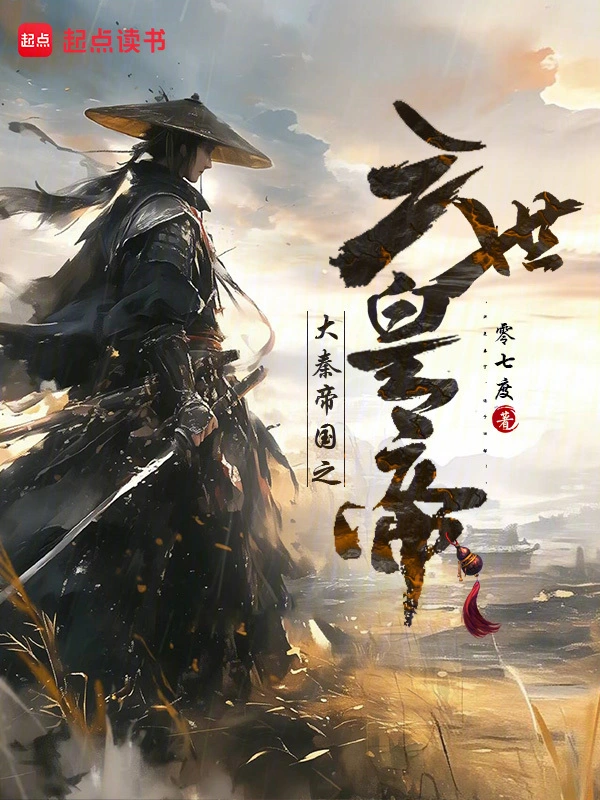
The Third Emperor of the Qin Empire
大秦帝国之三世皇帝
- Status
- Completed
- Length
- 726k Words
- Genre
- Historical
- Audience
- Male
- Subgenre
- Qin-Han & Three Kingdoms
- Updated
- 1y ago
- Source
- Qidian
Stats
0Monthly votes
5.1kRecommends
15.1kFans
201Chapters
Tags
Synopsis
Reader comments
Readers also read
 Talker in the Song Dynasty
 1914 Begins with the Rejection of the Schlieffen Plan
 Please Call Me Your Majesty the Tsar
 In the Red Mansion: Escort Daiyu to Beijing at the Beginning
 Never Walk Alone!
 Northern Qi: My Father, Emperor Wenxuan
 Emperor Ning Has the Guts
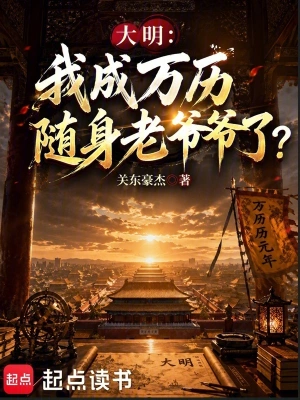 Daming: Have I Become Wanli's Portable Grandfather?
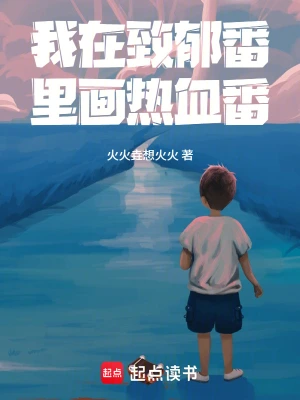 I Am Drawing a Hot-Blooded Episode in the Zhiyu Episode!
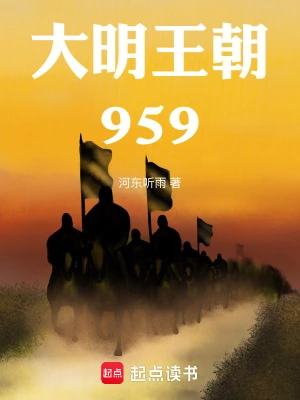 Ming Dynasty959
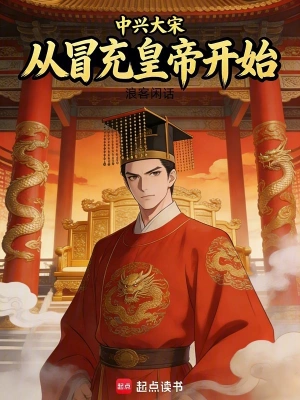 The Resurgence of the Song Dynasty Began by Pretending to Be the Emperor
 Golden Family, I Will Lead the Mongolian Cavalry Across Asia and Europe
 Beginning in the Western Han Dynasty
 Ming Dynasty Rebellious Boy
 Immortality and Immortality: Gou Proves Immortality in the Human World
In the first chapter, the people followed Qin III to Hanzhong. What kind of joke are you kidding? Look at the strict laws of the Qin Dynasty and see how Liu Bang gained the support of the Qin people with just three chapters of the agreement. You Ying family has long been unpopular. You are still following you to run away. What a dream.
He is the real Qin II
Speaking of Liu Bang, his greatest achievement is to maintain regional and cultural unification (no one can be king without Liu Xing). It was not until Han Wu completed the ideological unification. Since then, there has been a great nation on the land of China, the "Han" who is the undoubted master of this land.
Wonderful! It's good to watch. It's the first time I see the third generation of Qin moving south. Is there a world plot? ?
Finished reading, OK! Let's create a group to communicate. The protagonist Qin III decisively moved out of Xianyang and moved south to Sichuan! Changing history was cut in half by Xiang Yu. Qin Nu can be produced! List of six major scientists and craftsmen in the late Qin and early Han Dynasties Zhang Cang, Yang Chengting, Lu Banshu, Hu Kuan, Shi Lu, and Zhang Wen. The alchemists (chemists) of the Qin Dynasty: Xu Fu, Lu Sheng, Han Zhong (Han Sheng), Hou Gong, Shi Sheng. Archimedes, Eratosthenes, Apollonius Dionysodoro The protagonist continues to use the Qin Dynasty's craftsmanship title system, and supplements the invention patent protection. Which craftsman and alchemist makes a major invention and will be crowned king immediately! The author has checked the world historical data of the same period? In Central America, the Olmec civilization derived from the Mayan civilization. Native smelting bronze came out of the Andes Mountains of South America, and alpaca caravans traveled to various places. So the protagonist, the Daqin Fleet, takes the North Pacific route to the Aleutian Islands eastward. Remember to take advantage of the annual ice-free period from April to September to travel from Alaska to Vancouver. You can find maple sugar trees, blueberries, cranberries, reindeer, bison, barren argali, peccaries, turkeys, Muscovy ducks, and cold-resistant red rice. Go to Central America to buy corn, pumpkins, peppers, cocoa beans, pineapples from the Olmecs, and see the Mayan deer ranch (white-tailed deer). Especially the merchants and navigators of the Great Qin Dynasty in the past trade exchanges with Teotihuacan (the Indian ruins of Teotihuacan are located between the Popocatepel volcano and the Istacivatel volcano in Mexico, covering an area of 2.5 Square kilometers and 40 kilometers southwest of Mexico City. It is an important site of Indian civilization. The ancient city was established between 150 BC and 100 AD. Around 800 BC, humans settled in this area, and the population at that time reached 5,000-6,000 people. , Distributed in 20 independent villages. In 200 BC, a village with 7,000 residents and an area of 6 square kilometers appeared in the west of the current city. The residents were engaged in mining obsidian in the nearby mountains from shortly before AD to AD. From 200 to 300 AD, the Teotihuacan people built a city of 20 square kilometers and more than 30,000 people here, making it the first city in Central America) Go to the west coast of South America to buy potatoes, cinchona, sweet potatoes, cassava, alpacas, and capybara. There are sites such as Caral in the Supe Valley in the Xiaobei region. It is also the first civilization in the South American Andes called the Xiaobei culture (also known as the Caral era), which was from 3000 BC to 1500 BC (at the same time The dynasties include the Xia Dynasty of East Asia) Xiaobei Culture Age (Carral Culture Age), Kubisnik Culture Age, Chavin Culture Age Tiahuanaco Culture, named after the main site of Tiahuanaco. (Bolivia has large iron mines) Distributed in Bolivia and Peru, and expanded to Ecuador, Chile and northern Argentina. It dates from approximately the 5th to 10th centuries. The ruins of Tiahuanaco contain magnificent stone buildings. There is a foyer, square and altar built in front of the pyramid-style temple. Some of the stones weigh more than 100 tons. The metal processing industry of the Tiahuanaco Culture was relatively developed, and the gold, silver, copper and bronze products were very exquisite. It is generally believed that it inherited the Chawen culture and the Inca civilization, and played a role in the ancient Indian civilization of South America. The four countries in western South America from the 7th century to the 11th century! These four countries are already the bronze civilization circle in the Andes Mountains. They all have bronze swords, axes and spears, as well as bronze tools and agricultural tools. There are alpaca caravans of different sizes coming and going, and alpacas can carry up to 120 kilograms of stuff (goods). Sikan Kingdom in the north, Moche Kingdom in the central and northern parts, Wari Empire in the central and southern parts! The country of Diahuanaco is adjacent to the Amazon in the east. Around 750 AD, the environment in the area where the Moche people lived changed drastically. After the great flood, they encountered a severe drought with no rain for 30 years. Sandstorms caused a devastating blow to urban infrastructure, and canals and farmland were swallowed up by yellow sand. Coupled with rising seawater temperatures, fisheries are also affected. Natural disasters not only ruined the lives of the Moche people, but also destroyed their faith. A large number of people died, and the remaining people were forced to abandon their habitats. The Moche culture, which was flourishing for a while, also declined. The Kingdom of Huanca, from 1000 to 1450, north of Cusco, in the upper part of the Mantaro Valley, was actually just a loose alliance of chiefs. In 1450, the Incas destroyed Vanka. From 1200 to 1250, the Kingdom of Cusco in the center began to move to the Inca Empire. At the same time, the Kingdom of Chimu in the north began to destroy the Sican Kingdom in 1375, and was later destroyed by the Incas in 1470. (In the 11th century, the Indians established the "Kingdom of Quito" here. At the end of the 15th century AD, it became the political, economic and cultural center of the Inca Empire) In Colombia, the ancient Indians also invented a higher-level lost-wax casting technology. The wax mold is wrapped with a mud core, so that the casting is hollow, which saves a lot of metal than a solid casting and reduces the stress effect of the casting. Many ancient Indian gold casting artifacts were made using this unique lost wax method. The Inca oxidation gold plating and casting process was adopted by the Europeans. The Incas were good at metal smelting and processing, and were able to mine gold, silver, copper, tin, lead, platinum, mercury and other metals. The Incas mastered many metal processing techniques, such as casting, forging, molding, stamping, inlay, riveting, welding, etc. In the 16th century, the Peruvian Incas set up a post station at a distance of 8 kilometers along the well-built thoroughfare they built, and messengers ran to deliver messages. It is also called a post station for messengers and alpaca caravans to rest and stay. South America had no horses or vehicles before the Spanish colonists invaded. This kind of road for alpaca teams and messengers formed a network system extending in all directions from 1200 to 1530. It was a channel for the rulers of the Inca Empire to issue decrees, and it was also a transportation artery for the production, life and trade of the Inca people. At that time, the Inca rule ranged from central Chile in the south to Colombia in the north, including Ecuador and Bolivia. It was a large country with a population of more than 10 million. Corresponding road construction includes two north-south trunk lines: coastal stone road and plateau mountain road. The Aztecs built a complete road system among the city-states in Central America. They built a post station every 14 kilometers (14 kilometers) beside the road. The army could travel about 28 kilometers a day. When a war breaks out, they will arrange a messenger every 5 kilometers (5 kilometers) to quickly deliver letters through relays. A low-arsenic copper figurine was also found in the Atetelco courtyard at the Teotihuacan site, indicating that there was also a connection between Western Mexico and Teotihuacan, and that the practice of making copper was known to the Teotihuacan people before 600 AD. However, it is incredible that the bronze objects were not made into tools or weapons, but only human figures. Furthermore, the bronze artifact's date coincides with the collapse of the Teotihuacan polity and the formation of local petty polities. So some scholars see this as evidence of the restructuring of loyalties, alliances and trade networks. Around the 10th century AD, the Toltec Empire of the Nahua nation conquered the Maya and generally achieved the unification of Mesoamerica: In 1194, the Mayapan monarch Hunac Kel used bronze weapons, bows and arrows to conquer Chichen Itza. In 1441, Mayapan died in a civil war, which meant the Mayan centralized power collapsed. The remaining Xiu family later defected to the Spanish and became Spanish aristocrats who still exist today. On the Yucatan Peninsula, there are still some small Mayan states remaining. In 1526, a Spanish expedition (banditry) tried to use violence to establish a Spanish colony and enforce the Christian faith. The Mayans who refused to surrender launched a guerrilla war that lasted for more than a hundred years, until 1697, when the last Mayan city-state (the Kingdom of Peten Itza) was destroyed by Spanish artillery fire. (At that time, the Black Snake King of Itzamo had only three hundred canoes and two thousand warrior soldiers) The Tulum area was the location of the last Mayan kingdom, Peten Itza, and the last Mayan city to die. It is said that this is the best-preserved Mayan ruins and the only one built on the seaside with the most beautiful scenery. However, the resistance of the Mayans is far from over, and guerrilla warfare is still going on in the jungle. In addition, in 1761, there was an uprising that threatened colonial rule. A Mayan leader, Jacinto Can Ayke (his name was borrowed from the last king of the Peten Mayan regime), announced in the name of the Blessing of the Blessed Mother that he would liberate the Mayans from Spanish enslavement. However, this uprising was eventually suppressed by the Spanish. The Caste War of Yucatán was a racial conflict between the Mayans and the whites, which began in July 1847. In 1901, Mexican federal troops occupied Santa Cruz, the Mayan capital, and the war officially ended. In this war, the Mayans killed 250,000 white people at a cost of 50,000. On November 4, 1780, Tupac Avaru II, a descendant of the Inca royal family, launched the Inca Restoration Uprising. Initially 6,000 rebels grew to 50,000 by December. Staple foods: corn, potatoes (unique to South American origin), breadfruit (unique to Maya), cassava (unique to Haiti, Cuba), red rice and wild rice (North American wild rice), acorns and acorns (California, North America), sweet potatoes and sweet potatoes (South America), quinoa (South American Andes) Meat: (can be farmed) fish, river shrimp, sea snails, turkey, Muscovy duck, rabbit, peccary, iguana, (obtained from hunting) tapir, bullfrog (from southern North America to Central America), deer (Caribou, Central American white-tailed deer, South American deer is Andean red deer), crocodile, bison (North American ox), alpaca (South America), guinea pig (South America), Capybara (South America, Amazon river), ostrich (South America including Bolivia, Brazil, Argentina), snow sheep (North American Rocky Mountains from Alaska southward to Oregon, Idaho and Montana in the United States, living on steep slopes and cliffs above the tree line), barren argali (Canada), pronghorn antelope (northern Mexico to southern Canada), Eggs: turkey eggs, duck eggs, ostrich eggs Vegetables: pumpkin, black beans, kidney beans, amaranth, peanuts (South America), Inca beans (ice cream beans from the Amazon rainforest) Fruits: figs, avocados, egg yolks, papaya, sapodilla (made by the Mayans for chewing gum), papaya Pomegranate, tomato, dragon fruit, pomegranate (green fruit), white persimmon (Mexican apple is sweet and milky), black persimmon (Mexican green peel, brown and black flesh, sweet and cocoa taste), walnut (North America), chestnut (North America), cranberry (North America), blueberry (North America), grape (North America and Canada), strawberry (South America), pineapple ( Brazil and Paraguay), peach palm (Amazon, red and orange can be ground into powder), machi fruit (Patagonia Plateau, Mapuche people eat medicinal drinks), cherries (Chilean cherries) Sugar: honey, maple syrup (North America) Liquor: cocoa wine, tequila (high alcohol content and easy to get drunk), cactus wine, flower wine, Mead, pineapple beer, corn beer, alpaca milk wine, alpaca milk (also alpaca yogurt, alpaca cheese, alpaca butter, alpaca dairy products), peach palm wine, macchia wine Container: gourd, deerskin pot, crocodile skin pot, cowhide pot Drinks: coconut (Central America, South American Amazon rainforest), yerba mate (South America) ), yerba mate (South America) Seasoning: salt, pepper, vanilla, chia seeds (can be pressed for oil), sunflower (can be pressed for oil), peanut oil, pepper (natural preservative), star oil vine (Inca Inca fruit is pressed for oil in the tropical rainforest of the Andes Mountains region), palm oil (Amazon), peccary oil, deer oil, beef tallow, sheep oil, ostrich oil. Lighting: wooden torches, small corncob torches, candles, ceramic oil lamps. Materials: Rubber, palm oil (palm trees), limestone, volcanic ash (there are many volcanoes in El Salvador), American bamboo (used as long bamboo pipes to blow the wind) Construction manpower time: Paso de la Armada ruins, the central settlement of the Mocaia culture in the Soconusco coast area in the southeastern isthmus region, its Building No. 2 Requires 488 people to work for one day or 20 people to work for nearly 25 days to complete; The "mortise and tenon technique" of South American stone buildings is mainly used for relatively regular rectangular stones. Through surface polishing and trimming, they achieve concave and convex interlocking and fix each other. Even if an earthquake shakes the stones for a while, they will fall back to their original positions, which can easily withstand the strong earthquakes that often hit the area. These two techniques are like completing a huge puzzle, with no gaps between them, not even an embroidery needle can be inserted. Clothing materials: cotton, alpaca, cowhide, deerskin, ostrich skin, rabbit skin, dog skin, leopard skin, crocodile skin, tapir skin, wolf skin, bearskin, cochineal red (cactus red bug), Refreshing: Cocoa beans (a cocoa tree can produce 1,000 to 2,500 cocoa beans), tobacco, coca (anesthetic, stimulant), Special herbs: callus wood (the resin of a specialty tree in the Caribbean, anti-inflammatory and antibacterial to treat cold, gastroenteritis and syphilis), cinchona bark ( Peruvian Andes Mountains in South America), macchia medicine (fever, diarrhea, ulcers, childbirth), mint (USA and Canada, cold-resistant), Mayan analgesic incense (flowers, mushrooms, tobacco, alcohol used for smoking) Agriculture: The Maya in the Classic Period lacked manure technology and only had plant ash. Aztec farmers started manure. South American agriculture has popularized the use of alpaca and guano as manure. Water conservancy technology is well developed. Mineral distribution: Guatemala has lead, zinc, chromium, antimony, mercury, nickel, petroleum, and hematite. (There are copper and tin mines in the highland mountains of Guatemala) Hematite is also found in the Caminal Lake area. El Salvador has copper, iron, petroleum, coal, zinc, lead, mercury, sulfur, etc. Honduras has lead, zinc, copper, etc. Nicaragua has antimony, zinc, copper, lead, etc., And two places of oil. Costa Rica has iron, manganese, mercury, and bauxite. The reserves of bauxite, iron, and coal reach 150 million tons, 400 million tons, and 50 million tons respectively. Panama has copper, iron, mercury, bauxite, manganese, salt, oil, etc. (Copper, salt, and bauxite reserves are relatively large), Colombia has large coal mines, oil, copper, and iron. Cuba's large iron ore coal mine (there is a large open-pit iron mine in the southeast). Large copper and iron mines in southwestern Mexico, Oaxaca Canyon magnetite. The Rio Grande area (Atlantic Ocean) at the junction of the United States and Mexico is rich in iron ore, coal deposits, mercury deposits, copper deposits, lead deposits, and shallow oil. Andes Copper Mines Iron Ore. Amazon Iron Mine. Metal products: The Mayans (Yucatan Peninsula) traded in imported copper, gold, gold-copper alloys and silver. These figurines from the Mayan Yucatan Peninsula come from different areas of Mexico, Honduras, Costa Rica, Panama, and possibly Colombia. The bell found in Quirigua may also date to the 9th century: the bell was imported, but there is reason to think that it was cast locally. Papermaking: The Mayans began to use fig bark to make paper more than 2,000 years ago (more than 400 years ago). There are also deerskin paper, dog skin paper, and bison skin paper used in the Mexican city-state. Two thin pieces of wood are used as the cover for the front and back covers. Pen: Graphite pen is a very practical writing tool. A graphite pen is made from a long, thin stick of wood and a block of graphite. Blocks of graphite are ground into fine chips on wooden sticks and then glued together with grease. This graphite pen was widely used to record Mayan history, culture and other important information. Use cut conch shells as cartridges. Era: According to the Maya's precise calendar week calculation, this cycle takes 5,200 years as a cycle. The Fourth Era began in 3114 BC and is expected to end on November 23, 2012. (December 21, 2012) The Mayan calendar has 20 days in each month, totaling 18 months and a year, with an extra 5 days in January (5 days in 19 months) as the New Year holiday, making up a complete 365-day year. Before Columbus entered the Americas (1500), the population was: 5 million in North America, including more than 300,000 in California, 25 million in Central America (including four to five million in the entire Mayan world at the beginning of the 16th century), 10 million in the Inca, and about 10 million in other places, including other places including the Caribbean Islands, Gran Colombia, the Amazon rainforest, Brazil, and the Southern Cone. The two large Taíno islands may have 1 million each.
Do you think Liu Bang didn't think of moving south to Sichuan? Before Liu Bang entered Wuguan, he sent Li Shang to capture Han Dynasty and cut off Qin's escape route to Sichuan.
This is all a personal opinion. When I saw the latest chapter, I suddenly talked about Meng Tian's daughter. Suddenly I liked the protagonist for no reason, and I lost interest all of a sudden. I personally dislike these things. When writing a hegemony article, I should write a real hegemony article. I have to do this, and I don't understand politics. However, I personally feel that it is unwise to proclaim the emperor at this time. We will have to fight the decisive battle with the Chu State next, and the Chu State will definitely pull We should fight with those princes and kings. At this time, we should not tell them directly on the surface that everyone can live a good life again, and then recognize their throne so that they do not have to come with Chu to fight. Then send spies to their army to say that Qin has recognized their status and does not want to fight anymore. In addition, their princes and kings must also have conflicts themselves, and then make secret promises. Even bribe some officials to let them fight first and consume part of it themselves. Even if they can't be consumed by themselves, they have to be held back first. After all, there are hundreds of thousands of soldiers and horses. The protagonist needs time to develop. And if you don't make peace with them on the surface at this time, and even if you are proclaimed emperor, you have to bring the princes and kings together to proclaim themselves emperor. On the surface, they are paralyzed, and everyone can do their own thing. Yes, and then secretly went to bribe their military officials, lied, etc. Anyway, they said that the Qin State did not want to fight or anything, and they just wanted to live their own lives. These princes and kings themselves had a lot of conflicts, but it was only because of the Qin State that the conflicts did not break out. At this time, the Qin State suddenly stopped fighting and even recognized their status. Those subordinates and even some generals who were not nobles, should the princes and kings continue to reward them? Do you want to strike a balance? Detonating their internal conflicts and holding them back at this time is a great thing for the Qin State. The protagonist will become invincible as long as he develops for a while, instead of proclaiming himself the emperor after the world has been defeated. At this time, the protagonist does not find any use in proclaiming the emperor, just to get a name or title? And the protagonist sometimes feels smart, and sometimes he feels inexplicably stupid. The hints are so obvious. The protagonist is like a fool. He doesn't know anything. Call him smart, but he remembers so many things and says he is not smart. Some hints made by his subordinates are so obvious. The protagonist just can't see it. It feels like Gat is making a fool of himself.
Victory, defeat, rise and fall are all due to human power, how can there be destiny? There is no other reason why Liu Bang can conquer the world, that is, his military level is strong enough, his strategic level is so high that he makes all the heroes in the world despair, and he is strong enough to make Shi Le speak about things in the north. After reading the Historical Records and Hanshu, combining maps and timelines, and examining the battle situation at the end of the Qin Dynasty bit by bit, I slowly felt that I was a Han Emperor who was completely different from what ordinary people saw. He was not the son of the Red Emperor, nor was he blessed by destiny. Instead, he relied on a perfect understanding of the word strategy to complete the feat of sweeping the world in seven years. I mentioned three details that ordinary people rarely observe, and you can feel how terrifying Gaozu's strategic level is. First, I watched the Battle of Julu with gusto when I was studying, but it wasn't until I combined the map that I discovered that the Julu battlefield was in Xingtai, Hebei, across Shanxi from Xianyang in Guanzhong. The Qin State still occupied Bashu in Guanzhong, and Zhang Han was defeated but not dead. He still led the Qin army to confront Xiang Yu. The situation of the Qin State at this time was even better than when Qin Shihuang ascended the throne. Why was the country exterminated after just six months? Because Liu Bang's Western Route Army was already fighting towards Xianyang, breaking the Qin Pass, defeating the Qin army, killing Yang Xiong, and heading towards the capital of Qin. However, the monarchs and ministers of Qin could not even imitate the story of Emperor Xuanzong of the Tang Dynasty and patrol south to Bashu to delay the change... Because Liu Bang calculated one step more than them! Li Shang, one of the founding lords of the Han Dynasty, his brother was the Li Shiqi who was tricked by Han Xin... This unknown person in history, while Liu Bang was marching towards Xianyang, broke Hanzhong County and cut off the passage between Qin and Shu in one fell swoop! I, Liu Bang, not only want to enter Guanzhong first and defeat Xianyang first, but I also want to put an end to your dream of escaping south to Bashu! Let your Qin country be completely destroyed! When I saw this, my scalp really felt numb. What level of strategic vision is this? If the monarchs and ministers of the Qin State really fled south to Bashu and used Hanzhong as a barrier, once Liu Bang and Xiang Yu got into trouble later because of the distribution issue in Guanzhong, the Qin State might really have a chance to breathe. The second is the strategic advancement speed of the Han army. It is difficult to imagine that the army in ancient times could destroy the country at marching speed. The following is the timeline and map: in April 206 BC, Liu Bang entered Hanzhong, in May they fought out of Hanzhong, in August the Three Qin Dynasties were conquered, Bashu was pacified, and Zhang Han was passively beaten. At this time, Liu Bang once again showed his strategic vision. He left Zhang Han alone and immediately led the army eastward out of Hangu Pass to seize a series of strategically important places and densely populated areas. In 205 BC, he left Guandong and destroyed the country. He destroyed three princes and kings in three months. After obtaining Luoyang, the entire strategic advantage was completed (at this time, Liu Bang's power was stronger than that of Qin before the six kingdoms were destroyed). In May, he arrived at Xiang Yu's capital (Xuzhou, Jiangsu). At this time, only one year had passed since Liu Bang was sealed to Hanzhong. He had fought from Hanzhong (Hanzhong, Shaanxi) to Pengcheng (Xuzhou, Jiangsu), and occupied several geographical areas that were easy to defend, difficult to attack and densely populated such as Bashu, Hanzhong, Guanzhong, and Luoyang. Sitting west and attacking east, the strategic victory was already formed. Even if Xiang Yu could win tactically later, but None of them were able to shake the strategic advantage Liu Bang achieved this year (funny, even when Xiang Yu was at his most powerful, he couldn't even capture Luoyang... He didn't even touch Hangu Pass [laughing and crying]) The third is Liu Bang's strategic arrangement during the Chu-Han persistence phase. Liu Bang's perfect deployment of the Han army's offensive achieved a strategic outflanking of Chu! This was the greatest anvil and hammer tactic ever fought. As an anvil, Liu Bang dragged Xiang Yu's main force in Chengying again and again. He had only two tasks. The first was to defend Luoyang, the Han army's strategic advance base in the Kanto region. The second was to hold Xiang Yu back so that he could not interfere with Han Xin on the northern line and Peng Yueyingbu on the southern line. With the help of the manpower accumulated in the previous year, Liu Bang can slowly consume Xiang Yu in front of the east gate of Luoyang. As long as Luoyang does not lose the Han army, he can continue to consume. After all, I am waiting for Han Xin and Peng Yue. What are you waiting for? Now my northern general Han Xin defeated various vassal states along the way, and Peng Yueyingbu went south to continuously attack the Chu army's rear. As long as Xiang Yu left the center battlefield with the main army, Liu Bang would immediately defeat the generals he left behind (in November 204 BC, Liu Bang defeated the Chu State's Great Sima Cao Jiu) 203 BC , you can still see that Xiang Yu was able to win several victories tactically, but strategically his defeat has entered a countdown. Liu Bang on the middle line is as stable as Mount Tai, Han Xin on the northern line strategically completed the outflanking of the Chu State, and Guan Ying who went south was attacking cities and territories all the way in the hinterland of the Chu State. The Chu State has entered the stage of total collapse. In 202 BC, Xiang Yu committed suicide at Wujiang River, and the world was settled. At this time, it had only been four years since Liu Bang entered Hanzhong, and it had only been two years and eight months since Liu Bang left Hangu Pass and officially started war with Xiang Yu. Gaozu used Hanzhong to sweep away all the princes in the world, setting a record for the fastest clearance in the world! (Comparison: Cao Cao unified the north in twenty years before and after, seven years before and after Li Tang's unification, and thirteen years before and after Zhu Yuanzhang) We are modern people, so Liu Bang never had any destiny. From the beginning to the end, Liu Bang completed the hegemony of unifying the world with a more superb military level. Just like what he said, a commoner can sweep the world with a three-foot sword! So some people read history books and only read historians' boasts. They cannot understand maps, timelines, distribution of mountains and rivers, changes in military technology, logistics applications, strategic situations, and dense population. Their shrunken brains can only understand a few historical figures, Han Xin. , Xiang Yu, Liu Bang... In some people's minds, these heroes are like the people of the Trojan era. The outcome is determined by single combat. Xiang Yu>Liu Bang, Han Xin>Xiang Yu, relying on a few heroic units determines the ownership of the world. For such people, it is recommended not to touch history. "The Popular Romance of Chu and Han" is more suitable for you.
Qin and Han
Counting romantic figures, but also looking at the present. A beautiful young woman, a beautiful mature woman, a married woman, the favorite of Cao Cao, the character of Jian'an, the legacy of Wei and Wu, striving for the top.
It is not advisable to move the capital to Sichuan, you fool! !
Brother Xiang Yu will not let Qin go if you give up Guanzhong, the place where you are quickly established, and you can't do anything about it wherever you go. Because the road to Shu is difficult to enter, it can only delay the destruction of Shu. The best way to crack it is to defeat Xiang Yu head-on once and then slowly develop and gradually unify based on Guanzhong. Of course, this is also the most difficult, and Qin Bumie is a living target. The second method is to go to the Xiongnu or Baiyue first, and then go back after the conflict between Xiang Yu and the princes breaks out. This method is less dangerous and less difficult, but the reputation is not very good, but it will restore the country, not shabby. Liu Bang's entry into Sichuan was based on Hanzhong. Only with a genius like Han Xin and underestimation of the enemy could he have the opportunity to enter Guanzhong. Da Qin had no reputation at that time and was still a target. Even if Xiang Yu didn't attack you, the princes who had been sealed in Guanzhong would attack Shuzhong first. You don't think that even a general can stop it, right? Of course, if you write a cool article, I won't tell you that you will be fooled. After all, the protagonist has an invincible aura, so there is no need to be unreasonable.
One of the main reasons for the death of Qin was the forced and comprehensive implementation of the county and county system. This system was good, but there were not so many officials to govern during that period, which resulted in Qin Shihuang's control over the grassroots being extremely low. So how did the Western Han Dynasty solve the problem? The enfeoffment of counties and counties went hand in hand, and then one step Step by step to eliminate the influence of the princes, although it is slower, but it is feasible So can the protagonist copy this assignment? Can't copy it, there is no one in the clan, and it is almost done by the second generation How should the protagonist solve this problem after reunification It will definitely be too late to train talents after conquering the world.
Does a modern person think that after time travel, he can punch Emperor Qin, Emperor Wu of Han, and kick Emperor Zong Tang and Song Zu? With just a few kilograms and a few taels of stuff, you dare to confidently shout to kill Han Emperor Chu Bawang?
Li Zhe: The ancestor of the Han Dynasty is sacred to only one person after Yao. Later Zhao Shile said: If I meet Emperor Gao, I will attack from the north and compete with Han Peng to be the first. After meeting Guangwu, they should drive together in the Central Plains. It is unknown who will kill the deer. Zhu Yuanzhang said: Except for Ying Pingxiang, Emperor Gaozu of the Han Dynasty was lenient and generous. He who has the virtue of ruling the world and bringing peace to all generations is also one. Qianlong: Heaven is far away, but people are nearby. Pei Gong acted righteously and went west. As promised in the three chapters, Bingran obeyed the will of heaven and the people. Wei Yijie: After three generations, the rulers have been able to use all the heroes in the world to bring out all the talents, and there has never been anyone as high as the Han Dynasty. Su Xun: Among the heroes of ancient times, Emperor Gao of the Han Dynasty was the only one who was unmatched. Su Shi: Among the ancient heroes, there is no one better than Han Gao. Su Che: The rise of the Wei and Han Dynasties lasted for three generations. With a single call of the sword, heroes ran about. Bai Juyi: The Emperor Gao wanted to overcome the difficulties and bring about disasters, so he showed off his holy martial arts, fought bravely, raised the divine sword in his hand, and cut the spiritual snake on the bank of the river. With his sincere potential and faith in the praise of heaven and earth, he was able to destroy the powerful Chu, subjugate the Qin, and create a king's career in the Yanhan. Liu Zongyuan: Emperor Gao created the holy Zuo to show his virtue, to explore the secret purpose of the sky, to carry the blessings of Youming, to kill the White Emperor in Daze to inherit his spirit, to build a red flag in Peiyi to show his god, to use his hands to win, to confuse the princes, to rely on his strength to leave Guandong. Du Fu: I believe that Zhou Wu was lucky enough to preserve the self-improvement of Han ancestors. Li Bai: The Ying family has bad virtues, the gold spirit destroys them, the Qin deer is captured, the Han wind flies, the red dragon ascends to the sky, the sun rises, the Yinhong thieves wreak havoc, the Lus disturb each other, Zhu Xu comes and returns, the meeting is in the high hall, the strong sword strikes hard, the Queen Mother is frightened, the love is used to produce wealth, the great fortune is prosperous, the imperial family is crowned with merit, and it will not be destroyed today. Xun Yue: The great ancestor rose from the common people and conquered the world with his sword. He did not follow the Zen of Tang and Yu, and became the king of Tang and Wu. He followed the wind and clouds, conquered chaos and violence, and clarified the imperial palace. In eight years, the sea was settled, and the thoroughfare of the sky was built. The emperor was established. Ancient times have come. Book It is recorded in the records that there is no such thing as a man of great talent, broad and bright strategy, who has been taught by the gods, and can achieve such great achievements. The great ancestor started the great cause, unified the Yuan Dynasty, measured the rules, and it is no longer possible. The world was initially settled, and the common industry was founded. Therefore, the voice of Shaoxia has not been heard in the world. Zhao Pu: In the past, our great ancestors fought for the common people, raised up a lot of people, punished the violent Chu, destroyed the powerful Qin, and pacified the world in five or seven years. However, he had great ambitions and plans, and his behavior has not been seen since Xuanhao. Hao Jing: Therefore, those who were called sage kings in the previous world were headed by Shun, followed by Wen and Wu. Those who were called sage kings in later generations were headed by Gao Di, followed by Guangwu. Ziren: Since ancient times, most of the capable emperors were born rough. Liu Bang of the Han Dynasty was the most powerful among the feudal emperors. Lin Jianming: In short, although the unification of China began with the Qin Dynasty destroying the six kingdoms, it was actually completed in the early Han Dynasty. Liu Bang, who founded the Western Han Dynasty, was a great figure responsible for this historical mission. Liang Qichao: Liu Bang, the founder of the Han Dynasty, was a great figure. Wang Zheng: The Emperor of Han is a hero throughout the ages. Don't laugh at his immediate success at that time. Let me ask who became the emperor later. Lu Simian: The name of the Han people came from after Liu Bang became emperor. In the past, the nation-states were mixed into one, and people took the name of one dynasty as the name of their entire clan. Since then, although the dynasty has changed many times, the clan name has not changed. The number of words is limited. This is part of the evaluation of Liu Bang throughout the ages. Nowadays, the evaluation of Han Taizu Emperor Gao and Qin Shihuang has been completely reversed. Ying Zheng is called their ancestor, while the founder of the Han nation they only want to call him a villain.
Failure
There is too much space on women and the descriptions are too obscene. I wish I could write about the harems of famous people. It's very cool. The Machiavellian part is better.
Why do people who travel through ancient times, no matter what their status, have to make inventions? You are the emperor, doing the work of craftsmen, and the majesty of the emperor is no longer needed, especially at this time The emperor should do what the emperor should do. An emperor, doing what craftsmen do, even if you do it well, in the hearts of the ministers and the people, you are not doing your job properly, and you don't understand.
If Qin is not destroyed, the wars in that era will never stop, so Qin cannot be saved at all.
The establishment of Liu Bang's Han Empire meant that the old Qin people once again conquered the world
The Qin Empire was powerless and could only conquer the world again like Liu Xiu did. The court had become a liability, not only useless but also increasing the risk of infighting.
After the Qin Dynasty was conquered by Liu Bang, would anyone still want to help? Will anyone want to return? Is there still a place for people's hearts?
After reading a few chapters, the first issue is the title. Then there is the problem of mechanical errors. The spinning Jenny only spins yarn and turns fibers into threads, while the loom weaves threads into cloth. The loom uses a flying shuttle.
The more I write, the more I stretch my legs. What was the plot when recruiting Han Xin? After using the explosive pack, it started to change not long after I wrote it.
At the end of the elite period of the Qin Dynasty, one group was stationed at the Great Wall and the other group was stationed in Lingnan. The Central Army was the smallest, which gave the rebels a chance. Coupled with the two disasters of Hu Hai and Zhao Gao, the upper class was already dead in name only!
Finished? ?
How long did it take to finish this fucking book? It's so fucked up
The book is good, but it's a pity that the author is not good
Support
Good books are not afraid of criticism. Unlike Huang Weiyang's <>, he has an IQ of three years old, loves to preach, thinks he is the best in the world, and treats the ancients as fools. Treating readers as 2b and prohibiting them from telling the truth.
Where did your Level 5 come from? There should be other novels
How to join the group
Who is Meow's eldest son? Set up this ghost question
When it comes to the fall of the Qin Dynasty, the only one who holds Tai'a in his hands is right! Hu Hai and Zhao Gao are the two chief culprits! The essence of whether the person who becomes the emperor has political wisdom is to enable the country to be passed down.
Author
Can you answer the previous question?
The creativity is new and the writing is immature. You can take a look.