
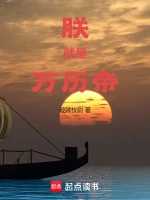
I Am Emperor Wanli
朕就是万历帝
- Status
- Completed
- Length
- 3.2M Words
- Genre
- Historical
- Audience
- Male
- Subgenre
- Song-Yuan-Ming Dynasties
- Updated
- 1y ago
- Source
- Qidian
Stats
12Monthly votes
92.3kRecommends
284.8kFans
975Chapters
Tags
Synopsis
Reader comments
In booklists 4
Following (A First Aid Manual for Times of Book Shortage)
These are the novels I have been reading recently. The books added to the book list are all books that suit my taste, have their own characteristics, and that I personally think are worth recommending. These are just books that suit my own taste. If you like them too, I will be very happy. However, everyone has different tastes, and it is normal if you don't like them. As an old bookworm, ten years of reading have left me destitute of books. It is really rare to find a good novel that suits my t
100Books3.6kFollows6moUpdated
Qingshan Is Still a Book List, I Have Read Every Book Carefully
Book friends, would you like to read and comment? I love reading, reading makes me happy! ! !
23Books41Follows1moUpdated
Various Types of Book Lists, Serious JPG
It's a good-looking, intelligent and not brainless book. I'm still catching up on it or I've finished it.
20Books2Follows1yUpdated
My Book List
I've seen it
24Books0Follows3moUpdated
Readers also read
 Northern Qi, Sage Khan
 Red Mansion: Start Escaping and Farming from the Equipment Bar
 Fu Ming 1627
 After Lying in Bed for Three Years, He Was Forced to Help the Han Dynasty
 Siheyuan: Start by Picking up Attributes
 I Really Don't Do My Job Properly
 Taichang Daming
 Beastmaster: I Can See the Evolutionary Path
 Immortal Who Seizes the Body
 Huang Ming
 Golden Family, I Will Lead the Mongolian Cavalry Across Asia and Europe
 When I Was in Hongwu, I Started by Rebelling Against the Party.
 My Era Started in 2003
 Emperor Shizu of the Song Dynasty
 Dashun Petty Official
 Apocalypse and Ming Dynasty
 Wanli Six Years to Turn the Sky
I just saw a comment saying that the writing is shallow, but the author of this book at least pays attention to logic, writes fluently, and has a low word count, right? ? ? So I think I have to give a thumbs up to the author who writes with care! I hope the author can keep his pace! Finish a great book.
The overall writing is okay, but the steam engine, grenade, and rocket launcher suddenly appear, which feels very abrupt.
This book is very interesting. It is about reorganizing the new army, so the time travel book is the most complicated. It seems that the more it is reorganized, the more complicated and messy it becomes. The army should be efficient and simple.
The author is awesome
I have read thirty-three chapters so far, and they are really well written. Unfortunately, I am short of money, so I can only subscribe to monthly tickets to support them.
AI restoration map of Emperor Ming
As title
This book is much better than the one "Wanli Mingjun". That book likes to be mysterious and makes the emperor seem to have no power. He is always making excuses with the civil servants. It is so fake! In fact, even the authority of Emperor Tianqi and Chongzhen in the late Ming Dynasty was unmatched by any civil servants. The author deliberately made the local gentry and central civil servants very powerful, which is simply ridiculous! Wei Zhongxian, an illiterate subordinate of the teenage Emperor Tianqi, made the civil servants and military generals ecstasy. This strongly illustrates the power of the Ming Dynasty's imperial power. All those civil servants and military generals are nothing but imperial power!
Looking at the introduction, if we don't invent the steam engine to improve productivity, how can we build a shitty new Ming Dynasty? It's useless to just engage in the so-called great voyage. It's not like we didn't do it in the early Ming Dynasty. It's just that the people died and the government died! Only steam engines + great navigation + restructuring can build a new Ming Dynasty! Many liberal arts students often underestimate the power brought by changes in productivity and overestimate the power brought by changes in ideas when writing novels. Without changes in productivity to support changes in ideas, it is just a castle in the air! If the Italian Renaissance was really so strong, how could it be that Britain developed the Industrial Revolution first, and even France, across the strait, lagged behind Britain? ! Why are the countries surrounding Italy lagging behind the UK? !
It's very depressing to watch. Where did you learn to change your perspective at every turn?
Now it's Liaodong, now it's the Forbidden City, now it's South China Sea. It's enough to change the perspective a few times, keep changing it, skip chapter change, now start changing within chapter? Author, this is a novel. Why are you learning the bad habits of movie lenses? !
The biggest problem with the book is that the transition is too abrupt. As soon as the story of the Forbidden City started, it suddenly started writing about Liaodong. As soon as I got into it, it changed to a naval battle with Spain. It was too tiring to read.
I don't understand why some people say this book is better than Wanli Mingjun's. I really don't understand. I've read five or six chapters, can anyone help clarify my doubts?
I'm really speechless. I didn't see the machinations. I only saw the novices. Is it okay to overthrow the strict party? Don't you, a descendant of the future, understand that being greedy for money doesn't matter if you can do things for yourself? I'm afraid you are the kind of person who is greedy for money and can't concentrate on serving you. People who are members of the pure Xujie party will still be greedy for money. The key is that they won't concentrate on serving you, the emperor, because he wants to protect his own interests.
The biggest failure of the book, "Zhang Siwei", repeatedly tried to kill the protagonist, and even attempted assassination repeatedly. Both the protagonist and Zhang Juzheng knew that the assassin who broke into the palace at night was sent by him, but Oogway was very tolerant. Later, Zhang Siwei Wei still goes his own way and opposes whatever the protagonist wants to do. Even Zhang Siwei and his uncle can't stand it anymore. They are afraid that Zhang Siwei will harm him, so they use arsenic to poison Zhang Siwei. The protagonist is still full of love and steps forward to let the imperial doctor rush him. The reason for urgent treatment is that the imperial doctor must save people. It is wrong not to save people when they see them being poisoned. Then Zhang Siwei burns down the palace after he recovers. The protagonists still feel that they need to endure it. Even if they can kill, they still hold back. The book starts with Chapter 184, and the theme has not changed. Only Zhang Siwei, a big villain, keeps pushing the plot of the book forward, various factional assassinations, etc. The author can kill him or not, but the author cannot let him die. The alias of this book - Repeated Jumps to Zhang Siwei
What a nonsense. The author is basically illiterate. . I just read the first chapter and it was all wrong. Hu Zongxian died during the Jiajing period and lived here until Wanli. . Gao Yi, a teacher from Wanli, died again at the beginning. . Gao Gong was the chief minister in front of Zhang Juzheng and was the Tuogu minister of Longqing. He retired when he came up here. . . If your cultural level is so low, don't write historical articles.
The comment made me laugh out loud. Wanli's attempt to establish a constitutional monarchy will lead to a dead end!
First of all, it is not allowed politically. Under the constitutional monarchy, the economic strength of the south is overwhelming, and the education industry will be overwhelming. The court will be directly taken back to Nanjing by the emerging southern forces! The North simply gave up and returned to the Northern and Southern Dynasties era. Under a centralized system, the north had to rely on raising bandits to counter the forces of the south (this is what Wang Chonggu and the Shanxi merchants did). Not to mention financially, once the water transportation from Kyoto is interrupted, we can send it directly! The South absolutely demands sea transportation. When the people in the South have enough food and clothing, the people in the north have to dig the ground while resisting foreigners. Who can bear it? Ideologically, centralization of power is already in the bones. Even today, power transfer is the so-called democratic centralization! Moreover, the territory of the Ming Dynasty was so large that there were no railways or telephones. The court's response ability alone required a centralized organization. Constitutional monarchy? If the Yellow River bursts its banks in the north, and the southerners refuse to pay, there will be a direct civil war, the Civil War. What was the most serious problem during the Wanli period of the Ming Dynasty? The scholar-bureaucrats did not think that they were rulers, but only wanted to be greedy, and the peasants did not think that they had the responsibilities of a common man. Do you really think that everyone from generation to generation is Zhang Juzheng? I'm afraid Zhang Siwei is the majority. Is a constitutional monarchy good? As modern society is so developed, the speed with which so-called developed countries respond to emergencies can be seen. It makes people laugh when they think about it, hahaha. Except for the eternal philosopher king, there is no perfect system. The social system is also determined by social productivity. The Ming Dynasty, which has a vast territory and a dense population, established a constitutional monarchy. It is ridiculous.
I saw that the protagonist gave all administrative powers, including personnel and financial powers, to the cabinet. I would like to say that there is nothing wrong with the prime minister of the cabinet being the emperor. People are selfish. People with conscience cannot sit in that position. If you don't check and balance, you will be finished. National power must be balanced. It is better to have an emperor who does nothing for decades and does not go to court than a cabinet with no one to check and balance.
Chapter 1 The Crown Prince Party was successfully persuaded to withdraw. . Too poisonous. Emperor Longqing is still there. . Only those ministers who are crazy would join the princely party.
The political and economic novice's view of history is really laughable
The premise of a constitutional monarchy is that there is a large number of forces that are enough to become the mainstream and have an overwhelming advantage, and there must be a common interest group! A constitutional monarchy can bring benefits to most people! Mentally, they asked me to annotate the Six Classics and fabricate a concept of common interests! It can only be said that if Wanli implements a constitutional monarchy, you don't have to wait for the guillotine. The Jin Party will directly let you fall into the water.
By Hai Rui's book about public security, fans criticized the idol for being bad, you were obviously so good before. The criticism is that Zhu Houcong was addicted to Taoism, and Taoism required money. He appointed treacherous ministers who also believed in Taoism and were able to make money, leaving the people without money. However, this is all true. The original article also affirmed his early achievements. Zhu Houcong just found a hobby to relieve his grief after the death of his mother and best friend.
It's too fragmented. One chapter talks about naval battles, the next chapter turns to Liaodong, and after just two or three chapters, it switches to naval battles. The beginning and end of each chapter don't match up at all, the separation is too serious Has anyone subscribed to the later chapters to tell me, will it still be like this later?
It was transferred from Wanli Mingjun, and I find it very interesting now. The power struggle does not have the original profound changes of Wanli Mingjun, and there are also slight flaws in the control of historical data details, but it cannot hide the novelty of the overall plot, especially the succession of the emperor as the legitimate eldest son, saving Hu Zongxian, and having an age advantage compared to Wanli in the original history. I am interested in following it. But I would like to make a comment, is Zhang Taiyue in the book too weak? He is a child prodigy after all. In the 28th year of Jiajing, he published "On Current Affairs" to systematically explain the New Deal propositions. After seeing Shizong's disapproval, he kept silent and clumsy. Judging from the series of actions he later dismissed Gao Gong, he had a very high Zhengzhi IQ, but in the book, he almost became the tool of Xu Ge's eldest grandson. Zhang is a tactful person and will not be so stupid. In this regard, Wanli Mingjun has done a good job in shaping the young master. After realizing that the young master is precociously intelligent, he is not like most people who are unwilling to be convinced or dismissive. Instead, he is happy and constantly testing. Through a series of measures such as heavy schoolwork and confrontation and suppression, he hopes to guide the young master into what he thinks is the "right path" and prevent the story of Baozong committing suicide and Shizong tormenting people from happening again.
No, I really can't bear it anymore
After watching the previous scenes of palace fighting and the first massacre with Qi Jiguang, I thought I could withstand it. Sure enough, it happened. Qi Jiguang led 6,000 infantry to find Xin Ai. At this time, the trick came. Not to mention that Xin Ai had to dispatch 15,000 cavalry for a robbery, and how many things had to be snatched to get back the money. You have 6,000 men, including shield bearers, musketeers, loaders, and reserves. Let's just say you have 3,000 musketeers, but the cavalry foolishly come over to charge and then foolishly catch bullets? And Qi Jiguang is indeed a master of military training. The 40 steps for each of his sharpshooters is not 40 steps with one foot. It is one step at a time with two feet. It must be more than 50 meters, and then kill them one by one like this? The cavalry at the back are also stupid. They just like to charge frontally and never take detours, go around the enemy's flanks, and harass and trap the enemy. When I read Lao Wang's historical novels before, I always said that he wrote war scenes that were boring, but at least they are consistent with facts and logic. You are totally thinking about Qi Jiguang's soldiers holding Maxim in their hands. It's so poisonous that I don't want to look back 😥
I don't know if this is another novel about the emperor personally facing the end. The majestic king of a country personally goes out to confront the officials. If you win, you are the emperor, and that is what you should do. The emperor is a wise man. If you lose, the emperor's prestige will be reduced. The emperor should be the referee. Even if something happens, he should let his trusted ministers come off the field to confront the opponents.
Happy
No, it's another book about Emperor Wanli. Wanli was all wiped out by you. "Guangzong Yaoming" "I revolutionized the Ming Dynasty first" "Shengui Ming Dynasty: Spiritual Ascension" "I am the Wanli Emperor" "Wanli Mingjun" Okay, okay, let me see which Wanli among you has gone the furthest.
Some comments. First, there is a problem with the writing. One thing is too broken up. Four chapters a day, two chapters about the war, two chapters about the capital, every day, the cutting is too fragmented, the reader's emotions are also chopped into pieces, the climax is also chopped into pieces, and there is no reading experience at all. Second, since the protagonist is the emperor, there should be less war writing. Many war plots can be summed up in one stroke, and there is no need to write them in such detail. If the protagonist is a general, then you should write more about wars and military strategies. If the protagonist is a soldier, then you should write more about specific battles. Different protagonists correspond to different readers. When you write about the emperor, what everyone wants to see is how the protagonist becomes emperor, not how to fight! It turns out that you wrote so much about war, which is totally unnecessary because it has nothing to do with the protagonist. What is appropriate detailing? If it has nothing to do with the main plot, you don't need to write too much. What is the main line? The main plot of this book is how the protagonist becomes emperor, how to reform the Ming Dynasty, how to develop the country, and even how to fight for power, but not how to fight! Unless the protagonist conquers it personally! That's not what you wrote before. Why have you changed it now? How many words have you just started to get wet? I didn't subscribe to the first two chapters. I ordered the last one but didn't read it.
In other words, the protagonist of the novel cannot die. Under normal circumstances, the protagonist died twenty times after traveling there. Damn, he just time travelled. Even a dog knows how awesome and smart the protagonist is. The enemy also knows that the protagonist is messing with him, but they let the protagonist mess with him. Others are praising the protagonist for how smart he is. Tsk tsk, there is no system and writing like this is really not a compliment.
The first part is very good, but the second part makes me feel embarrassed. Hello, fellow workers. . . It was really embarrassing. After I ascended the throne, I basically skipped watching it. It was boring.
I can't stand it anymore after seeing this. As the leader of the aristocratic class, he thinks about betraying the class every day and lowers the sanctity of imperial power whenever possible.
Was it started by the Navy? What kind of thing is this written? I couldn't stand it after reading a few chapters. I was born in thirty-four years and will be eight years old in thirty-eight years. Let's not mention that Wanli was born in 1563 and Jiajing died in 1566. 8-4 Cannot be equal to 8 no matter what! Whose intelligence is this insulting?
The protagonist is too young, it's like watching a fairy tale, I can't stand it
This book is definitely one of the better historical novels in recent years.
The author's writing is still very good and detailed. Although the ending is a little rushed, it is better than continuing the story from the beginning. The author used too many scene jumps in the early and middle stages. Although the story timeline was unified, the look and feel was slightly poor. Many people complained that the story was always interrupted. I like the fact that the author has given new names to the expanded territories. Most of the new place names are also quite nice. If the author adds real-world place names after the new place names, it will make it easier for readers to locate the place. Every time I see a new place name, I'm stunned for a moment and then wonder where it is, there's something a little weird about it. The outline of the story is also very rigorous. First, increase strength and gain power, and then reform. There is no thought that the political struggle between the old and new forces will be over. The author has filled in most of the pitfalls, which is definitely better than many other novels. However, there is one person who I don't know whether the author didn't fill in or I forgot. They are the Huo brothers who were used to regain the northwest. Although these two people are fanatic followers of the Yellow Sect, they are obviously ambitious. The protagonist also used the enfeoffment of the Khanate to promise the Huo brothers, but it is definitely impossible to enfeoff to them in the northwest. The subsequent buffer state between Persia and Persia was also established using tribes driven from Central Asia. If they don't fulfill their promise or get rid of the Huo brothers, they will definitely rebel. In fact, during the Wanli period, American civilizations such as the Inca, Maya and Mapuche had just been conquered by Spain, but I am afraid that not only the author, but also most readers do not understand it. It's a pity that there was less interaction with native civilizations when exploring the Americas. At the end, I also wrote about South America, which I had not written much about before, but Australia and New Zealand were also successfully forgotten. There were gold mines in Australia, and there should have been moa birds in New Zealand at that time, which could be captured, opened in zoos, and bred. I personally prefer group portraits. It would be great if the author could write additional stories about Tibet, Siberia, Japan, Australia, and New Zealand after the counties, and the mentioned Zhurong County in South Africa (there were few black people in Madagascar and South Africa before the colonial era) 🙂. (Isn't it okay for me to start by saying that the author has nothing to do? Besides, I can write a new book) Although the author most likely doesn't want to write the extra chapter, I wonder if the author or someone has a master to draw a map of the administrative divisions of the Ming Dynasty and a world map at the end to take a look.