Night Mist
夜薄雾
- Status
- Completed
- Length
- 78k Words
- Genre
- Short Story
- Audience
- Female
- Subgenre
- Short Fiction
- Updated
- 1y ago
- Source
- Qidian
Stats
0Monthly votes
18Recommends
0Fans
23Chapters
Synopsis
Reader comments
Readers also read
 She Traveled to Jiangnan
 Back to 1985, Salted Fish Turned Around and Went Overseas to Become Rich
 After My Brother and I Failed to Redeem Ourselves, the Movie Queen and the Female CEO Regretted Going Crazy.
 After I Escaped and Left, the Empress Went Crazy
 Never Walk Alone!
 Night Without Borders
 How Can You Become an Immortal If You Don't Have Money?
 Daming: Have I Become Wanli's Portable Grandfather?
 I Am Drawing a Hot-Blooded Episode in the Zhiyu Episode!
 Corpse Hunter
 Sword and Candle Wilderness
 In the Name of Supernatural Power
 The Story of Wine in Longmen Mystery Gaiden
 Martial Arts Heroes
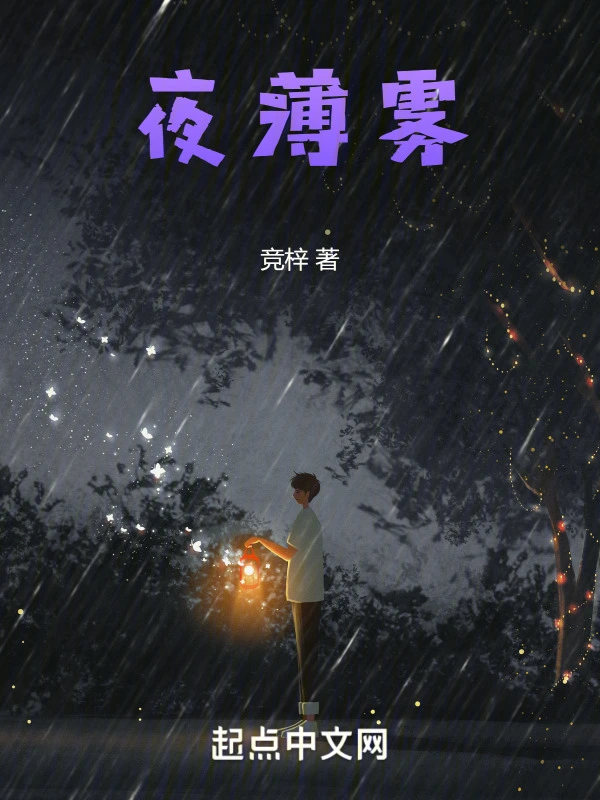
### Book review of the first part of "Night Mist": Quiet Narrative and Urban Emotional Experiment in Unpopularity 1. Overview of the work: With "first love is not possible" as the core proposition, the work tells the story of the protagonist Zi's experience in the seaside village "Haiyan Village". Through images such as mist, violets, and late-night conversations, it outlines an emotional entanglement that ends before it even begins. The label "Urban·Cause Encounter·Pastoral·Reality·White Moonlight" hints at its narrative tone that blends modern anxiety with natural poetry. The story revolves around Zi's journey of healing: he goes to Haiyan Village for unknown reasons, and gradually uncovers the relationship network with Hong'er, Ma Le and others amidst alcohol, mist and sea breeze. Chapter 3 mentions "morning after the mist dissipates" and "wound treatment", suggesting that the main plot may involve the healing of psychological trauma; while the image of "violets" in Chapter 6 echoes the fatalistic feeling of "sometimes there must be something in life" in the text, strengthening the lyrical color of the work. 2. Narrative style: fragmented lyricism and the art of blank space The narrative of "Night Mist" shows a strong tendency of prose poetry. It can be seen from the fragmentary descriptions in the existing chapters that the author prefers environmental rendering and psychological description to weaken plot conflicts. For example, the opening chapter "The car engine roars in the mountains" uses a dynamic scene to cut into a static state of mind, and the repeated image of "branches" outside the window creates a sense of loneliness and flow; the dialogue in Chapter 7 "If I say this is luck, do you believe it?" Conveys the subtle tension between the characters through vague questions and answers. This style runs counter to the "fast pace" and "strong conflict" of mainstream online literature, and is closer to the stream of consciousness experiment in traditional literature. For example, in the copy, "We met in the breeze and walked towards the determined path under the bright moon" uses abstract time and space as a metaphor for the impermanence of emotions, while the idea of "sometimes in life must always be there" gives the story a background of philosophical speculation. Although this choice improves the literary quality of the text, it also raises the reading threshold. 3. Character Creation: Symbolic Characters The characters currently appearing, such as Zi, Hong'er, Ma Le, Yun, etc., Still have a thin image. It is speculated from the chapter summary that Zi, as the first-person male protagonist, is set as an urban youth with traumatic memories, and his behaviors such as "wound treatment" and "drinking" imply inner depression; Hong'er may represent the "White Moonlight"-style first love object, but the interaction is limited to the daily segments of "talking to the door of the room". The symbolic tendency of the character. For example, the description of "Violet blooms well" focuses more on image rendering rather than character creation. Emotional clues such as "luck" and "strangeness" and other dialogues also lack specific background support. This blank technique gives the text a hazy beauty, but objectively weakens the reader's sense of involvement to a certain extent. 4. Shining Points 1. **Integrity of the Image System** "Mist" is a core metaphor throughout the text, which not only refers to natural phenomena, but also symbolizes the ambiguity of the characters' emotions and the unreliability of memory. Chapter 3 "The Mist Disperses" forms an image contrast with Chapter 6 "Violet", implying the protagonist's change of state of mind from confusion to sobriety. If this symbolic network can be deepened, a unique poetic system can be constructed. 2. **The "anti-typing" of emotional writing** The work abandons the bloody conflicts common in online writing and instead captures the hidden emotional folds of urban people. For example, the dialogue "Trust, but it's strange to say" in Chapter 7 explores the relationship between fate and choice in an implicit way. If more impactful plot twists (such as the intersection of time and space, memory tampering) can be embedded later, it may create a "gentle knife"-style aesthetic tension. 3. **Accurate exposure to niche markets** Referring to the successful experience of the unpopular masterpiece "Wo Yi Xiang" (Douban score 8.5), Focusing on "life philosophy in daily narratives" may attract readers who prefer literature and art. Potential audiences can be activated by participating in the topic of "Unpopular Novel Amway", posting in book review communities (such as Douban groups), or cooperating with independent bookstores for promotion. 5. Creation suggestions: Balance literariness and web logic 1. **Strengthen the narrative anchor** While retaining the lyrical style, add suspenseful clues (such as the source of Azusa's wounds, Hong'er's true identity) or fantasy elements (such as the supernatural properties of the mist) to enhance the plot's appeal. You can refer to "The Mist"'s approach of integrating hard-core science fiction into emotional lines, and unfold the narrative in a "time loop" or "memory maze". 2. **Deepen the character arc** Design a more contradictory inner drive for the protagonist (such as atonement, self-finding), and fill in the background of the supporting characters with details (such as the relationship history between Ma Le and Yun). For example, Chapter 4 "Dealing with Wounds" can insert flashback clips to reveal Azusa's past trauma and enhance emotional thickness. 3. **Adjust update strategy** Adopting the structure of "unit drama + main line", every 2-3 chapters constitute an emotional event (such as "The Mystery of Violet" and "The Truth of Late Night Conversation"), and set up a suspense hook at the end of the chapter. At the same time, the author interacts with readers through the column "What the author has to say", collects guesses about the image or ending, and enhances the sense of participation. --- #### Conclusion: Unpopularity is not the end, but another beginning The "no one cares" about "Night Mist" is to some extent a by-product of its artistic experimentation. In the torrent of industrialization of Internet literature, it is like a violet growing quietly, challenging the noisy laws of the market with its quiet attitude. If the narrative strategy can be optimized and the audience can be accurately targeted, a unique literary oasis may be opened up in a niche field - after all, all classics have experienced a dormant period of unpopularity, and the true light of creation will eventually emerge in time.