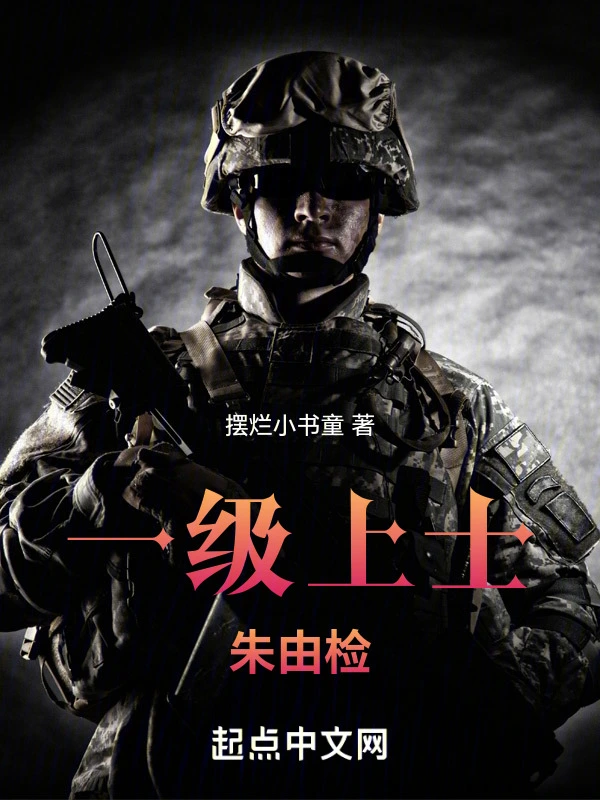
First Class Sergeant Zhu Youjian
一级上士朱由检
- Status
- Ongoing
- Length
- 310k Words
- Genre
- Historical
- Audience
- Male
- Subgenre
- Song-Yuan-Ming Dynasties
- Updated
- 2y ago
- Source
- Qidian
Stats
0Monthly votes
1.3kRecommends
2.7kFans
132Chapters
Tags
Synopsis
Reader comments
Readers also read
 Red Mansion: Start Escaping and Farming from the Equipment Bar
 After Lying in Bed for Three Years, He Was Forced to Help the Han Dynasty
 Northern Qi, Sage Khan
 Fu Ming 1627
 Taichang Daming
 At the Beginning, Please Ask Chongzhen to Abdicate!
 Northern Song Dynasty: Spoiler of the Future, Zhao Kuangyin Collapsed
 I Studied Abroad in Modern Times
 Destroy the Qing Dynasty
 I Am a Tyrant in Nanming
 Tianqi: My Teacher Is a Mechanical Pioneer
 Rebirth at the End of the Ming Dynasty: the Heavenly Group of the Ming Emperors
 Li Shimin's Soul Penetrates Liu Adou
After reading 14 episodes, the biggest problem is that the writing style is not uniform. Sometimes it's literary, sometimes it's white. Sometimes it's like being slapped in the face like an online article, and sometimes it's like being dressed from head to toe and being written about in a Dream of Red Mansions. Then the writing of private goods is a bit boring. For example, Han Xu is directly characterized as a traitor in the article, instead of guiding readers to understand it bit by bit through the behavior in the book. This way of writing is not a mistake, it just lacks the playability of the text. Finally, the vocabulary can be refined a little more. The problem now is that everyone's speaking style is similar, and there is no difference. I don't know why the words are so mixed and clear, and there is no feeling of writing half-literate and half-white. Some even suddenly become second-guessing (Big Snow Dragon Guard?). As far as the plot is concerned, it has not yet been fully developed, and is even a bit slow. At this speed, it may be possible to write more than a thousand chapters and not cover the seventeenth year of Chongzhen. It is worth looking forward to.
Follow-up
Secondly, why do officials in the late Ming Dynasty appear to have such low standards? To clarify this issue, we must first talk about the foundation of officialdom: the imperial examination. The imperial examination originally had two functions. One was to rule the world from a prison and gather the wise people from all over the world in the court; the other was to select talents and select those who devoted themselves to studying the Four Books and Five Classics to be officials. This institutional innovation is indeed the crystallization of the wisdom of the Han people. The officials selected under such circumstances are indeed not bad in character. This is also the reason why China was far ahead of the world before the Industrial Revolution. And the so-called eight-part essay is not as bad as our descendants imagined. Through careful study of the Four Books and Five Classics and the teachings of Master Confucius, many famous officials emerged, such as San Yang and others who were also products of Confucianism. But the most critical issue gradually emerged. Since the Four Books and Five Classics are limited, they are just a few books. The principles contained in them have been gradually tested through hundreds of years of scientific examination. The Han people are very intelligent in this regard, so smart people soon appeared and figured out a different method. In the scientific examinations over the years, the smart people of the Ming Dynasty came up with many wonderful examination questions and answer sheets, but the content of the Four Books and Five Classics that could be tested became less and less, so the examination questions became more and more tricky and weird, and the questions became more and more comprehensive. This makes it difficult for those who really believe in what Confucius taught and devote themselves to studying. So who can stand out in this situation? They were those who studied in various major academies in the late Ming Dynasty. Most of the teachers in these large academies are bureaucrats who have become officials. After returning to their hometowns, they use their connections in the officialdom and combine their own talents and learning to study past examination papers with concentration. Students in academies do not need to spend so much time reading and reciting a large number of Four Books and Five Classics. Moreover, simply studying the Four Books and Five Classics is far from meeting the standards of the scientific examination. As a result, book clubs and academies came into being in various places. The most well-known among them is Donglin Academy. These academies in various places would ask those recognized scholars of the Ming Dynasty to compile articles on various subjects together, and then write down their own understandings, so that the students in the academies could immediately learn these real questions after passing the elementary school, and improve their writing skills through the tactics of question-sealing. At this time, Juzi truly became a nerd. Most of these people are people with mediocre qualifications, rich families, and weak personalities. The most notable characteristic of such people is that they abide by the rules and are quite popular among officials. This is also the fundamental reason why no famous ministers appeared in the late Ming Dynasty. People such as Qian Qianyi and others were mostly from aristocratic families in various places, and their distance from ordinary people was naturally getting farther and farther. After this situation occurred, ordinary people who could have been able to take the scientific examination and become officials by studying the Four Books and Five Classics at home no longer had the opportunity to advance, and many smart people were left among the people. This is also the reason why most of the good literary works and ideological works in the late Ming Dynasty came from the people. It was these people who personally sent Ming Dynasty to the grave. (The author sighs: Someone once said that the Ming Dynasty also had the development of industrial and commercial civilization and had the opportunity to enter the industrial revolution. But what I want to say is that the industrial revolution was based on commerce. It was the profit-seeking nature of businessmen that brought social development. But the businessmen in the late Ming Dynasty, according to the teacher, should be called bureaucratic capitalism. They are dependent on the bureaucracy. They are not just purely profit-seeking. Entering the bureaucracy is their real purpose. This is different from Europe The situation is completely different, so the situation in the late Ming Dynasty was absolutely impossible to develop capitalism. Fourth, why couldn't Zhu Youjian save the Ming Dynasty? Let me talk about it from a small perspective. It is said that it was Zhu Youjian's internal money. There are many historical materials on this point, but there are only two extremes. One is that people who later took refuge with Li Zicheng and the Manchu Tatars widely publicized that Chongzhen still had a lot of internal money, the most famous of which. Even when Chongzhen went to Meishan to hang himself, he still had 37 million taels of silver in his possessions. But in my humble opinion, this matter was all a lie. If Chongzhen really had so much money, he would not have been forced into this situation. Tiandi, if we really believe this argument, it is ridiculous to believe that Zhu Youjian was a man who would rather die than give away his remaining wealth. Secondly, some people say that Chongzhen never had any remaining wealth, which is not true. It is believed that the Ming emperor, as the largest landowner in the Ming Dynasty, owned a lot of land. During the Jiajing period of Emperor Shizong of the Ming Dynasty, Huo Tao, the Minister of Rites, once wrote a memorial mentioning the number of private lands occupied by the Ming Dynasty royal family in the suburbs of Beijing in Beizhili. According to his survey of various farmlands in Shuntian and other prefectures, a total of 20 million acres ("Mingchen Economic Records" Volume 21, "Survey of Land in Guinei"), the style of the old Zhu family landlords is naturally reflected This is basically true. It means that the fertile fields around the suburbs of Beijing have been occupied by the royal family. Of course, not all of these fields belong to the emperor alone, including the fields given to the emperor's relatives, ministers and eunuchs Except for the fields in Beizhili. There are also official fields in Southern Zhili. Moreover, these Zhuang fields belong to the emperor and do not need to pay land tax. At the same time, a large amount of land rent is collected every year and goes into the emperor's personal treasury. So Emperor Chongzhen succeeded to the throne. In the beginning, it was impossible to be poor. And the money Wei Zhongxian had was not as scary as he imagined. The eunuch Wei seemed to be powerful, but he only really held power for a few years. With the behavior of those civil servants, , It's just using Wei Zhongxian's name to plunder people's wealth and wealth. So even if Emperor Chongzhen ransacked Wei Zhongxian's house, it did not solve the food and salary problem at the border. You must know that this part of the income from the house raiding did not. It's not Zhu Youjian's, but it belongs to the Ministry of Revenue. This also shows from the side that Wei Zhongxian's name seems to be very famous, but it is just that the scholar-officials continue to exaggerate for their own selfish desires. The real money is actually in the hands of those scholar-officials. Nowadays, many people are touting the so-called theory that if Emperor Chongzhen does not kill Wei Zhongxian, the Ming Dynasty will not fall. This argument is really ridiculous. In their eyes, the eunuch Wei seems to have taken those scholars. The officials are playing tricks on them. As long as Wei Zhongxian is not killed, Zhu Youjian will not lose control of various places. But in my humble opinion, the real situation may be exactly the opposite. It is precisely those scholar-bureaucrats who are playing tricks on Wei Zhongxian. In the palm of your hand. Don't worry when you see this. Let me tell you whether it makes sense or not. Let's talk about it after reading it. First of all, we must understand that no matter how powerful Wei Zhongxian is, he can only reach the height of the emperor. Come on, but even the emperor dare not say that he has the civil and military affairs of the Manchu Dynasty at his fingertips. Can Wei Zhongxian, who is so educated, really be able to play with those bureaucrats who have been in officialdom? I don't think even Zhu Yuanzhang could do this. The real purpose of these scholar-bureaucrats is to continuously build momentum for Wei Zhongxian. Their own purpose of extorting money! In the Tianqi Dynasty, as long as they continued to praise Wei Zhongxian, these scholar-bureaucrats could openly put all the bad reputation on Wei Zhongxian, while they themselves made a fortune this. These bureaucrats only seem to be obedient to Wei Zhongxian, but in fact they are just constantly plundering the people's wealth. In the end, whether they blame the emperor or Wei Zhongxian, everything will be fine. Can a person like Cui Chengxiu be considered a smart person? Choosing sides in officialdom is called opportunism. Although such a person has power for a while, he will definitely die every time a new leader comes to power. So a truly smart bureaucrat! It is precisely those unknown people who not only made money, but were also good at hiding themselves, so that even after several generations of emperors, they could still keep their families rich and worry-free. There is another evidence for this, which is the first year of Chongzhen. "Dengda Fangguanyuan Ji Miyong Sanxie Bing Shu" written by Bi Ziyan Shangshu, the Minister of Household Affairs, specifically mentioned that since the Liao Dynasty, the two emperors Taichang and Tianqi had misappropriated internal funds to support the Liaodong battlefield: In the first year of Tianqi, Ji Miyong was established On the day of the new recruits, the internal funds were abundant, and the chariots and gold were divided. It was not just the extra money. Li Ruhua, the former Minister of the Ministry of Finance, published a record of the emperor's benevolence, which recorded the amount of money issued over the years. From July 48 of Wanli to Tianqi, I briefly read it. Ended in November of the fourth year, a total of 19.38 Million yuan of money was issued, and the salary was sufficient. The internal funds were empty so far, and an additional item was allocated, which gradually accumulated to 1.76 Million yuan, and the salary was sufficient. Under the Wanli Emperor. After his death, his successors Taichang and Tianqi used a large amount of the small treasury accumulated by Wanli to support the Liaodong battlefield, spending 19.38 Million taels in just five years. From this perspective, although Emperor Tianqi was playful, he was really not stupid. Wei Zhongxian seems to be a traitor, but he is not really causing harm to the country and the people. I am not here to overturn the case for Wei Zhongxian. There is nothing to overturn in Wei Zhongxian's case. Although Wei Zhongxian did not get much money, he was satisfied with the scholar-bureaucrats fabricating it for him. The nine-thousand-year-old dream was satisfied with the obedience of his grandchildren. This indeed inspired the collective corruption of the bureaucratic class in the late Ming Dynasty, and also intensified the contradiction between the bureaucratic class and the people in the Ming Dynasty. So the Ming Dynasty fell. The death of the Ming Dynasty due to the scholar-bureaucrats is the same thing. Let's not argue about it. There is really no case to be solved. Because Wei Zhongxian, who had obtained the power of the emperor, did not have the ability to govern these bureaucrats, but indulged them. This is an irresistible crime! Having said so much, I just want to express one point. For those sitting in the palace, they seem to be the emperor, but in fact they are just prisoners kidnapped by the ministers. Neither Zhongxian nor Zhu Youjian can escape this kind of control. It's just that the ministers who have the absolute right to speak will only praise the loyal ministers in their ranks and belittle the emperor excessively. This is true for Zhu Youjian, Wei Zhongxian, and even Cixi Yongzheng. Reading this in history, it is really sad, and I can only lament: Ridiculous human beings, ridiculous games.
The author gave me a feeling that he would offend the literary youth, whether it is from the title or the last sentence of the chapter on historical views 😏
Ming Sizong Zhu Youjian died and was reborn in the next life, and then traveled back in time after his death, three times in a row! After three generations, there is still no city government. The first step when Pig's Feet comes back is to restore the factory guards to the way they were during the Hongwu period. Otherwise, he would not know how he died. Didn't the Ming Dynasty emperor know that he was destined to water? Throughout the ages, the death of the emperor of the Ming Dynasty has been unclear. I can't even figure it out. You'd better stop writing. You're tired of writing, and we're depressed when we look at it!
The entire Ming Dynasty was a collapse. There were a bunch of people behind the elders. No one could change their own camp. The common people and officers were completely abandoned. The emperor had no ability to change at all. Unless the emperor rebelled again, starting from the local landlords, there was no other way. The imperial examination system was a slave to people's hearts. It was okay if there were no foreign enemies. If there were any, everyone with rights would have selfish motives.
A hammer in the east, a mallet in the west, digging holes everywhere, the preface does not match the follower, it is very taken for granted
The imperial examination is not for selecting talents
The first important point of the imperial examination is to imprison intellectuals, so that all the smart people in the world can enter the cage of eight-part essays, and let them study chapters and sentences, and learn all the classics. In this case, these people will not be easy to have whims and be confused by crooked ways. Once the scholars are at peace, even if there are still people in the world who want to rebel, they are just grass bandits and can't achieve anything big.
Chongzhen's life-saving straw was the peasant army
The bureaucracy at the end of the Ming Dynasty was rotten. Most of the wealth in society was owned by a small number of people. They were opposed to even a little change. Neither Zhang Juzheng nor Tianqi died in a normal way. Wanli was a similar person in their eyes. Chongzhen's only way out was to select loyal and capable people from the Jinyiwei, control their families, and then let them mix into the peasant army, lead the peasant army to make revolution, and divide the fields in the front and rear. They smashed all the old systems and at the same time established force. Whoever can completely occupy Liaodong will be crowned the vassal king. Then he will defend Shanhaiguan without spending a penny and watch the Liaodong warlords bite dogs. Use limited money to raise a private army that is completely loyal to you. If you and the army cannot stay in Tianjin, you will run south. Maybe Ming Dynasty still has a way to survive. Otherwise, you will definitely die!
Well, historically Zhu Youjian also had very good physical fitness and very good personal martial arts skills.
Dissuade from the front row
The first two chapters were good, so I read on with high hopes. I didn't read much, but I found that it was getting worse and worse. Throw away the setting, and more than half of a chapter was just nonsense, mixed with private goods, and washed away Yuan Chonghuan No brainer, the protagonist has traveled through so many times, where is the city? The two lives are like a young boy The greater the expectations, the greater the disappointment.
The population of Zhu Zi and Zhu Sun is about the same as that of the Manchus, and the average educational level of Zhu Zi and Sun is more nutritious than that of the Manchus.
More training may not be worse than having a full army. After the Manchus conquered the Central Plains, they lost their position of power. You can use the interests of the family to restore the country, etc. To unite them to resist.
Reminds me of the carpenter emperor who came back from college
I have seen a lot of the late Ming Dynasty, and what became Chongzhen Apocalypse in the past is not new. The only thing is that it cannot be reformed on a large scale. After all, Chongzhen has lost its sovereignty since the fifth year of Ping Liao Dynasty. The people below him are acting in secret, and he is isolated and helpless. Everyone is coaxing the emperor to play. It cannot be solved by killing a few people. Donglin and the eunuch party The struggle had just come to an end, and Chongzhen did not unite the remnants of the eunuchs. As a result, he had to rely on Donglin to survive, and to get promoted and make money. His situation can be imagined. Chongzhen has no military power, and he is powerless just relying on loyal ministers like Qin Liangyu. There are too many pig teammates, and if you kill too many, everyone will be destroyed. Running a country is different from running an army, so there must be room for success. Mr. Zeng said: Why should you care about me if you are virtuous? Chongzhen's famous scene dealt with Wei Zhongxian. Later, because the Manchus invaded many times and killed indiscriminately, the emperor lost his authority. Everyone figured out your temper, and they were led away.
Very good😍
Zhu Youjian's character is headstrong and he is timid about taking responsibility. I think that if he traveled to modern times and served as a soldier for 12 years, he could change the problem of whether he dares to take responsibility, but he still can't change his headstrong character. It would be better to choose Li Zicheng for the subject matter.
Is this sergeant politically competent?😏
At the end of the Ming Dynasty, the bureaucracy was basically rotten, and a group of old fritters were worse than a group of stupid young people. At least Leng Tou Qing can do things and be obedient. The military emphasizes discipline, and the country actually does the same, and must act in accordance with rules and regulations. Special cases are only for emergencies.
At the end of the Ming Dynasty, those who still listened to nonsense talked about ancestral system and made revolution.