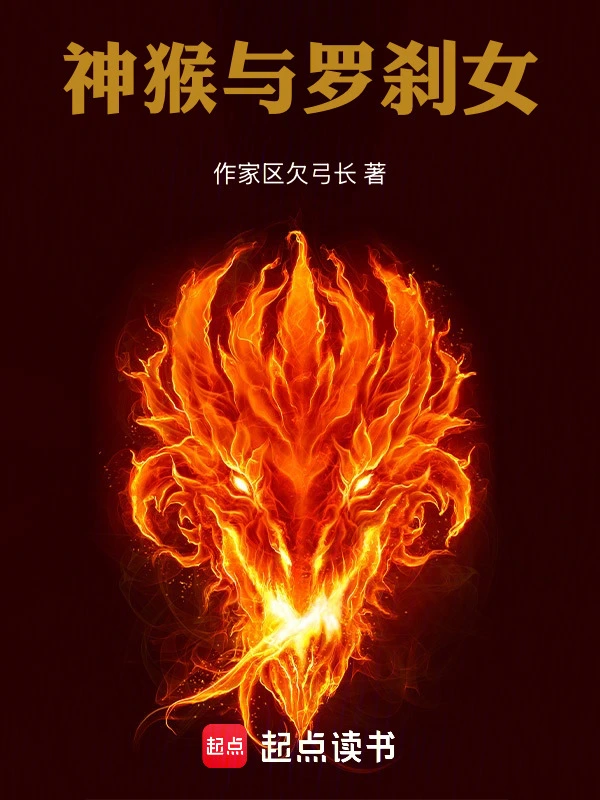
The Monkey God and the Rakshasa Girl
神猴与罗刹女
- Status
- Ongoing
- Length
- 449k Words
- Genre
- Western Fantasy
- Audience
- Male
- Subgenre
- Historical Myth
- Updated
- 8mo ago
- Source
- Qidian
Stats
0Monthly votes
378Recommends
0Fans
147Chapters
Synopsis
Reader comments
Readers also read
 Kobold Wizard: What the Hell Is Your Attainment Status?
 Open Your Adventure Log
 The Alchemist Girl Is Becoming a God
 I Won the Favor of Ms. Quiet
 If You Are Already an Adventurer, Who Should Work Hard on Your Own?
 Wen's Immortal Path
 Don't Worship the Immortal!
 The Artist Begins in Prison
 Traveling at the Same Time: Great Love to the Heavens
 Man and God
 Cultivation of Immortality: Starting from the Silkworm Household to Weave One's Life
 The Heyday of the Cultivation Sect
 Breakthrough Mirror
Thanks to Teacher Jiangbian Gyatso for writing the preface 1 of this book
(Due to the word limit, the content may be completed in four times) Since ancient times, humans have been asking: Who are we? Where did it come from? However, to this day there is still no definite answer. About 30,000 years ago, during the Paleolithic Age, Tibetan ancestors began to settle and live on the Qinghai-Tibet Plateau. The Yarlung Valley in Shannan was named because it is located south of the Gangdise Mountains and the Nyenchen Tanglha Mountain. It is known as "the first place in Tibet" because it has the first farmland, the first village, the first palace, the first Buddhist temple, the first monastery and the first Tibetan king in the history of Tibet. It was here that the story of the monkey god and the Rakshasa girl was first circulated, and was recorded in the "Tibetan Kings", "The Sage's Wedding Banquet", "Yongzhong Bon Religion History", "Guangjie Sutra", and "Kalachakra Sutra" and other works. And it was vividly painted on the murals of Samye Temple, Potala Palace and Norbulingka. There are records that the monkey god and the Rakshasa girl live in Senmuwuzi and Yanggawuzi, while Zhukangzi is the place where Bodhisattvas practice. To this day, there is still the legendary monkey cave on the Rishen Mountain in Kampot, and there is also a dam called "Zedang" at the foot of the mountain, which is said to be the place where monkeys used to play. And now, because of this myth, this place has become a pilgrimage place for Tibetan people to pursue their ancestors, and it has also become a place of development for mankind in the hearts of Tibetans. It is based on such vivid myths and legends that the author interprets the wonderful legend of the monkey and the Rakshasa girl. However, through this novel "Monkey God and Rakshasa Girl", I unexpectedly saw many differences.
Thanks to Teacher Jiangbian Jiacao for writing the preface 2 of this book
(Due to the word limit, the content may be completed in four times) This is a seemingly simple work, but it contains rich connotations. Usually, we see more records about how the Rakshasa girl went to great lengths to pursue and seduce the monkey god, and even forced her to combine with the demon king to harm the human world. However, people seem to ignore the inner world of the monkey god and only emphasize his loyalty to the precepts. On the surface, the monkey god and the Rakshasa girl written by the author adhere to the theory of parents' temperament, that is, "all those who are kind, compassionate, diligent, and amiable come from the father; all those who are greedy, jealous, hateful, and changeable come from the mother." In fact, they are excellent choices made based on the special identities and attributes of the monkey god and the Rakshasa girl. The so-called parental temperament here does not represent the biological parents in life, but represents the sacred monkey who keeps the precepts and the Rakshasa girl who is a demon. The book depicts that the reason why the monkey is afraid of the Rakshasa girl is precisely because of his kindness and integrity, and the Rakshasa girl can change, which is a portrait of a good person. At first, it was difficult for them to change, no matter who they were, but they eventually came together. The guiding philosophy of all these seems to be the function of meditation, but in fact it is the choice of human nature and justice. It is understood that the myth and legend of monkeys turning into humans is unique in the world, and it only exists among the 18 ethnic groups that speak Sino-Tibetan languages on the Qinghai-Tibet Plateau today. In the eyes of Tibetans, the sacred Tibetan area is called the "Land of Snow", "the land where Guanshiyin Bodhisattva practices extensive purification, and an area surrounded by auspicious snow-capped mountains."
Thanks to Teacher Jiangbian Gyatso for writing the preface 3 for this book
(Due to the word limit, the content may be completed in four times) The combination of the divine monkey and the Rakshasa girl is, to a certain extent, the fusion of diverse cultures and beliefs on the plateau, because on the roof of the world, it is very difficult for human beings to survive and reproduce, and it is not easy to unify people's thoughts and strengthen their belief in survival among the many beliefs left over from history. The penance of the sacred monkey can be seen as an exploration and pursuit of life and belief by the ancestors, which is also the formation process of the plateau people from clan to tribe, and then to tribal alliance. Through struggle and integration, a "stable nation with a common language, a common region, a common economic life, and a common psychological quality reflected in a common culture was finally formed. It cannot but be said that this is a miracle." After carefully studying the novel "The Monkey and the Rakshasa Girl", it is not difficult to find that the author's description of the natural nature and unique characteristics of various little people is worth savoring. In addition to the red-faced monkey and the Rakshasa girl, there are the three Guanyin sisters, the little fox Narcissus, the mixed-haired old wolf Kula, the pangolin Dafu, the rhinoceros Chongchong, the pheasant Huahua, the king of the ant kingdom Ruka, the squirrel Jiejie, the toucan Hu En, the porcupine Luban, the Millennium The old turtle Chongyuan, the Tibetan antelope Ke Huan, the big bear Benben, the little rabbit Mila, the little hedgehog Guozhen, the lark, as well as the devil, ghost king, black Rakshasa, three-eyed monster, two devils, one-eyed monster, new devil, one-horned rhinoceros, etc., All impressed me deeply.
Thanks to Teacher Jiangbian Gyatso for writing the preface 4 for this book
(Due to the word limit, the content may be completed in four times) Especially those forest friends, they infect readers with their sincere love and attitude towards life. Whenever they sing "Song of the Forest" it is like singing "Unity is Strength". However, what surprised me the most and moved me the most was not the well-known tangible characters in the book, but the fireflies that were easily overlooked. This is the finishing touch of the author's imagination. He made me deeply feel that even the most inconspicuous little insect can arouse people's awakening and light up the world. "Introduction to Chinese Folk Literature" says: "We cannot estimate the spiritual inspiration and spiritual comfort that people get from this ancient legend, but the value of its existence and the thinking it brings to us are far-reaching. Therefore, the legend of 'Tibetans were derived from the combination of macaques and Rakshasa women' is an extremely important explanation of its origin left in the memory of the Tibetan ancestors. Its authority and antiquity are unquestionable." The Tibetan people are unwilling to take credit for the development of this land. They would rather believe with awe that it was Guanyin Bodhisattva who took highland barley, beans, barley and other seeds from Mount Sumeru and scattered them on the earth, turning the desolate plateau into a viable agricultural area. Here, I would like to thank the author for interpreting for the world such a mythical story of a monkey and a Rakshasa female reproducing humans. Let us not forget the efforts of our ancestors, inherit our culture, and promote justice.
As soon as I started reading, I was deeply attracted and looking forward to more exciting stories.
Forward netizen comments
This is a comment from a netizen
This novel tells the myths and legends about the origin of human beings. The combination of the kindness of the divine monkey and the Rakshasa girl from the demon world shows the origin of the coexistence of good and evil in human nature in the world. It is worth reading! 👍🏻👍🏻👍🏻👍🏻
Well-founded fairy tales
The divine monkey and the Rakshasa girl have always been considered the ancestors of the Tibetan people in Tibetan areas. This is another version of the transition from ape to human.
I love the way the author depicts the divine monkey, lifelike, lifelike, and perfect!
Must-read novels in 2023
👍The short story "Monkey God and Rakshasa Girl"
The language is delicate and the plot has ups and downs. I look forward to the follow-up.
Teacher Zhang's calligraphy is like an exquisite painting, its charm is indescribable. It not only attracted me deeply, but also allowed me to gain a wealth of knowledge from it. Looking forward to updates.
Should the Rakshasa girl fall in love with the divine monkey? What is different about this monkey?
The monkey god is very outstanding, kind-hearted, and wants to have a goal.
New monkey drama drops siege attack
From the new perspective of human ancestors, Monkey God and Rakshasa Girl tell us the true story of the journey from ape to human. It is fascinating and immersive. We look forward to more exciting updates in the future.
The animal 🐺 world described by the writer is vivid and colorful! People's hearts need such happiness now! The article brought me to the freedom of nature in a dream. It's rare to be happy! The writer is talented! Broad vision, looking forward to updates [Holding fists][Holding fists]
At every step from ape to human, humans must learn to gain new life through labor and struggle.
The monkey god and the Rakshasa girl have six little monkey grandchildren, each of whom is outstanding and possesses all the intelligence of human beings.
It's refreshing to read. I suddenly realized that there are rich associations; Wang Shuo used sharp and inelegant words to dissect the society at that time, and Mo Yan used thunderous magic to interpret the world in front of him. What does the author want to say? It's a bit confusing, so you must read it to see what he wants to say? ? !
At first glance, it looks like the generosity of a cultural person with life experience. Highly recommended! ! !
This book is very well written and opened my mind after reading it. I hope the author will continue writing and become a big IP
"The Monkey and the Rakshasa Girl" is wonderfully written. It is a rare serious fairy tale and is worth reading and appreciating🌹🌹🌹🌹
"The Monkey and the Rakshasa Girl" is a work with both cultural connotation and entertainment, suitable for readers who are interested in Tibetan culture, myths and legends, and fantasy themes.
"The Monkey and the Rakshasa Girl" is a work with both cultural connotation and entertainment, suitable for readers who are interested in Tibetan culture, myths and legends, and fantasy themes.
The work is not only a love novel, but also a literary work that explores human nature, good and evil, and ideals. The ideal kingdom pursued by the monkey god symbolizes the beautiful expectations for the future of mankind. This depth of the theme makes the novel contain profound philosophical thinking under the fantasy shell.
Recommended good book "The Monkey and the Rakshasa Girl"
"The Monkey and the Rakshasa Girl" presents readers with a wonderful reading feast with its unique mythological background, rich plots and profound themes. In terms of plot structure • The story is highly attractive: the novel revolves around the love story of the red-faced monkey and the Rakshasa girl, and also incorporates elements such as the contest between good and evil and the legend of human history. The divine monkey was enlightened and practiced by Guanyin Bodhisattva, but met a Rakshasa girl, and finally got married after going through struggles and hardships, which started the multiplication of Tibetan ancestors on the snowy plateau. The plot is full of fantasy, attracting readers to read in depth. • The plot is relaxed and relaxed: in the process of telling the main story of the monkey and the Rakshasa girl, many other plots are interspersed. For example, the description of the divine monkey's experience in Juxian Mountain in the South China Sea, as well as his conflicts with wolves, etc., Make the story rhythm slow and urgent, avoiding monotony. In terms of character creation • The image is vivid and vivid: the image of the monkey is very vividly portrayed. He has innate magical power and supernatural powers, but at the same time he is confused about his own life experience and persistent in practice. The Rakshasa girl is portrayed as a charming image. Her love for the monkey god is persistent and passionate, showing her courageous pursuit of love. • The characters are rich in personality: Take the Monkey God as an example. He not only has a divine side, such as possessing divine power, receiving enlightenment from Bodhisattva, etc., But also has a human side, such as curiosity about beautiful women, entanglement when faced with choices, etc., Making the character more three-dimensional and real. Theme and Thoughts • Contains cultural connotations: The novel is based on myths and legends recorded in the Tibetan history book "The King's Lineage Mingjian" and other records. It is the myth and legend that humans are closest to Darwin's "from ape to man" theory of evolution. It contains profound Tibetan cultural connotations and embodies the Tibetan people's imagination of their own origins and the philosophical concept of harmonious coexistence between man and nature. • Educational significance: Through the experiences of the monkey god and the Rakshasa girl, the story shows the perseverance, self-improvement, kindness and justice of human ancestors in the struggle against nature. It conveys positive values and has certain educational significance for readers. Writing style • Delicate and vivid description: The author's description of the environment and characters is relatively delicate. For example, in the description of Juxian Mountain in the South China Sea where the monkeys live, "the lush forest intimately embraces the steep rocks, and the waves lap the soft sandy beach tirelessly", vividly showing the fairyland-like beauty. The description of the character's appearance, expression and movements is also very detailed, allowing readers to clearly imagine the character's image. • Unique language style: When narrating stories, the language is concise and clear, able to tell complex mythological plots clearly and understandably, without losing the mysterious color that mythical stories should have. However, this novel may also have some shortcomings. For example, as a mythological novel, the plot may be somewhat limited by the traditional mythological framework, and the novel may be slightly less innovative. In addition, the characterization of some supporting characters may not be in-depth enough, which affects the richness of the story to a certain extent. But overall, "The Monkey God and the Rakshasa Girl" is still a mythological novel worth reading.
"The Monkey and the Rakshasa Girl" Spiritual World Contract Dream Above the snow top, the broken shadows of Hongmeng are like illusions The monkey lives quietly in a secluded cave, and its spiritual thoughts are gently held by the moonlight The stars are like broken diamonds in dreams, outlining the obsession of practice Time stops here, and the heart is calling to the Sanskrit sound The Rakshasa Girl comes in the night, and the charm of her body is full of charm Eyes Her eyes hide the deep fire of dreams, igniting the forbidden flame of love Her prayers are like secret spells under the moonlight Quietly entangled in the heart of the monkey, the deep pool of silence The storm of choices rolls crazily in the heart Should we guard the lonely moon of pure cultivation, or go to this feast of love Until the oracle flashes like the gleam of dawn Destiny The threads of luck began to twine strangely They embraced each other, among the flowers in the spiritual realm The spiritual seeds were scattered, and the miracle of life sprouted The cry of the young spirit was like the sound of nature cutting through the eternal silence A new story quietly unfolded in the cradle of time The spiritual food gradually disappeared, and the crisis was like the shadow of the dark night The riddle of existence, questioning the border of the soul Until the spirit messenger arrived with the holy object Opened civilization, the first twilight dream The monkey and the Rakshasa, this dream of the spiritual world Love and fate, intertwined into a mysterious dream In the abyss of time, quietly precipitated Become a legend, an everlasting dream poem
I was attracted by the magical realm described by the author, and I watched it for a long time without realizing it 👍
The story of the monkey god and the Rakshasa girl is vivid and real, just like the struggles, sufferings and enlightenment experienced by our ancestors. The plot of the story is twists and turns and fascinating, especially the vivid description of the forest brothers. They are righteous and united, from weak to strong, constantly awakening, until victory. The monkey god and the Rakshasa girl cannot do without the help of their friends. In the end, the monkey god and the Rakshasa girl chose the spiritual world and let their descendants endure the test for all generations. It was a bold and wise decision.
Reading Mr. Zhang's supernatural novels feels like seeing a monkey in Eastern mythology return to its place of origin. Mr. Zhang constructed the ethics of ghost science that can only be established in the land of Tibet. This curiosity about the spiritual world, the curiosity about demons, the supernatural stories that the ignorant love brain struggled to resolve, re-explained the war, the new order, the devastation of life, and also demystified the historical myths. This time, there was no sutra, and the Buddha nature has been implemented since then. There are many more ghosts in the Western Region It feels like Mr. Zhang has fulfilled half of his wish for this place. Under this framework, there seems to be a big story behind it
Comments from Teacher Jiangbian Gyatso
Since ancient times, humans have asked: Who are we? Where did it come from? However, to this day there is still no definite answer. About 30,000 years ago, during the Paleolithic Age, Tibetan ancestors began to settle on the Qinghai-Tibet Plateau. The Yarlung Valley in Shannan was named because it is located south of the Gangdise Mountains and the Nyenchen Tanglha Mountain. It is known as "the first place in Tibet" because it has the first farmland, the first village, the first palace, the first Buddhist temple, the first monastery and the first Tibetan king in the history of Tibet. It was here that the story of the monkey god and the Rakshasa girl was first circulated, and was recorded in the "Tibetan Kings", "The Sage's Wedding Banquet", "Yongzhong Bon Religion History", "Guangjie Sutra", and "Kalachakra Sutra" and other works. And it was vividly painted on the murals of Samye Temple, Potala Palace and Norbulingka. There are records that the monkey god and the Rakshasa girl live in Senmuwuzi and Yanggawuzi, while Zhukangzi is the place where Bodhisattvas practice. To this day, there is still the legendary monkey cave on the Rishen Mountain in Kampot, and there is also a dam called "Zedang" at the foot of the mountain, which is said to be the place where monkeys used to play. And now, because of this myth, this place has become a pilgrimage place for Tibetan people to pursue their ancestors, and it has also become a place of development for mankind in the hearts of Tibetans. It is based on such vivid myths and legends that the author interprets the wonderful legend of the monkey and the Rakshasa girl. However, through this novel "Monkey God and Rakshasa Girl", I unexpectedly saw many differences. This is a work that seems simple but contains rich connotations. Usually, we see more records about how the Rakshasa girl went to great lengths to pursue and seduce the monkey god, and even forced her to combine with the demon king to harm the human world. However, people seem to ignore the inner world of the monkey god and only emphasize his loyalty to the precepts. On the surface, the monkey god and the Rakshasa girl written by the author adhere to the theory of parents' temperament, that is, "all those who are kind, compassionate, diligent, and amiable come from the father; all those who are greedy, jealous, hateful, and changeable come from the mother." In fact, they are excellent choices made based on the special identities and attributes of the monkey god and the Rakshasa girl. The so-called parental temperament here does not represent the biological parents in life, but represents the sacred monkey who keeps the precepts and the Rakshasa girl who is a demon. The book depicts that the reason why the monkey is afraid of the Rakshasa girl is precisely because of his kindness and integrity, and that the Rakshasa girl can change is a portrait of a good person. At first, it was difficult for them to change, no matter who they were, but they eventually came together. The guiding philosophy of all these seems to be the function of meditation, but in fact it is the choice of human nature and justice. It is understood that the myth and legend of monkeys turning into humans is unique in the world, and it only exists among the 18 ethnic groups that speak Sino-Tibetan languages on the Qinghai-Tibet Plateau today. In the eyes of Tibetans, the sacred Tibetan area is called the "Land of Snow", "the land where Guanshiyin Bodhisattva practices extensive purification, and an area surrounded by auspicious snow-capped mountains." In many majestic snow-capped mountains and beautiful lakes, miracles will appear, or magical natural characters, or Bodhisattvas and Arhats. The combination of the divine monkey and the Rakshasa girl is, to a certain extent, the fusion of diverse cultures and beliefs on the plateau, because on the roof of the world, it is very difficult for human beings to live and reproduce, and it is not easy to unify people's thoughts and strengthen their belief in survival among the many beliefs left over from history. The penance of the sacred monkey can be seen as an exploration and pursuit of life and belief by the ancestors, which is also the formation process of the plateau people from clan to tribe, and then to tribal alliance. Through struggle and integration, a "stable nation with a common language, a common region, a common economic life, and a common psychological quality reflected in a common culture was finally formed. It cannot but be said that this is a miracle." After carefully studying the novel "The Monkey God and the Rakshasa Girl", it is not difficult to find that the author's description of the natural nature and unique characteristics of various little people is worth savoring. In addition to the red-faced monkey and the Rakshasa girl, there are the three Guanyin sisters, the little fox Narcissus, the mixed-haired old wolf Kula, the pangolin Dafu, the rhinoceros Chongchong, the pheasant Huahua, the king of the ant kingdom Ruka, the squirrel Jiejie, the toucan Hu En, the porcupine Luban, the Millennium The old turtle Chongyuan, the Tibetan antelope Ke Huan, the big bear Benben, the little rabbit Mila, the little hedgehog Guozhen, the lark, as well as the devil, ghost king, black Rakshasa, three-eyed monster, two devils, one-eyed monster, new devil, one-horned rhinoceros, etc., All impressed me deeply. Especially those forest friends, they infect readers with their sincere love and attitude towards life. Whenever they sing "Song of the Forest" it is like singing "Unity is Strength". However, what surprised me the most and moved me the most was not the well-known tangible characters in the book, but the fireflies that were easily overlooked. This is the finishing touch of the author's imagination. He made me deeply feel that even the most inconspicuous little insect can arouse people's awakening and light up the world. The "Introduction to Chinese Folk Literature" said: "We cannot estimate the spiritual inspiration and spiritual comfort that people get from this ancient legend, but the value of its existence and the thinking it brings to us are far-reaching. Therefore, the legend of 'the combination of macaques and Rakshasa women to derive Tibetans' is an extremely important interpretation of its origin left in the memory of the Tibetan ancestors. Its authority and antiquity are unquestionable." The Tibetan people are unwilling to take credit for the development of this land. They would rather believe with awe that it was Guanyin Bodhisattva who took highland barley, beans, barley and other seeds from Mount Sumeru and scattered them on the earth, turning the desolate plateau into a viable agricultural area. Here, I would like to thank the author for interpreting for the world such a mythical story of a monkey and a Rakshasa female reproducing humans. Let us not forget the efforts of our ancestors, inherit our culture, and promote justice. Jianbian Gyatso