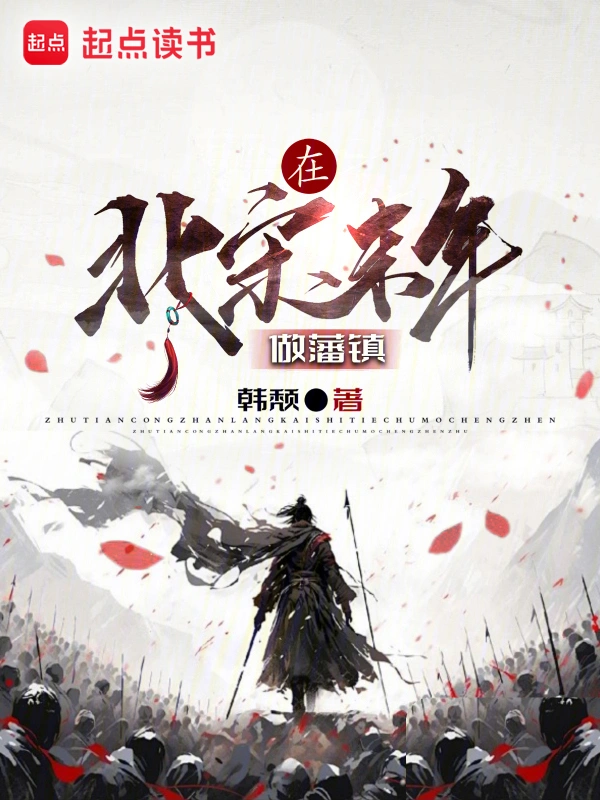
Became a Feudal Lord in the Late Northern Song Dynasty
在北宋末年做藩镇
- Status
- Completed
- Length
- 791k Words
- Genre
- Historical
- Audience
- Male
- Subgenre
- Song-Yuan-Ming Dynasties
- Updated
- 2y ago
- Source
- Qidian
Stats
0Monthly votes
25kRecommends
73.9kFans
299Chapters
Tags
Synopsis
Reader comments
In booklists 3

Lingmeng Bookstore
This is the first time I am creating a book list (つ<)・゚Aling recommends books that I have read and found to be very good.
96Books430Follows1yUpdated
But the Small Study Room of Emperor Weiqing
Bao and peach blossoms bloom together.
41Books331Follows9moUpdated
I Have Tried the Poison. Don't Be Afraid When the Book Wasteland Comes.
Everything can be done again, only time will not go back
41Books50Follows1yUpdated
Readers also read
 In the Red Mansion: Escort Daiyu to Beijing at the Beginning
 Talker in the Song Dynasty
 1914 Begins with the Rejection of the Schlieffen Plan
 Please Call Me Your Majesty the Tsar
 Never Walk Alone!
 Taichang Daming
 Emperor Ning Has the Guts
 Daming: Have I Become Wanli's Portable Grandfather?
 I Am Drawing a Hot-Blooded Episode in the Zhiyu Episode!
 Ten Kingdoms Week
 Northern Qi: My Father, Emperor Wenxuan
 Gou Qin
 Return to the Prosperous Tang Dynasty and Become the King of Sui Dynasty
 Datang: Queen Mother, I Really Want to Make Progress
The writing is not clumsy and the writing is solid. After reading the first few chapters, it is worth reading now.
To be honest, I just want to watch the group travel through the Northern Song Dynasty, and everyone is separatist in the Northern Song Dynasty. They come to more than ten or twenty vassal towns and give the Northern Song Dynasty scholar-bureaucrats a little bit of the shock of the late Tang Dynasty martial arts.
The horse is riding on Tokyo and doing Zhao🐶. From the emperor to the ministers, no one should die.
To be honest, Wanyan Aguda is a real hero. He accepts all ethnic groups (also related to the fact that there are relatively few real women), basically does not engage in massacres, is victorious in every battle, and has a broad mind. Even with the unparalleled diplomacy of the Northern Song Dynasty, he can actually hold his breath.
You have to look at the reason why the Song Dynasty emphasized civility over military affairs. During the Five Dynasties and Ten Kingdoms, the force used to protect the frontiers was out of control. Many military generals turned back during civil strife. People in the Central Plains regarded cannibalism as a common thing. Many of them were "Lu Bu". That is, after the emperor died, his successor was pushed down and replaced by another, as long as it was beneficial to his interests. So, here's the question? If the protagonist dies before his birth, that is, before his career is completed, what will happen to future generations who still have unfinished business? Will he fail because he loses his restraints and disobeys his generals who throw him off the throne? Even if this military commander has some different plans and ideas from yours, may he not even have the same intention?
Okay okay
In the Song Dynasty, if you were a soldier, you could not be loyal, perform meritorious service, win battles, or consider yourself a human being, because you were loyal to Yue Fei, and could you win battles better than Wei Qing? Therefore, in the Song Dynasty, you could only live well by being a traitor, traitor, and stabbing in the back, because being a loyal minister was against the law. This is the national condition of our Song Dynasty.
The real Jingkang incident 2
The civil service group that rose through the imperial examination was mainly from the south, with Jiangsu and Zhejiang as the core, and Fujian, Jiangxi, and Huguang as its wings. In 1111, the Donglin Academy was established. The Luo Party cooperated with the Zhejiang Party to secretly resist the reform. It was relatively well-organized and operated for 15 years before launching the Jingkang coup. At that time, the emperor, like modern people, did not believe that civil servants had the ability to launch a coup, and the result was a failure. The 44-year-old Huizong unexpectedly abdicated because there was a coup in the palace and his life would be lost if he did not give up his position. A group of people in the imperial court launched a coup. People headed by Zhang Bangchang, Li Bangyan, and Geng Nanzhong took control of Huizong and issued an edict in the name of Qinzong, packaging the coup as an abdication. At the same time, an edict was issued to recruit troops from Huaixi and Zhejiang to Beijing. At that time, there were so many imperial troops in Kaifeng. Why did they recruit troops from Zhejiang? This was to use their own people to completely control the capital. It's the same principle as the Shenlong coup in the first year of Shenlong. It catches you off guard. Why was Shenlong a revolutionary, but Huizong was forced to abdicate? Because during the Shenlong period, Zhongzong Li Xian teamed up with the scholar Zhang Jianzhi and others to rebel. It was a joint effort between the imperial power and the civil servant group to suppress Wu Zetian's forces, and it had the factor of changing the dynasty. Therefore, it was written down by the civil servants and packaged as a great revolution. As for Huizong's coup, the gentry was an isolated, premeditated, illegal rebellion without any orders. They won't say that I rebelled and imprisoned the emperor. Just like when someone kills someone, he won't tell others on the street. They themselves also know what can and cannot be said. The Jingkang Incident was very similar to the Zhou Dynasty's overthrow of the Shang Dynasty. Both internal reforms aroused dissatisfaction among internal ministers. The main army was outside, and they took the opportunity to notify the enemy, act as a leading party, and lead the enemy's troops to march straight in. Both were suddenly destroyed during the most powerful period. Both were defeated twice. The leading party of the Shang Dynasty was enfeoffed and established the Song Dynasty. The Leading Party of the Northern Song Dynasty accepted the canonization of the Jin Kingdom, abandoned the burden of the north in their eyes, and returned to their hometown of Hangzhou to establish the Southern Song Dynasty The coup faction were civil servants in Jiangsu and Zhejiang and did not care about the north. They returned to their hometown of Hangzhou, eager to get rid of the economic burden of the north. In the future, they would not need to collect taxes and transfer payments from the south to the north. Generally speaking, the southern political power is located in Nanjing, while the Southern Song Dynasty is located in Lin'an. Why, the headquarters of Jiangsu and Zhejiang civil servants and Jiangsu and Zhejiang consortia is not in Hangzhou, so as to control the emperor. Song history records show that the first time the Jin army went south, it only took more than 20 days to get from Beijing to Kaifeng. 1,600 Miles in more than 20 days, which is still a high-speed mileage. In fact, the construction capabilities of the Song Dynasty were much worse, and road conditions were much worse. It is not unusual for more than 2,000 miles. When encountering ditches, you need to go around, when you encounter water, you need to explore, there are potholes, downhill and uphill, and it is crazy to drive. The tens of thousands of Jin troops penetrated 1,600 miles into the enemy's belly for more than 20 days, and had to cross mountains and cross the Yellow River. They didn't even have a navigation system. As long as there was a city resisting, these Jin troops were alone. No one with any sense would do this unless the Jin people were particularly sure, for example, someone in the Song Dynasty collaborated with the enemy. The reason why they have the confidence to do this is that the leading party is definitely not a small player. Beijing was a fortress city at that time. It was a miracle that it surrendered in four days without much war. On January 4, the Song general Guo Yaoshi surrendered. The Jin army did not repair for a day and set off immediately. In less than a month from January 4 to January 31, in the ice and snow, the 10,000 Jin army took an army several times larger than theirs and went directly into the hinterland to the enemy's capital. They did not grab anything and did not get lost along the way. The Jin army was in God mode, which was faster than Manstein's troops and twice as fast as Guderian. When marching into enemy-occupied areas that have never been passed before, a large number of scouts must be placed in front to explore the route, and a considerable number of senior troops must be behind. The army must maintain a strict formation during its movements. This is why it is often considered fast for an army to march more than ten kilometers a day. A dozen kilometers a day is basically the average advancement speed of the German Blitzkrieg in World War II. Especially with the technology of the time, it could only be achieved within the borders of the country. When marching in an enemy country, if you encounter resistance, your marching speed will be slowed down The Jin Army was in Baihe on 1/02 and in Kaifeng on 1/31. Excluding various sieges, battles, and incidents on the way, the actual marching time was only 22 days, that is, it marched about 36 kilometers per day. If the Jin army was not a full cavalry force, it would be impossible to achieve this speed, and a full cavalry force would not be able to effectively attack the city along the way. How could it conquer every city on the same day? The key is that the territory of the Song Dynasty is not an uninhabited land outside the Great Wall. It is strange that there is no resistance along the way. The leading party is very powerful In order to resist the northern cavalry, the Northern Song Dynasty artificially transformed the terrain and nature north of the Yellow River, changing the course of the Yellow River, digging rivers in the plains, planting trees, creating swamps... Such an exaggerated creation of terrain that restricted the cavalry, and no one led the way, it would not pass so quickly. Moreover, ancient maps had no scale at all. Strategic maps were kept in the palace and the Privy Council. Locally, there were only regional maps of the region. Privately storing and drawing maps privately was tantamount to treason. Domestic marches require specialized army guides to maintain a normal army march, let alone foreigners who come for the first time. Let alone Yaoshi Guo, as a native of Yan, it was simply impossible for him to draw a strategic map just by going to Beijing once to do business. Why was tax evasion by business travelers a bribery checkpoint rather than a detour in ancient tax collection? Because it is impossible to do it at all. Apart from relying on the familiar business methods of predecessors, you will be in darkness wherever you go. Not to mention ancient times, how many drivers in modern times can accurately drive to a destination 1,000 kilometers away without looking at a map? During the Jingkang Incident, it was the hinterland of the Central Plains. It was densely populated and you had to capture cities and seize territory. Otherwise, the enemy forces in the rear would block you. The Jin Army was able to penetrate deep alone quickly without being blocked in the rear. This was a big problem! Regardless of how the Jin army attacked the city, just looking at the marching speed, it was simply faster than a rocket ride. The speed of the attack exceeded the scope of physics. The Jin Army is coming. "The Biography of Li Gang" records that this Jin Army is said to be 60,000 and goes straight to Kaifeng. It is said to be 60,000, but it must not even be 60,000. It is estimated that there are only 30,000 people, and a large part of them are the original Liao and Bohai people. The Jurchens are only about 10,000. Such a ragtag group of people traveled unimpeded and encountered no resistance. They arrived at Kaifeng City from their hometown in twenty days. The green light was given all the way and the journey was smooth. This trip must have been arranged because we still had to cross the Yellow River. The speed was so amazing. We must have sent Huizong off before the Western Army came to rescue him. As a result, the plan failed to change, and the civil service group was divided. Li Gang actually supported Huizong, and began to fight against the clique, resolutely taking the lead in the battle, and refusing to let the Jin army enter Kaifeng City. His position was extremely firm, just because his Jin army failed to enter Kaifeng City. Huizong had been deprived of military power and imprisoned in Longde Palace at that time. Tong Guan got the news and immediately came back to escort him. Because the Western Army he led was preparing to destroy Xixia and could not move, he could only bring some people back by himself, but the capital was already under control, so Tong Guan sent those few people back. The civilian clique first wiped out the Northwest Army, deducted food and wages, and hoped for internal strife in the Northwest Army. They arranged for the Northwest Army to go north to fight the Jin Army, and provided information to the Jin Army. The Western Army was leaderless, and then notified the Jin Army to cut off Tongguan from the Western Army to the capital. The Jin Army went south again and there was no threat anymore The only generals in the northwest were the Liu family and the Zhe family. The Liu family later had Miao and Liu mutiny, the Zhe family surrendered, and the leader of the Zhe family was poisoned. Li Gang was a civil servant, but he was a resolute militant and even broke the law to fight against the Jin Dynasty! The rebel who belonged to the civil service group also had to be taken away this time. He was first taken to Hebei, but after discovering that Hebei was the only place the Jin people had to pass through on their way south, he was taken to Yangzhou. The reformists headed by Cai Jing, Tong Guan, and Wang Fu were all exterminated or exiled and then killed on the road. You will definitely not be allowed to meet people from the army again. At this point, Huizong lost military power, just like Emperor Chongzhen could not live to see Li Zicheng, and Xuanzong could no longer have contact with the military. From then on, Huizong was transferred indefinitely, until the entire descendants of Taizong were packed up and given to the Jin Dynasty. The civil service group divided up the family wealth accumulated by Huizong since the Reform. The official school that Huizong cultivated, the weaving bureau that produced silk, the official kiln Ru Kiln that produced porcelain, Anji Fang, Zaozuo Bureau, Xingxing Bureau, and more than 300 large and small facilities were all shut down, and all cash and materials were divided among officials. More than 3 million acres of state-owned land under the jurisdiction of Xicheng was divided up. Huizong's reform completely failed and changed himself. In November of the first year of Jingkang, the civil servants of the coup dismissed King Qin's army and notified the Jin army again that this time there is no problem at all, come on. This time the Jin Army led more people. Wanyan Zongwang of the East Road set out from Baozhou on September 8 and arrived at Kaifeng City on December 10. A dozen kilometers a day is basically the average advancement speed of the German Blitzkrieg in World War II. This part of Wanyan Lou's army crossed the Yellow River south and headed west to Luoyang. They blocked Tongguan and locked up the most elite Western Army of the Song Dynasty within Tongguan, cutting off their way to the east from King Qin. The people responsible for the defense of Kaifeng this time are the four-wall defender Sun Fu and the prime minister He Li. How to let the Jin army in? Use Guo Jingyao's method to confuse the Kaifeng defenders. The troops of King Qin from all over the country had already been ordered by Tang Ke and Geng Nanzhong to hold back. Only Zhang Shuye, the general manager of the South Road, and his two sons Bo Fen and Zhong Xiong defied the imperial order of surrender and recruited 13,000 troops to serve the king. They encountered Wanyan Zonghan's tribe in Yingchang Mansion, and the eighteen major and minor battles ended in victory for each other. Finally, the entire army broke into Kaifeng City. This was the only Qinwang army that was able to enter Kaifeng City during the second siege. To be continued
Exchange Building
From time to time, you can see very unfriendly words in the background. Please keep your words in mind. What I wrote was not good, but my family did not offend you. This is a building dedicated to the exchange of plots and history. You can leave messages normally. You can talk about any historical figures and plots you want to see. I just ask that the tone be gentler. Thank you very much readers for your support.
A very important reason why the Ever Victorious Army invested in gold in history was the unfavorable operation of the Northern Song Dynasty. Originally, Song and Jin agreed not to accept their respective rebel generals, but Song turned back and recruited Zhang Jue, the traitor general of Jin, who surrendered. However, Zhang Jue failed to defeat Jin and fled to Song, and Song accepted him. However, the letter between him and Song Song was intercepted by Jin, so Jin went to Yanjing to find the important person of Song Dynasty. According to common sense, Song Dynasty should either betray the alliance. Since he wanted to betray the alliance, he should fight to the end. As a result, Song Dynasty chopped off Zhang Jue and gave it to the Jin Dynasty. This incident gave a deep negative impression to Pharmacist Guo.
🙂 Shame on the Song Dynasty, call back the master with twelve gold medals I would rather pay the annual coins every year than lose a cent of my homeland.
To be honest, the ending of the Northern Song Dynasty also had something to do with his own work. What the Iron-blooded Song Dynasty liked most was to detain and kill envoys. Whether it was with the Jin Dynasty or with the Meng Yuan Dynasty, they were extremely naive in diplomacy. Wanyan Aguda, a person from the old forests of the Northeast, all knew that diplomacy required formal credentials. The Northern Song Dynasty actually did not bring the credentials three times.
What do people who want to take over the Yan family think? After all, others are from the royal family. How much can you give, can you make them king? If the savages are dissatisfied and given the opportunity, they will rebel.
Is your surname Liu a blood descendant of Liu Bang? If so, you can still use the name of Sanxing Han Dynasty.
Zongze? Even. . 😳😳Forget about Wanyan Loushi, even Wanyan Yinshu can, Wanyan Sect can't beat these second-rate Zongze, right?
😥😥😥 Zongze's record said that there were thirteen battles and thirteen victories. The moisture was too great. It could not stop people like Zong Wang from invading. Wanyan Lou's room was not even willing to look at Zongze. The Jingkang shame was over. A bunch of people and Zongze started to brag about my early victory. . .
The real Jingkang incident 1
The Jingkang Incident was a coup involving internal and external collusion. Tong Guan, the direct descendant of Emperor Huizong of the Song Dynasty, was in charge of the Western Army. The army in the capital was not under control and was overthrown by a coup. Song Huizong and Song Qinzong were not fools. If they were fools, they would have been turned into puppets long ago. Those stupid and traitorous behaviors were only forced by them after the civilian coup was successful. For example, the emperor went to the Jin camp to negotiate in person. It was impossible for the emperor to go there himself. At that time, the Jin army did not occupy the outer city. If you were the emperor, would you go? They were kidnapped after the civilian coup Two years after Huizong ascended the throne in 1102, he changed the Yuan Dynasty to Chongning, which was to respect the meaning of Xining's reform, continue the ideas of Shenzong Zhezong, and enable the new party Cai Jing to be the prime minister and Tong Guan and others to vigorously reform. Cai Jing was inextricably linked to the previous dynasty Wang Anshi. His younger brother Cai Bian was Wang Anshi's son-in-law. He himself was also a staunch reformist influenced by Xining's reform. After Huizong and Prime Minister Cai Jing came to power, they used very severe political punishments (except murder) to quickly end the party struggle that had lasted for more than thirty years. Song Huizong's reform seriously damaged the interests of the civil servant group, especially the southern civil servant group. From 960 to 1127, the proportion of northern Jinshi scholars dropped from 38.42% To 2.86%, While the proportion of southern Jinshi scholars increased from 61.58% To 97.14%, Indicating that the number of northern Jinshi scholars continued to decline during the Northern Song Dynasty, while southern Jinshi scholars were in a monopoly on the rise. There are already prototypes of the Ming Dynasty's North and South List. Several reformers were outliers among southern officials. The official schools established by Huizong are somewhat similar to today's universities, with various majors, including military, medicine, law, accounting, art, etc. It is also juxtaposed with prefectures and counties. After passing the examination in the county, you can go to the prefecture and county to study. After passing the examination, you can go directly to the Imperial College in the capital. This system is a bit like nine-year compulsory education. When the time is right, the number of people in Taixue has almost reached 200,000. Then Huizong did two major things: abolishing the imperial examination and abolishing Enyin. The abolition of the imperial examination system is easy to understand. It means that Huizong no longer used the imperial examination system that has been in place for more than a thousand years and had been in existence for 500 years. Instead, he selected talents from his school. Historically, it was difficult for a poor family to produce a noble son. Power has always been in the hands of the rich. Only when you are rich can you have the opportunity to study. Those who have no money have to work on the land to study. However, this official school run by Huizong was a piece of cake for the nobles, but it got the support of the Han people in the world. Then this official school run by Huizong was discredited by various means. From the current perspective, Huizong and Cai Jing's New Deal is very clever and their thinking is very advanced. Instead of taking a unified classics and meaning exam, we will make the best use of materials and talents, infinitely amplifying everyone's professional abilities and skills. In the future, we can rely on the majors we have studied to find corresponding jobs. This is the prototype of modern higher education. In the third year of Chongning (1104), Emperor Huizong of the Song Dynasty, at the request of Cai Jing, the imperial examination was canceled and all the scholars were returned to the school for tribute. As a result, schools became the most important way to enter officialdom, which could not only break the education monopoly of scholar-bureaucrats, but also improve the quality of official selection. Then Emperor Huizong of the Song Dynasty abolished Enyin. There were so many officials in the Song Dynasty who were living on empty wages. How could there be so many from the imperial examination alone. This favor system is the mainstream, which means that the seventh sister-in-law and the eighth aunt can also hold official positions. Huizong cut off a person's lifetime career and financial path. Cutting off a person's financial path is like killing his parents. What's the difference between that and killing the parents of the civil service group? This hatred is irreconcilable If the abolition of the imperial examination damaged one of Mr. Huang's legs, restricting Enyin would directly knock Mr. Huang to his knees. Economically speaking, Emperor Huizong of the Song Dynasty established the Imperial Academy, established pension policies, and needed money for the Northern Expedition all year round, so Huizong used different methods to obtain money from the scholar-bureaucrat class. In the second year of Zhenghe, Huizong nationalized the tea trade. Prior to this, Huizong nationalized all mineral resources such as gold and silver mines. Emperor Wanli also did a similar operation and was blackmailed to death. The public land law was implemented by Yang Jian, another treacherous minister. Simply put, it means checking the land deed of your home, then comparing the land deed with the land you actually own, and collecting the land beyond the land deed as public land, which will be managed by the state. This move was scolded miserably in the history books, saying that it was used to seize the land of small people at will, causing people to live in dire straits. But in fact, the amount of land that ordinary people can have is enough to make a living for a family. The only ones who really own land are the trinity of scholar-bureaucrats. Besides, how did you get the land that exceeds the land title in your home? Have you paid taxes? Can they tell clearly whether it is illegal income? Land acquisition is considered light. It would be nice if he didn't let those scholar-bureaucrats make up for the taxes owed by his eight generations of ancestors! The government-run weaving bureau and official kiln were established. History books say that these were all to produce exquisite items for Huizong for his enjoyment. But the weaving bureau set up by Huizong was in Zhejiang! If he wanted to enjoy himself, why not just get one in Kaifeng? In fact, Huizong did this to increase fiscal revenue, and the silk pointed out by the government-run Weaving Bureau could also be sold directly overseas. But in doing so, the trinity of scholar-bureaucrats will lose something to eat. In this way, Huizong put all the profitable businesses into his sleeves. At this time, the Northern Song Dynasty eliminated cliques internally and appointed Cai Jing to govern the country. The Northern Song Dynasty ushered in the last period of extreme economic and military expansion. The actual number of active personnel in the army reached 800,000, closely following the 1.26 Million during the Renzong period. The territory reached its peak, singing and dancing flourished across the country, and even takeout and errand services were developed in Kaifeng City. However, Huizong's seemingly harsh reforms exposed the shortcomings of his nature - too kind, too idealistic, and reckless. To a certain extent, Zhang Chun's assessment of Zhao Ji as frivolous, that is, too impatient and unstable, is accurate. The most disgusting thing he ever did was to erect a monument to the Yuan You traitor party, and 309 die-hards headed by Sima Guang, Su Shi, and Su Zhe were engraved in black on the monument. In the first year of Yuanyou, Zhezong of the Song Dynasty, Sima Guang became the prime minister, abolished the new laws of Wang Anshi between Shenzong, Xining and Yuanfeng, and restored the old system. In the first year of Shaosheng's reign, Zhang Dun became prime minister, restored the Xifeng system, denounced Sima Guang as a traitor, and was demoted and expelled from the court (but to this day, we still learn "Sima Guang smashed the vat", which shows that Huizong's reform was defeated). Thinking that this method can make them infamous forever is obviously underestimating the old party's ability to resist. Emperor Qianlong did far better than Huizong in this regard and established a literary prison. The fact is that if you want to reform with peace of mind, you cannot have too many opponents. Donglin Academy was founded by Yang Shi in the first year of Zhenghe in the Northern Song Dynasty (1111). Donglin Academy was actually controlled by Zhejiang East Group and Xijing Luoyang Group. The Donglin Party began to surface. Since the Song Dynasty, a relatively secretive class has formed in the Jiangnan area. This class has a characteristic. Each family is not particularly big, but they have some inextricable connections. They basically control the imperial examinations and are good at examinations. As long as there is an imperial examination system, they can quickly penetrate into the management and control the center of government affairs. As the old saying goes, if a person achieves enlightenment, chickens and dogs will ascend to heaven, and if he passes the exam, his relatives, friends, classmates, and students will all benefit. They are mainly connected by the relationship between teachers, students, colleagues and friends, followed by blood relationship, and are united by ideology to form a political group. Most of the officials in the DPRK and the Central Government belong to them. They control the government, gain the most benefits from their own class in terms of policies, and suck out the marrow of the people. When Song Huizong was in power, he also performed two major martial arts feats. The first was to destroy the Liao (no matter how he destroyed it, whether it was glorious or not, it counts as his martial arts anyway), and the second was to severely defeat and almost destroy the Xixia. The Western Army of the Song Dynasty was the strongest army in the Song Dynasty at that time, and it was almost impossible to defeat Xixia. Just when the Western Army of the Song Dynasty was sharpening its sword and had just destroyed the Liao Kingdom and was preparing to destroy Xixia, because it had recovered a large area of territory in the north, there were a large number of refugees who needed to be resettled, so Huizong began to prepare to take advantage of these rich people. This time Huizong was very strict and limited the payment within two months. Violation of this would be a violation of military law. When the emperor was raking in wealth, one was raking in the poor and the other was raking in the wealthy nobles. If you slay the poor, the peasants will revolt; if you slay the gentry, sorry, the emperor will become a wage earner, and you will definitely be punished. Immediately afterwards, Huizong continued to issue an order that all the relatives of the clan, concubine's family, and prime ministers should be handed over. This time, the important ministers of the capital and the relatives of the prime minister were offended. Huizong's recklessness and lack of order were fully demonstrated. Huizong's reforms were too advanced and stricter than any previous dynasty. Huizong, who relied on some members of the Jiangnan gentry to carry out reforms, completely offended the gentry class across the country. You Zhao Ji, we recognize you, you are the emperor. You want to reform, but you also want to get rid of us and kill us? So the shocking conspiracy began. To be continued
Give Zhao Song the shock of a vassal town, princes and kings
Has the author changed the plot?
It is clear that he escaped from Yanjing with his wife Wan Niang, but later in the plot there is another sentence: after escaping from Yanjing, he finally settled in Rongcheng. Later, he sent people to Yanjing to look for him, but he could no longer be found. But he didn't want to feel sorry for her. Obviously in the previous version, he ran away and didn't care about his wife's life or death.
Why are you so anxious for the finale after only 790,000 words? The performance of this monthly ticket is not a little bit better than most books in the same period, right?
The prophecy of the Golden Sword will be remembered forever! Isn't this prophecy coming true?
It is recommended that the author give the protagonist a golden finger, and nothing else. Just a person who has been in good health for two lifetimes and lives a long life without being affected by any disease. This is enough.
The new book is probably about returning to the prosperous Tang Dynasty and becoming a martial artist.
The author's writing is very good, but as a time traveler, the history is very familiar, but the aspect of increasing combat effectiveness does not seem to have been done at all. It seems to be the meaning of an ancient person who is familiar with history.
I'm speechless. I finished it in a hurry in the middle of writing. What's the difference between this and being a eunuch?
Brother's writing is very good. It doesn't matter if you end it hastily. The main thing is that you finish the entire layout before talking about it. It's not less than one or two pieces.
Been warned?
What does the author mean? Well written and ended suddenly?
What's going on? It's very perfunctory for readers. I want to see the protagonist destroy Song Dynasty, but this is the end? Doesn't the author send an explanation? Explain?
It was so exciting to watch that I suddenly poured a basin of cold water on it!
Why did it suddenly end? This is too bad, right?
The protagonist is praised everywhere.