Fall of Qin, Chu and Han
秦楚汉堕
- Status
- Completed
- Length
- 474k Words
- Genre
- Historical
- Audience
- Male
- Subgenre
- Qin-Han & Three Kingdoms
- Updated
- 2y ago
- Source
- Qidian
Stats
0Monthly votes
2.4kRecommends
5.4kFans
201Chapters
Tags
Synopsis
Reader comments
Readers also read
 Talker in the Song Dynasty
 In the Red Mansion: Escort Daiyu to Beijing at the Beginning
 1914 Begins with the Rejection of the Schlieffen Plan
 Please Call Me Your Majesty the Tsar
 Three Kingdoms: Ji Han Liu Zhang
 Gou Qin
 Ten Kingdoms Week
 The Tang Dynasty Began with the Heian Shi Rebellion
 Late Tang Dynasty: Father-In-Law Strategy Guide
 Three Kingdoms: Crossing the River by Touching the Sima Family
 Northern Qi: My Father, Emperor Wenxuan
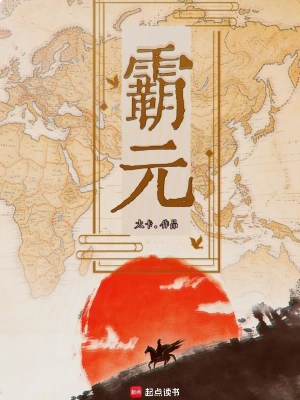 Overlord
 Siheyuan: Teacher, I Really Want to Make Progress
 The Road to Rivers and Lakes Begins with the Legend of Fire Cloud
If you travel to the Six Kingdoms, you will inevitably be restricted by the position of your land and hometown. For example, if you go to the Zhao Kingdom and experience the massacre by Bai Qi, then as a Zhao nationality, you will inevitably be massacred when you invade Xianyang at the end of the Qin Dynasty. This is "the destruction of the country and the hatred of the family and the country."
Good guy, starting from the time when Qin destroyed Zhao, you are very ambitious. I hope the author doesn't want eunuchs🤫
Woohoo, the collection and pursuit ratio is too imbalanced 😭 Don't keep books during the new book period. Keeping books will make you more enthusiastic, and the author's mentality will collapse. Don't wait for hundreds of thousands of words before reading, which will fall into a vicious circle. Everyone reads every day, the better the data, the better the data, the better I will write, the better I write, the more enjoyable it will be for you, let's create a virtuous cycle, please! 🥺🥺
He is clearly a time traveler, but he has the mindset of an indigenous aristocrat. You also need Chen Sheng and Wu Guang's "Princes, generals, Xiang Ning, etc." To encourage themselves, thinking that Li people can be emperors, and that their status as ordinary nobles is not a problem, and they are also qualified to be emperors. Which modern person is not the boss of heaven, the second child of me, even the gods and emperors don't look down on me. Princes, generals, Xiangning, etc. Are almost engraved in their bones, and they don't need to be taught by others. Only if you are strong enough to be an emperor, I never feel that your background is not qualified enough. The emperor, whoever has strong soldiers and horses will do it, no one knows. You might as well just say that the protagonist is an indigenous person who has obtained the memory of a modern person who failed to travel through time.
Spending more than a dozen chapters to describe Tou Qin is too slow. I don't know where it is at all. Newbies and new books don't have any fan stickiness. Writing like this in the early stage will not retain people. If a book is not popular in the early stage, don't expect great results in the future.
No, is this thing so difficult? First gather your own strength, gather the armed people in the city together in the name of welcoming the King of Yan, throw a cup as a sign, those who agree will live, those who disagree will die, then destroy all the people who oppose, unite the strength, wait for the King of Yan to come, directly catch the turtle in the jar, and then send someone to contact Li Xin, wouldn't it be good?
The writing is good, but one thing to note is that you can have a female protagonist and have a harem, but don't spend too much time on the female character, as the gain outweighs the loss.
To be honest, if you want to be emperor in the future, you cannot go to Qin. Qin's rule was not long, and it even accumulated a lot of hatred because of excessive taxes and wars of annihilation. This generation basically still exists, and the hatred is still there. When Ying Zheng was in power, he was assassinated many times. Once you defect to the Qin Dynasty, you will be regarded as a traitor to the six countries. And once you surrender to the Qin Dynasty, you will definitely be asked to get a certificate of surrender, and the function of the certificate of surrender is to let you stand in line. It doesn't matter if you are just an ordinary family member or bureaucrat, but once you become a king or want to be a powerful minister, your reputation will become very bad.
The imperial power of the Qin system was supreme, and they would confiscate homes and exterminate three clans at every turn. The second and third generations of the army would be transformed into a doctor's government, waiting for the next winner of the chicken-eating competition with ten houses and nine empty houses. It is better to welcome the emperor of Zhou and build a shogunate, which can not only reduce the middle class who impose excessive taxes, but also avoid the hell on earth where nine out of ten will be destroyed every time the military government is changed.
If you think about it, many people like to introduce new policies during the Spring and Autumn Period and the Warring States Period. In fact, there is nothing to do. The ancients were no worse than us. In the era of great strife such as the Spring and Autumn Period and the Warring States Period, talents from various countries actually formulated corresponding systems according to local conditions. In the later period, the systems of medium and large countries such as the Qin system, the Chu system, the Wei system, the Zhao system, etc. Were not very different. They were all centralized reforms by the central government and a mixed system of local feudal princes, prefectures and counties, that is, the early Han Dynasty. After all, in the era of great strife, systems that are inefficient or incompatible with their productivity and national conditions will be eliminated. It is not the novel "The Great Empire" that describes only a certain system that is advanced and other countries are backward, especially a large southern country with a bunch of lords.certainly is a soft persimmon. Specifically, you can see Wang Jinghai, the boss of Zhihu, who complained very sharply about it. Instead of engaging in various institutional reforms during the Warring States Period, we did not consider whether they were appropriate or not. Might as well just have a golden finger - the technology for mass production of black powder. Let's first talk about whether black powder can be effective. It is, so damn useful. According to another book written by the author of "Jian Shang", "Three Hundred Years of Civil War", the Han Dynasty and the Xiongnu fought for the first time. The Han army was extremely uncomfortable with the Huns' erratic fighting style, and the Xiongnu also found it difficult to attack the Han army's tight military formations and fortifications. Considering its inheritance, the tactics of the Spring and Autumn and Warring States periods should be similar. No matter what black powder is, it is at least useful for attacking fortifications. The mass production of black powder requires a lot of saltpeter. In order to obtain saltpeter, Western countries not only invented the saltpeter field method, but also set up corresponding officials, so that they could forcibly break into residents' homes, collect feces and urine, and scrape the nitrate soil from the corners. The method is rough, but it is useful and greatly exercises administrative skills. For example, the fact that many of the outrageous tax regulations in the UK can actually receive money should be related to this. As for the sulfur in black gunpowder, there were two ways in ancient China. In the early Han Dynasty, sulfur was mainly obtained from volcanic areas in the Western Regions. According to records, there was a volcano in the Yueban area (today's Kuqa, Xinjiang) at that time. "The rocks beside the mountain were all scorched and molten, and the ground where they flowed for tens of miles was solid, which was stone sulfur." However, during the Han Dynasty, the Central Plains had also begun to extract sulfur from black coal-bearing pyrite (then called nirvana, because it was the raw material for burning green vitriol, so it was also called alumite) (from the encyclopedia). Using the former method, you need to carry out large-scale trade or even military occupation for safe supply. Even for trade and military occupation, you need to conduct geographical exploration first. After all, you need to know where it is first. The latter requires technological innovation. As for the role of technology on productivity and productivity on the superstructure, it goes without saying. At least in order to obtain sulfur, the production of iron should be greatly increased. The mass production of iron has greatly improved productivity. It may even appear that the more you use it, the more you need, and the more you use, the less you can use it. Historically, this was not solved until after the Industrial Revolution. And the demand for gunpowder will promote the development of chemistry. The emergence of modern chemistry was not the Chinese alchemy or the Arabian philosopher's stone, but Lavoisier's research on combustion, which was originally born for gunpowder. As for firearms made from gunpowder, they require mechanics, ballistics, smelting, casting, geometry, etc., Not to mention. Historically, Leonardo da Vinci always emphasized his military help when applying for jobs. I think the lead or surpass of many countries is due to the dual influence of insufficient innate conditions and huge demand. For example, the advancement of iron smelting in ancient China was due to the poor quality of China's iron ore and its huge demand. The superiority of Western gunpowder technology is caused by the lack of innate gunpowder materials and the demand for more and more frequent and intense wars. Many times, your advance system planning will be counterproductive. If you create huge demand, humans will always find a way out.
Illustrate
I would like to post a few questions here, one is about the memory of the protagonist, and the other is about the protagonist's surrender to Qin. The first question is, I saw some students complaining about the fact that the protagonist is half-indigenous and half-travelling. First of all, let me explain that the setting of this book is that the protagonist travels through time and is reborn, not simply through soul travel or clothing. There are two reasons for this setting. One is the problem of time travel logic. If it is not set to be reborn but to directly travel through the soul, the protagonist will encounter the problem of being unable to integrate into the era. Language issues, customs and habits, common sense of life, concepts of the times, and emotional issues with family members will all become loopholes and poisonous points for soul penetration. Why do I say this, because soul traveling means that you have not personally experienced all the experiences of the original body. If you only have memories, it is more like watching a long movie, which will not solve the above problems. Take the language issue as an example. You will not learn a foreign language just because you have watched a foreign movie. Similarly, the protagonist who only has memories travels directly through the Warring States Period. You can't even understand what the people at that time said. The same is true for customs, living habits, common sense and so on. So in order for the protagonist to get rid of this trouble reasonably, the best way is to be reborn and experience the same environment as the ancients, then these problems will naturally disappear. If the first level of reason is to fill these time-travel loopholes and poisonous points, then the second level of reason is to lay the foundation for the protagonist's future development. Everyone who has read this book knows that the protagonist in the book is a family, not an individual or a small family. The reason for this is because when the book was originally written, it paved the way for subsequent development and the evolution of reality. A big problem in writing historical articles is whether the protagonist's evolution after changing history is reasonable. Is your development logic realistic? Looking at the title of the book, everyone should know that this book is about fighting for hegemony. Since it is about fighting for hegemony, how can a later generation stand out among so many talented people in ancient times and finally be able to fight for hegemony in the world? In order to solve this problem, I arranged a noble status for the protagonist so that the protagonist can have a realistic and reasonable starting point. Why can the second protagonist stand out in history? Why can he defeat those historical celebrities? In order to make this logic reasonable and realistic, the author consulted a large amount of historical data, and finally found that people who are not particularly capable can win in the end and even occupy a side in troubled times because such people have a lot of help. This kind of help is divided into foreign surnames and inner surnames. Everyone understands the foreign surnames, so I won't go into details. The inner surname is the help of the clan, so the author refers to the Ji family that King Wu defeated Zhou, the Cao Cao family that separated one side in the troubled times, the Sima family that dominated Liaodong, the Murong family that dominated Liaodong, the Tuoba family that unified the north, the Li Tang family that swept the world, the Yelu family that established the Liao Kingdom, the Wanyan family that destroyed Liao and the Song Dynasty, the Golden family that swept across Europe and Asia, the Zhu family that conquered Jiubian, and finally the Aisin Gioro family. So in order for the protagonist to have the legitimacy to dominate or even defeat historical celebrities, the Xia family was arranged to help the protagonist. In order to make the Xia family capable of helping the protagonist, the author also arranged for the Xia family to have a subordinate of Le Yi, with a background of a general family. In this way, the logical question becomes clear. Why can Xia Yuan compete for hegemony? It is because of the help of everyone in the family. Why everyone in the Xia family is able to help Xia Yuan is because the Xia family has followed the famous Warring States general Le Yi. But the premise of all this is that the protagonist is familiar with everyone in the Xia family and has a deep relationship, so that what happens next can happen, otherwise everything is just a loft in the air. So in order to let Xia Yuan and everyone in the Xia family have feelings, become familiar with each other, and trust each other, and finally be able to rely on the Xia family, dare to use the Xia family, and rest assured of the Xia family, the author arranged for the protagonist to be reborn, grow up with everyone, and know the basics. In this way, there will be no emotional problems and familiarity and trust problems faced by the soul. After all, memory is memory, just like a movie. It will not allow a person who suddenly traveled through time to develop feelings and trust when facing a group of unknown people. Therefore, in order to fill this loophole and poisonous point, the setting of time traveling and rebirth was created. This is the second reason why the author set it up this way. Now that we have talked about the issue of time travel and rebirth, let's talk about the protagonist's defection to Qin. Some readers said that the protagonist's defection to Qin was due to disloyalty, but I also mentioned in the book that it was the King of Yan who was unjust first and then the protagonist became disloyal. It is written in the book that the protagonist's family was suppressed and retaliated by the King of Yan because of Le Yi's reasons. Even the title that the protagonist's family had fought for through bloodshed and sacrifice was deprived of it. Then the protagonist's family was demoted to the bitter cold land of Liaodong by King Yan in order to survive. Therefore, the Xia family and King Yan have no relationship between monarchs and ministers. Instead, it should be said that they have hatred. As Mencius said: The king regards his ministers as dirt, and the ministers regard him as a bandit. There is nothing wrong with the protagonist's rebellion against this hateful relationship between the king and his ministers.
Considering that the people of the Six Nations can adopt the concept of hatred between the country and the family, a suggestion
The protagonist is originally from Yan, so it is definitely not suitable for him to lead troops to the capital of Qin in the future. After all, Yan itself was among the six kingdoms that were destroyed, and their families and people were destroyed. Especially since there are detailed historical records about Qin Yan before the destruction, I feel that after arriving in Xianyang, the hatred of the Yan soldiers towards Qin will definitely not be suppressed. It is better to let Xiang Yu do the dirty work for him as a "black glove".
Please change the name. The name is not good. The content is good.
So the protagonist won't proclaim himself emperor? . Be the prime minister?
You can see it, it's very good! The writing style is good and in line with the Warring States Period. There is no random use of words like those historical novels. The protagonist's IQ and logic are online. Except for the plot advancement, which is a bit slow, everything else is very good. It is suitable for those who are interested in history and logic, and those who are realistic, but not suitable for those who are interested in history.
Five people invested and signed the contract, which was a mistake of 100 million yuan
Don't be a eunuch or a waterman. There are too few people who have the brains to write historical articles.
Lazy you
As a newcomer and a new book, if you don't update a few thousand words every day, you don't work hard, and you don't persist. Who will come to collect and follow up.
Damn it, awesome, the first example of historical writing 🤓
I won't read a chapter for now. I'll give you some monthly tickets first.
Didn't Chapter 1 say that after receiving the news, the county governor went to Liaoxi to welcome King Yan? Later in Chapter 4, I wonder why the Sheriff is not here
I feel very diarrhea. The moral of modern people is not to kill people? He is going to kill you, but you still don't dare to kill him?
A eunuch? Keep subscribing. If you don't want to update, don't update.
As long as you travel through time, for the sake of a sense of security or to cope with confusion about the future, no matter whether it is useful or not, you will definitely prepare something! Why is the protagonist not prepared for anything and just waiting for the event to happen?
The main reason for Li Xin's failure was the rebellion of Lord Changping. Lord Changping was a relative and a decent son of Chu State, but King Ying Zheng of Qin put him in an important position to help Li Xin. I think Ying Zheng was testing Lord Changping and used the lives of 200,000 Qin troops as bait. , Once there is any change in Changping Lord, his position as prime minister will be gone, and his relatives can be wiped out, and Ying Zheng will be able to stick to his word in the true sense. Of course, Ying Zheng may have too much self-confidence and feel that everything is under control. He did not expect to lose so miserably. Just like Yang Guang conquered Goguryeo three times.
You update twice every other day, it is better to update one every day, at least continuously
Make progress quickly, not many people want to see you write about destroying the Six Kingdoms
Dear writer, your new book is very good. I have joined the new book investment group. Please update~
Dear writer, your new book is very good. I have joined the new book investment group. Please update~
"Myth" is a very important work for the Mainland's National Day period, because it was reported at the time that "Myth" made the National Day period a "new 100 million yuan box office period". At that time, the mainland box office could reach over 100 million yuan.
! ! ! ! ! ! ! ! ! ! ? ! . ?