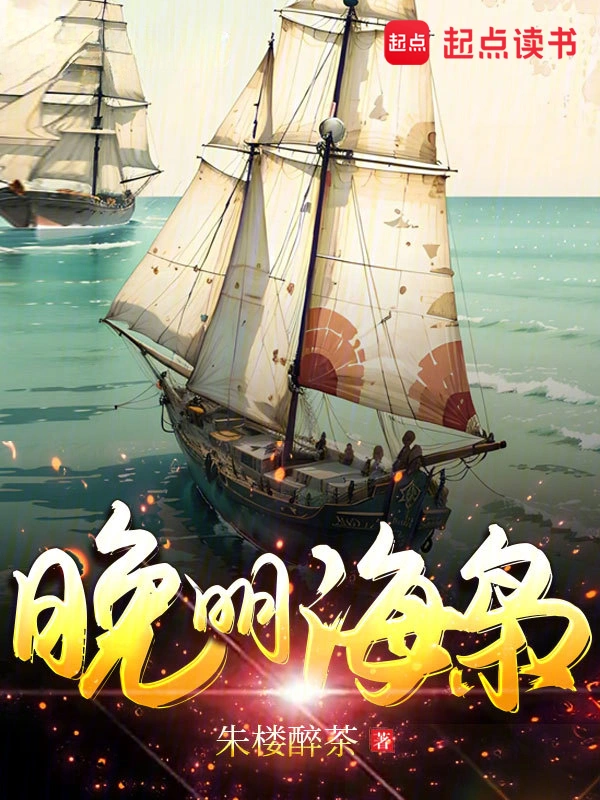
Late Ming Sea Owl
晚明海枭
- Status
- Ongoing
- Length
- 1.1M Words
- Genre
- Historical
- Audience
- Male
- Subgenre
- Song-Yuan-Ming Dynasties
- Updated
- 1y ago
- Source
- Qidian
Stats
Tags
Synopsis
Reader comments
In booklists 4



Male Channel*shuangwen*entertainment*naruto
Ratings and reviews of books are relatively subjective and are for reference only. There is no classification in the book list. Personal preference, most of them are cool articles that are not too trivial. If you like it, add it to your favorites🥺 *Recommended content and ratings or removal of books being updated will be modified based on subsequent performance
Take Good Care of Seedlings, Like Grass Jelly, and Stay Away from Poisons
As a bookworm for ten years, I only read high-quality products, of course, high-quality products that have the same taste as me.
A Collection of Late Ming Dynasty + Good Books That I Have to Share
1. In the late Ming Dynasty, there were single wear, group wear, soul wear, and wearing. There are people who started their business in Hainan, Taiwan, Northeast China, Shandong, Shanxi and even Southeast Asia, Australia and the Americas. If anyone has any books on group wear, can I recommend them? 2. The book I'm following

History Department Book List
I recommend those that I am currently reading or have already read, those that are serialized or completed, and those that are good to memorize.
Readers also read
 After Lying in Bed for Three Years, He Was Forced to Help the Han Dynasty
 Red Mansion: Start Escaping and Farming from the Equipment Bar
 Fu Ming 1627
 Northern Qi, Sage Khan
 Siheyuan: Start by Picking up Attributes
 The Wind Rises in North America 1625
 1848 Qing Dynasty Charcoal Burner
 Beastmaster: I Can See the Evolutionary Path
 Immortal Who Seizes the Body
 Ming Dynasty Heroes
 1853: Mein Kampf
 I Am a Great Power
After chasing it, there are no major poisonous points, but there are some bugs, but I can tolerate it without thinking about it in detail. Overall, the writing is not bad, and it is one of the standout novels I have read recently.
This book describes navigation and trade in great detail. Just because of this, I want to follow this book to the end! Why? Because sea trade is so important! Many novels in the late Ming Dynasty do not pay attention to sea trade. Many of them are about equalizing land, farming, and military feudalism (equalizing land serves the army, and political power also serves the army) and then fight for the world. Those who write about sea trade only use it as an auxiliary. But have you ever thought about it, if the military feudal system can really succeed by relying on land equalization, then in the troubled times of the late Ming Dynasty, there might be a situation where a certain warlord implemented military feudalism and then overthrew the Ming Dynasty, wiped out Jianzhou and established a new dynasty. Does this mean that in the cold environment of Xiaoglacier, the harvest achieved by relying on equalization of farmland in the interior may be very limited, and I am afraid that it cannot support a system to compete for the world? Manchuria did not even have enough basic food rations to farm outside the customs, so they could only rely on plundering the Ming Dynasty to survive. It seems that Li Zicheng, a wandering bandit, did not cultivate fields. At the same time, how did Europe survive the cold and withstand the attacks of the Tatars in the north and the Ottomans in the south, and finally succeeded in counterattacking and rising to control the world? The answer is to conduct overseas trade! Sea trade not only allowed Europe to obtain a large amount of survival materials to survive the cold winter, but overseas colonial activities also promoted the advancement of weapons. Frequent commercial activities changed people's ideas. It made the commercial system more mature, gave merchants more power, and eventually entered the stage of history with the new aristocracy, accelerating the birth of capitalist society. After that, China was ruled by the land dynasty sui and never had the opportunity to embrace the ocean. Only now has it been clearly stated: We want to go to the ocean! But hundreds of years
I just finished reading the book "Late Ming Dynasty". No wonder the author also engaged in sea trade first like him. To be honest, the late Ming Dynasty is indeed a masterpiece in the history books I have read, but again, nothing is perfect in the world, and the late Ming Dynasty also has some shortcomings that I am not satisfied with. I hope this book, the author, can make up for it First, there is almost no mention of the technological development of the late Ming Dynasty, such as steel and shipbuilding. The shipbuilding industry in the Ming Dynasty was extremely developed. I am attaching a picture of the dock workshop of the Ming Dynasty It can be seen from the picture that the shipbuilding industry in the Ming Dynasty was very large. There is also steelmaking. The development of krypton gold in ancient times is inseparable from steelmaking. Similarly, as a leading technological power in the world, steelmaking in the Ming Dynasty also crushed Europe. Five-level iron, nine-level iron, high carbon steel, low carbon steel, and high-grade steel with uniform carbon content by the dripping wax method. These are all advanced technologies that have been available in the Ming Dynasty The second point is about siege. I have read more than eight history books and am a 15-year-old bookworm. However, I don't know where this trend started. Over the years, there is only one book that seriously considers the methods of siege. The others either use alienation tactics or internal response, or use cannons to directly bombard the city wall. Neither alienation strategy nor internal response. What's the problem, but I really can't figure out how to use big cannons to blast city walls. Most of the city walls in China are trapezoidal, that is, gravity dams that are wider at the bottom and narrower at the top. They have cut bricks on the outside and rammed earth on the inside. Generally, they are about six meters wide at the bottom, and less than three meters at the top. Most of them are like the Beijing city wall, which is more than ten meters wide at the top and more than 15 meters at the bottom. This type of gravity dam city wall is taken as an example of the Nanjing city wall. The Japanese had a headache even with the artillery of World War II, so don't think about using solid bullets to attack the Chinese city wall. It's not that it can't be defeated, but it is really time-consuming and laborious, and even if it is defeated, it will still be a pile of earth and masonry several meters high. It is really difficult to think about it Let me give you a few methods of siege that can be used First, the bouncing attack method. Look at the picture Most of the Chinese city walls are square with a few curves (although it is not bad for this attack method whether they are square or not). So to attack this kind of city wall, you only need to build a platform higher than the city wall at the corner of the city wall, such as a mound of earth or a Lu Song chariot. Then you can directly attack the city wall corridor in a straight line. The cannonballs will bounce in the wall stacks on both sides of the city wall. At this time, all the soldiers standing on the wall will die. This attack method can also directly attack the stairs going up the wall inside the city wall, forcing the defenders inside the wall to be unable to go up the wall Second, Z-shaped digging of trenches to advance, see the picture This way of digging trenches can almost ignore the fire attack of the defender. With the artillery hit rate at that time, it was almost impossible to hit because it was moving under the ground. Unless the artillery shell hit the point being dug, it would be meaningless to hit anywhere Even if you get close and the opponent's muskets, bows and arrows, and even artillery shells hit that spot like God's blessing, you only need to have a few engineers above your head, holding an iron shield of several hundred kilograms. The iron shield is wider than both sides of the trench, so that the iron shield can be placed directly on the top of the trench. Not to mention hundreds of kilograms, you can put on a shield of more than one ton. It is just a few more engineers to resist a few steps when moving. When the trenches are dug to a close distance, you can imitate Huang Taiji in the late Ming Dynasty book about the Battle of Lushun, and pile up earth walls under the eyes of the defenders, build fortifications and then prevent them from attacking. The mounds of earth can be higher than the opponent's city wall, so that you can use the first siege method to crush the defenders Third, the concave cannon, there is no mother-in-law cannon, just flatten the opponent with heavy firepower, see the picture , it comes with a concave cannon butt , Hongwu's thing, the rock cannon, you can make a concave cannon by modifying it, and then fire the explosive package. Maybe many people have no idea about the power of the explosive package. You can look at the explosive package in the anti-Japanese drama But there is one data that you need to know before looking at this kind of explosive package, and that is the burning speed. Countries have strict restrictions on folk gunpowder. This limit is the burning speed. For example, the burning speed of firecracker gunpowder does not exceed the speed of sound, while the burning speed of real black powder exceeds the speed of sound, let alone stronger granular black powder. To put it simply, this thing can hit about two hundred meters with one shot, and one shot can create a small mushroom cloud. If the quality control is strict, the regulation is strict, and the testing is careful, it can even control the air explosion, and then fill the explosive bag with fragments such as iron flakes, porcelain flakes, and steel balls I personally believe that with such weapons, the various armies and bureaucrats in the late Ming Dynasty, including but not limited to the Ming Dynasty, Hou Jin Dynasty, Korea, Japan, etc., Could not withstand ten rounds. In order to take care of readers who don't like to read goldfinger and crushing articles, I do not recommend the use of this weapon. Of course, it won't matter when the forces in the later period rise
The development idea is very good. Recruit more apprentices to establish a backbone, have a little loyalty, overdo it in the early stage, and develop your own people based on points. Just like Zhu Yuanzhang in the early stage of accepting adopted sons, the uncle's people still listen to the uncle. Now it is a cooperative relationship, and power cannot be given away at will. There is a certain basis for cooperation now that there are relatives. The biggest fear is that the protagonist will be swallowed up by the uncle. Now the protagonist has no useful and loyal people, so he can only move Li Yiguan out to act as a facade.
I love this book so much. My pitfall for historical time travel novels is "Late Ming". This book is not only good to read, but also satisfies my regret for the great voyage plot line that was cut off in the late Ming Dynasty.
The writing is actually good, and it is a slow-burning type. In addition, it starts with a voyage, and the audience will be affected a lot. Two suggestions: change the name, don't mention sailing, first trick the readers into it and then kill them. Second, speed up the update. With your volume, it is difficult for the operation to recommend it to you, 2 million words. In the past, it was no longer recommended by editors. The fewer updates and low subscriptions, the less recommended. Operations only look at data. Normally, one recommendation per month. If you don't write this down, there should be a chance to reach a peak around one million. It depends on whether you can get a best-selling mobile phone from the operation.
Hello author, I copied your book on another platform. The feedback from readers has been very good, the popularity is also good, and there are many rewards. I plan to pick up a car at the end of the year. Author, please work hard and update a few more pictures. Don't make my readers wait too anxiously.
Brothers, let me ask for a follow-up reading. Today, I asked about the status of the test push. The bad news is that the promotion failed, but the good news is that there are 87 candidates in the pursuit, which should not be too bad and can be saved. This book has a lot of recommendation votes and rewards among other books of the same period, and its collection is quite good, which proves that some people still like it very much. However, I just barely managed to read it. Maybe it's because the unsystematic and brainless farming novels are not exciting enough in the early stage. Many friends who like to read this kind of books like to fatten up and then kill. But newcomers and new books really need everyone's help in reading in the early stage, because now the recommendations are all based on the reading data every Tuesday. Without recommendations, it is a dead end. So if you think this book is acceptable, please give Zhulou Zuicha a helping hand. Thank you all!
Your book does have problems, and there are many. First of all, the core is unclear. You said it is not just about navigation. There is a problem here. It is not that online articles cannot have multiple cores, but successful ones are so rare that they are almost unheard of. Different cores require different writing methods, which will cause conflicts. For example, if farming is the core, then it must be written around the territory and the increase in population. , Write about the rise of science and technology, and about the increase in agricultural production. If it is the core of navigation, it should focus on shipbuilding, maritime trade, piracy, naval battles, and mainly write about officialdom. That is another way of writing. The further back you go, the less clear the core is. This is the root of all problems. Your book is called Hai Xiao. Look, how long has it been since it has anything to do with Hai Xiao...
It would be irresponsible to say that the Hualou Machine was the most high-tech gadget in the Ming Dynasty. It only required four steps to complete various textile tasks and could encode fine patterns. The existence of this thing is not just a major breakthrough in the textile industry, but the design concept has completely advanced the times. If you catch the craftsmen who made this thing, you can even make a telegraph, because the design ideas of this thing can be directly used in the electrical age. Of course, this kind of craftsman is not so easy to snatch from the hands of the imperial court, but this machine alone can already expand the textile light industry uncontrollably. Four people can beat weavers who have been working for many years with simple training. I believe no one can understand the difference between them
The author is a bit high-spirited and the scene is too big. In the early stage, at least before it is put on the shelves, it is best to focus on the protagonist, the protagonist's territory and power development, such as status advancement, asset growth, various talent team training, etc. Highlight a tight rhythm and get to the point. With the foundation in place, the middle period of the novel is where the author can show off his talents, and the upper limit of the performance of historical novels depends on the middle period. But the lower limit depends on the early stage.
This book is fine, but the setting of the agents is not pleasing to the eye. What age is it? It's not a good word to call yourself an agent. You have a career in this field, but you would never call yourself an agent. Normally, people would just talk about what department they belong to and what kind of job they are responsible for. There is no such thing as an agent talking openly and silently.
The pace is tight and the writing is good. Is the protagonist a little older? The protagonist should be in his thirties by the time he fights for the world, and he will be in his forties by the time the country is founded and proclaimed emperor. It's a bit too fast, just like "Late Ming". Slow it down a little. You have to write at least 3.5 Million words anyway. I feel that according to the way the author wrote it, it was completed in less than two million.
When fighting Zheng Zhilong, he also introduced Eastern and Western artillery, tactics, and ships. It is understandable that the first time he was not strong enough, but the second time he deliberately let Zheng go to seek development. After destroying Zheng, it will end with 500 chapters, right? Naval battles are indeed a rare subject, but what I want to see is the colonization of the Pacific and the game between countries. Hurry up and draw Zheng to death and get into the theme, otherwise the more you write, the smaller the pattern will be and the less enjoyable it will be. Learn from the mythology of Chen Xi. The fight depends on the younger brother, and the general direction depends on the protagonist. Since the protagonist established the habit of discussing tactics before the war when he defeated Zheng for the second time, problems will not be too big later. Divide that Wu Guoyi and that one, the radicals and the conservatives, into two battlefields, and unexpectedly gain a commander-level general who is unprecedented in history to coordinate the battlefield (you can have a blank slate with no experience, but if you have talent, just throw out why he did not appear in history as bad luck or something), and then the protagonist will grasp the general direction. To be honest, destroying Zheng now feels like destroying the Yellow Turbans in the mythical Three Kingdoms. Hurry up and write it to death. Hurry up and become famous. Hurry up and vote from all directions. Hurry up the timeline. Now the layout is almost complete. You really need a cool point to retain readers.
The author can disparage the Eunuch Party, which is fine, but it is disgusting to promote the Donglin Party. It is all about party fighting, and there are no good people. After Chongzhen, the Ming Dynasty became more prosperous, and most important positions were controlled by the Donglin Party. The Ming Dynasty declined rapidly. Don't tell me that this is the responsibility of the Eunuch Party. At this time, apart from the Donglin Party, there were only a few neutral factions left in the Manchu Dynasty. It was not until the later period of Chongzhen that Chongzhen saw the face of the Donglin Party clearly and killed a large number of Donglin Party and people who were attached to the Donglin Party. At this time, the Donglin Party saw that they were not trusted and realized that the dynasty was at the end of the day. Then they went out in large numbers and laughed to death. Can the Donglin Party be cleansed?
I have a question, you can buy artillery whenever you want, and you can have it whenever you want? Aren't they all small French cannons, and cannons of more than ten pounds can be bought at will? Don't tell me that there is an artillery factory in Macau. It's not something you, a little person with no identity, can have access to.
I read a few chapters and found that the biggest shortcoming of this article is the dialects. Only people from a few southern provinces can understand it. It is very difficult for people from other provinces to understand. Many dialects can only be understood by reading comments, and the article is not fluent at all. And the author, don't you understand? This is a novel that everyone is reading just for fun. Who has the time to look up what your dialect means? I couldn't read the article clearly. I couldn't read a chapter. I read the comments more than a dozen times before I knew what those dialects meant. You're kidding me 😅 I don't know what's going on in the south. Anyway, except for a few local dialect words (which can basically be understood by outsiders), some of our young people can speak dialects, and not all of them speak Mandarin 😥 It's like when you sell goods on a live broadcast, you use your own local dialect to let outsiders listen and let outsiders buy. You can only understand if you save by yourself. It turns out that you still have the goods after saving by yourself. Who will buy the goods you bring during your live broadcast?
The writing is okay, the writing is logical and smooth, and it is at least in the top 200. It depends on the author's diligence in updating.
Is this author a eunuch? Three of the three books I have been following recently are all about eunuchs. I feel that they are all very well written. They are better than those with hundreds of thousands of fans. I can't figure it out.
Well-documented, well-written, and platinum-like
To be honest, I still can't understand the purpose of establishing this company. You can obviously rely on your strength to gradually establish a superior-subordinate relationship, but instead turn everyone into a colleague relationship, and then worry every day that you will not be able to control it in the future. It's really baffling. If it is to make money, then just make money, whether it is to separate the army or not to lose the big tail in the future, it is your own business to train the army how you want to train the army after the company earns dividends and puts it into your own pocket. Otherwise, if you want to change the direction of development, you will have to vote every day. Is it possible that you will have to vote when you become emperor in the future?
Well, I finally found a book I can read.
Come on bro, the writing, plot, and character of the protagonist are all great. It doesn't look like it was written by a new author.
Detailed research and worthy of careful consideration
About artillery materials and manufacturing technology
I think the author cannot be overly superstitious about the artillery technology in "Zhu Rong Zuoli". Although the wrought iron cannon is better than the cast iron cannon at the same weight level, it is still forged and assembled by hand, and there is still a big gap between the later solid steel forged cannons. Its heat storage redundancy is too low and it is very easy to overheat. A simple example is that warship artillery is much heavier (and has a longer diameter) than field artillery of the same caliber (even if the barrel length and multiple diameters are the same). In addition to having a high muzzle velocity to break armor, naval battles are more intense and the advantage of the rate of fire is maximized within the window period. This requires the artillery to be able to shoot continuously for a long time and have a high degree of thermal redundancy. Therefore, naval guns are all heavy cast iron guns. Generally, 12-pound guns are about one ton in size, 18-pound guns are directly over 2 tons, and 32-pound guns are all about 2 tons in size. How much is the field gun? The 12-pounder is only a few hundred kilograms (the Gribeauval system is only 880, and the bronze gun is only 550). About manufacturing technology. The forged gun is also suitable for field guns, it is light and flexible. Naval guns and fortress guns are still big things. In an era without powerful forging machinery, if you want to manufacture high-quality large-caliber guns, the casting process is an insurmountable hurdle. 1. The traditional solid iron pillars are cast in sand molds and then machined. This process actually mainly tests the machining ability, but it can be used until death because machining is necessary. In addition, raising the furnace temperature and smelting temperature is beneficial to the fluidity of molten iron. Remelting pig iron in a reverberatory furnace is beneficial to purifying the iron. In the late 18th century, the British used this technology with machined cast iron to meet the needs of tens of thousands of heavy guns for naval combat ships. 2. Composite barrel gun with inner steel and outer iron. This is a technology that existed in the Ming Dynasty. It cannot be said to be bad, but it cannot be said to be very good. It is true that it is complicated, but large-caliber guns still have the disadvantage of casting defects in the outer cast iron layer. 3. The best thing is the inner film water-cooling casting process. I think this can be studied as a long-term topic. As a time traveler, I know that the research direction is definitely correct. The rest is nothing more than spending resources and time, constantly trial and error, and accumulating experience. It is much more targeted than Rodman's fumbling and experimenting. Here we need to establish a measurement system, the determination of the specific heat capacity of water and steel, the relationship between water flow and heat, etc. If this technology is successful, it means that the success rate of manufacturing heavy artillery has skyrocketed. Not to mention the abnormality of 508 mm, at least heavy artillery with a caliber of less than 300 mm is no longer a dream. Cannons of this caliber were only available in bronze casting in the past, and cast iron cannons were difficult to obtain. 4. The inner film water-cooling casting process is combined with the Ming Dynasty's existing inner steel and outer iron composite barrel technology. The quality is even better than the Rodman gun. At least the lifespan of the 18-pound gun can be increased to several thousand. 5. Looking forward, after the machining technology becomes better, if iron hoops can be forged or wrought iron pipes can be machined, then the cast iron gun body of the Rodman casting process will be additionally reinforced with a thermowell process (similar to the Parrot gun casing or the Krupp gun ferrule), and combined with the lined steel tube composite body tube, this will be the ultimate front-loading smoothbore gun. Don't give up!
Let's talk about the power of artillery in the era of sailing battleships
Let's first roughly count the armor-piercing capabilities of the 18-pound naval gun: An 18-pounder gun of about 2 tons, with a maximum charge of about 1,200 yards, can penetrate a 21-23-inch white oak hull. If it is a 32-pound gun, the power will only be higher, because under the same bullet type coefficient, the heavier the bullet, the better the long-distance speed storage, and the greater the terminal energy storage! In addition, in the era of sailing battleships, the armor-piercing capability of naval artillery has always been excessive. Wooden battleships have almost no resistance to cast iron cannonballs flying hundreds of meters per second. The early pursuit of high muzzle velocity by naval artillery was mainly to facilitate aiming (because the ballistic trajectory is flatter), and in terms of subsequent lethality, the 18-pounder gun was obviously not as large as the 32-pounder gun. Therefore, after the 19th century, almost all the large British battleships had 32-pound guns of the same caliber and different calibers (of course, different muzzle velocities and different ballistics), and even some 68-pound guns. However, with the same number of guns, the projection volume is more than 50% higher than that of previous class battleships. Because within the combat range, a larger caliber gun will cause greater damage.
Are you already a complete eunuch?😰
The author's writing is very good and very immersive. It is very similar to the early late Ming Dynasty, but it highlights the war scenes. Come on!
Is this taking up the ecological niche of the Zheng family?
Overall a very good novel, I don't know why it was discontinued.