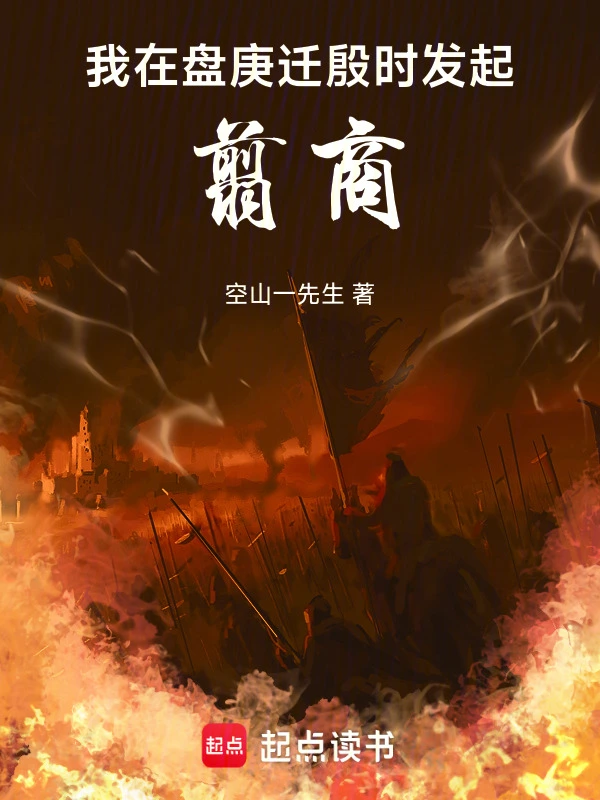
When Pan Geng Moved to Yin, I Initiated Jian Shang
我在盘庚迁殷时发起翦商
- Status
- Completed
- Length
- 2.1M Words
- Genre
- Historical
- Audience
- Male
- Subgenre
- Pre-Qin Antiquity
- Updated
- 8mo ago
- Source
- Qidian
Stats
Tags
Synopsis
Reader comments
In booklists 3
Small Excerpts from Online Articles, Non-Novice, Non-Mainstream List Works
Not a novice, personal, purely subjective. The works will be scored based on personal preference on a 10-point scale. The articles on the list are quite good, but they are basically business-oriented, just like Nipple Fun. It was very enjoyable the first time I read it, but it was too boring after reading too much, and it had no meaning. It was just a way to kill time. Nowadays, single owners basically just do random overseas shopping, and it's not that big. It's a leisurely place, so it's quite
Traveling Through History, Exquisite Products Dominate China and Foreign Countries
Travel to ancient times and achieve hegemony
Unsystematic, Not Popular, Tasteful
There are so many popular novels, but you always feel that they are not to your liking. It's because your mood has improved, or you're missing a certain flavor. Then come in and take a look! Most of the works selected here are not popular! But it's definitely a work worth savoring!
Readers also read
 In the Red Mansion: Escort Daiyu to Beijing at the Beginning
 Please Call Me Your Majesty the Tsar
 Talker in the Song Dynasty
 1914 Begins with the Rejection of the Schlieffen Plan
 Never Walk Alone!
 Gou Qin
 War Palace and Knee Pillow, Austria's Destiny
 Daming: Have I Become Wanli's Portable Grandfather?
 I Am Drawing a Hot-Blooded Episode in the Zhiyu Episode!
 African Entrepreneurship Record
 Taichang Daming
 Northern Qi: My Father, Emperor Wenxuan
 Douluo: I Also Have a Long-Term Plan
 I Became an Emperor from a Substitute
 Pokémon: at the Beginning, the Alpaca Punished Guangli
[Trial Reading] "I initiated Jian Shang when Pan Geng moved to Yin"
General comment: It is a time-travel historical novel, but it is not a popular one like the Han, Tang, and Ming dynasties. Instead, it travels back to the Xia, Shang, and Zhou dynasties. A primitive society is portrayed through a large number of environmental descriptions and detailed descriptions. The overall performance of the work is not boring, but I personally think it has unlimited potential. Tags: time travel, Shang and Zhou Dynasties, struggle for hegemony Plot: The story tells the story of the male protagonist who traveled to the Xia and Shang Dynasties, faced with the oppressed tribesmen, and faced with the position of the patriarch who was in danger. The male protagonist realizes that if he wants to survive, he must break the existing class, so he embarks on the path of rebellion to accumulate food and become king. After reading the overall plot, the story is quite interesting. It has always followed history and has not opened any weird technology trees. I hope this will continue. But it may be that it is too consistent with the historical trend, which makes me feel that I have lost some interest when reading. I often don't want to read anymore after reading. But this is not important. What is important is that some of the male protagonist's behaviors can easily arouse doubts, and the ancients were not stupid, so I hope the author will continue to study it carefully and eliminate some too advanced ideas and practices. Maybe it will be better. Characters: As for the characters, in my opinion, the author's character creation is very good. There are not too many characters at the beginning, and all the characters related to the plot are introduced one after another, and every aspect of the characters is described and portrayed through the advancement of the plot. Even in the novel, I saw the author effectively divide the forces through the way the characters do things. It does not introduce the relationship between characters, but uses their words and actions to effectively divide the characters' power and hierarchy. This is very worthy of recommendation. Brief review: This is an ancient historical text that is almost based on history. Compared with the past when choosing this period of history to write about fairy tales or fantasy, the author chose history, or history without a lot of magical changes. For this courage, it is worth recommending it so that more people can see it. Although such a book lacks something interesting. However, for the ancient pre-Qin period, which is currently relatively unpopular, the emergence of this kind of book proves that historical literature is broadening its boundaries and is worthy of encouragement. So when I saw this book, I personally recommended it after reading it, and I hope more people can read this book. But I still hope that the author can change the title of the book. This title is too convoluted and is not conducive to promotion. {"TopicId":"847235287436099584","TopicName":"New book trial"}
I have a new understanding of King Zhou of the Shang Dynasty. At the end of the Shang Dynasty, King Zhou reused slaves, listened to the opinions of women, opposed the use of human beings as sacrifices, disrespected the gods, and seriously damaged the interests of theocracy and the nobility. These became the reasons for attacking him. Moreover, the nobles and wizards had too much power, which negated the royal power. King Zhou had very strong military capabilities and was able to expand the territory in the late period, nearly doubling his territory. However, the prisoners were not handled well, which led to the holding back of the army. The royal family was also all spies. As a royal family, they did not support their own king and worked as spies for Zhou. But Zhou was really aggrieved. After winning the battle, his strength was too great, and his territory had to be divided. Most of the wealthy places were given to the major princes. Military power was dispersed. Each princely state had its own independent military power. As the emperor, Zhou's political power and legislation were broken down and left to his own hands. His younger brother mastered "rituals", the basis of politics and legislation, and he only lost the title of emperor. There was also Qi State. Jiang Ziya, the sixth, gave himself the richest and largest place, and stayed away from Zhou to avoid being restricted in his development. He also took over the marriage of the emperor. , The emperor had to get married, but later he was gradually ignored, and a lot of chaos happened. After that, human sacrifice was redeveloped, slaves were oppressed, and women were suppressed. Later, Ji Dan used the weapon of "ritual" to quietly re-complete the unfinished changes of King Zhou. He used the method of respecting the king to repel the barbarians, completed part of the centralization of military power, used "ritual" to regulate the behavior of the nobles, took back some legislative power, attacked the divine power, and human sacrifice and other barbaric and harmful behaviors to productivity. Combining the above, he truly established his political status as emperor.
The scissors are not history books, but they are just imaginative articles based on some archaeological discoveries. It is good to use them as reference for writing novels, but there is no difference between taking this as historical fact and bragging about Emperor Xin.
It depends on which class overthrows the previous dynasty!
Those who say that Emperor Xin was a tyrant will be discredited in history books. You must remember: 1. Those who rebelled and overthrew him were nobles with feudal states! Since the beneficiary is the aristocracy, it must be that Emperor Xin's policies at that time harmed the interests of the aristocracy! As for the history books compiled by the Zhou Dynasty? If you don't discredit Di Xin, how can you stand up legally? He is said to be promiscuous. How many wives does he have? The one hundred wives of the Zhou Dynasty are recorded in history books, right? Those who say he is cruel are not based on "The Romance of the Gods", right? As for human sacrifice? He wanted to change it, but would the other nobles agree? Human sacrifice really began to change when Qin Shihuang did a better job and chose to make pottery figurines. If the force that overthrew a dynasty was dominated by the peasant class, then I would think that the previous dynasty must have been too cruel and excessive in taxes and miscellaneous taxes, and it deserved to destroy the country. However, apart from Zhu Yuanzhang, who in history had a real grassroots background as a farmer?
I remember obeying the system internally and externally, respecting heaven and protecting the people, and moving the capital many times.
It's rare. No novel about traveling through the Yin and Shang Dynasties has been published for hundreds of years. Come on, the author, write well.
It's not easy. Finally, there is an author who writes about the Yin Shang Dynasty and no longer writes about the gods. In the past, when I read novels written by the Yin and Shang Dynasties, almost all of them were fantasy novels based on the list of gods, and few wrote about history.
After the world was unified, the leader of the Xin clan proclaimed himself emperor and was called Emperor Xin.
It takes several generations to cut a business. Business is too powerful at this time.
I particularly admire the enfeoffment system of the Emperor of Zhou. It was originally a desolate and remote place with such a large population. It was enfeoffed and allowed them to occupy, develop and expand the place. Let alone the attempt to unify the Zhou Dynasty, it was meaningless. According to the saying, some people use the modern yield per mu to represent ancient times. In the late Eastern Han Dynasty, the yield per mu was 120 kilograms. Only by first understanding what common people are, you will know what common people are. If you can ask a nobleman to rent a house for you and give you 40%, he is a great benefactor. He will give you 20% cruelly.
Personally, I feel that the author has been a little too hasty and wants to squeeze everything into a short period of one or two years. As a result, the protagonist is now too open-minded and has no sense of immersion. He is omnipotent in winemaking, weaving, finance, military diplomacy, etc. He is no longer like a human being, but like a machine.
The sphere of influence of the Shang Kingdom during the Nangeng Dynasty set in the book (approximately)
The author can practice democracy and elections in primitive society. Just elect a president or separate the three powers, instead of going to the trouble of a little centralization here and a little democracy there, it feels like you are suffering from schizophrenia. What is written is like a hodgepodge?
Living in a slave society, in charge of a tribe that is not a country, it is Lao Zhu's heart. The author even regarded it as a treasure for Lao Zhu's direct control of the six ministries to reverse the trend. Now there are no serious nobles, so they have started taking exams. Do you really think that the imperial examination is for selecting talents?
I accidentally saw a picture of the Spring and Autumn Period, and glanced at the map. Wow, it seems that if there were no pig's feet to interfere with the Guzhu clan and He Wujing, they would have always existed in the northeast corner, from Pan Geng of the future Shang Dynasty to the establishment of the Shang Dynasty and the Zhou Dynasty
The comments are different after reading a few marketing accounts before talking nonsense. At least take a look at the historical monographs and the excavation reports of the Neolithic Age. If not, look at popular biographies like Jian Shang. The history of the Neolithic Age relies heavily on archaeological excavations, which is very serious. At the same time, because it is the end of the Neolithic Age and the beginning of the Bronze Age, many customs from the tribal era are still there. Don't take the Western Zhou Dynasty. Evaluate the Yin and Shang dynasties based on the etiquette culture, and do not judge critically by the subsequent family and state culture. The Shang dynasty was a slave-owning society in the true sense of Chinese history. At the same time, because Zhou Gong excavated the tombs of the Yin and Shang dynasties on a large scale, we now have very few historical materials. Moreover, our excavations have found that many historical records are different from the excavation results. It can now be basically considered that the history of the Shang Dynasty has also undergone large-scale revisions.
I have just read two-fifths of the book "Jian Shang". . . Are there any time travel novels? Does anyone really want to travel through this "primitive tribe"? Food, clothing, housing and transportation... And writing had just been invented. . . There is nothing to communicate about
I feel like the comment section is better than the novel.
The comment section is indeed a major feature of historical novels🙂
Is there a Shennong? How did the author cheat? Given the productivity at that time, even advanced technology would be difficult to spread, and if it spread, it might cause disaster. Whether it is excellent seeds or labor-intensive planting technology, it is very difficult to promote it. When it comes to metal smelting, it is difficult to distinguish the original ore, and most of the craftsmen hide it. Religion itself is a form of power. It is also difficult to unify religions. Then the political system and bureaucrats are basically unable to do anything. First, there is not enough wealth to cultivate, and second, blood is more important than talent in this era. I heard that it has reached the level of the Ming Dynasty. Is the author doing it systematically? At that time, it was difficult for the central dynasty to count local dynasties as its own strength.
It's well written, but it's a pity that the updates are unstable.
Is there any more? Isn't it updated?
Grandpa, grandpa, thirty years have passed, and the novel you are following has been updated again! ! !
Has it been half a year since the last update?
I guess there is no such unpopular subject as piracy.
More than 700 chapters and only 200 comments? Criticized?
Okhotsk
So far away
Author
Do all the novels you open have multiple female protagonists?
It's finally over. It's not easy.
The author is too talented in China. He should go to Bangzi to develop in the United States. Various cults there need you to cut down mountains and destroy temples.
What novel does the author plan to write next?
Does the reproduction of civilization make sense?
We should still follow the old path. There will still be Manchu and Qing Dynasties in the future. It makes no sense anymore.