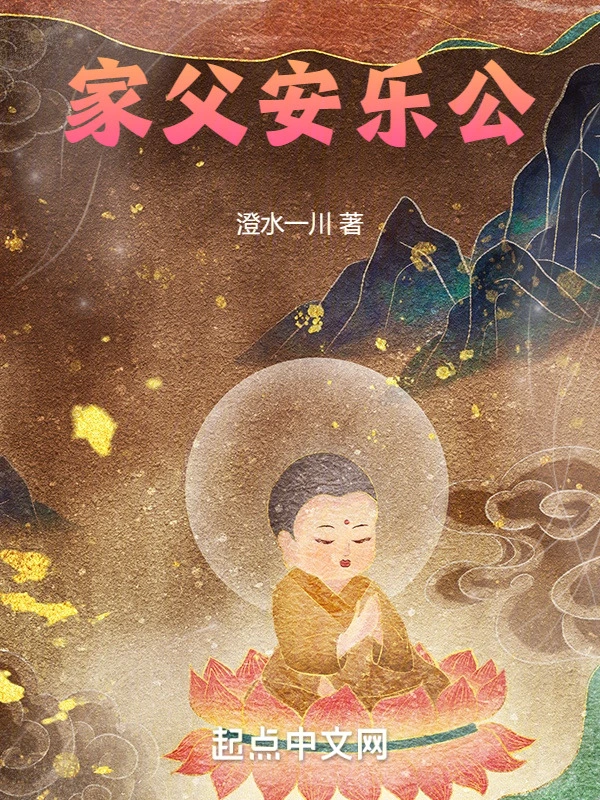
Father an Le Gong
家父安乐公
- Status
- Ongoing
- Length
- 157k Words
- Genre
- Historical
- Audience
- Male
- Subgenre
- Qin-Han & Three Kingdoms
- Updated
- 3y ago
- Source
- Qidian
Stats
0Monthly votes
2.1kRecommends
46Fans
60Chapters
Tags
Synopsis
Reader comments
In booklists 1
Readers also read
 Red Mansion: Start Escaping and Farming from the Equipment Bar
 Northern Qi, Sage Khan
 Fu Ming 1627
 After Lying in Bed for Three Years, He Was Forced to Help the Han Dynasty
 Siheyuan: Start by Picking up Attributes
 Ten Kingdoms Week
 Northern Qi: My Father, Emperor Wenxuan
 Beastmaster: I Can See the Evolutionary Path
 Immortal Who Seizes the Body
 Late Tang Dynasty: Last Descendant of the Clan
 Jinting Han People
 Emperor Ning Has the Guts
Although the protagonist starts off relatively weak, he is a descendant of the royal family of the Shu Han Dynasty, and he is born to occupy the people and people in Shu. The land of Yizhou is known as the land of abundance. It is easy to defend but difficult to attack, and it has geographical advantages. The starting time is 347. In 349, Shi Hu died and the Northland was in chaos. This was the right time. Therefore, it is best to completely capture the entire Yizhou, including Hanzhong, before Shi Hu dies. When Shi Hu dies, he can lead his army north and regain the Guanzhong area in one fell swoop. At this time, the timeline has reached about 350 years. After regaining Guanzhong, you can send envoys north to establish an offensive and defensive alliance with Ran Min. It is agreed that Ran Min will deal with Qian Yan and you will deal with Later Zhao. Hou Zhao is a soft persimmon. You can defeat Hou Zhao and then occupy Bingzhou, Taiyuan, and Hedong, which have the advantage of salt and iron. Merger State is a beautiful place. Overlooking the Central Plains of Hebei, you can sit and watch the success or failure between Ran Min and Murong Tiantuan. And the most important thing is that Ran Min did not have the historical defeat of Xiangcheng. He and the Murong family will definitely be fighting against each other. No matter who wins by then, it will be a miserable victory. The protagonist will march eastward and can take over Hebei and Youzhou. At this time, the timeline should be around 353. The protagonist occupies the five continents of Yizhou, Sili, Bingzhou, Jizhou, and Youzhou. Yanzhou and Liangzhou can be decided in one battle. And if I remember correctly, Yuzhou directly voted for the former Qin during this period, so there is a high probability that the protagonist can take Yuzhou without a fight. When the time comes, the protagonist owns the land of 8 states, is a descendant of the Liu Han royal family, and holds the imperial seal in his hand. He can directly proclaim himself emperor in Guanzhong, win over people's hearts, and then just push him over.
In an era of chaos, he traveled south for the first time in his clothes, and wars continued, so he casually became an emperor. Emperor Yuan, Sima Rui - the frustrated emperor. Yiguan's journey to the south was successful, but it was a pity that the "kings and horses share the world" decree did not leave the palace. Emperor Ming, Sima Shao - the best mediator. Balance the contradiction between overseas Chinese and Wu gentry. Emperor Cheng, Sima Yan - a wise and frugal young man. When I was young, I had too many uncles who were not in charge; when I grew up, I was frugal and self-disciplined, and wanted to build a shooting range. Emperor Kang, Sima Yue - a little calligrapher. As short-lived as his brother Emperor Mu, Sima Dan - extremely lucky. After he succeeded to the throne as an infant, the clan kept its duties, relatives did not take exclusive power, and Huan Wen was busy opening up territory. Emperor Ai, Sima Pi - Emperor Keyao. He ate yao instead of grains, and died of poisoning on the 25th. Deposed Emperor, Sima Yi - impeccably cautious. Huan Wen wanted to do away with him and couldn't find any excuse, so he killed his children after defiling them as male favorites. Emperor Jian Wen, Sima Yu - living fossil of the Eastern Jin Dynasty. The youngest son of Emperor Yuan of Jin Dynasty, because he had no power to govern personally, he loved chatting and metaphysics, and was pure and devoid of desires. Emperor Xiaowu, Sima Yao - died in bed. Won the Battle of Feishui, asserted his imperial power, and was suffocated to death for joking with his young wife Emperor An, Sima Dezong - the idiot emperor. It is difficult to live in the common people without changing the cold or heat, and not knowing whether you are hungry or full. . Emperor Gong, Sima Dewen - died in bed again. Liu Yu gave him poisoned wine and refused to drink it, and was later suffocated to death by an assassin Five Barbarians: Xiongnu, Xianbei, Jie, Qiang, and Di. Sixteen Kingdoms: Former Zhao, Later Zhao, Former Yan, Qian Liang, Former Qin, Later Qin, Later Yan, Western Qin, Hou Liang, Southern Liang, Xiliang, Northern Liang, Southern Yan, Northern Yan, Xia, and Cheng Han.
The author's subject matter is too novel. You use the classification of the Three Kingdoms to write a story that travels through the Sixteen Kingdoms of the Eastern Jin Dynasty, but the story that goes through the Eastern Jin Dynasty starts from the Cheng Han Dynasty, and the golden sword of the Jin Dynasty, the descendants of Liu Bei, An Le Gong of the Cheng Han Dynasty, and the beginning of Shu Zhong. This design is really unique in the history genre! If you don't do your homework in the early stage and don't understand the history of the Wei, Jin, Southern and Northern Dynasties, you really can't write like you. What you can write later depends on the author's historical skills. After all, it is a new field. It has not been written since the Chenghan Dynasty. This regime seems to have only historical records in "Huayang Guozhi". Here is a reminder to the author. Since Liu Bei became emperor in Shu and went through the Western Jin, Eastern Jin, Southern and Northern Dynasties, the place in central Shu has almost always been out of control of the central government. After all, the Central Plains are chaotic enough. The Eastern Jin Dynasty was weak and its ministers were strong, and they could not reach the western border. Therefore, as long as the power in Sichuan is strong enough, anyone can be the emperor for a few days. There is definitely a chance, but it is enough for you to be able to sit firmly and not be overthrown by rising forces. The Sixteen Kingdoms of the Eastern Jin Dynasty started in Shuzhong. Should they go north to Hanzhong and Guanzhong to expel the barbarians first, or go down the river to fight with Huan Wen and the Eastern Jin Dynasty in Jingzhou? I want to know what the author thinks? I hope the author will write well. The authors who are willing to write about the Sixteen Kingdoms of the Eastern Jin Dynasty are all warriors. It is not easy to write the most chaotic history in Chinese history well, and it is even harder to write wonderfully!
First of all, I am not the kind of gimmick writer who follows the trend of the studio. I guess no one in the studio will research the history of the Han Dynasty, let alone write about the Sixteen Kingdoms of the Eastern Jin Dynasty...
The picture borrowed from Next Door, although Next Door started with Shi Zhao, the situation in Shu is clearly marked in the picture, you can refer to it. A small goal of the protagonist Liu Yan is to transform the Cheng Han who has captured Chengdu into his own Liu Han, regain Zhaolie's ancestral property, establish a foothold in Shu, and watch the world
Zhou Zuan, an official of Soochow, reached the rank of General Weiyuan Son: Zhou Min Grandson: Zhou Fang Zhou Fang (260-320), courtesy name Shida. His native place is Ancheng County, Runan County (now southeast of Runan County, Henan Province), and later moved to Xunyang County, Lujiang County (now Jiujiang City, Jiangxi Province). A famous general in the Jin Dynasty. Zhou Fang was born in the Han tribe[1]. He was resolute, humble, and had a reputation for giving. He was first appointed as Xunyang Gong Cao, and was later promoted as Xiaolian. After Sima Rui, King of Langya, was promoted to the general of Zhendong, he recruited Zhou Fang as his assistant. Later, he led troops many times to quell the rebellions of Hua Yi, the governor of Jiangzhou, and Du Zeng, the governor of Jingzhou. He also assisted in quelling the rebellion of refugees by Du Tao, making outstanding contributions to the Sima regime's foothold in the south. After being promoted to General Annan and Governor of Liangzhou, he was granted the title of Marquis of Xunyang County. In his later years, he worked as a farmer in Liangzhou and trained troops to fight against the domineering general Wang Dun. In the third year of Taixing (320), Zhou Fang passed away at the age of sixty-one. He was awarded the title of General of the Western Conquest, and his posthumous title was Zhuang. Zhou Fu (? ~365), Named Daohe, was born in Ancheng, Runan (now Runan County, Henan Province). A famous general in the Eastern Jin Dynasty, he was the son of Zhou Fang, the governor of Liangzhou. Strong and resolute, he has a paternal style. He inherited the title of Marquis of Xunyang County, worshiped General Yingyang and the Governor of Wuchang, and participated in Wangdun's rebellion. Wang Dun was defeated, and after being recommended by Wang Dao, he left the town of Xiangyang. After being hit by mistake, Zhao Guojing retreated his troops and was dismissed from office. In the early years of Xianhe, he was appointed by Wang Dao to quell Su Jun's rebellion. The great Sima Huanwen conquered Shu County and was responsible for putting down the rebellion. After guarding Shu County for thirty years, his reputation spread far and wide and his politics were stable. He was promoted to General Zhenxi, Governor of Yizhou, and Jiancheng Gong. When he passed away in the third year of Xingning (365), he was posthumously awarded the title of General Zhengxi, with the posthumous title of Xiang. The Jin Zhou Dynasty visited Du Tao to quell the rebellion; his son Fu served as the prefect of Yizhou for more than thirty years, and pacified the three bandits of Kaiwen, Deng Ding, and Xiao Jingwen; Fuzi Chu served as the prefect of Qianwei. He lived in Liang and Yi, and gained great wealth and quelled the rebellion of Sima Xun. In Taihe, the demon thief Li Hong was given the title of Fenghuang, and Chu sent his son Qiong to pacify him; Qiong Zifei, named Mengwei, was unyielding to Fu Jian. It can be said that he was a famous minister for five generations. Great-grandfather: Zhou Zuan, General Sun Wu Weiyuan. Grandfather: Zhou Min, General Zuo Zhonglang. Father: Zhou visited, was promoted to General Annan, and was granted the title of Marquis of Xunyang County. Brother: Zhou Guang, who was promoted to General Ningyuan and Prefect of Xunyang, and was granted the title of Qujiang Nan. Son: Zhou Chu, official to champion general, attacked feudal city and county princes. Grandson: Zhou Qiong, the son of Zhou Chu, was promoted to the rank of captain of the Eastern Qiang School, and was granted the title of County Duke. Great-grandson: Zhou Hui, the son of Zhou Qiong, served as a lieutenant of Xiyi School and the prefect of Zitong, and was granted the title of County Duke. Great-great-grandson: Zhou Xing, son of Zhou Hui.
There are no cheats in this book, so readers are asked to read on their own. Please note. Regarding the debate about whether there is a golden finger or not, the author believes that there is no conclusion to this dispute. Since it is a historical article, history and times can only give the answer. Personally, I think that historical writing is different from other genres. In historical writing, history itself is the biggest golden finger. Five thousand years of Chinese and foreign wisdom are enough and absolutely inexhaustible. If it is really not enough, then wait another five thousand years... Every reader has his or her own preferences, and the authors have their own strengths. Reading a book is about congeniality, nothing more. Sincerely.
The late emperor's business was half-finished when his middle path collapsed.
It is suggested that the author must accept Wang Meng. The protagonist must be "Liu Bei" and must be assisted by "Zhuge Liang", who often happens to be the Wuhu version of Zhuge Liang.
It should be regarded as a relatively serious historical article, and it is also intended to make up for a historical period that no one has paid attention to. I also hope to be grafted with familiar historical figures. The author does not guarantee writing skills, but will definitely try his best. I sincerely hope that everyone will like this work. The author also hopes to bring some small embellishments outside of life to his readers in his daily coding. In fact, I have always felt that reading historical texts is more immersive and less restrictive than other types. I hope that readers will have the same idea as me. I don't expect to receive any rewards now. I am very satisfied if I can open it and read it for a few minutes every day. After all, if no one reads it, I really have no motivation to write it down. I don't want to talk about the cumbersome promotion rules and duration regulations of the new book period. In fact, reading books is just a matter of chance. Although I need it, I won't force it. The author does not guarantee his writing skills, but he guarantees his efforts, the rationality of history, and the readability of the plot.
The male protagonist Liu Yan
Miss Fan Bi: Lang Jun
I originally wanted to keep it, but it died before it was put on the shelves. What a pity.
Damn it, finally! Finally, someone has written about the Han Dynasty. The Eastern Jin Dynasty is about to be ruined.
It is recommended that the author not use the posthumous names and temple names of the Huns. If you use them, it is equivalent to acknowledging the orthodoxy of these Huns. It is recommended that Liu Bei be called Emperor Zhaolie, the first lord, and Liu Chan be called the later lord.
Great-great-grandson of Emperor Zhaolie, great-grandson of King Ganling Liu Yong, and Duke Anle Liu Xuan
Li Lian
The subject matter is good, but the male protagonist really has no personal charm...