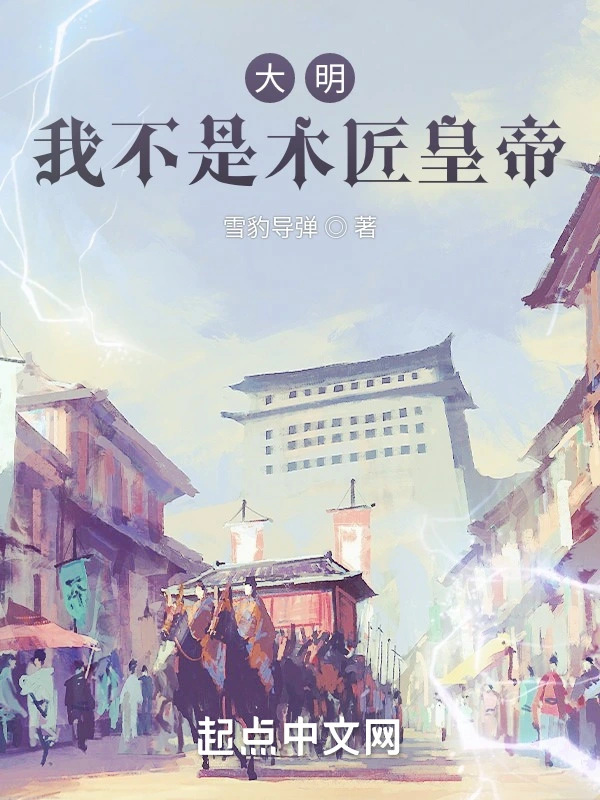
Daming: I Am Not a Carpenter Emperor
大明:我不是木匠皇帝
- Status
- Completed
- Length
- 2.3M Words
- Genre
- Historical
- Audience
- Male
- Subgenre
- Song-Yuan-Ming Dynasties
- Updated
- 6mo ago
- Source
- Qidian
Stats
7Monthly votes
9.7kRecommends
27.4kFans
1.1kChapters
Tags
Synopsis
Reader comments
Readers also read
 Fu Ming 1627
 After Lying in Bed for Three Years, He Was Forced to Help the Han Dynasty
 Red Mansion: Start Escaping and Farming from the Equipment Bar
 Northern Qi, Sage Khan
 Siheyuan: Start by Picking up Attributes
 Daming: Moral Kidnapping? I, Chongzhen, Have No Morals!
 Huang Ming
 Beastmaster: I Can See the Evolutionary Path
 Immortal Who Seizes the Body
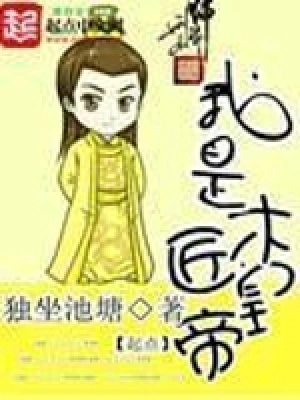 I Am the Carpenter Emperor
 Ni Ming 1644
 Long Wanshengshi
 The Most Poisonous Person in the Three Kingdoms Must Be Rectified by Me.
 Wan Ming: Starting from the Opposition Marquis
 Revitalization of Northern Xinjiang in the Three Kingdoms
I wrote 76 chapters in one month and it's not over yet. I've done a lot of great things. In less than a month, everyone in the Mo family is an elite gunpowder grenade and two kickers. These people still take turns to study and train. Are these people all the bodies of soldiers and the brains of professors? The palace is full of gunpowder, there are so many people doing things, and everyone is not one of us but political opponents. How can we not be discovered? Where did you get so much gunpowder? Who provided it? How to do it without leaving any trace. History books can tell what kind of people those people are, but the prince actually knows who participated, and also knows the details and how they were arranged. These things have never happened in history. The prince is really awesome. I won't go into more details. To sum up, I wrote 76 chapters in one month. There is no golden finger, no politician, and no counselor. He knows everything, including firearms and gunpowder technology.
I like the history of the Ming Dynasty and collect it decisively. I read it every day
Tsk tsk, I thought it was some kind of golden finger, like creating a fantasy version of the Mohist machine, and I have been doing it for a long time to promote Mohism. This is harder than fighting the Donglin Party. The promotion from eliminating the party to the Confucian-Mokist dispute is pure nonsense.
The three pillars of the Ming Dynasty were the clan, the gentry, and the hereditary generals. . . The emperor's rebellion was the first to be destroyed. . . Don't fantasize about reform other than restarting the stove, unless the emperor has a hundred thousand guards under his direct control. . .
Really speechless! I thought it was so awesome, but now someone has led troops to attack the palace. Even the palace transfer case in history can be regarded as the ministerial power overpowering the imperial power. But what you wrote is straight to the point. What do you want other people in the world to think? 😅😅
Does the author know what heresy is? At the beginning of the chapter, you are going to dig up the grave of Confucianism, awesome Klass
It's so funny that the emperor developed the Mohist family. . . .
For thousands of years, you have only respected Confucianism. If you mention Mohism, you are seeking death! Except for Confucianism, it is taboo in other schools to mention whoever mentions it will die! Therefore, you have to train the troops at the beginning, and after the training is completed, the school will be established. The emperor will kill the one who trains the troops. Anyone who has a righteous name and opposes is trying to influence the imperial power. It is no problem to kill him. Then I need to cultivate the talents I need. I have the talents in the army. Once I have a few batches of talents, I can rebel!
The catchphrase is so entertaining😓
Science is science and it must involve Mohism. Scientific thought and Mohist thought are two different paths. You cannot develop science and technology only with Mohism. If you don't use Mohist thought, big problems will occur sooner or later.
In the era of Confucian rule, you have been talking about Mohism. Do you really feel that your position is stable? This is not a battle of interests, but a matter of ideas. Who gave you the courage to dare to fight against the world's enemies? And it was still when you were the weakest. It would be fine if you came secretly or used Mohist ideas occasionally because you were less educated, but you are too blatant.
After reading the previous chapters, I just want to complain. When Wanli died, Zhu Youjian was still an eight or nine-year-old boy, and he began to win over courtiers and fight for power with his brother. This is outrageous.
Nowadays, I am really annoyed by the technology trees that are constantly being used. At that time, people did not support their thinking at all, and there was no soil for technology trees. Just like Qin Shihuang's theory of unification and the system of prefectures and counties. Look at how many years it took for them to be truly implemented. The theory of unification was only accepted by Emperor Wu of the Han Dynasty. It was basically accepted two generations later. The latter system of prefectures and counties was not really implemented until the Tang Dynasty. See for yourself, the feudal dynasty is just tinkering and tinkering. If you really want to reform, it will not work for decades or hundreds of years.
The angle of this book is very strange, but there is a prerequisite. If you start it without controlling the situation, you will die quickly enough. Even if you succeed, you will only be severely damaged. In addition, the previous writing is so boring and the protagonist is so nagging and nagging that it is difficult for people to continue reading.
I clicked in and didn't read a chapter before I remembered why I hadn't read it before. A classic conspiracy theory at the hands of military power and civilian officials. Then he belittled Donglin before the Year of Apocalypse, and he was able to cast a shadow on a virtuous official like Wang An who was famous in history. The elements are really all in place. I don't like virtuous eunuchs who like to advise and are loyal and help you move the palace. You only love the rebellious Wei Zhongxian, right?
After the apocalypse, the carpenter can do it, but engaging in Mozi will only speed up the fall into the water.
It would be much more interesting if we could transform wood-flow horses into large-scale machines for transportation and farming, make machine-like mythical beasts, make ever-moving wooden kites, machine-heavy cavalry, and machine-powered rapid-fire crossbows.
There is nothing wrong with learning from Yue Fei, but learning from Guan Yu? What to learn from him? Others singled him out to shoot secret arrows, right? Who in ancient times liked Guan Yu? Still want to learn from him? Are you going to laugh me to death?
I know you are following Zhu Yuanzhang, but you don't have to say "I, I, I" all the time. It's quite awkward. Even if you don't use "I", you can still use "I".
I've read Chapter 45, and I can summarize it in two words: "Awkward"
Read more, read more newspapers, eat less snacks, sleep more💤
A poisonous weed with all kinds of awkwardness! If you want to see it, don't use your brain!
The writing style is too modern, especially when someone in a superior position doesn't have the tone of a superior person. It's so embarrassing to read.
The concept is good, but the writing is really average
That's nonsense. Talking about Mohism among a bunch of officials who have passed the exam from a subset of Confucian classics and history is equivalent to the president of the United States talking about socialism and asking officials to listen to you.
This is a thinking of Ming history
When the Ming Dynasty was established in 1368, years of wars had led to desolation of the land, a sharp decline in population, and a serious lack of social productivity. Recuperation and recuperation were a must-have national policy. In 1371, Ming Taizu issued the "Sea Ban", which prohibited all Chinese ships from going to sea and severely punished private traders and ship owners. In 1374, the Baobao Promotion Department was established, and the Ming Dynasty Baobao was officially issued the following year. It was initially put on the market through financial channels such as salary and military pay, and the paper currency standard was forcibly implemented, severely cracking down on privately minted copper coins, and prohibiting the circulation of gold and silver. (Since the imperial court banned the circulation of gold and silver, then the gold and silver circulating among the people Where did it come from? It is obvious that precious metals such as gold and silver have not needed national power to give them credit value since ancient times. Through border smuggling and the trade development of the land and sea Silk Road in the past dynasties, bureaucratic capital and private tycoon families have accumulated a large amount of hard currency gold, silver and copper. Since the Song Dynasty, A large amount of precious metals in society are no longer in the hands of the court, and the newly established Ming Dynasty court has almost no gold and silver reserves. In order to maintain the operation of the country, it needs to continue to make financial expenditures. If precious metals are directly used as the national currency, it is tantamount to the country voluntarily giving up its monetary sovereignty, and the court will only have one. It is an empty shelf and exists in name only. For example, if banknotes are forced to be used as national currency without reserves, the country will still be subjugated if the country's credit is completely overdrafted) In 1381, Ming Taizu further strengthened the sea ban policy and issued the "Da Ming Huidian", which required all merchant ships to go to sea with government approval. (While prohibiting private overseas trade, the tribute trade system was used to establish maritime trade monopolized by the central royal power. Earning overseas gold and silver provided credit support for the Ming Dynasty treasure banknotes. Hedging bureaucratic capital and private capital used hoarded precious metals to seize the country's monetary sovereignty. All foreign trade was settled with treasure banknotes. The Ming Dynasty purchased precious wood and spices. , Foreign luxury goods, foreign trade silk, porcelain, iron pots, prices were all set by the Ming Dynasty) In 1402, Emperor Yongle ascended the throne. In addition to continuing to maintain Zhu Yuanzhang's national policy, he also sent Zheng He on seven voyages to the West from 1405 to 1433 (expanding trade routes, destroying pirates and escorting merchant ships, and monitoring private smuggling). Zhu Yuanzhang established the rules of living for the people when he founded the country, and set the tax rate at a very low level. Emperor Yongle was able to move the capital to Beijing, build the Forbidden City, build the Ming Tombs, conduct five expeditions to Mobei, conduct an expedition to Vietnam, repair the Great Wall, and dredge the North-South Grand Canal. Compiling the Yongle Canon, any of the above items would be enough for the whole court and the public (such as Emperor Yang of the Sui Dynasty and Emperor Wu of the Han Dynasty), but if the Yongle Dynasty did all these things, then he must have the money to do these things, and where does this money come from? It can only be the Western trade. It is easy to earn, otherwise there is no way to explain the national finances (all the vassal states at that time accepted the Ming Dynasty treasure banknotes. Zheng He used such depreciating banknotes to exchange for a large amount of gold, silver and various physical objects. The Ming Dynasty treasure banknotes can be printed as much as they want, and the Ming Dynasty does not need to worry Regarding the issue of inflation, Zheng He sold high and bought low. Ming historians estimate that Zheng He made seven voyages to the West and earned 720,000 taels of gold and 12.76 Million taels of silver. This is the total income. At the same time, he spent a total of 6 million taels of silver on the seven voyages. The total cost was that when Ming Xianzong Zhu Jianshen became emperor, there were still 2.4 Million taels of silver in the treasury) In 1435, Ming Xuanzong died at the age of 37, and Ming Yingzong, who was only 8 years old, succeeded to the throne. Amid the cry of "wasting people, hurting money, and not beneficial to the national economy", all data and information related to the maritime trade in the Western Sea and the maritime fleet were basically sealed or destroyed, causing the central finance of the Ming Dynasty to shrink significantly. Even with the support of the wealth accumulated in previous maritime trade, the national credit of the Ming Dynasty treasure banknotes began to gradually decline and depreciate. (From the epitaph of Guo Yan, we can learn that he was ordered to supervise the construction of 120 "Xiaban sea ships" in the eighth year of Zhengtong (1443) of Emperor Yingzong of the Ming Dynasty, and was appointed as the "general coordinator of the eight prefectures". Due to his good supervision, "the military and the people benefited from it". After the completion, "tens of thousands of military and civilian officials from the eight prefectures came to the mansion to express their thanks." This confirms Emperor Yingzong of the Ming Dynasty was preparing to restart the national plan for the Western Ocean trade. After the ship was built, it was first put on hold due to the civil uprising, and then the Tumubao Incident occurred in 1449. In 1457, just a few months after the restoration of the Emperor Yingzong of the Ming Dynasty, he wanted to start the Western Ocean trade plan again. Zhang Zhao objected on the grounds of needing disaster relief. In order to provide relief to the former. Let him clean up the mess and sail to the West. By the Chenghua period in 1464, Emperor Xianzong of the Ming Dynasty Zhu Jianshen ordered the Ministry of War to search for archives of Zheng He's voyages to the West, but found that the relevant documents (including charts) were missing, and Liu Daxia, an official of the Ministry of War at the time, was accused of hiding or destroying them. Archives, since then the imperial court has completely lost the ability to return to the Western Ocean) In 1567, Longqing Emperor Zhu Zaijing was forced to shut down the business due to the increasing national financial deficit. Bureaucratic capital and private capital began to encroach on the maritime trade that was originally a monopoly of state-owned enterprises in the Ming Dynasty. With the massive inflow of wealth and silver, most of the tax revenue went into the hands of bureaucratic capital and private capital, except for the imperial court. The amount of silver in private circulation also increased massively, and the monetary sovereignty of the Ming Dynasty was gradually being eroded. Longqing Emperor Zhu Zaijing was an adult and knew the stakes. Silver must not be allowed to become the legal currency of the Ming Dynasty. However, this was the last step for bureaucratic capital and private capital plutocrats to steal the monetary sovereignty of the Ming Dynasty. From the death of Ming Xuanzong at the age of 37 to the ascension of Emperor Longqing to the throne, it was 1 In 31 years, it was 132 years before Emperor Longqing switched on and off. How could the century-old plan of bureaucratic capital and private capital plutocrats stop progressing and fall short? Therefore, Emperor Longqing had to die in 1572, five years after the switch, in pursuit of beauty and lust, in order to ensure that Emperor Wanli, who was only 10 years old, ascended the throne. In 1581, Zhang Juzheng promoted a whip law to abolish treasure banknotes and use silver as the national currency. As a result, the country lost its monetary sovereignty, and its economic lifeline gradually fell into the hands of bureaucratic interest groups, Jiangnan gentry and maritime merchants who controlled large amounts of gold and silver. They emptied the country's wealth and got rid of the control of the central royal power. After Zhang Juzheng's death, Emperor Wanli liquidated him on charges of "authoritarianism and chaos in government", deprived him of his title and ransacked his home. Wanli once ordered "dissection of coffins and slaughter of corpses", intending to dig graves and whip corpses to vent his anger. However, due to the strong persuasion of officials such as Chief Assistant Shen Shixing, this was not actually implemented. In the Chongzhen period, there were no eunuchs to check and balance, and Chongzhen could only borrow money from ministers to pay the army, until the Manchu Qing Dynasty, the collaborator selected by the capital tycoons, entered the customs in 1644 (I just want to be the wife of the county magistrate, I don't care who is the county magistrate, this is the fundamental reason why the Song and Ming Dynasties fell from the world twice). By 1662, the Southern Ming Dynasty fell, and the Manchu Qing Dynasty began a 295-year dark rule.
There is no chronology of the Great Unification, and there is no chronology of the Yellow Emperor. It is sad, but we still use AD? Whose AD is AD? Before Yuan Shikai had the courage, people directly recorded the Yellow Emperor's year. At least the descendants of Yan and Huang knew that Yuan Shikai did it, and they all knew what year it was. In 4723, the backbone of the Han people was sadly broken in half.