


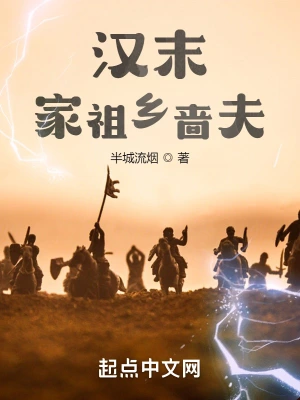
Late Han: My Ancestor Was a Village Clerk
汉末:家祖乡啬夫
- Status
- Completed
- Length
- 1.7M Words
- Genre
- Historical
- Subgenre
- Qin-Han & Three Kingdoms
- Updated
- 1y ago
- Source
- Qidian
Stats
411Chapters
0Votes
13.7kRecs
55.8kFans
Tags
Synopsis
More by this author
Readers also read
 My Father Is Wen Tianxiang, and We Win the Battle of Yashan from the Start
 A Guide to Building Civilization in a Primitive Tribe
 Daming: Asking for the Throne at the Beginning, Lao Zhule Went Crazy
 My Only Method: I Will Add More Points to Become Stronger at the End of Ming Dynasty
 A Record of a Mortal's Journey to Immortality: I Earn Immortality by Grinding Achievements for Rewards
 The Wily Qin
 Late Han: Born in Bingzhou, Destined to Be a Hero
 Lord Evolution
 A Record of a Mortal's Journey to Immortality: Choosing Hextech in the Chaotic Star Sea
 Is the Son of Heaven Born to Rule?
 The Age of the Yellow Sky
 Northern Qi: My Father Is Emperor Wenxuan
 The Martial Saint of the Late Han Dynasty
 Three Kingdoms: Life Simulation, Liu Shan Is Losing It
Reader comments 41
Google Translate
The protagonist is a Yangzhou shepherd, which shows that the author seriously lacks geographical and political knowledge. Before the Song Dynasty, China's economic center of gravity was in the Yellow River Basin, and wars were fought for money and food. Therefore, except for Zhu Yuanzhang, the north unified the south. By the Song Dynasty, the Guanzhong Plain was in ruins due to over-exploitation and warlord wars in the late Tang Dynasty. Later, with the rise of Xixia, Guanzhong became the front line and was completely hopeless; the Sanyi River returned to the river, which caused the North China Plain to be abandoned, and it was still wiping the butt of Zhao and Song Dynasty until the Ming Dynasty; during the Song and Jin Dynasties, the Jin Dynasty conquered the Yellow River, causing the Yellow River to seize the Huaihe River and flow into the sea, and the Huaihe River Basin was also abandoned. By this time, the Yangtze River Basin had risen and become China's new economic center. This was the real reason why Zhu Yuanzhang was able to unify China from the south - there was sufficient money and food in the Yangtze River Basin, the Guanzhong Plain became the Loess Plateau, the North China Plain was flooded by the Yellow River, and the Huaihe Plain was also flooded because the Yellow River took the Huai River and entered the sea. The entire North China lacked money and food to support the army's year-round campaigns. This situation lasted until the Republic of China. To sum up, the protagonist can only choose a territory in the Yellow River Basin to have money and food to conquer the world. He can only choose one of the four states: Liangzhou, Yuzhou, Jizhou, and Xuzhou. The best choice is Jizhou. The North China Plain is not only economically prosperous, but can also control the northern resources of strong soldiers and horses, and can also prevent the rise of Yuan Shao. The second option is Xuzhou. Xuzhou is not only rich in money and food, but also adjacent to Yangzhou, which is convenient for the protagonist to annex. The chaos of Qingyan in the north is also convenient for the protagonist to annex. Yuzhou in the west is also rich in money and food. Yuan Shu is easy to fight and can stifle Cao Cao's rise nearby.
Later, when the protagonist's wife gives birth to a child, it is best to be a boy, because boys were considered heirs in ancient times and can reassure their subordinates. If it is a daughter, they cannot reassure their subordinates that they are die-hard loyalists. Of course, if the author insists on having a daughter, then I hope the protagonist will not dote on her daughter and treat her as much as she wants. The daughter slave is really disgusting to see (the protagonist of the online article will not dote on his son 100%, but he likes to dote on his daughter and favor his daughter)
Although I like to read the Romance of the Three Kingdoms, I really can't stand it. I speak of foreigners and so on. I also fantasize about going back in time and wiping out all these foreigners. But have you ever thought about the aliens you call the Xiongnu, Xianbei, Wuhuan, Qiang, Di, Shanyue, barbarians, etc., Even if they are Later, the Tubo Turkic Uighurs, the Khitan Liao, the Jurchen Jin, the Dangxiang Xixia, the Bai Dali, the Mongolian Yuan, and the Manchu Qing. Everyone living on the land of China is now a member of the Chinese nation. China is a multi-ethnic country, not just a Han ethnic group! Hehe, let me say something unpleasant. After thousands of years of ethnic integration, are your Han bloodline pure?
The author likes to over-interpret. Emperor Ling of the Han Dynasty is a foolish emperor. What are you pretending to be?
With the organizational capabilities of the Yellow Turban Army, can it really be possible for 100,000 Yellow Turbans to break out of the camp secretly? That wave of talents will be famous throughout the ages 🤭🤭
The layout is too small, or the writing is too stingy. There are seventy-eight free chapters. It focuses on describing the story of revenge. Running around with no base and no subordinates. The last sentence is to rely on the rich family. If you want to rely on the rich family, it depends on what you write. The Three Kingdoms is enough.
Not killing Wang Ji's wife and children shows that the protagonist, as a time traveler, still has some humanity. As the saying goes, there are things to do and things not to do. I kill you to avenge the head of the family. It will not bring harm to the wife and children. If your son wants revenge in the future, just do it. I will follow.
It feels like the protagonist has been assimilated by this era and is trapped in a circle with no way out. It always feels a bit strange when reading it.
Yangzhou is chosen well. The protagonist occupies the Golden Corner very early. With a large number of elite soldiers, he can be more aggressive at the beginning when dealing with big families. After all, if the cavalry in the southern expedition to the north does not have the upper hand, it requires higher mobilization capabilities and organization. First of all, aristocratic families cannot give priority to political power, not even unified political power. What's more, the protagonist is not born high, so the protagonist should open a school and actively cultivate officials from poor families. The governance of a political power is very important. History proves that both Wei and Jin died in aristocratic families.
Why do you see the protagonist acting like a loser in the back, while he was the strategist in the previous battles?