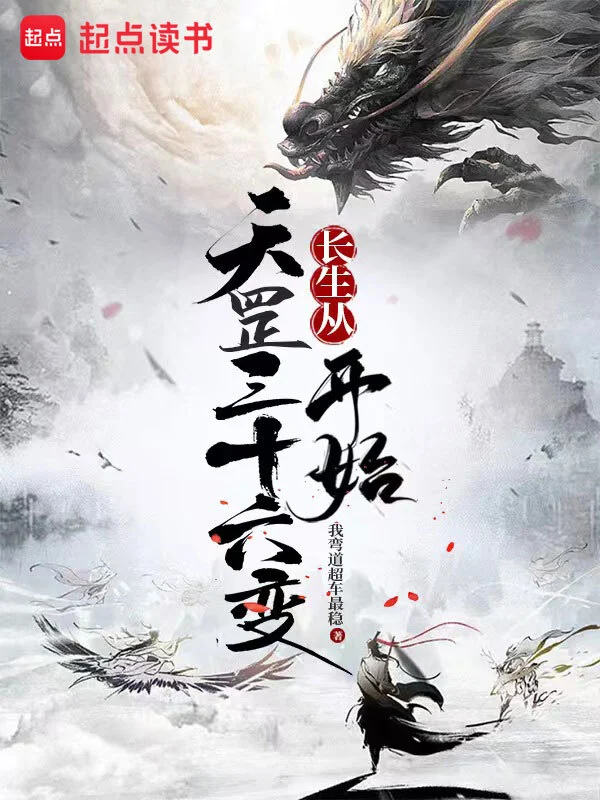
Immortality Begins with the Thirty-Six Transformations of Tiangang
长生从天罡三十六变开始
- Status
- Completed
- Length
- 1.8M Words
- Genre
- Cultivation
- Audience
- Male
- Subgenre
- Mythic Cultivation
- Updated
- 11mo ago
- Source
- Qidian
Stats
0Monthly votes
95.8kRecommends
265.2kFans
437Chapters
Tags
Synopsis
Reader comments
In booklists 1
Readers also read
 Immortal Travel
 Guixuxuanji
 Xuanjun
 Your Magic Weapon Version Is Too Low!
 Never Walk Alone!
 Dashang Supervisor
 Pushing Martial Arts Horizontally: Starting with the Turtle Breathing Technique
 Daming: Have I Become Wanli's Portable Grandfather?
 I Am Drawing a Hot-Blooded Episode in the Zhiyu Episode!
 Call Me a Court Eagle? I Am the Great Qin Martial Saint
 Eternal Sword
 The First Prince of Daxuan
 The Whole World Is an Actor
 The Sanctification of the Physical Body Starts with Unlimited Stacking of Talents.
 You Promised to Conquer the Sea and Capture the Dragon, but Then You Turned Around and Made a Fuss in Heaven?
What the hell
When writing about Yangshen, I don't have the background of Mengluishenji, and when writing about my son-in-law, I don't have the writing power of Banana. The protagonist is as stupid as a pig and has no charisma. It's not as cool as an ordinary pretentious and slap-in-the-face article.
🈶You have the Thirty-Six Transformations of Tiangang in hand, why are you still staying in this miserable place? Leave! What do you care about? You have such magical powers, find a secluded place to practice. Poison.
I like this kind of systematic writing, one word is cool
Isn't this just copying Yang Shen?
The plot is almost the same as the novels I have read before, but this refreshing novel is not satisfying at all, and there are too many points that make it feel inexplicable.
I have read more than 90 chapters, what can I say? I just feel that Tiangang 36 does not bring much help to the protagonist, and it does not specifically highlight the awesomeness of Tiangang Taoism. It always feels that it is weakened. It is understandable that the author is afraid that Tiangang will be too strong and lead to a collapse in strength in the early stage, but it can also be strengthened appropriately. It was too passive before it was put on the shelves.
💩
It's like being a stallion when you haven't done anything yet. You can't do this even if you have some brains.
I find that in every novel, the bullied bastard's goal in life is to clear his mother's name, gain recognition from others, and please others. What kind of psychology is this?
Not to mention anything else, at the beginning the protagonist is in danger but doesn't know how to hide. He seems to be reasonable and well-founded, but in fact he is sharp. In other words, you forcibly outsmart the enemy and cheat the protagonist, otherwise he would have finished playing.
The protagonist who has practiced the Thirty-Six Transformations of Tiangang is a fourth-level martial artist who punches 400 kilograms with one punch. This is far better than other martial artists. What is this?
I don't know what other people say, they say it looks like Yang Shen, but Shenji also said back then that everyone can use his settings in the future. I just thought it was cool and happy after watching it. I hope the author will keep up the good work.
The story begins with a frustrated concubine. If this scumbag father is not eliminated later, then the novel will not be worth reading.
A miscellaneous examination of the Thirty-Six Methods of Tiangang and the Seventy-two Techniques of Earthly Evil Reprinted from NGA Pirates Quanzi
Long story short. 1. The development and integration of Taoism in the Song and Yuan Dynasties Taoism in the Song and Yuan Dynasties developed many new Taoist sects on the basis of Shangqing, Lingbao and Zhengyi. However, the basic background of these Taoist sects is still the improvement and innovation of Shangqing, Lingbao and Zhengyi. Although there are inevitable disputes between the new sect and the old sect, Taoism in the Song and Yuan Dynasties was open-minded, and different Taoist sects learned from each other. It is common for famous Taoist masters to hold multiple dharma sects. For example, Xu Jing Tianshi, Bai Yuchan, Sa Shoujian, Wu Quanjie, etc. In terms of academic affairs, various sects communicate and learn from each other. Politically, Longhushan has obtained the management qualification of the Three Mountains Talisman, which effectively integrates the teaching and transmission activities of various Taoist talisman sects. The exchanges of Taoism and Dharma among the various talismans and Taoist sects are getting closer and closer. It has become common for one person to hold multiple inheritances. The originally independent sects have become the branches of the dharma circulating in the Three Mountains Talisman. As a result, a large number of compiled Taoist books were produced, and the Taoist teachings inherited within each sect were integrated and summarized into a complete system. Zhu Quan, the master of the Jingming sect and King Ningxian, summarized in the "Tai Qing Jade Book of Emperor Zhi Dao" that there are nearly 200 levels of Taoism, and each level is a Taoism. Among them, there are more than 130 so-called "immortal arts" listed in the "Yuxu Heavenly Book", "Tongtian Baolu", "Kui Gang Six Locks", "Tian Marrow Spiritual Chapter" and so on, and divided them into two categories: "methods used by immortals" and "methods used by magicians". This is the original source of the thirty-six heavenly gangs and seventy-two earthly evil spells in the Ming Dynasty. The publication of the Ming version of the orthodox Taoist canon also reintroduced ancient books such as the Taoist scriptures of the Wei and Jin Dynasties, "Tai Xuan Jin Suo Liu Zhu Yin", which recorded the methods of shrinking the earth, entering the cave into the sky, riding a dragon, riding a crane, riding the wind, going up to the sky, entering the earth, entering water and stone, painting the ground as rivers and mountains, and making gourds to fill the sky and earth. This process of summarizing gave the intellectuals of the Ming Dynasty the opportunity to have a deeper understanding of Taoism. 2. The prosperity of the publishing industry and the upsurge of literary and artistic creation in the Ming Dynasty Beginning in the mid-Ming Dynasty, the publishing industry ushered in a great prosperity. Publications were no longer limited to eight-legged essays and four books and five classics. A large number of "idle books" were published. There were many curious people involved in Taoism among the intellectuals of the Ming Dynasty. For example, Gao Lian, the author of "Eight Notes of Zunsheng", is famous for his good at alchemy. Wang Shizhen, the chief director of Tan Yangzi's ascension incident. The novels of the middle and late Ming Dynasty, such as "Journey to the West", "Supplementary Biography of Pingyao", "Tongjian of the Immortals of the Past Dynasties", "The Iron Tree", "The Flying Sword", "The Curse of Dates", "The Complete Biography of Xiangzi" and other novels compiled by scholars, all fully reflect the author's in-depth understanding of Taoist theory and alchemy. 3. The Water Margin and the promotion of the concept of Tiangang Disha As a person from the late Yuan and early Ming Dynasties, Shi Naian's understanding of Taoism was quite rough, but he only knew the "Five Thunders and Heavenly Mind Zhengfa". However, in the section "Loyalty and Righteousness Hall, Gangsha gathers righteousness", the concept that Tiangang is noble and earthly evil is humble has been deeply rooted in people's hearts through the popularity of Water Margin. Fourth, the changes in the thirty-six Tiangang numbers and the seventy-two Earthly evil numbers in Journey to the West The Tiangang and Earthly evils themselves are not a very important concept in Taoist alchemy. They only belong to one type of star clusters, that is, the so-called divine evils and evil stars in today's fortune-telling. Based on the water and land paintings and divination of the Ming Dynasty, In the book of fortune-telling, the evil stars of the Congchen that the Ming Dynasty valued, such as Diaoke, Sangmen, Daxiao, Xiaoxiao, General, Yellow Banner, Leopard Tail, White Tiger, Golden God, Qingyang, Crow, Taisui, Dasha, Riyou, Taiyin, Crane God, Blood Blade, Qisha, etc., Are no different from the evil stars and gods used in today's Ziwei Dou Shu and four-pillar fortune telling. Thirty-six stars of Tiangang and seventy-two stars of Earthly Evil, except for Tianji, Tiangui, Tiankui, Tiantian, Tianwei, Tianshang, Tiansha (co-killing), etc., Are still used in Ziwei Dou Shu, and the other evil stars are the kind of people who keep them but do not use them. So, the greatest contribution of Water Margin is to propose the concept of a boy band called Thirty-Six Heavenly Gangs and Seventy-Two Earthly Demons. As for the bunch of star names in the group, they actually don't attract much attention. When Journey to the West set the changes in the seventy-two earth evil numbers and the thirty-six Tiangang number changes, it was obviously influenced by the set of numbers in Water Margin, but it only adopted the two sets of Tiangang and earth evil numbers, and did not inherit the concept of Tiangang being noble and earth evil being humble. On the contrary, Journey to the West believes that the Disha number is greater than the Tiangang number, so the change in the Disha number is stronger than the Tiangang number. This is also the only special case where the Disha number is higher than the Tiangang number. Fifth, The Legend of Ping Yao written by Luo Guanzhong and supplemented by Feng Menglong, the establishment of the Thirty-Six Methods of Tiangang and the Seventy-two Techniques of Earthly Evil Feng Menglong published a large number of books throughout his life. He was not only a best-selling author with many books, but also a naturalist who read all books. After all, this person has published college entrance examination textbooks, recreational readings, and life tips... The Legend of Pingyao describes nearly a hundred kinds of spells, almost including all types of spells visible in Chinese classical literature. These spells were summarized in the "Tongjian of the Immortals of All Dynasties" published in the early Qing Dynasty as the Thirty-Six Tiangang Techniques and the Seventy-Two Earthly Evil Techniques (although it is full of irrigation and making up numbers). The Legend of Pingyao had a great influence on the setting of later novels about gods and demons. After the story of Pingyao was published, all later novels about gods and demons followed this setting. Including the following points: 1. Tiangang Zhengfa is the highest vehicle, and non-celestial beings cannot practice it. Two, the technique of earth evil can be good or evil. Taoists call it earth evil magic, and Buddhists call it Vajra Zen evil method (Vajra Zen is a misuse of another name of Tantric Buddhism). Third, Xuannv is the ancestor of Zhang Dharma. Academic Dharma does not need to worship Sanqing and Tathagata, but it has to worship Xuannv (this is even generally inherited by folk Dharma books). Sixth, the final version of "Tongjian of the Immortals of the Past Dynasties" and the Thirty-six Techniques of Tiangang and the Seventy-two Techniques of the Earthly Demon "The Tongjian of the Immortals of the Past Dynasties" almost completely follows the settings of "Pingyao Zhuan". The most obvious evidence is from the 12th chapter of "Ping Yao Zhuan", "According to the 16th article, it is the Hutian Technique. The sky in the pot is not the heaven in the sky. This is just the meaning of hiding from the armor and shrinking the earth." The 16th article of the Seventy-two Earthly Evil Techniques in "Tongjian of the Immortals of the Past Dynasties" is the Hutian Technique. The list of magic spells compiled in "Tongjian of the Immortals of the Past Dynasties" is mostly from "Ping Yao Zhuan", and a small number of them are from "The Romance of the Gods", "The Romance of the Three Kingdoms", "Journey to the West", "The Cursed Dates" and the Taoist Canon. "Tongjian of the Immortals of the Past Dynasties" is extremely boring and ugly as a novel, but it can still be regarded as a compilation of fantasy materials from ancient Chinese literature. The original source of some spells Mediating with creation: Dao Dharma Huiyuan, which means that the thunder method can communicate with the power of creation, and the two qi of yin and yang are used to transport the cardinals. Therefore, it is omnipotent to summon thunder and rain, drive away gods and ghosts, eliminate disasters and extend life. Inverting Yin and Yang: Wang Chongyang's elixir formula means that Kanli water and fire, sun soul, moon soul, baby and girl are nothing more than the two qi of yin and yang, reversing each other to create the immortal way. Changing Stars to Change Fighters: Youyang Zazu, a group of monks hid the Big Dipper. In the Romance of the Three Kingdoms, Zhuge Liang restrained his natal generals before his death and prevented his whereabouts. Returning to heaven and returning to the sun: Huainanzi, Lu Gong waved his sword, and the setting sun returned to Zhongtian. "Guiguzi Tianmui Lingwen" has the Huntian method, which is similar. Call the Wind and Call for Rain: The Taoist Dharma Hui Yuan records more than 100 thunder methods of praying for rain, calling for wind, praying for sunshine, praying for snow, and eliminating hail. Shocking the Mountains and Shaking the Earth: Notes on the Water Classic, the giant spirits shook the Huashan Mountains, the Huayang Kingdom, the five powerful men caught snakes and shook the earth, and opened the way to Shu. Riding the Mist and Soaring into the Clouds: There are too many texts to describe it. For example, Journey to the West, Water Margin, Shuo Yue Quan Zhuan, all have warlocks stepping on the veil to turn into clouds and fly, the Jade Void Heavenly Book, the Heavenly Essence Spiritual Inscriptions, the Tongtian Baolu, the Dunhuang Text, etc., There are the cloud-creating method, the cloud-driving method, the cloud-controlling method, the cloud-riding talisman, etc. Zhujiang Chenglu: There are too many articles to illustrate the story of Pingyao Zongdi Jinguang: The Romance of the Gods, Yuanshi Tianzun gave twelve immortals escape rituals. Changing the river and disturbing the sea: The Romance of the Gods, Nezha is causing trouble at sea. Referring to the Earth to Become Steel: The Romance of the Gods, I am afraid of leaving my grandson to seize earth and do his deeds. Five Elements Escape: The Romance of the Gods, Shen Gongbao said that Jiang Ziya's Five Elements technique can be used to move mountains and fill seas. Liujia Qimen: Romance of the Three Kingdoms, Qimen Dunjia and other techniques are very ancient. They were used by pre-Qin military strategists as yin and yang. The theory of good and bad directions and the divination of Guxu Fengjiao gradually entered the Taoist sect. There are the five elements and eight trigrams to hide the shape, the six armor and six dings to summon the gods, and the formation of the twenty-eight constellations to play birds. The Romance of the Three Kingdoms has the plot of Zhuge Liang using the art of Liujia to frighten Sima Yi, and there is also the legacy of pre-Qin military strategists using the art of Yin and Yang to shake the morale of the army. Predicting the future: The Romance of the Gods. Predicting the future is a general term for prophecy and divination in all myths. There are many articles about it. Whip Mountains and Move Stones: Synopsis of the Three Qi Dynasties, the gods used whips to drive rocks away during Qin Shihuang's time Resurrection from the dead: Seven Lotuses in the Cloud, Taishang Laojun used magical talismans to enlighten the dead bones and return to life Flying body traces: Hidden Eight Skills Sutra, which means flying in all directions, coming in and out, etc. For details on the technique of attaining enlightenment, see "Yunji Qizhu·Zhu Jia Qi Dharma Department" Derivation of Yuanyang: Fang, Shu, Mi, Jue and other books, the so-called picking and replenishing matters Subduing the dragon and subduing the tiger: The biography of the Celestial Master family, eminent monks, etc. It is said that the Celestial Master Zhang Daoling subdued the White Tiger God, and the Tathagata subdued the poisonous dragon with meditation. Subduing the dragon and subduing the tiger has become a standard tool for advocating the supernatural powers of immortals and Buddhas. It can also be used as inner elixir method to subdue the dragon and subdue the tiger, and reconcile the yin and yang. Mending the sky and bathing on the day: Huainanzi, using Nuwa to patch the sky and Xihe bathing on the day Pushing the mountains and filling the sea: Huainanzi, said to be the magical power of the Eight Dukes of Huainan. Turn stone into gold: Huainan Wanbi Shu, for example, the Legend of Pingyao. The Midas touch is the ultimate dream of mankind to pursue wealth. The immortal turns stone into gold. The magician needs to use the elixir Huangbaizhu for enlightenment. Stand upright and have no shadow: The Seven Lotus of Yun Ji means that those who practice the way of the sun and the moon and become immortals will have no shadow in the sun, just like the palaces in Dafang obey the law of the sun and the moon. The fetus changes shape: the legend of the gods, it is said that the holy fetus is raised, the soul is born, and the house is rebuilt The size is as desired: there are many texts, for example, Journey to the West The flowers bloom in an instant: Zazu in Youyang, Han Xiangzi can bloom flowers in an instant, and make a wine tour. Insights from across the wall: there are too many articles to describe it, for example, Journey to the West is about guessing objects on the partition between cars and Chi in the country. Returning Wind and Returning Fire: There are too many articles to mention it. For example, in Water Margin, Song Jiang uses the method of returning wind and returning fire to make the noble magic come back. "Kui Gang Six Locks Secret Technique" has two methods of returning wind, which are similar. Mastering the Five Thunders: There are many texts but it is not recorded, that is, the Five Thunders Technique, which is the largest Taoist magic method since the Song and Yuan Dynasties, with hundreds of kinds handed down from generation to generation. Qianyuan Shrinking: The Book of the Later Han Dynasty, for example, Ping Yao Zhuan, Fei Changfang has the art of shrinking the earth, "Tai Xuan Jin Suo Liu Zhu Yin" has Yu's footwork, if you step on the stars, you will fly to the sky, if you step on the nine states, you will shrink the earth's veins, if you step on the five mountains, you can travel freely to the blessed land of cave heaven. Flying sand and flying rocks: There are too many texts to describe it. Water Margin, Romance of the Three Kingdoms, Pingyao Zhuan, etc. All have the magic of flying rocks like rain Carrying mountains and seas: From Mencius, for example, Journey to the West, Sun Xingzhe carried three mountains on a flat top of a mountain. Throwing beans and making soldiers: There are too many articles to give an example. The Legend of Pingyao Seven Arrows: The Romance of the Gods, Lu Ya cursed to kill Zhao Gong to make things clear. The Seventy-Two Techniques of Disha are found in the Ping Yao Zhuan part Inviting Immortals (Ping Yao Zhuan, Chapter 15), Wedding Dreams (Ping Yao Zhuan, Fourteenth Chapter), Continuing the Head (Ping Yao Zhuan, Chapter 29), Immobilization (Ping Yao Zhuan, Chapter 39) ), pray for sunshine (Ping Yao Zhuan, seventeenth chapter), pray for rain (Ping Yao Zhuan, seventeenth chapter), cover the sun (cover the sun with a fan that turns into clouds, Ping Yao Zhuan, seventeenth chapter), provide relief (Ping Yao Zhuan, twenty-four chapters), exorcise the gods (Ping Yao Zhuan, thirteen chapters), borrow the wind (Ping Yao Zhuan, thirty-one chapters) ), spreading fog (Ping Yao Zhuan, chapter 2), sitting on fire (Ping Yao Zhuan, chapter 30), entering the water (Ping Yao Zhuan, chapter 17), controlling the wind (Ping Yao Zhuan, chapter 13), burning flames (Ping Yao Zhuan, chapter 28), pot sky (Ping Yao Zhuan, chapter 13), and releasing the staff (Ping Yao Zhuan, chapter 13) Twenty chapters of the Legend of Ping Yao), clone (the thirty chapters of the Ping Yaoden), invisibility (the twenty-third chapter of the Ping Yaoden), chasing souls (the fifteenth chapter of the Ping Yaoden), capturing souls (the thirteenth chapter of the Ping Yaoden), recruiting clouds (the seventeenth chapter of the Ping Yaoden), and taking the moon (the twenty sixth chapter of the Ping Yaoden), Carrying (Pingyaoden, Chapter 17), Separation (Pingyaoden, Chapter 29), Staff (Pingyaoden, Chapter 21), Swordsmanship (Pingyaoden, Chapter 1), False Form (Pingyaoden, Chapter 17), Spraying (Pingyaoden, Chapter 20), Finger Transformation (Pingyaoden, Chapter 20) The Legend of Ping Yao, Chapter 17), Moving Scenery (The Legend of Ping Yao, Chapter 18), Summoning (The Legend of Ping Yao, Chapter 17), Going (The Legend of Ping Yao, Chapter 17), Gathering Beasts (The Legend of Ping Yao, Chapter 34), Opening the Wall (Chapter 20), Jumping over the Rock (The Legend of Ping Yao, Chapter 37), Drinking Water ( Chapter 28 of the Legend of Pingyao), Medicine (Chapter 30 of the Legend of Pingyao), Nightmare Prayer (Chapter 39 of the Legend of Pingyao) Seven, the duplication of the content of the Tiangang Disha Dharma, and the errors in the process of spreading The Tiangang method spreads beans and becomes an army: it overlaps with the Earth Demon technique of fingering and spraying. The only difference between fingering and spraying is that spraying has an additional procedure of spraying water on the target. You can refer to the money-changing method in Ping Yao Chuan, which is a typical spraying technique. The Seven Arrows Nailed by the Tiangang Technique: It coincides with the Nightmare Prayer of the Earth Demon Technique, which is the so-called "Oolong Beheading Method" in Ping Yao Chuan. It means to make a magic sword and cut off the name of the enemy general, and the enemy general will be decapitated. If the enemy's troops are cut off, the entire enemy army will be destroyed. Tiangang's method of concealing the abyss and shrinking the earth: coincides with the earth's evil method of Hutian, both of which refer to Fei Changfang's Taoism from Hugong. You can refer to "Tai Xuan Jin Suo Liu Zhu Yin". The Tiangang method masters the five thunders: it coincides with the Tiangang method to summon wind and rain, the earth evil method to induce darkness, drive away gods, borrow wind, spread fog, pray for sunshine, pray for rain, cover the sun, attract clouds, storms, prevent disasters, and relieve misfortunes. The five thunder methods are generally like a basket that can hold too many things. The technique of inviting immortals to the earth, chasing souls, and capturing souls coincide with each other, and they are all methods of attracting ghosts. The Disha technique of Corpse Dissection overlaps with Zhizhang and Zhijie, both of which are derived from the Taoist Corpse Dissection method. The technique of summoning, coming and going, and carrying are similar to today's magic tricks such as the Three Immortals Returning to the Cave. One carrying method is broken down into three types: calling, coming, and carrying. This is a typical online text wording technique. The Earthly Evil Techniques of spitting flames, swallowing knives, sitting on fire, moving scenes, continuing heads, sprouting heads, gathering beasts, and adjusting birds all originally refer to the illusion tricks of the Han and Tang Dynasties. Today's magic tricks that transform living people are all circus activities. Fu Shui and medicine are both ancient medical traditions. Knowing the place and the time are nothing more than what Feng Shui fortune tellers do. Daoyin, taking food, eating grains, and boiling stones are all Taoist health methods. The method of taking food is subdivided into the method of taking plants and trees and the method of boiling stones by taking gold and stone. It is embarrassing to make up the words. Daoyin and bigu are common Taoist health methods, and they are also named after the seventy-two techniques of earth evil. It can be seen that the "Tongjian of the Immortals of the Past Dynasties" is full of water. The technique of lying in the snow means that the immortal does not feel the cold in winter and does not get sick while lying in the snow, just like Wang Chuyi, one of the seven sons of Quanzhen, chewing plum blossoms in the snow with his bare feet. The Tiangang method of standing upright without a shadow, the fetus transforming into a shape, and the wandering spirit controlling the air all refer to the special situations of immortals after they attain enlightenment, and were also used to make up the numbers in "Tongjian of the Immortals of the Past Dynasties". The earth evil technique of rainstorming is actually one of the ancient rain-seeking techniques. The shaman who prays for rain is exposed to the scorching sun. The scene in The Romance of the Three Kingdoms when Sun Ce was forced to pray for rain by a lucky day is a typical example of rainstorming by the rainstorm. Tiangang Method Nine Breaths Conquer Qi and Extract Yuan Yang. The former is the characteristic of long breathing achieved by practicing the Fetal Breath Method. The latter is a cunning method for men and women to lose control of each other's inner Qi in Huangchidu Qi cultivation. It has also been promoted as Tiangang Method and magical magic. It is really speechless. Nong Wan Shu is a common trick of clowns throwing small balls in succession. However, throwing small balls is called Nong Wan, and throwing daggers is called Feijian. This is how the Han people describe Feijian Nong Wan performed by Anxi and Dashi artists. Just because the sword was upgraded to an important magical weapon in Taoism, there were a large number of documents on sword refining and flying swords. Gu Nong Wan was also promoted and became the Jian Wan technique as famous as the sword weapon in the legend of the sword immortal. Today's people are uneducated and have no skills. They think pill making is the golden elixir method, which makes the Fang family laugh. Eight, digression Today's interpretation of the 108 methods of Tiangang Disha originally came from the magic stick on the other side and spread through the Internet. However, the version of the "Tongjian of Immortals of the Past Dynasties" of the Thirty-Six Techniques of Tiangang and the Seventy-two Techniques of Earthly Evil itself contains a large number of errors, omissions, and corruptions. Coupled with ulterior interpretations, it deviates even further from the original intention. However, this type of interpretation is either for preaching, selling charms, idols, or gaining followers, and is often mixed with exaggerations and secondary creations. Internet writers use their words indiscriminately and misuse them, and jokes are inevitable.
After seeing Chapter 25, I am basically sure that this is Ben Lese! First, if you copy the setting and structure of Yangshen, even the protagonist's situation is exactly the same. Forget it, at least you can change the name and live to see it. The problem is that you can't copy the essence. Second, what does the protagonist of Yangshen rely on? Inheritance. What do you rely on, cheats? Now that you have cheats, your living conditions are better. I want to ask, except for opening the first magical power, you don't even know how your cheats work. Your cheats are activated by absorbing other people's souls, and your development route is also fighting. What did you do in Chapter 25? I just started practicing martial arts, doing this and that, going out to write poems and costume contests, and giving the princess suggestions on national policies to stabilize the country. Does it have anything to do with you? Will it put you in a better position? It will be worse. You are a fool to put your life in someone else's hands. The mountain wolf in the sub-lineage becomes rampant when it succeeds, and has no ability.
He is also a master of Neo-Confucianism, and his reputation is the most important thing! Reputation? Are you sure? His wife knew that he had a great reputation, so she still sent her concubine to marry him? Isn't this the laughing stock of Da Zhou? So funny, this is written
I'm speechless. I've already practiced the Thirty-Six Methods of Tiangang, and I'm still fighting with this and that. You, a person with a modern way of thinking, traveled through the past and put yourself in someone else's shoes and thought about whether you went to cultivate immortality directly. At most, after you succeed in cultivation, you can return to revenge and repay kindness to resolve the cause and effect.
It's too vicious. First of all, the bastard is being suppressed. Secondly, this is the son of the princess. The princess's son is the bastard? The princess was imprisoned and died by a marquis, what kind of brain did you have to write this?
Alas, if I don't practice supernatural powers, I will practice martial arts. I just play It's true that my magical power is no match for Tianshu (author)
When I first read it, I felt that the writing was very good. It should be a book by an old author. I was looking forward to it at this time. But the setting and plot behind it are really poisonous in my opinion. The sentence at the beginning of the sentence about how the wind and snow froze the cattle and sheep to death, King Mang led a million cavalry south and almost sent me away... I kept reading for a while, and the fairy tales about suppressing the bastard and the prince bullying the princess are all here... I am really speechless. I can only say that the old author is an old author, and the first paragraph starts to screen readers...
Trash, what kind of protagonist is this? He is mentally retarded. It was a soldier who traveled through time. This is a complete insult to the soldiers. I have never seen such a weak-minded protagonist.
Nowadays, novels are all the same. What kind of bastards and waste streams? You get to know some big bosses from outside, and then they pretend to compete. The family members are shocked and want to suppress them. The big guys outside come forward to protect the protagonist, and then the protagonist joins that faction, and then gets some modern things. The boss is shocked, the protagonist slowly rises to a high position and becomes a big boss, and then returns to the prince's mansion to scream. Anyway, the author will find reasons for the protagonist to forgive the people in the prince's mansion. Later, the protagonist becomes the strongest in the Great Zhou Dynasty, and there must be a disaster that will destroy the Great Zhou Dynasty, so that the protagonist can pretend to be better.
Looking at this introduction, I feel that I cannot be a son-in-law but can only be destined to become a saint.
It's a very strange book. The more I read, the more angry I get. Damn, I've never seen such a mentally retarded protagonist, all kinds of saucy tricks, and saying he's a reborn soldier on the border. It's simply a slander. Shit, shit, shit. Can people read this kind of garbage? 😡
This is the true 36 changes of Tiangang.
If it were me, I would choose to kill the whole family and let this garbage family be wiped out. The name of my mother's certificate is ridiculous. My mother was killed by the family and she didn't want to take revenge. She has a problem with her IQ.
Before I even finished reading the first chapter, I was dissuaded by some logical things. Fantasy is not fantasy, and ancient times are not like ancient times. If you look at a million cavalry, three thousand miles is nothing. But if you compare the size of a prince's palace, and then reason about the other thirteen princes, princes' mansions, palaces, merchants, and civilians, this imperial city may be hundreds or even thousands of miles away, and it seems that it is not far from the frontier. The treatment of the protagonist is also a mystery! Dad is so amazing, the best martial artist in the world. In this world where one's own power determines status, it cannot be explained by copying ancient historical situations. There are dozens of children, whoever can practice martial arts or study must be carefully cultivated, and they will only be given up if their qualifications are not good enough. Someone like the protagonist, who has no mother and is not valued by his father, is simply a transparent person. Why should the mistress target him? Is the main character's mother clan stronger? Or do you have a strong talent and understanding? Or will people get into trouble if they hate dogs? It is even more strange to be bullied by Yue Feng and his servants. Without the tacit approval of the master's family, they are all the sons of the Marquis. They are also the masters of those servants. Are they willing to die? Mr. Hou doesn't want to lose face? There is no logic in how you can contact some sages with some light. So how did these people cultivate before? It's so difficult for a prince of a noble family, what should an ordinary poor family do? So he has no power, no money, no connections, no qualifications, is not popular, and is targeted by everyone, how can he be the prince-in-waiting?
Personally I think the writing is pretty good, keep up the good work! Nowadays novels are mostly the same
The plot is similar to the plot of Meng Shen Ji's Yang Shen, but Yi Zi becomes invincible within a few years even before he fails.
This is based on the plot template of Yangshen, and it also lowers the level of Tiangang Transformation. Those who have never seen Yangshen are a little embarrassed...
It's so disgusting to watch. All poisonous