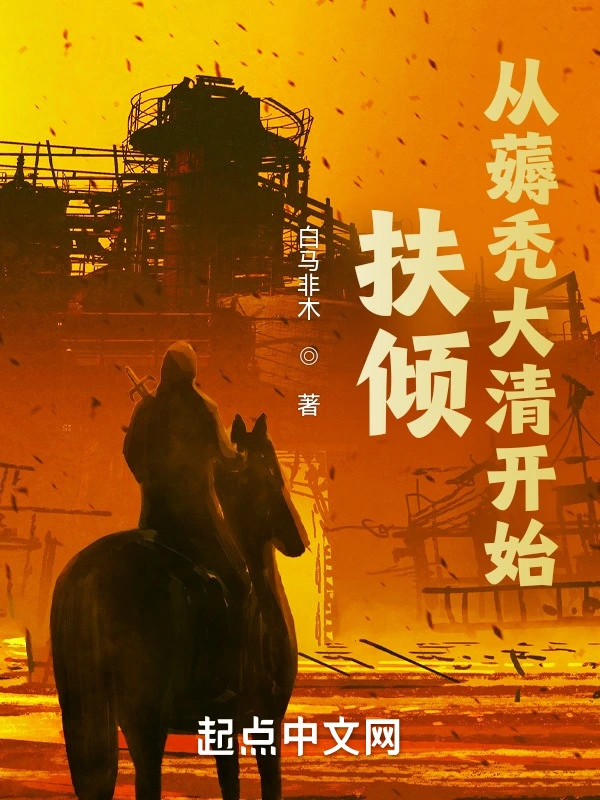
Fu Qing: Starting from the Qing Dynasty
扶倾:从薅秃大清开始
- Status
- Completed
- Length
- 195k Words
- Genre
- Historical
- Audience
- Male
- Subgenre
- Qing & Republican Era
- Updated
- 3y ago
- Source
- Qidian
Stats
0Monthly votes
2.4kRecommends
22Fans
92Chapters
Tags
Synopsis
Reader comments
Readers also read
 In the Red Mansion: Escort Daiyu to Beijing at the Beginning
 Please Call Me Your Majesty the Tsar
 Talker in the Song Dynasty
 1914 Begins with the Rejection of the Schlieffen Plan
 Never Walk Alone!
 Taichang Daming
 Ming Dynasty: My Brother Zhu Yuanzhang, I Founded the United States
 Daming: Have I Become Wanli's Portable Grandfather?
 I Am Drawing a Hot-Blooded Episode in the Zhiyu Episode!
 Destroy the Qing Dynasty
 Millions of Pounds, but the American Civil War!
 Daming: Emperor Chenghua Is Here to Ascend the Throne First!
It's well written, light-hearted, humorous, and consistent with historical facts. Good luck, author!
The protagonist traveled through time and became a banner slave. How could he fight against the Qing Dynasty? The slaves did not support it, and the gentry did not approve it.
Hello author, I was pleasantly surprised when I saw your latest chapter of 254 pages today, and I felt very happy after reading it. But when I saw the instructions for cutting the book at the back, I felt uncomfortable. I think this book is very good, why should I give up? You said that reading data is not good. I think you can adjust and improve the plot rhythm of each chapter. Or, change the title of the book to "The Great Qing Dynasty", which is concise and concise. Now the title of this book is a bit like a systematic article. These are only my personal opinions, the author can consider them. In short, there are people supporting you and you should not give up easily. Because I also searched and searched on the new book list before I found you. We are destined to meet each other thousands of miles away, and I hope that this fate can be brought to a perfect end, rather than a series of meaningless ellipses. The author, please think about it carefully. Sometimes if you persist a little longer, it may be sunny. And once you give up, you may be on the road of no return😁. In short, come on, author. No matter what decision you make in the end, reading your book brings me happiness during these days! And if you decide to persist, I will fully support you! Come on! Come on! Come on!
A rare article about rations. This period of history is a regret in every Chinese's heart. I hope the author will write it well and not collapse. I'm looking forward to seeing how the protagonist will launch a rebellion when he can't stand it any longer. Come on, author!
When Tsarist Russia invaded and occupied Sakhalin Island, why did Qianlong ignore it?
When Qianlong was alive, the control of the Heilongjiang Basin was actually very lax, and his understanding was very vague. The main reasons were two points: 1. Qianlong's understanding of the Northeast had basically collapsed; 2. Qianlong felt that Tsarist Russia could not get here, and he did not want to provoke Tsarist Russia for this. The Manchu letters sent by the Qianlong Dynasty have been translated and published. They record many military aircraft department files during the Qianlong period, including those related to the Outer Northeast. ============ In the 57th year of Qianlong's reign (1792), Qianlong's understanding of the Northeast had basically collapsed. He only knew that during the Kangxi period, in order to compete for Yaksa and Nerchinsk, he went to war with Tsarist Russia. But what is happening to these two places now? Whether they are still under the jurisdiction of the Qing Dynasty and who is under the jurisdiction is completely unknown. When he ordered his subordinates to investigate the details, he also specifically requested that it be done secretly so that Tsarist Russia could not detect it. "Translation and Compilation of Manchu Letters from Qianlong Dynasty 23" Translation and Compilation of Manchu Letters from Qianlong Dynasty 23 Compilation of Manchu Letters from Qianlong Dynasty 23 After the Heilongjiang general found out about Yaksa, Qianlong felt that there were many mountains, forests and rivers in this place, and Tsarist Russia could not penetrate. If he rashly increased the outposts, it would arouse the suspicion of Tsarist Russia. So it was ordered not to increase the number of outposts. "Translation and Compilation of Qianlong's Manchu Letters 23" ============ To sum up, Qianlong's knowledge of the Northeast was very limited, and it was not even clear whether it was still under the jurisdiction of the Qing Dynasty. In order not to irritate Tsarist Russia, he was unwilling to even increase outposts, let alone take other further measures. In other words, the protagonist can find a way to infiltrate certain personnel into the Northeast region at this time, because the local area is actually a mess.
I like this kind of writing that combines court struggle, farming development, and technological upgrading. The author must keep writing and update it well. Come on!
Idiom Solitaire: A blockbuster🙂
The History of the Ming Dynasty and the History of the Qing Dynasty are two of the most unreliable history books in the history of the world. One is widely criticized and the other is widely fanned. Internet novels are more reliable than these two written rubbish.
Good book and interesting. Author, please continue to maintain the quality of your work.
I've read more than 300 chapters and it's really well written.
I would like to ask, is this novel a reform or a revolution? Is there a step forward in the historical process? Are you obsessed with the nationalism of the Manchu and Qing Dynasties? Then you rebel, but I cannot accept that you will not rebel if you rebel. It is just because the national issue has not taken a step forward in the historical process.
Boldly put it on the shelves and subscribe to one hundred chapters directly
Qianlong and Macartney visited China
Regarding Macartney's visit to China, Qianlong had already learned from his own channels about the strength of the British Empire and its brutal conquest process (especially in the Indian Ocean). Therefore, Qianlong judged that it was impossible to defeat his opponent in the navy, but he could defeat the British army on land, especially in local defense battles. Qianlong asked the Macartney delegation to kneel down, which may have been partly out of vanity, but more importantly it had a political deterrent effect. Macartney did not come purely for trade purposes. He came more as an outpost of the colonial empire to find out China's reality and establish colonial strongholds similar to those along the coast of India. Therefore, the series of demands he made were almost identical to the Treaty of Nanjing decades later. Qianlong believed that the British Empire would become a strong threat to China in the next few decades, but due to the lack of information channels, he could not truly understand the differences between the two from institutions to economy to military, such as the industrial revolution, the global colonial system, and a fully professional army. In the following Napoleonic Wars, the armies of European countries will usher in a new round of military tactical revolution, such as "total war", which will further widen the gap in military systems. Due to the vague fear of the British and the vague fear of the unknown power, Qianlong still made arrangements for the British threat, but these arrangements were over with the corrupt bureaucracy in the Jiaqing Dynasty. Qianlong rejected Macartney's intention to spy on intelligence as quickly as possible. After Macartney returned without success, he immediately ordered the provinces, prefectures and counties on the southeastern coast to reorganize their troops, strengthen coastal defense, and be ready to resist possible retaliation from the British (mainly British India). Therefore, Qianlong's act of expelling Macartney was right, and there was nothing to say to the jackals, tigers and leopards who had no good intentions. However, Qianlong and subsequent emperors and court officials failed to quickly open their eyes to the world and improve the rudimentary intelligence system before the First Opium War. They missed the golden time of the climax of the European Industrial Revolution and the Bourgeois Revolution (1880s and 1890s to the 1820s and 30s). They missed the new military tactical revolution after the Napoleonic Wars. They also missed the last chance to prevent China from experiencing great changes unseen in three thousand years and sinking into a century of darkness and humiliation. It is really sighing and regrettable.
Staying together for a long time is a test. Come on, author!
The Qianlong Dynasty might be able to introduce Western learning
First, first of all, we refer to the spread of Western learning to the east from Wanli to Chongzhen in the late Ming Dynasty, focusing on the introduction of scientific knowledge, gunpowder firearms technology and new military tactical ideas (the results of the Thirty Years' War and the Seven Years' War). For example, the modern infantry tactical revolution in Europe experienced the Swiss Phalanx and the Spanish Phalanx, which is the Morris Phalanx of the Netherlands, derived from Morris referred to and studied "Tactics" written by the Eastern Roman Emperor "Wise" Leo VI, as well as the "On War" by the ancient Roman military strategist Vegitius, and then the military reforms of Swedish King Gustavus II, the real founder of the modern infantry revolution, and then the "On War" by the Prussian soldier Clausewitz, by the way. It was advanced and combined with the American Mahan's "On Sea Power" and the German Ludendorff's "Total War" Secondly, in view of the success of Japan's Meiji Restoration, part of it was due to the Mito School brought to Japan by Zhu Shunshui, a Ming survivor, who eventually formed the Mito School with the main idea of "respecting the king and rejecting the barbarians", which influenced a large number of samurai warriors of various vassals, and ultimately contributed to the great politics. The other part is the translation and dissemination of Orchidology (learning from the Netherlands) that Japanese scholars, businessmen, and samurai have worked together for hundreds of years from the late Warring States Period (Warring States Period) to the early Azuchi-Momoyama Period, paving the way for the people to quickly accept advanced modern Western cultural ideas and science and technology. Therefore, it should be a feasible way for Japan to introduce orchid science. Third, the Renaissance brought the legacy of ancient Greece and Rome, while the Enlightenment was the rapid development of humanism. On this point, Rousseau's thoughts cannot be introduced for the time being, but the works of Voltaire, a thinker and philosopher who once studied Chinese thought and system and advocated "enlightened monarchy", can be accepted after inspection and fine-tuning. Humanism can also be combined with the "unity of knowledge and action" proposed by Wang Yangming, a great Confucian in the late Ming Dynasty, and the "management of the world and practical application" proposed by the Confucian School of Pragmatism in the late Ming Dynasty, to further enlighten people's wisdom, cultivate and recruit more useful talents, and slightly improve the numb and decadent social atmosphere in the middle and late Qing Dynasty. Fourth, there are all kinds of dazzling knowledge and technologies, such as Diderot's encyclopedia writing model, and China just has the Yongle Dadian and Sikuquanshu. For example, Western navigators used more scientific and sophisticated surveying and mapping techniques to draw clearer maps of China and the world, focusing on the current status of the global colonial system. This may allow more people, including Qianlong, court officials and the scholar-bureaucrat class, to see the global situation clearly. The threat of the British Empire (British India) is imminent, and the military front is already at the waist of China, the Eastern dragon.
This book of fairy grass is a gift from a great god!
Jingxing in my mind
The protagonist helps his wife to ascend to the throne, and then becomes the regent and husband. I remember there is a novel called Luan Qing written like this.
Is the author messed up? A chapter is updated regularly at 12 o'clock every day. This should not be on the shelves, right?
This 6 was singled out, and the author cut it
Overthrow. Rebel. Either way. You are coming to play with the revolutionary party in the Qing Dynasty. I am speechless.
To rebel, you need someone first. Where can you find someone among the bannermen in the capital? This development idea is wrong.
It looks like there's been a gap, it's been a week
Alas, it makes me want to laugh. Did Kangxi write about promoting two-crop rice? , And the Qing Dynasty's 33 taels of silver, which ordinary people received every year. Do you have any doubts about the value of silver? 33 Taels of silver, ordinary people can't make it. It can be said that for ordinary people, this is a small rich man. You have no concept of money. If the Qing Dynasty has this level of 33 taels of silver, I can be called the prosperous feudal dynasty of the Qing Dynasty for thousands of years.