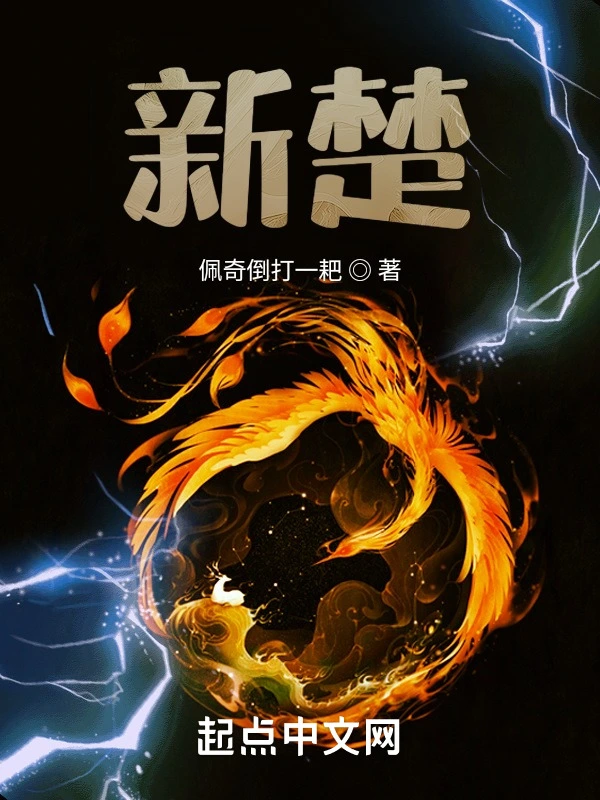
Xinchu
新楚
- Status
- Completed
- Length
- 1.4M Words
- Genre
- Historical
- Audience
- Male
- Subgenre
- Pre-Qin Antiquity
- Updated
- 1y ago
- Source
- Qidian
Stats
0Monthly votes
2.7kRecommends
5kFans
679Chapters
Tags
Synopsis
Reader comments
Readers also read
 Please Call Me Your Majesty the Tsar
 Talker in the Song Dynasty
 1914 Begins with the Rejection of the Schlieffen Plan
 In the Red Mansion: Escort Daiyu to Beijing at the Beginning
 Never Walk Alone!
 The Rise of Prussia
 Make Habsburg Great Again!
 Daming: Have I Become Wanli's Portable Grandfather?
 I Am Drawing a Hot-Blooded Episode in the Zhiyu Episode!
 Ten Kingdoms Week
 Northern Qi: My Father, Emperor Wenxuan
 Ming Dynasty959
 King of Wei
 Take Charge of the World
Reading the introduction made me sick to my stomach. Colonial expansion has really become the political correctness of historical online articles. If I didn't write about this, there would be nothing to write about. I wish I could write a prehistoric myth and build ships to colonize the sea.
The names of the armies made me extremely embarrassed. They were Eastern Canglong and Western White Tiger! Southern Suzaku! The four legions in East, West, South and North all have such embarrassing names! Thought it was 2012? I am so embarrassed that I have cancer! Anyone who can accept this name feels cruel
The political form of Chu State makes it difficult for it to become a country that dominates the world.
Play a Goudao strategy, conquer the Bashu region, and after the destruction of the Yue Kingdom, defend the north and expand to the south. Do not pursue expansion to the northern and Central Plains countries. Learn from the Southern Song Dynasty and build three southern defense lines: Jingxiang Defense Line (defend Wei, Han and Zhao), Huaisi Defense Line (defend Song and Qi), and Bashu-Han Central Defense Line (defend Qin). To the south, an armed immigrant group was organized to expand the border, open up new land, and develop the Bashu area. Jingnan area (south of the Yangtze River in Hubei region) and Jiangdong area (Yangtze River Delta) persist for a hundred years, and the general trend can be achieved.
The author's operation of the southward migration of feudal lords does not feel very appropriate, because it is very likely to force most of the feudal lords to rebel, which goes against the original intention of the feudal lords to move south. After all, the southward migration policy was devised to leave a way for the feudal lords to retreat, so that they would not have no choice but to rebel. Therefore, the operating principle of moving the emperor to the south should be to win over the majority and attack a small group. Moreover, it is not a one-time battle, but a long-term policy. If I do it, there should be a few steps: 1. Feng Jun voluntarily moves south, let the Qu Zhaojing family set an example, choose a good place in the south, and then develop it, which shows that the family will develop better after moving south, and good places can be obtained quickly and slowly. 2. To win titles with gold, every year on the basis of the quality of the tributes paid to the King of Chu, several of the biggest princes (who opposed the southward migration) were eliminated and other princes were rewarded. 3. Model the Tokugawa shogunate's attendance and transfer system, and set up some official positions in Yingdu. Local lords will regularly come to the central government to serve as officials to help the King of Chu handle government affairs. For a period of one year, regular rotation will ensure that approximately one-third of the lords will stay in Yingdu. In fact, the Tokugawa shogunate took care of the great Japanese officials, and faced a situation similar to that of the current King of Chu, so many systems can be used as a reference.
I suddenly had an idea. As the saying goes, there must be a brave man under a heavy reward. The power of the Chu State monarch is so powerful that the powerful factions in other countries cannot help but envy it. When they attacked Shu, they promised to conquer Shu and Hanzhong. Lord Shu Ping (small feudal lords such as Lord Shu An and Lord Shu Ding) is not my territory anyway. I can get it with generous rewards. Besides, with these lords in Shu, if Qin wants to fight back, these people will be the first to disagree and will definitely resist the Qin army desperately. With the land of Shu, we can basically rely on the natural dangers of the Yellow River for defense. Then we can practice martial arts internally, choose the Qin State to fight firmly, rely on the Hangu Pass on the Yangtze River for defense, and then learn Liu Bang and Liu Heng's operations after unifying the world. Stabilize the world and reduce the feudal fiefdoms. I feel that the operation is feasible.
The writing style is so poor, and I feel like I don't have any imperial thoughts when writing. Everything is said out loud.
But it can write 330 pages. Much better than some great eunuch
The Chu State would be called a barbarian. Although it had a large land area, internal disputes were too serious and there were too many aristocratic families.
Well, the writing is, how should I say, pretty good, but the writing style is not like historical writing.
I feel that it is difficult to write about the centralization of power in the Chu State. Without centralization, it is impossible to unify the domestic forces and deal with the outside world. Even Wu Qi's ruthless reform failed.
How difficult is reform
Tsarist Russia also wanted to reform. The tsarist prime minister was a reformist, but the reforms failed. The situation in Chu State is very similar to that of Tsarist Russia. In fact, the Chu State's feudal lords adapted to the changes in the relationship brought about by productivity faster than the Chu central government. They competed with the Chu State's central government for population. Why did the barbarians work for the lords as servants and were unwilling to register under the central government's name? This is the key to reform. The monarchs and nobles are not monolithic. There are down-and-out nobles from all eras. These people have culture and are extremely eager to restore the glory of their ancestors.
At the beginning, I will give wisdom and enlightenment to the ancients... 🐂Come on, farewell
Let me draft a proposal for reform, let's take a look First of all, the King of Chu established a new army of soldiers, and then united the three major clans of Qu Zhaojing (the author has written) Secondly, I think we can start to change the fiefs for the princes, let the princes develop the land in Lingnan, seduce them with real power, and let the princes establish a state in Lingnan and become princes. After unification, the vassals will be reduced. Then, we can implement the order of favor in the country, and establish feudal lords with less effort. This can be supplemented by burning gold to win titles, and eliminate a group of lords who do not cooperate with the reform. Domestically, the three provinces and six ministries system was implemented in Yingdu to strengthen the authority of the King of Chu. The county system was implemented locally to organize households and people. At the grassroots level, we can start to implement the land equalization system, adopt the rent adjustment system for taxation, and promote the military system in the military. (Basically modeled on the Tang system) Culturally, find a great Confucian, use Dong Zhongshu's New Confucian theory to promote the reform, establish prefecture-level Chinese studies, and use the imperial examination system to extensively select talents from the six countries.
It's impossible to read the current Warring States novels. Every year, wars involving hundreds of thousands of people are launched without considering the productivity at that time. Even Qin, a war madman, is not capable of this. At that time, there were only a few wars involving more than 100,000 people, and the others were mostly small and medium-sized wars involving tens of thousands of people fighting for one or two cities. When the author writes like this, the most likely reason is that he is unable to write about the nuances of governance, and can only rely on large-scale wars to promote plot development, such as developing national strength, in one sentence.
The protagonist wants to unify. It is best to give up the country name Chu after proclaiming the emperor. If you continue to use Chu as the country name, it will cause psychological resentment in the other six countries.
The writing is awkward and childish. Not to mention that a strong young man makes a country strong. What kind of military system? What, um, the Eastern Blue Dragon Legion. White Tiger Army. To be honest, there has never been such an awesome army name in Chinese history.
I watched Qingmei Lazi two years ago and he was also the king of Chu Huai 😰
There are few novels about the Spring and Autumn Period and the Warring States Period, and even fewer about the Chu State. Except for "The Great King Huai of Chu" and this book, there are few books that have written so many and are of relatively high quality. I give the author a thumbs up.
Why not create the first era name?
Can I make a situation map of the entire map?
Why is it called Liangzhou? Isn't it good to call it Yizhou? 😆
When to write about economic development, the economic base determines the superstructure, so a whole chapter must be written to fit in with the system design and military reform I wrote before.
Other countries are also planning to issue era names. Can you sort them out first?
What posthumous title should be given to the protagonist?